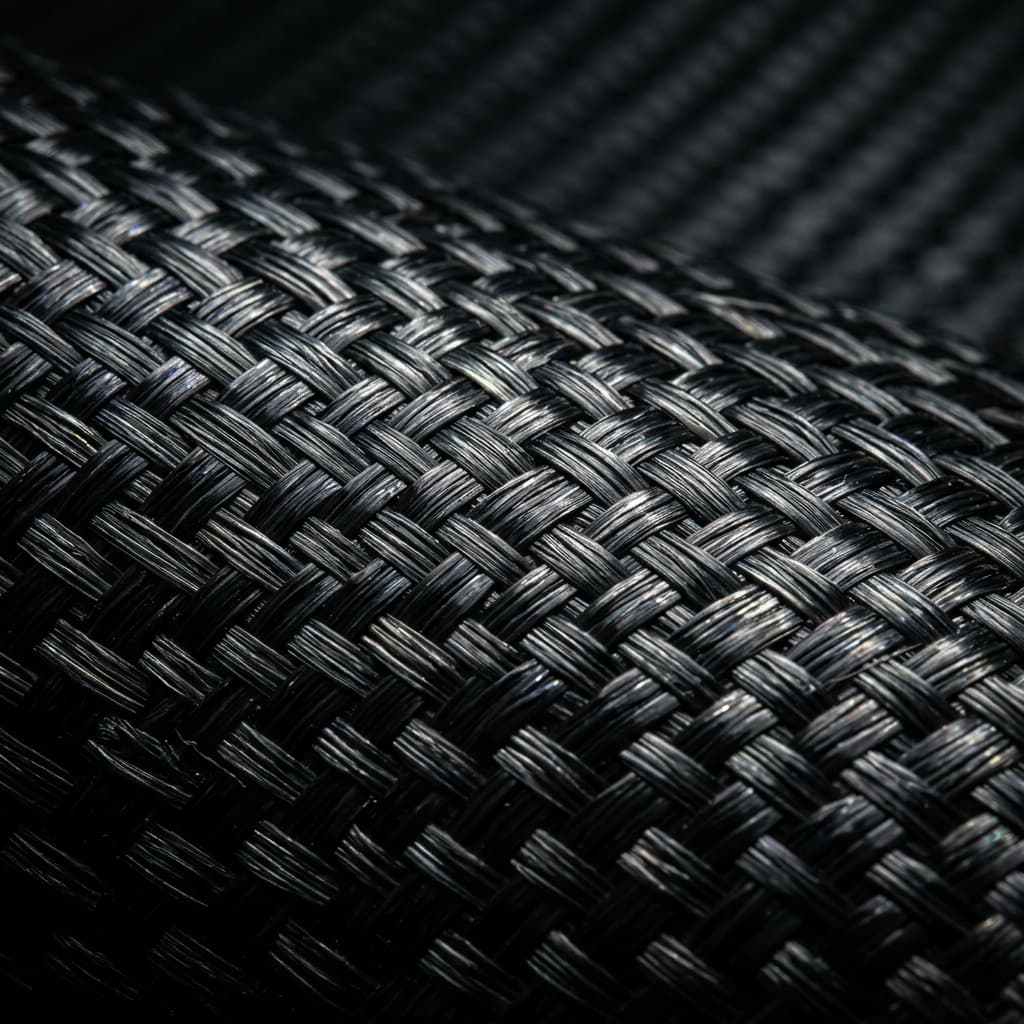
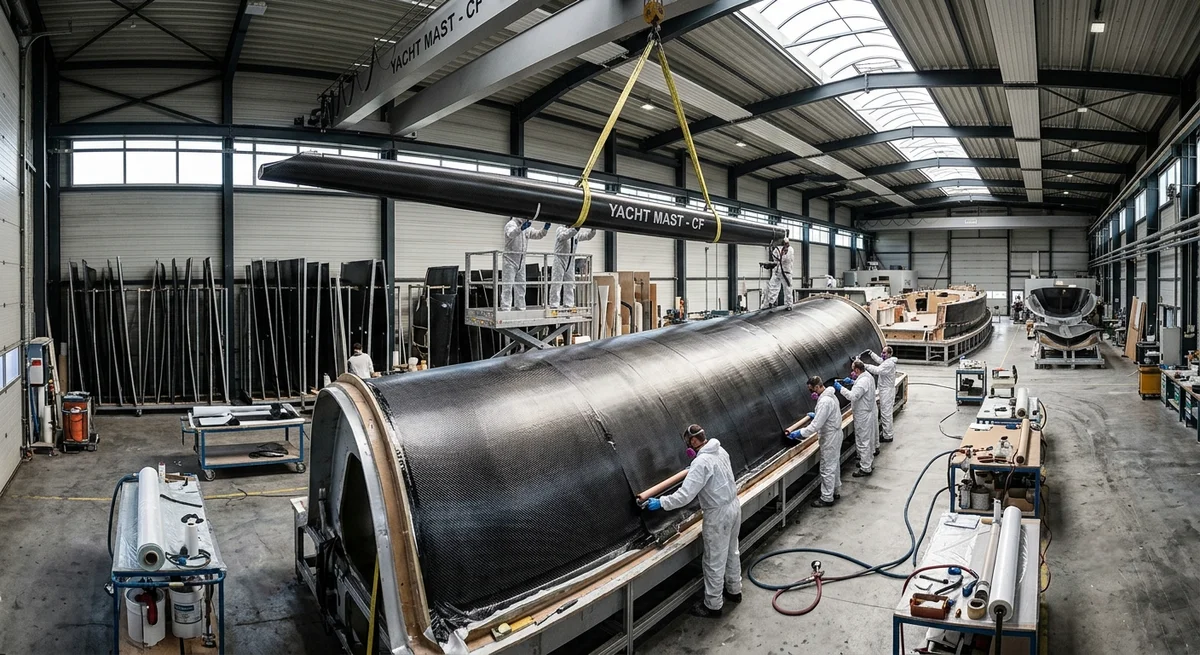
Carbon fiber has become the preferred material for luxury yacht construction above 40 meters. This article examines hull lamination, mast design, and superstructure integration with real project data.
Carbon Fiber in Superyacht Construction: 2026 Material Selection Guide
The global superyacht market (vessels >24 m LOA) reached 5,800 vessels in active service in 2026, with 12.4% utilising carbon fiber composite primary structures — up from 7.8% in 2020. For vessels above 40 metres, the adoption rate exceeds 35% for new builds. The driving factors are unambiguous: weight reduction for speed and fuel efficiency, stiffness for mast performance, and corrosion resistance in marine environments.
Material Selection by Vessel Component
| Component | Typical Resin System | Fiber Architecture | FVF (%) | Weight Saving vs Aluminium | Cost Premium vs Aluminium |
|---|---|---|---|---|---|
| Hull (full carbon) | Epoxy (infusion) | ±45° biaxial + 0° unidirectional | 52–58 | 35–42% | 2.8–3.5× |
| Hull (hybrid carbon/glass) | Vinylester (infusion) | Carbon/glass interleaf | 48–52 | 22–28% | 1.6–2.0× |
| Deck & superstructure | Epoxy (prepreg) | ±45° biaxial + foam core | 50–55 | 30–38% | 2.2–2.8× |
| Mast (sailing yacht) | Epoxy (prepreg autoclave) | 0° unidirectional ± 90° wrap | 58–62 | 40–50% | 3.0–4.0× |
| Boom & rigging | Epoxy (pultrusion) | 0° unidirectional | 60–65 | 45–55% | 2.5–3.5× |
| Interior structures | Epoxy (prepreg) | ±45° biaxial / Nomex core | 45–50 | 40–50% | 1.8–2.5× |
| Propeller shafts | Epoxy (filament wound) | ±45° + 0° helical | 55–60 | 55–65% | 2.0–3.0× |
Case Study: 52m Sailing Yacht "Albatross VII" (2025)
Launched in early 2025 by Royal Huisman, Albatross VII is a 52-metre sloop with a full carbon composite hull, deck, and rig. Key metrics:
- Displacement: 195 tonnes (vs 280 tonnes for aluminium equivalent — 30% reduction)
- Mast height: 68 m above waterline — built from 62% FVF unidirectional carbon prepreg, autoclave-cured in three sections
- Hull construction: 150,000 person-hours of infusion labour; 8,200 kg of carbon fibre fabric consumed
- Top speed (motor): 16.2 knots from a 480 kW diesel — equivalent aluminium hull requires 650 kW for same speed
- Fuel tank capacity: 23,000 L — range 3,800 nm at 10 knots motoring (vs 2,700 nm for equivalent aluminium hull)
Infusion vs Prepreg for Hulls
| Parameter | Vacuum Infusion | Prepreg + Autoclave | Prepreg + Oven/VARTM |
|---|---|---|---|
| Optimal hull length | 20–50 m | Any (sectional) | 30–60 m |
| FVF achievable | 48–55% | 58–65% | 50–56% |
| Void content | 1.0–2.5% | <0.5% | 1.5–3.0% |
| Mould cost | $80–150K | $150–300K | $100–200K |
| Cycle time (50m hull) | 8–12 weeks | 14–20 weeks | 10–16 weeks |
| Skin thickness (typical) | 8–18 mm | 6–14 mm | 7–15 mm |
| Total hull cost (50m) | $1.2–1.8M | $2.0–3.0M | $1.5–2.2M |
Mast Design: Critical Parameters
Sailing yacht masts made from carbon fibre have become standard above 30 m LOA. The 2026 state-of-the-art for a 60 m mast section:
- Section profile: Elliptical (0.65 aspect ratio) for reduced windage
- Wall thickness: 4–8 mm tapered from base to tip
- Lay-up: 70% 0° unidirectional, 20% ±45° biaxial, 10% 90° hoop
- Buckling safety factor: 2.8 at 50-knot apparent wind (MSC/ISO 12215-9)
- Weight: 2,800–3,500 kg (vs 5,500–7,000 kg aluminium)
- Natural frequency: >2.0 Hz (avoiding vortex-induced vibration coupling)
FAQ
Q: Is a full carbon fibre hull worth the 2.5–3.5× cost premium over aluminium for a 50m+ yacht?
A: The business case depends on operational profile. For a motor yacht cruising at 12–16 knots, the 30–40% weight reduction translates to 25–35% fuel savings at cruising speed. At current MGO prices ($680/tonne, 2026 average), a 300-tonne displacement yacht burning 180 L/hr saves approximately $1,800–2,500 per 12-hour cruising day. Over a 150-day operating season, annual fuel savings reach $270,000–375,000. At a 2.5× hull cost premium ($1.2–2.0M additional), the payback period is 4–7 years. For charter yachts operating 200+ days/year, the economics are compelling. For private yachts with <50 days/year usage, the premium is harder to justify.
Q: What are the galvanic corrosion risks when carbon fibre meets aluminium or steel fittings in marine environments?
A: Carbon fibre is cathodic (+0.3 to +0.4 V vs SCE) while aluminium is anodic (−0.75 V vs SCE), creating a galvanic couple of approximately 1.1 V in seawater. This drives accelerated corrosion of the aluminium at any direct contact point. Mitigation requires: (1) glass-fibre isolation layers (minimum 0.5 mm) at every carbon-to-metal interface, (2) titanium or 316L stainless steel fasteners (never 304), (3) bonded (non-fastened) attachments where possible, and (4) sacrificial zinc anodes bonded to the carbon structure. Properly isolated, galvanic corrosion rates can be kept below 0.05 mm/year.
Q: Can existing aluminium or steel hulls be retrofitted with carbon fibre superstructures?
A: Yes — this is a growing retrofit segment. A 40m motor yacht superstructure replacement with carbon/foam-core sandwich typically saves 8–15 tonnes (25–35% of original aluminium weight). Key engineering considerations: (1) thermal expansion mismatch (carbon: 0.2–0.5×10⁻⁶/K; aluminium: 23×10⁻⁶/K) must be accommodated with flexible joint connections, (2) the 1.1V galvanic differential requires full glass isolation at every interface, (3) Class society (Lloyd's, DNV, ABS) approval is required for structural modifications, and (4) the lower centre of gravity from weight reduction improves stability — typically a 0.3–0.5° reduction in static heel.
Part of topic
Related Articles
- Carbon Fiber Mooring for Floating Offshore Wind: Fatigue and Corrosion in Deep Water
- Carbon Fiber Bicycle Frame Optimization: Layup Design and Manufacturing for Competitive Racing
- Carbon Fiber CFRP Retrofit for Infrastructure: Bridge and Building Seismic Strengthening
- Carbon Fiber Medical Imaging Equipment: Lightweight Gantry and Couch Structures for MRI/CT
- Carbon Fiber EV Battery Enclosures: Crash Safety and Electromagnetic Shielding Design
- Carbon Fiber Structures for Low-Altitude Economy: UAV Airframes and eVTOL Components
Interested in Our Products?
Contact our team for competitive pricing and technical specifications.
Get a QuoteRelated Products
Carbon fiber standard plate-3k stripe
Lightweight, ultra-rigid standard sheets for drone fuselages, robot housings, facades and structural applications.
Carbon Fiber Plate — 3K Twill T700 1.5mm
Thin 1.5mm carbon fiber plate with 3K twill weave surface. Lightweight and stiff, commonly used for covers, panels, drone bodies, and applications requiring a premium aesthetic appearance.
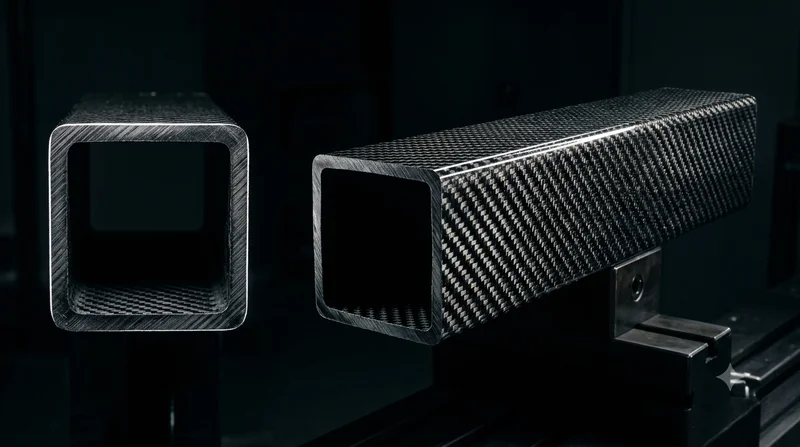
Square Carbon Fiber Tube — 3K Twill T700
Square cross-section carbon fiber tube manufactured with 3K twill weave for torsional strength. Preferred for structural frames, trusses, and support columns where rectangular geometry offers design flexibility.
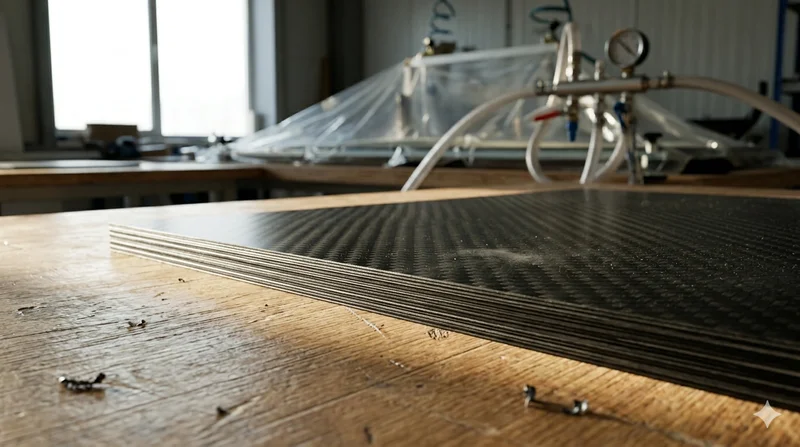
Carbon Fiber Plate — 3K Twill T700 3.0mm
Medium-thickness 3.0mm carbon fiber plate offering significantly higher load capacity while maintaining attractive 3K twill finish. Suitable for structural brackets, reinforcement plates, and load-bearing panels.
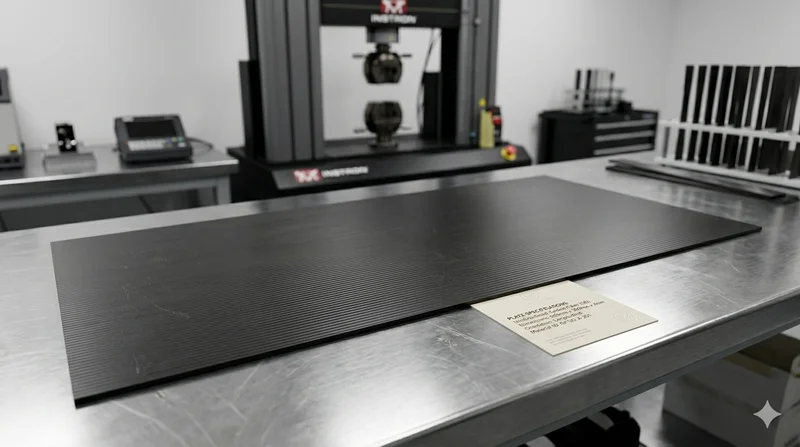
Carbon Fiber Plate — UD Unidirectional T700
Unidirectional carbon fiber plate with all fibers oriented in a single direction for maximum strength along the fiber axis. Essential for structural reinforcements, splints, and applications where load direction is predictable.