
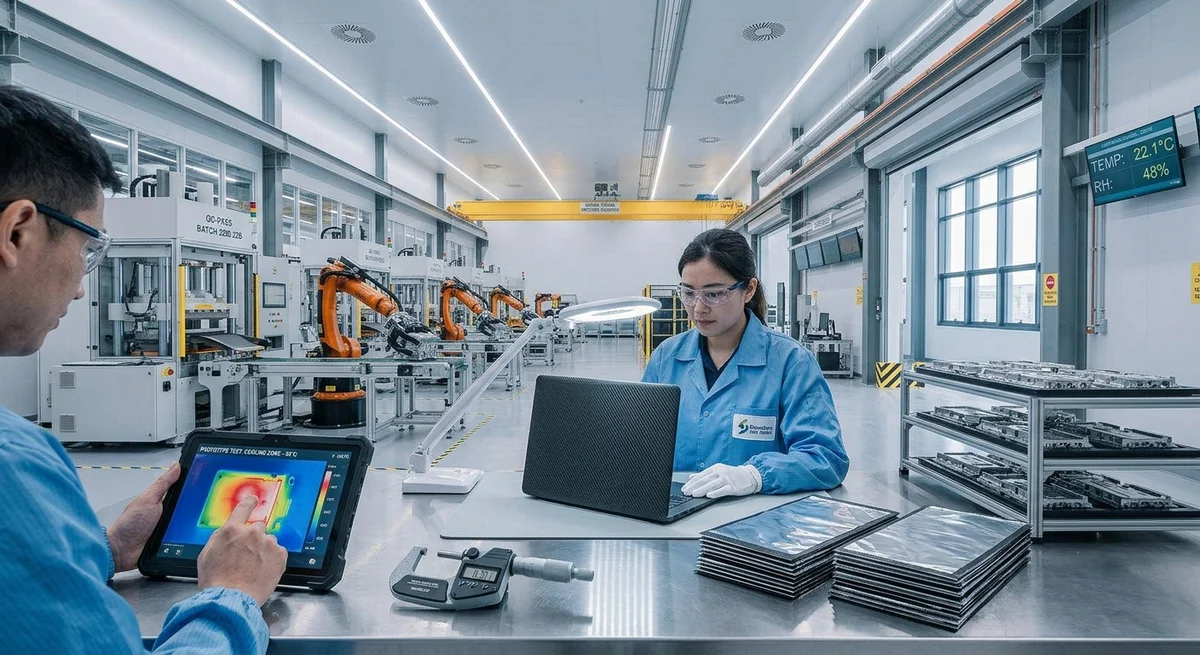
Carbon fiber is transforming consumer electronics design by offering a unique combination of thermal conductivity, electromagnetic interference (EMI) shielding, structural rigidity, and lightweight construction. This article examines how carbon fiber composites are replacing traditional materials in heat sinks, device enclosures, and EMI shielding components for smartphones, laptops, and wearable devices.
The consumer electronics industry faces a persistent challenge: devices must become thinner and lighter while delivering higher performance, generating more heat, and operating in increasingly dense electromagnetic environments. Carbon fiber reinforced polymers (CFRPs) have emerged as a compelling solution across three critical areas — thermal management, structural enclosures, and EMI shielding — offering properties that traditional metals like aluminium, magnesium, and copper cannot match in combination.
Modern smartphones and ultrabooks generate between 5 W and 28 W of thermal load in chassis smaller than 15 mm thick. Conventional aluminium heat sinks, while thermally conductive (205 W/m·K), add significant weight and require secondary forming operations. Pitch-based carbon fiber, with thermal conductivity ratings reaching 500–800 W/m·K in the fiber direction, outperforms aluminium by a factor of 2.5–4× while weighing 40% less. When embedded in a polymer matrix as a thermal interface material (TIM) or as a standalone heat-spreader plate, carbon fiber composites effectively channel heat away from processors, battery modules, and 5G RF amplifiers toward enclosure walls where it can dissipate naturally.
For device enclosures, carbon fiber offers a unique design advantage: modulus-to-weight ratios that exceed those of magnesium alloys by 30–50%. A typical 0.8 mm CFRP laptop top case weighs approximately 35 g versus 55 g for a comparable magnesium part. The material also provides inherent vibration damping — a critical parameter for devices housing precision optical components and miniaturised hard drives. Modern compression-moulded carbon fiber enclosures achieve surface resistivities below 1 Ω/sq without requiring a separate conductive coating, enabling thinner wall sections and simplified supply chains.
EMI shielding has become a pressing concern as 5G mmWave frequencies (24–47 GHz) and Wi-Fi 6E/7 bands push into higher spectral ranges where traditional shielding techniques lose effectiveness. Carbon fiber composites exhibit electromagnetic interference shielding effectiveness (SE) of 40–60 dB across the 1–18 GHz range, comparable to aluminium (60–80 dB) at a fraction of the weight. When combined with nickel-coated carbon fiber or conductive filler additives, SE values can exceed 70 dB, meeting the stringent requirements of FCC Part 15 and EU EMC Directive 2014/30/EU for commercial electronics.
| Property | Aluminium (6061-T6) | Magnesium (AZ91D) | Pitch-Based CFRP | PAN-Based CFRP |
|---|---|---|---|---|
| Thermal Conductivity (W/m·K) | 205 | 72 | 500–800 (fiber dir.) | 8–50 (in-plane) |
| Density (g/cm³) | 2.70 | 1.81 | 1.6–1.8 | 1.5–1.6 |
| Tensile Modulus (GPa) | 68.9 | 44.8 | 400–900 (fiber) | 230–400 (fiber) |
| EMI SE @ 1–18 GHz (dB) | 60–80 | 50–65 | 40–60 | 35–55 |
| Surface Resistivity (Ω/sq) | < 0.1 | < 0.5 | < 1.0 | 1–10 |
| Wall Thickness (mm) | 0.6–1.0 | 0.7–1.2 | 0.4–0.8 | 0.5–1.0 |
| Weight (g, laptop top case) | ~70 | ~55 | ~45 | ~35 |
- Pitch-based carbon fiber heat spreaders: 500–800 W/m·K axial thermal conductivity for hot-spot mitigation in smartphones and tablets, typically 0.2–0.5 mm thick
- Compression-moulded CFRP enclosures: 30–50% lighter than magnesium with integrated conductivity for EMI shielding, no secondary coating needed
- Nickel-coated carbon fiber gaskets: SE > 70 dB at 40 GHz for 5G mmWave module compartments, compressible and reusable
- Hybrid carbon/glass fiber structural battery covers: combine load-bearing capacity (modulus >100 GPa) with electrical isolation and UL 94 V-0 flame rating
- CFRP antenna windows and radomes: RF-transparent in selected orientations while maintaining structural integrity in sub-1 mm thickness profiles
FAQ
Q: Can carbon fiber enclosures be mass-produced at scale for consumer electronics?
A: Yes. Compression moulding and injection-moulded CFRP processes now achieve cycle times of 60–120 seconds per part, making them suitable for high-volume production runs of 100k+ units. Automated fibre placement (AFP) and sheet moulding compound (SMC) processes are the most common methods for consumer electronics volumes.
Q: Does carbon fiber interfere with wireless signals (Wi-Fi, Bluetooth, 5G)?
A: Carbon fiber is electrically conductive and can attenuate RF signals if the fiber orientation creates a continuous conductive path. Design solutions include selective fibre placement, hybrid glass/carbon layups in antenna zones, and laser-ablated windows that remove conductive material in targeted areas while preserving structural integrity.
Q: How does carbon fiber EMI shielding compare to metal shields in cost?
A: At the material level, CFRP costs 3–5× more than aluminium per kilogram. However, system-level cost can be lower because CFRP replaces multiple parts (enclosure + shield + coating) with a single moulded component, reducing assembly labour, inventory complexity, and secondary operations by up to 30%.
Q: What is the maximum operating temperature for carbon fiber in consumer electronics?
A: With standard epoxy matrices, continuous service temperatures range from 120–180 °C. For higher-temperature scenarios such as processor hotspots or battery compartments, polyamide (PA) or PEEK-based matrices extend the range to 250–300 °C. The carbon fiber itself remains stable to over 3000 °C in inert atmospheres.
Q: Are carbon fiber enclosures recyclable?
A: Recycling CFRP enclosures is more challenging than metals. However, emerging technologies — including pyrolysis to recover carbon fibre (with 90–95% modulus retention) and solvolysis for matrix dissolution — are becoming commercially viable. Several OEMs now offer take-back programmes for end-of-life CFRP components.
Carbon fiber composites are no longer exotic materials reserved for aerospace and motorsport. Their unique combination of thermal management, EMI shielding, and structural performance — all at a fraction of the weight of metals — makes them an increasingly practical choice for next-generation consumer electronics. For OEM engineers and procurement managers evaluating material roadmaps for 2026–2028 product cycles, CFRP heat sinks, enclosures, and EMI components offer a proven pathway to thinner, lighter, and more performant devices, with a growing ecosystem of tier-1 moulders and compound suppliers capable of supporting production-scale adoption.
Part of topic
Related Articles
- Carbon Fiber Mooring for Floating Offshore Wind: Fatigue and Corrosion in Deep Water
- Carbon Fiber Bicycle Frame Optimization: Layup Design and Manufacturing for Competitive Racing
- Carbon Fiber CFRP Retrofit for Infrastructure: Bridge and Building Seismic Strengthening
- Carbon Fiber Medical Imaging Equipment: Lightweight Gantry and Couch Structures for MRI/CT
- Carbon Fiber EV Battery Enclosures: Crash Safety and Electromagnetic Shielding Design
- Carbon Fiber Structures for Low-Altitude Economy: UAV Airframes and eVTOL Components
Interested in Our Products?
Contact our team for competitive pricing and technical specifications.
Get a QuoteRelated Products
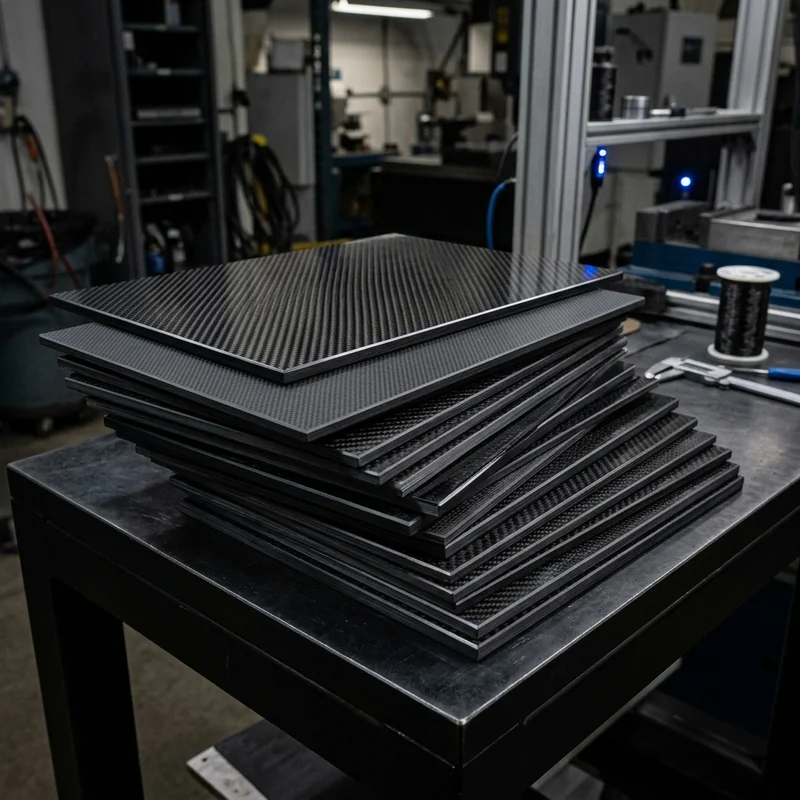
Carbon fiber standard plate-3k stripe
Lightweight, ultra-rigid standard sheets for drone fuselages, robot housings, facades and structural applications.

Carbon Fiber Plate — 3K Twill T700 1.5mm
Thin 1.5mm carbon fiber plate with 3K twill weave surface. Lightweight and stiff, commonly used for covers, panels, drone bodies, and applications requiring a premium aesthetic appearance.

Square Carbon Fiber Tube — 3K Twill T700
Square cross-section carbon fiber tube manufactured with 3K twill weave for torsional strength. Preferred for structural frames, trusses, and support columns where rectangular geometry offers design flexibility.
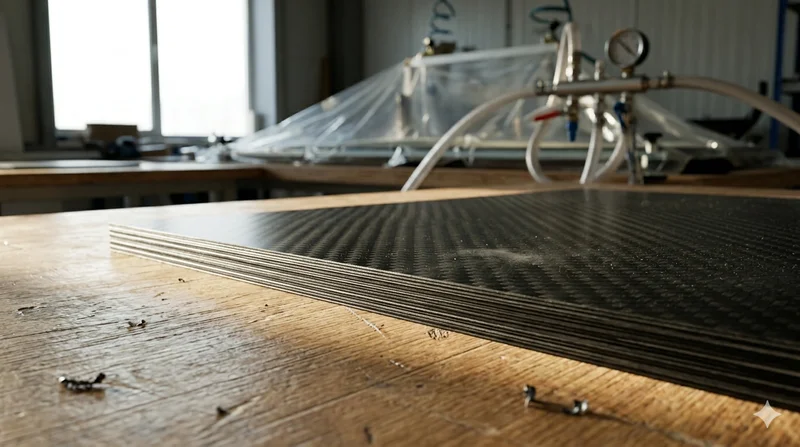
Carbon Fiber Plate — 3K Twill T700 3.0mm
Medium-thickness 3.0mm carbon fiber plate offering significantly higher load capacity while maintaining attractive 3K twill finish. Suitable for structural brackets, reinforcement plates, and load-bearing panels.
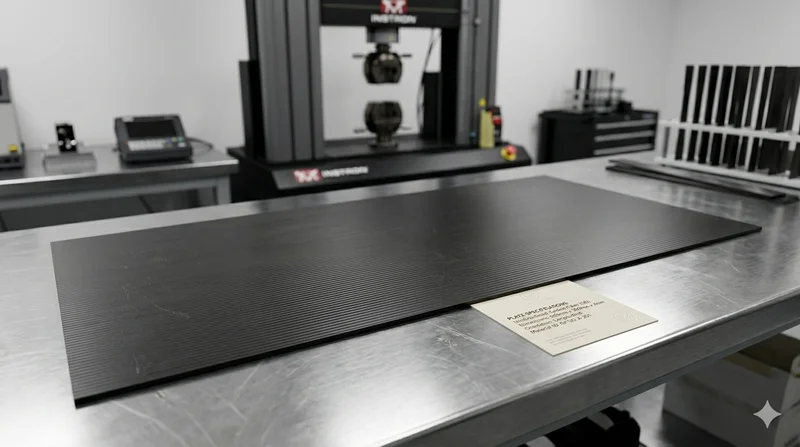
Carbon Fiber Plate — UD Unidirectional T700
Unidirectional carbon fiber plate with all fibers oriented in a single direction for maximum strength along the fiber axis. Essential for structural reinforcements, splints, and applications where load direction is predictable.