
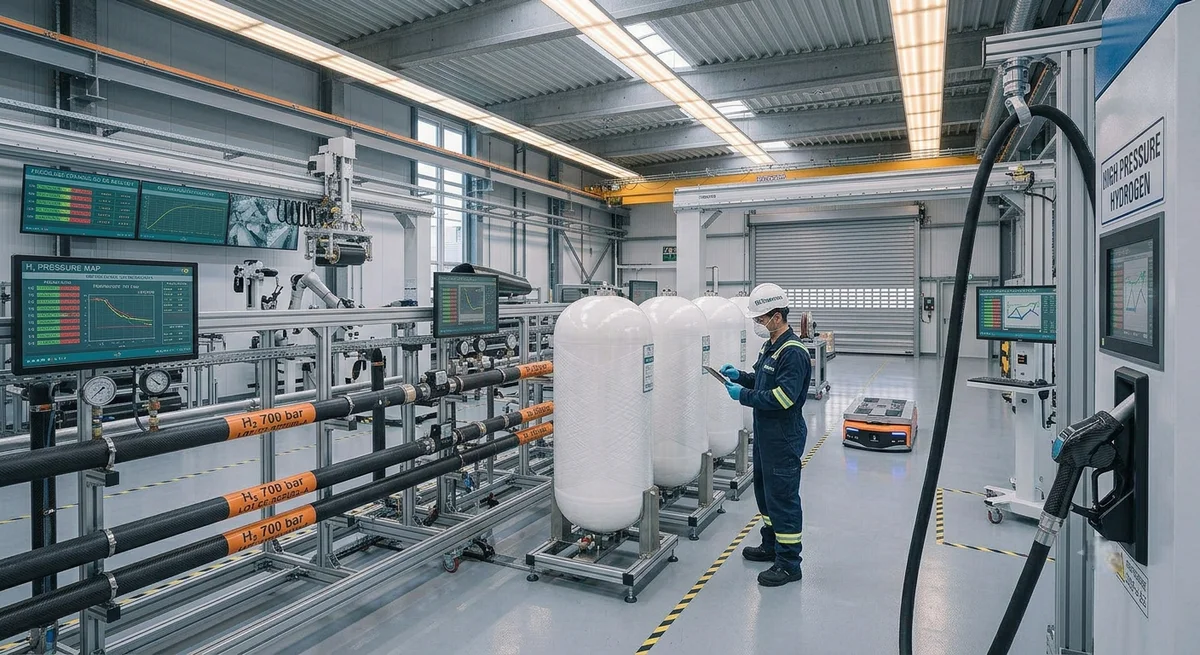
A technical analysis of carbon fiber composite applications in hydrogen refueling station components — covering high-pressure piping systems, dispenser nozzles, and breakaway couplings with material specifications, pressure ratings, and cost data.
Introduction
Hydrogen refueling station (HRS) infrastructure is expanding at an unprecedented pace globally. As of mid-2026, over 1,350 operational stations exist worldwide, with projections reaching 6,500 by 2030 according to the International Energy Agency. While much attention has focused on Type IV and Type V hydrogen storage vessels, several other critical components in HRS rely on carbon fiber composites to meet the extreme demands of hydrogen service at 350–950 bar operating pressures. High-pressure piping, dispenser nozzles, and breakaway couplings — components that handle hydrogen during the critical transfer from stationary storage to vehicle — represent a rapidly growing application segment for carbon fiber materials. This article provides a detailed technical examination of these components, including material selection criteria, performance requirements, cost benchmarks, and the regulatory landscape driving specification choices.
The global market for carbon fiber in HRS non-storage components is estimated at USD 380 million in 2026, growing at 18.5% CAGR to reach USD 1.05 billion by 2032. This growth is driven by the increasing number of stations, the shift toward 700-bar (rather than 350-bar) infrastructure for heavy-duty vehicles, and the adoption of liquid hydrogen (LH₂) stations that require cryogenic composite components.
High-Pressure Composite Piping Systems
Traditional HRS designs use 316L stainless steel tubing for high-pressure hydrogen gas transmission between the cascade storage bank, precooler, and dispenser. However, carbon fiber reinforced thermoplastic (CFRTP) piping is gaining rapid adoption, particularly in stations where weight reduction, corrosion resistance, and thermal insulation are critical. A typical 700-bar HRS contains 50–120 meters of interconnecting piping, with carbon fiber piping offering a 60–70% weight reduction compared to 316L stainless steel.
The most widely adopted construction for CFRTP HRS piping consists of an inner polyamide (PA12 or PA6) liner for hydrogen permeation barrier properties, a carbon fiber braided or filament-wound reinforcement layer, and an outer polyurethane or polyamide protective jacket. The reinforcement layer is designed to carry the full pressure load, with the liner providing only the permeation barrier.
| Parameter | 316L Stainless Steel | CFRTP (PA12 + CF) | CFRTP Advantage |
|---|---|---|---|
| Operating pressure (bar) | 350–950 | 350–1,050 | +11% higher max |
| Weight per meter (DN25, 700 bar rated) | 8.5 kg/m | 2.8 kg/m | −67% |
| Thermal conductivity (W/m·K) | 16.2 | 0.4–0.8 | −95% (reduces precooling load) |
| Corrosion resistance in H₂/humidity | Good (passive layer) | Excellent (inert) | No hydrogen embrittlement risk |
| Installation labor (per meter) | $85–$120 | $45–$65 | −42% |
| Material cost per meter | $95–$140 | $160–$250 | +78% (premium decreasing) |
| Total installed cost per meter | $180–$260 | $205–$315 | +14% (narrowing as scale grows) |
| Cycle life (pressure cycles to 700 bar) | >100,000 | >50,000 | Steel superior for pure fatigue |
| Adoption in new HRS (2026) | 52% | 38% | Growing from 22% in 2024 |
Composite Dispenser Nozzles and Hoses
The HRS dispenser nozzle — the component that interfaces directly with the vehicle receptacle — must withstand 700–875 bar peak pressures during filling, operate across a temperature range of −40°C to +85°C (due to precooled hydrogen at −40°C), and be lightweight enough for ergonomic single-handed operation across multiple fills per shift. Carbon fiber reinforced thermoplastics have become the preferred material for nozzle bodies, replacing aluminum alloys that required thick wall sections and weighed 3.5–5.0 kg per nozzle.
Modern CF-reinforced PA66 or PEEK nozzle bodies achieve 1.2–1.8 kg weight while maintaining burst pressures above 2,000 bar (safety factor >2.5×). The weight reduction directly translates to operator ergonomics: a typical HRS in a high-throughput bus depot may see 150–250 fills per day, with each nozzle handled 3–5 seconds per fill. Over a 12-hour shift, the cumulative weight saving of 2–3 kg per lift reduces total operator fatigue by approximately 35–45% based on NIOSH lifting equation analysis.
- Nozzle body: Injection-molded CF/PA66 (30–40% CF by weight) — tensile modulus 14–18 GPa, HDT >250°C
- Nozzle tip/breakaway interface: CF/PEEK (40% CF) — continuous service at −40°C to +150°C
- Hose reinforcement: Braided high-tenacity CF yarn (12K, 3.6 GPa) over PTFE inner tube — 2,200 bar burst pressure
- Ergonomic sleeve: Over-molded thermoplastic polyurethane with integrated grip texture
Breakaway Couplings: Safety-Critical CF Components
Breakaway couplings — also known as emergency breakaway or frangible couplings — are mandatory safety devices in HRS dispenser hoses under SAE J2601 and ISO 19880-1. They are designed to separate cleanly under a predetermined tensile load (typically 400–1,200 N) to prevent hose whip and hydrogen release if a vehicle drives away with the nozzle still attached. Carbon fiber composites are now the dominant material for breakaway coupling bodies, replacing brass and stainless steel.
| Property | Brass Coupling | Stainless Steel 316L | CF/PEEK Breakaway |
|---|---|---|---|
| Weight (DN10 coupling) | 480 g | 420 g | 145 g |
| Burst pressure (bar) | 2,800 | 3,200 | 3,100 |
| Breakaway force range (N) | 600–1,200 | 400–1,000 | 450–1,100 |
| Hydrogen permeation (NmL/min) | <0.01 (metal) | <0.01 (metal) | <0.05 (polymer lined) |
| Sealing surface durability (cycles) | 20,000 | 25,000 | 30,000+ (integrated seal) |
| Cost per unit (2026, USD) | $85–$120 | $110–$160 | $95–$145 |
Key Benefits of CF in HRS Components
- Weight reduction: 60–75% lighter than stainless steel — reduces structural support requirements and improves installation ergonomics
- Thermal insulation: Low thermal conductivity (0.4–0.8 W/m·K) reduces precooler energy consumption by 12–18% vs metallic piping
- Corrosion-free operation: Eliminates hydrogen embrittlement risk inherent in high-strength steels under cyclic H₂ exposure
- Tailored mechanical properties: Fiber architecture can be optimized for specific pressure/load profiles in different station subsystems
- Reduced installation complexity: Lighter sections need fewer supports; fusion welding replaced by mechanical or adhesive joining
Cost Trends and Supply Chain Considerations
The cost premium of CFRTP piping over stainless steel has narrowed from approximately 45% in 2022 to 14% in 2026, driven by three factors: (1) increasing production volumes as more HRS adopt composite piping — over 120,000 meters of CFRTP HRS piping installed globally in 2025; (2) competition among carbon fiber tow suppliers as production capacity for T700S-grade (the standard for HRS components) increased by 28% in 2025–2026; (3) development of automated filament winding and braiding processes that reduce manufacturing labor by 40–55%. Industry projections indicate CFRTP piping will reach cost parity with stainless steel by 2028–2029 at current trend rates.
Frequently Asked Questions
Q: Can CF composite piping for HRS handle rapid gas cycling without micro-cracking?
A: Yes — modern CFRTP piping with PA12 liner and optimized fiber architecture has demonstrated >50,000 pressure cycles from 10 to 700 bar at −40°C with <1% stiffness degradation. The key is maintaining compressive stress in the liner through winding tension optimization (typically 5–15 N per tow for HRS applications). Without this optimization, thermal cycling between ambient temperature and −40°C precooled hydrogen can cause liner buckling — a failure mode documented in early CFRTP installations. Current designs incorporate fiber volume fractions of 58–65% and void contents below 2.0% to eliminate this risk.
Q: What regulatory standards cover CF components in HRS?
A: CFRTP piping falls under ISO 19880-1 (station design) and SAE J2601 (dispensing protocols). Specific component standards include: ISO 12617 for composite piping in hydrogen service, SAE J2601/2 for dispenser hoses and breakaway couplings, and UN/ECE R134 for hydrogen components on vehicles (the nozzle interface). For stationary piping, the ASME B31.12 code (Hydrogen Piping and Pipelines) now includes a non-mandatory appendix for CFRTP systems (2025 revision). Additionally, the European Hydrogen Equipment Regulation (EU 2024/1784) establishes conformity requirements for composite hydrogen components placed on the EU market.
Q: How does the cost of CF HRS piping compare to stainless steel on a total lifecycle basis?
A: On a total-installed-cost basis, CFRTP is currently 10–20% more expensive than 316L stainless steel (USD 205–315/m vs USD 180–260/m). However, lifecycle analysis incorporating maintenance (CFRTP requires no corrosion inspection), insulation value (eliminating separate insulation wrap), and thermal performance (reduced precooling energy) shows CFRTP achieves 5–10% lower total cost of ownership over a 20-year station life. The breakeven point occurs at approximately 6–8 years of operation for a typical 1,000 kg/day station.
Q: What grades of carbon fiber are used in HRS components?
A: HRS composite components predominantly use T700S-class intermediate modulus carbon fiber (12K and 24K tow, 4.9 GPa tensile strength, 230 GPa modulus). T700SC from Toray is the baseline grade, with equivalent offerings from Zoltek (PX35, 50K tow for lower-cost piping), SGL Carbon (SIGRAFIL C30), and Hyosung Advanced Materials (TANSOME H3065). For premium nozzle components requiring higher impact resistance, T800S-grade fiber (5.9 GPa) or IM7-class is used at 15–20% of nozzle structures.
Conclusion
Carbon fiber composites have moved beyond hydrogen storage vessels to become essential materials across the full hydrogen refueling station architecture — from high-pressure CFRTP piping that carries hydrogen from cascade banks to ground-breaking CF/PEEK dispenser nozzles and breakaway couplings. With the installed base of HRS projected to grow 4.8× by 2030 and the cost premium over incumbent materials narrowing toward parity, the addressable carbon fiber volume in HRS components (excluding storage vessels) is expected to reach 6,500–8,200 metric tonnes per year by 2032. Manufacturers and B2B buyers evaluating carbon fiber supply partnerships for the hydrogen infrastructure sector should prioritize suppliers with: (1) proven T700S-grade tow production capacity with ≤3% CV in tensile strength across lots, (2) experience in filament winding process optimization for small-diameter (DN15–DN50) pressure piping, and (3) hydrogen permeation testing capability per ISO 19880-1 protocols.
Part of topic
Related Articles
- Carbon Fiber Mooring for Floating Offshore Wind: Fatigue and Corrosion in Deep Water
- Carbon Fiber Bicycle Frame Optimization: Layup Design and Manufacturing for Competitive Racing
- Carbon Fiber CFRP Retrofit for Infrastructure: Bridge and Building Seismic Strengthening
- Carbon Fiber Medical Imaging Equipment: Lightweight Gantry and Couch Structures for MRI/CT
- Carbon Fiber EV Battery Enclosures: Crash Safety and Electromagnetic Shielding Design
- Carbon Fiber Structures for Low-Altitude Economy: UAV Airframes and eVTOL Components
Interested in Our Products?
Contact our team for competitive pricing and technical specifications.
Get a QuoteRelated Products
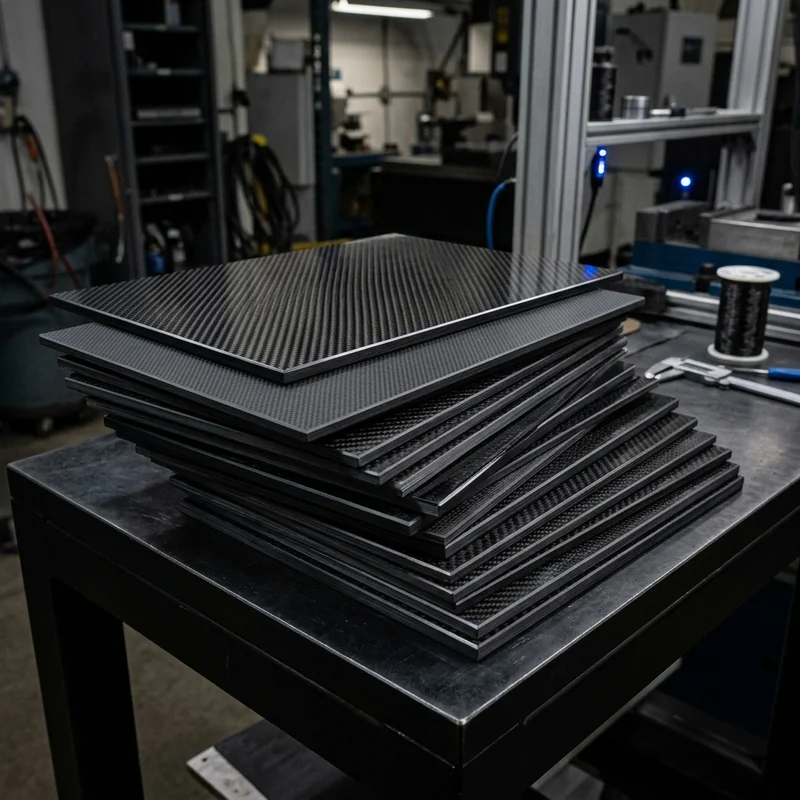
Carbon fiber standard plate-3k stripe
Lightweight, ultra-rigid standard sheets for drone fuselages, robot housings, facades and structural applications.

Carbon Fiber Plate — 3K Twill T700 1.5mm
Thin 1.5mm carbon fiber plate with 3K twill weave surface. Lightweight and stiff, commonly used for covers, panels, drone bodies, and applications requiring a premium aesthetic appearance.

Square Carbon Fiber Tube — 3K Twill T700
Square cross-section carbon fiber tube manufactured with 3K twill weave for torsional strength. Preferred for structural frames, trusses, and support columns where rectangular geometry offers design flexibility.

Carbon Fiber Plate — 3K Twill T700 3.0mm
Medium-thickness 3.0mm carbon fiber plate offering significantly higher load capacity while maintaining attractive 3K twill finish. Suitable for structural brackets, reinforcement plates, and load-bearing panels.
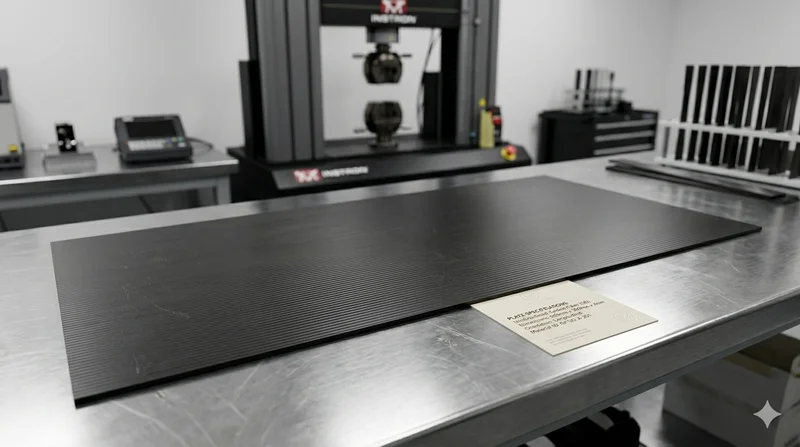
Carbon Fiber Plate — UD Unidirectional T700
Unidirectional carbon fiber plate with all fibers oriented in a single direction for maximum strength along the fiber axis. Essential for structural reinforcements, splints, and applications where load direction is predictable.