
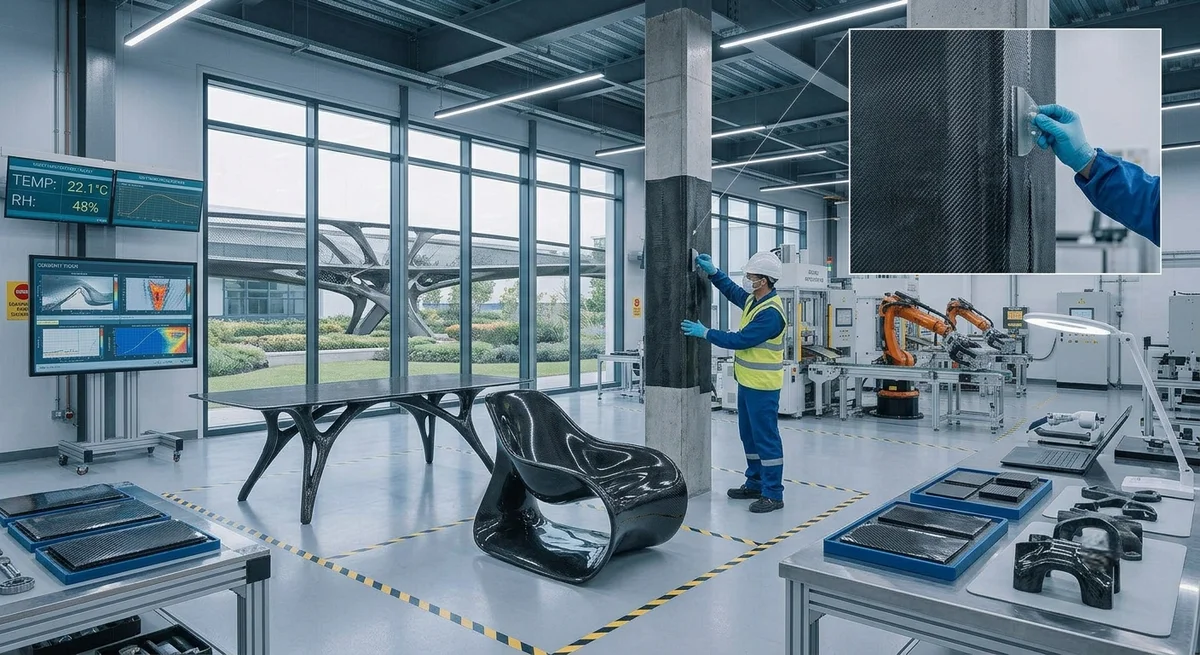
Explore how carbon fiber composites are transforming modern furniture design and architectural structures — from lightweight chairs to earthquake-resistant building reinforcements.
Introduction
Carbon fiber composites have transcended their aerospace and motorsport origins to become a compelling material choice in furniture design and architectural applications. The unique combination of extreme lightweight (1.6 g/cm³), high tensile strength (3,500–6,000 MPa), and aesthetic versatility — visible weave patterns, matte or glossy finishes, and the ability to create organic, flowing forms impossible with wood or metal — has captured the imagination of designers and architects worldwide. The global market for carbon fiber in architecture and design is projected to grow from $320 million in 2025 to $780 million by 2032, driven by demand for iconic architectural features and premium furniture.
Carbon Fiber in Furniture Design
Contemporary furniture designers have embraced carbon fiber for its structural efficiency and distinctive appearance. Key applications span from structural frames to decorative surfaces:
| Furniture Type | Carbon Fiber Application | Weight (CF) | Weight (Conventional) | Weight Reduction |
|---|---|---|---|---|
| Side Chair | Monocoque shell + legs | 1.2–2.5 kg | 4–8 kg (metal/wood) | 60–70% |
| Dining Table | Frame + legs | 5–12 kg | 20–40 kg (wood) | 65–75% |
| Lounge Chair | Full monocoque body | 3–6 kg | 12–25 kg (leather+frame) | 65–75% |
| Desk System | Skeletal frame | 8–15 kg | 25–50 kg (steel) | 65–70% |
| Lighting Pendant | Thin shell diffuser | 0.3–1.0 kg | 1.5–5 kg (glass/metal) | 70–80% |
Architectural Applications
- Structural Reinforcement (FRP Wrapping): Carbon fiber sheets (200–600 g/m²) saturated with epoxy and wrapped around concrete columns, beams, and slabs. Increases flexural and shear capacity by 30–80%. A 300 mm × 300 mm concrete column wrapped with 3 layers of 400 g/m² unidirectional carbon fiber achieves an axial load capacity increase from 2,400 kN to 3,800 kN (+58%). Installation time: 2–4 hours per column vs 2–3 days for steel jacketing.
- Facade Systems and Cladding: Carbon fiber sandwich panels (2–5 mm carbon fiber skins over an aluminum honeycomb or PET foam core) provide facade panels weighing 8–12 kg/m² vs 35–50 kg/m² for stone cladding. These panels span 3–6 m without intermediate support, enabling frameless glass aesthetic for building facades.
- Pedestrian Bridges: All-composite or hybrid carbon fiber pedestrian bridges — spans of 15–50 m weighing 5–15 tons vs 30–80 tons for steel. The 40-meter-long Lleida Bridge in Spain (2019) uses a carbon fiber-reinforced polymer deck, reducing dead load by 70% and allowing a slender 1:60 depth-to-span ratio.
- Roof Structures and Canopies: Carbon fiber grid shells and cable-net structures for lightweight roof systems. The 50 m × 30 m canopy at the Abu Dhabi Louvre uses carbon fiber reinforced polymer ribs weighing 2.8 tons total — 80% lighter than an equivalent steel structure.
Material Selection Guide for Architects
- Prepreg Laminates (Aerospace Grade): 250–350 g/m², 2×2 twill weave. Autoclave-cured at 120–180°C. Fiber volume fraction 58–65%. Best for high-visibility furniture and load-bearing architectural components. Cost: $60–$120/m².
- Wet Layup Laminates: Dry fabric infused with epoxy on-site or in workshop. Vacuum or hand consolidation. Fiber volume fraction 35–50%. Suitable for large architectural surfaces and renovation projects. Cost: $30–$70/m².
- Pultruded Profiles: Constant cross-section profiles (rods, tubes, channels) made by pulling fiber through a heated die. Standard sections include round tubes 10–200 mm diameter and rectangular profiles 20–300 mm. Modulus 120–150 GPa. Ideal for structural furniture frames and architectural truss systems. Cost: $20–$50/kg.
Frequently Asked Questions
Is carbon fiber furniture suitable for outdoor use?
Yes, with proper resin selection. Standard epoxy resin systems have good UV resistance for 5–10 years before surface degradation begins. For outdoor furniture, specify UV-stabilized epoxy or acrylic resin systems with anti-UV additives. Carbon fiber's inherent corrosion resistance (unlike metal furniture) and lack of water absorption (unlike wood) make it naturally suited for outdoor environments. However, exposed carbon fiber furniture should have a UV-protective clear coat (polyurethane or acrylic) reapplied every 3–5 years for optimal appearance retention.
How does the cost of carbon fiber architectural reinforcement compare to traditional methods?
Carbon fiber FRP wrapping typically costs $30–$80/m² installed, compared to $100–$250/m² for steel plate bonding and $150–$400/m² for concrete jacketing. The installed cost advantage is 50–80% in favor of carbon fiber. Additionally, carbon fiber wrapping adds minimal weight (1–3 kg/m² vs 50–120 kg/m² for steel) and requires no heavy lifting equipment, reducing project logistics costs. For seismic retrofitting of buildings, carbon fiber wrapping can reduce total project cost by 30–50% while providing equivalent or superior strength enhancement.
Can carbon fiber furniture be repaired if damaged?
Yes. Small surface scratches can be filled with clear epoxy and re-polished. Structural cracks can be repaired by applying a carbon fiber patch (2–4 layers of fabric with epoxy) over the damaged area, overlapping 50–80 mm on each side. The repaired area typically retains 85–95% of original strength. Unlike wood (which can split irreparably) or metal (which can fatigue-crack), carbon fiber's damage tolerance and repair compatibility make it surprisingly serviceable over the long term. Most high-end carbon fiber furniture manufacturers offer factory repair services for structural damage.
Part of topic
Related Articles
- Carbon Fiber Mooring for Floating Offshore Wind: Fatigue and Corrosion in Deep Water
- Carbon Fiber Bicycle Frame Optimization: Layup Design and Manufacturing for Competitive Racing
- Carbon Fiber CFRP Retrofit for Infrastructure: Bridge and Building Seismic Strengthening
- Carbon Fiber Medical Imaging Equipment: Lightweight Gantry and Couch Structures for MRI/CT
- Carbon Fiber EV Battery Enclosures: Crash Safety and Electromagnetic Shielding Design
- Carbon Fiber Structures for Low-Altitude Economy: UAV Airframes and eVTOL Components
Interested in Our Products?
Contact our team for competitive pricing and technical specifications.
Get a QuoteRelated Products

Carbon Fiber Plate — 3K Twill T700 3.0mm
Medium-thickness 3.0mm carbon fiber plate offering significantly higher load capacity while maintaining attractive 3K twill finish. Suitable for structural brackets, reinforcement plates, and load-bearing panels.
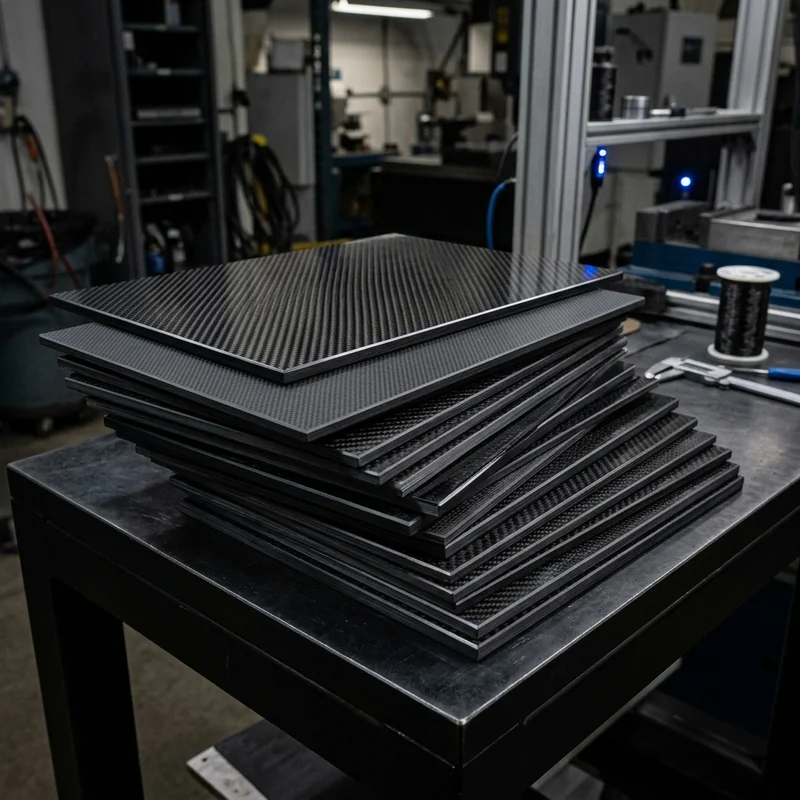
Carbon fiber standard plate-3k stripe
Lightweight, ultra-rigid standard sheets for drone fuselages, robot housings, facades and structural applications.

Carbon Fiber Plate — 3K Twill T700 1.5mm
Thin 1.5mm carbon fiber plate with 3K twill weave surface. Lightweight and stiff, commonly used for covers, panels, drone bodies, and applications requiring a premium aesthetic appearance.

Square Carbon Fiber Tube — 3K Twill T700
Square cross-section carbon fiber tube manufactured with 3K twill weave for torsional strength. Preferred for structural frames, trusses, and support columns where rectangular geometry offers design flexibility.
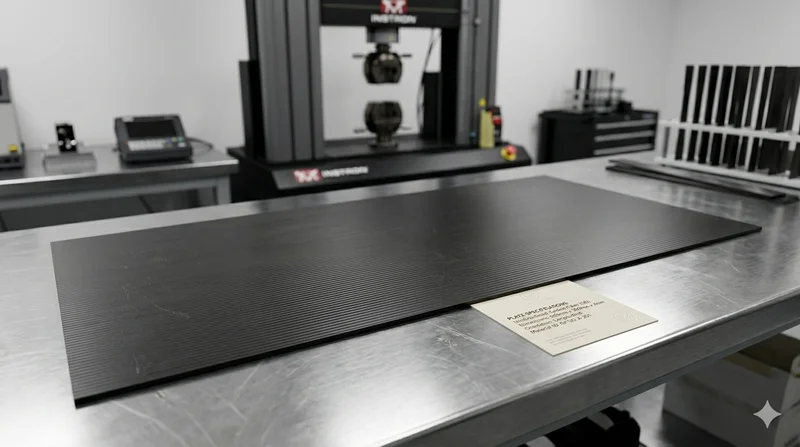
Carbon Fiber Plate — UD Unidirectional T700
Unidirectional carbon fiber plate with all fibers oriented in a single direction for maximum strength along the fiber axis. Essential for structural reinforcements, splints, and applications where load direction is predictable.