
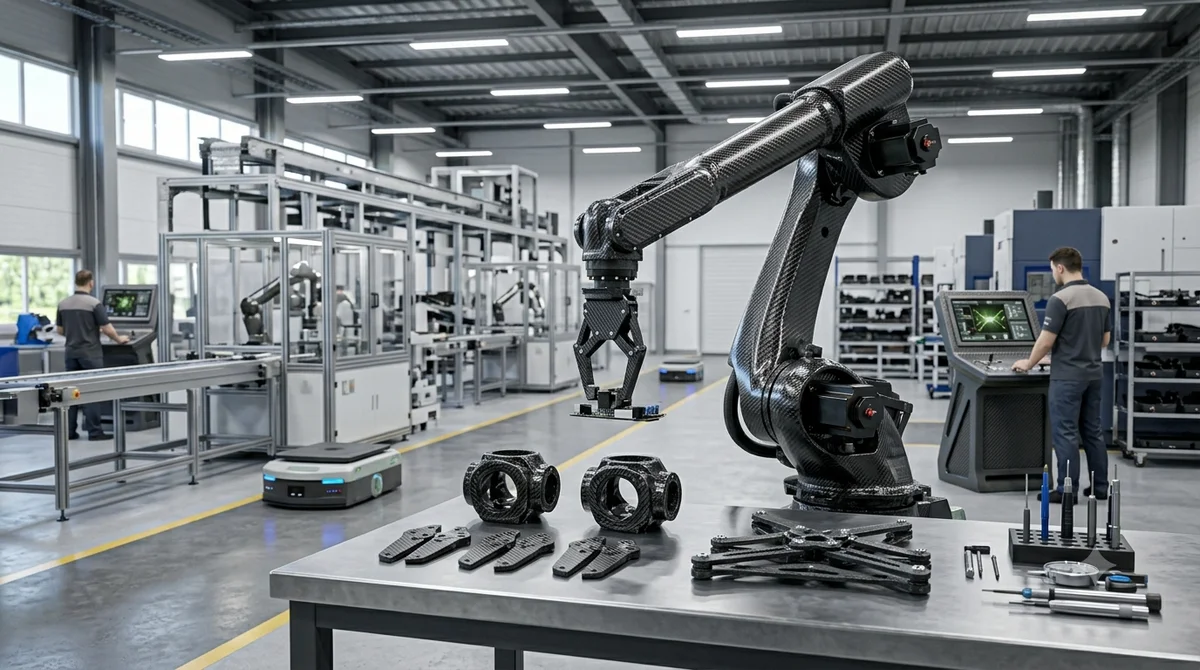
How carbon fiber composites improve robotics performance through lightweight structural components, with material comparison across robot arm links, base frames, and grippers.
Introduction
The robotics industry demands structural components that are simultaneously lightweight, stiff, and strong. Every gram saved on a robot arm or mobile platform translates into higher payload capacity, faster acceleration, and reduced energy consumption. Traditional metals such as aluminum, steel, and titanium have been the go-to choices for decades, but carbon fiber reinforced polymer (CFRP) is rapidly emerging as the superior alternative for high-performance robots. Its specific stiffness is up to four times that of steel, and tensile strength can exceed 3,500 MPa in unidirectional laminates. This article compares carbon fiber against aluminum, steel, and titanium for four critical robot components: arm booms, robot bases, joint housings, and grippers.
Material Comparison for Robot Structural Components
| Property | Carbon Fiber | Aluminum 6061 | Steel 4140 | Titanium Ti-6Al-4V |
|---|---|---|---|---|
| Density (g/cm³) | 1.6 | 2.7 | 7.8 | 4.43 |
| Tensile Strength (MPa) | 3500 | 310 | 655 | 950 |
| Modulus (GPa) | 230 | 69 | 205 | 114 |
| Specific Stiffness (MN·m/kg) | 144 | 25.6 | 26.3 | 25.7 |
| Fatigue Limit (MPa) | ~1400 | 96 | 310 | 510 |
| Weight Reduction vs Steel | 70% | 50% | – | 43% |
| Relative Cost | High | Low | Low | High |
From the table, carbon fiber consistently offers the highest specific stiffness and weight reduction for every component. Titanium provides excellent strength and corrosion resistance at high cost. Steel remains cheapest but its density limits dynamic performance. Aluminum balances cost and weight, but its low modulus limits suitability for long-reach arm booms.
Key Advantages in Robotics
- Dramatic weight reduction: Replacing steel with carbon fiber cuts mass by ~70%, allowing higher payloads or smaller actuators.
- Vibration damping: Higher internal damping than metals reduces oscillation in high-speed pick-and-place operations.
- Thermal stability: Near-zero CTE (≈0–1 ppm/°C) eliminates dimensional changes from motor heat.
- Design freedom: Molding allows complex geometries (hollow profiles, curved arms) without machining costs.
- Corrosion resistance: No rust or galvanic issues in humid factory environments.
Frequently Asked Questions
Can carbon fiber be used in robot joints with high shear loads?
Yes, with proper layup design. ±45° ply orientation achieves shear strength over 100 MPa. For impact-prone areas, hybrid laminates with Kevlar or metal foil layers are used. Metal inserts are bonded into the carbon fiber for threaded connections and bearing seats.
How does carbon fiber cost compare for small to medium production runs?
For low volumes (1–100 units), carbon fiber is significantly more expensive due to mold costs. For medium volumes (100–1,000 units) using compression molding, cost drops to 3–5× that of aluminum. Lightweighting benefits often justify the premium through downsized motors and gearboxes.
Is carbon fiber repairable when damaged?
Bonded patches or scarf joints can restore up to 80% of original strength. Field repair is less straightforward than welding metal. Many manufacturers adopt replace-from-service for small parts and repair large components like arm booms.
Conclusion
Carbon fiber is the material of choice for next-generation robots demanding extreme lightness, stiffness, and speed. Its specific stiffness surpasses all common structural metals. For high-speed pick-and-place arms, mobile robot bases, or dexterous grippers, carbon fiber offers a clear path to performance improvement. Browse our robotics-grade materials or contact our engineering team.
Related Articles
- Carbon Fiber Mooring for Floating Offshore Wind: Fatigue and Corrosion in Deep Water
- Carbon Fiber Bicycle Frame Optimization: Layup Design and Manufacturing for Competitive Racing
- Carbon Fiber CFRP Retrofit for Infrastructure: Bridge and Building Seismic Strengthening
- Carbon Fiber Medical Imaging Equipment: Lightweight Gantry and Couch Structures for MRI/CT
- Carbon Fiber EV Battery Enclosures: Crash Safety and Electromagnetic Shielding Design
- Carbon Fiber Structures for Low-Altitude Economy: UAV Airframes and eVTOL Components
Interested in Our Products?
Contact our team for competitive pricing and technical specifications.
Get a QuoteRelated Products

Carbon Fiber Plate — 3K Twill T700 1.5mm
Thin 1.5mm carbon fiber plate with 3K twill weave surface. Lightweight and stiff, commonly used for covers, panels, drone bodies, and applications requiring a premium aesthetic appearance.
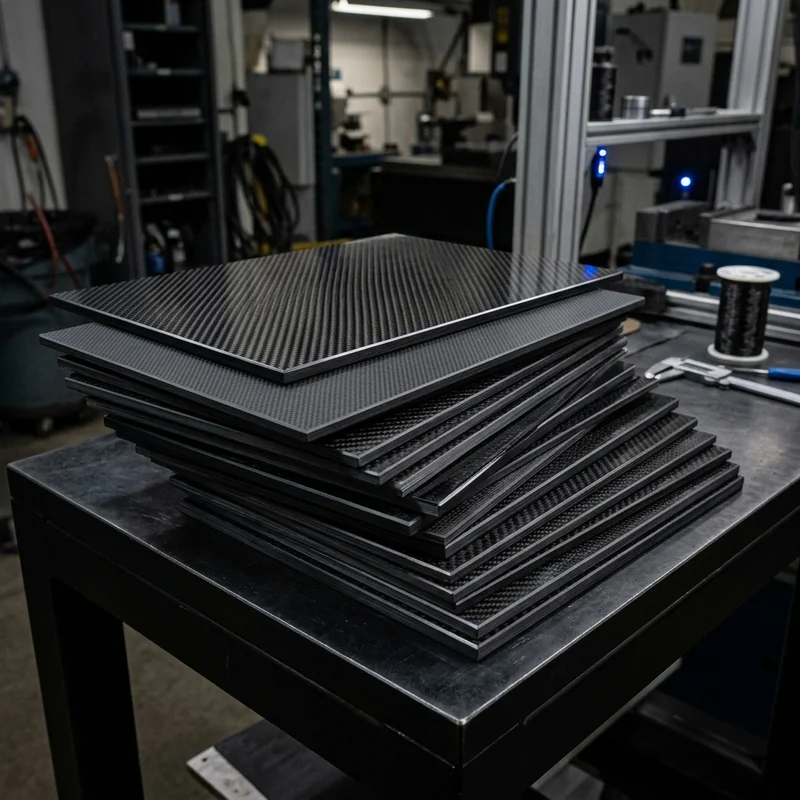
Carbon fiber standard plate-3k stripe
Lightweight, ultra-rigid standard sheets for drone fuselages, robot housings, facades and structural applications.

Square Carbon Fiber Tube — 3K Twill T700
Square cross-section carbon fiber tube manufactured with 3K twill weave for torsional strength. Preferred for structural frames, trusses, and support columns where rectangular geometry offers design flexibility.

Carbon Fiber Plate — 3K Twill T700 3.0mm
Medium-thickness 3.0mm carbon fiber plate offering significantly higher load capacity while maintaining attractive 3K twill finish. Suitable for structural brackets, reinforcement plates, and load-bearing panels.
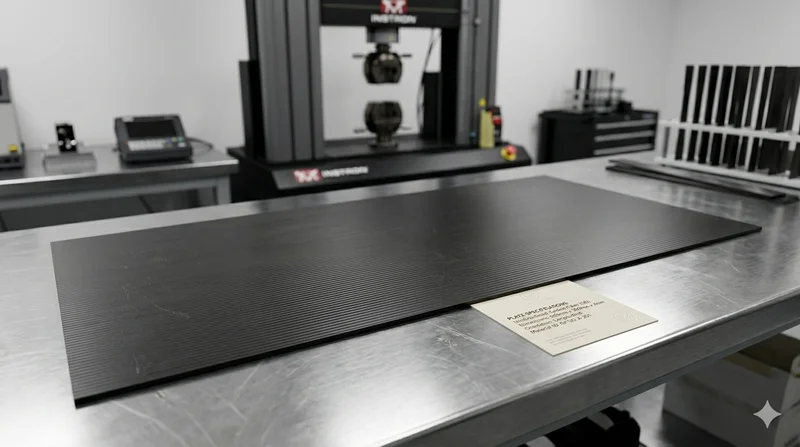
Carbon Fiber Plate — UD Unidirectional T700
Unidirectional carbon fiber plate with all fibers oriented in a single direction for maximum strength along the fiber axis. Essential for structural reinforcements, splints, and applications where load direction is predictable.