
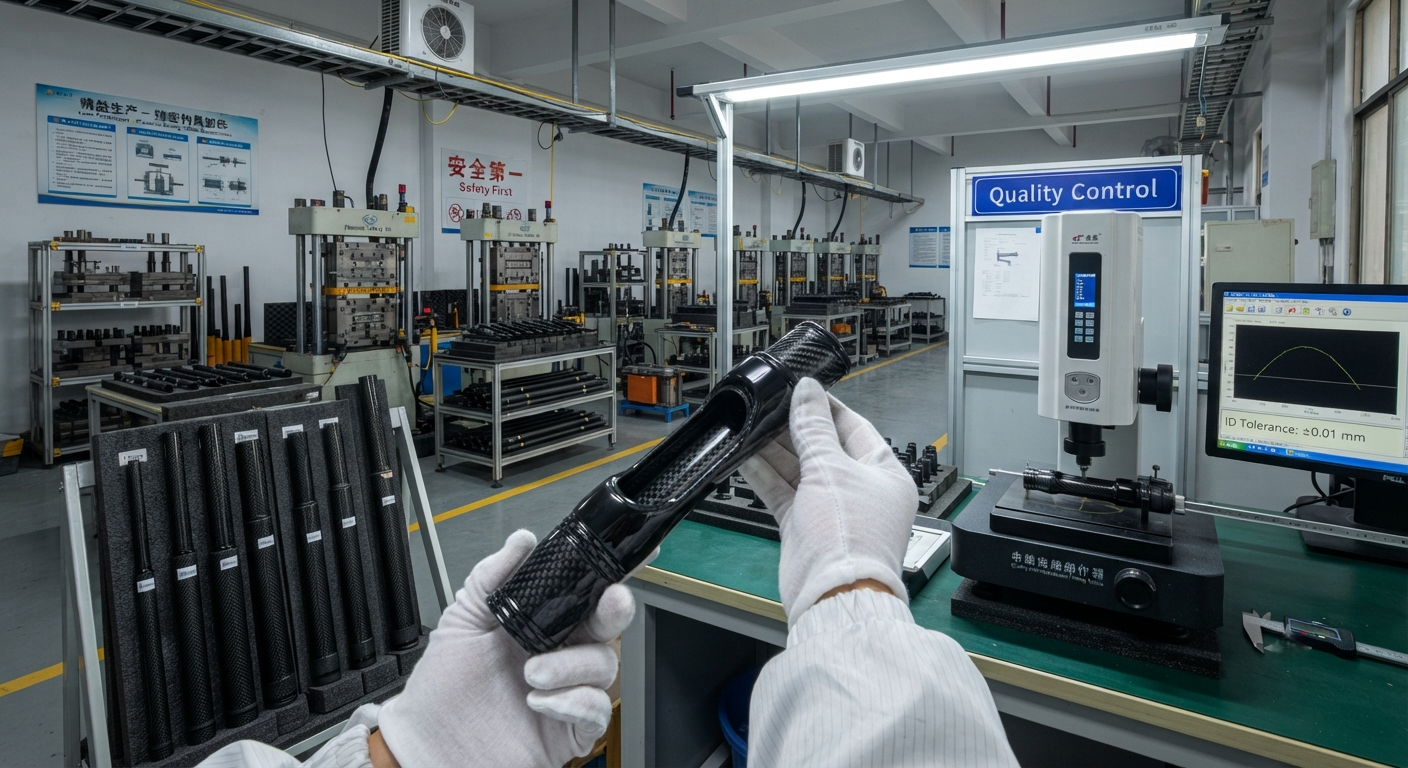
Carbon Fiber Fishing Rod Components: Reel Seats, Butt Sections, and Guide Frames for Premium Tackle The global fishing tackle market is projected to reach $26.7 billion by 2030, with the premium segment — rods retailing above $300 — growing at 9.8% CAGR, nearly double the mass-market rate. Within…
Carbon Fiber Fishing Rod Components: Reel Seats, Butt Sections, and Guide Frames for Premium Tackle
The global fishing tackle market is projected to reach $26.7 billion by 2030, with the premium segment — rods retailing above $300 — growing at 9.8% CAGR, nearly double the mass-market rate. Within this premium segment, carbon fiber components have become the defining differentiator between entry-level and high-performance fishing rods. The transition from traditional materials such as aluminum, brass, and stainless steel to carbon fiber composites in fishing rod reel seats, butt sections, and guide frames represents one of the most significant material substitution trends in the tackle industry over the past decade.
For B2B buyers — including original equipment manufacturers (OEMs) supplying major fishing tackle brands, private-label rod manufacturers, and component distributors targeting the Asian and North American fishing equipment markets — understanding the technical specifications, manufacturing processes, and performance characteristics of carbon fiber fishing rod components is essential for product development and procurement decisions. This article provides a comprehensive technical analysis of carbon fiber reel seats, butt sections, and guide frames, including material specifications, manufacturing methods, weight reduction data, and comparative performance testing results.
Carbon Fiber Reel Seats: Design and Material Specifications
The reel seat is arguably the most structurally critical component of a fishing rod. It must withstand the full torque of a fighting fish transmitted through the reel's foot, maintain secure clamping force over thousands of load-unload cycles, and resist corrosion in saltwater environments. Traditional high-end reel seats have been machined from aluminum alloy 6061-T6 or 7075-T6, anodized for corrosion protection, weighing between 28 and 65 grams depending on size and design complexity. Carbon fiber reel seats, manufactured from unidirectional and woven prepreg laminates, achieve weight reductions of 40–55% while maintaining equivalent torsional stiffness and offering superior corrosion resistance.
Carbon fiber reel seats are typically produced using compression molding of prepreg laminates. The layup schedule incorporates multiple orientation plies: 0° unidirectional fiber aligned along the reel seat axis to provide axial bending stiffness, ±45° biaxial fabric to resist torsional loads during hooksets and fish fighting, and a surface layer of 2×2 twill weave for aesthetic appearance and resistance to abrasion from reel clamp screws. The laminate stack is consolidated at 130–150°C under 10–20 bar pressure, producing a void-free structure with a fiber volume fraction of 58–63%. After demolding, the seat body is CNC-machined for the reel foot slot, clamp hood profile, and threaded locking ring interface.
| Parameter | Aluminum 7075-T6 Reel Seat | Carbon Fiber Prepreg Reel Seat | Improvement |
|---|---|---|---|
| Weight (standard spinning reel seat) | 42 g | 22 g | −47.6% |
| Tensile Strength (MPa) | 572 | 850–1,050 (fiber direction) | +48–83% |
| Tensile Modulus (GPa) | 71.7 | 135–170 (fiber direction) | +88–137% |
| Corrosion Resistance (salt spray, hours to first pit) | 336 h (anodized) | >10,000 h (no degradation) | >30× |
| Thermal Conductivity (W/m·K) | 130 | 0.5–5.0 (through-thickness) | Lower = less heat transfer to hand |
| Fatigue Life (cycles at 50% UTS) | 1.2×10⁶ | >10⁷ | >8× |
| Manufacturing Cost (per unit, 1,000 qty) | $8.50 | $18.00–$24.00 | 2.1–2.8× premium |
The key design challenge in carbon fiber reel seats is the threaded locking ring interface. The locking ring — which applies axial compression to secure the reel foot — requires a threaded engagement surface. In aluminum seats, the thread is cut directly into the metal. In carbon fiber seats, two approaches are used: co-cured stainless steel thread inserts (where a pre-threaded insert is integrated into the laminate during cure, providing pull-out strength of 3,500–5,000 N for M22×1.5 threads) or bonded-in brass helicoil-type inserts. Co-cured inserts are preferred for premium rods due to their superior structural integration and higher pull-out resistance.
Butt Sections: Fighting Power and Fish-Fighting Dynamics
The butt section of a fishing rod — the lower portion below the reel seat extending to the rod butt cap — transmits the majority of the bending load during fish fighting and provides the leverage point for the angler. In conventional rod construction, butt sections have been manufactured from tubular aluminum (alloy 6061 or 2024), stainless steel, or solid fiberglass. Carbon fiber butt sections have emerged as the preferred solution for premium saltwater and big-game rods, where the combination of high bending stiffness, low weight, and corrosion immunity provides decisive advantages.
Carbon fiber butt sections are manufactured by roll-wrapping or filament winding unidirectional and ±45° carbon fiber prepreg around a mandrel, followed by autoclave or oven curing at 120–150°C under vacuum bag pressure. Tube diameters range from 12 mm to 35 mm for conventional rod designs, with wall thicknesses of 1.0–3.5 mm depending on the rod's power rating. The primary layup design variable is the ratio of 0° (axial) to ±45° (torsional/bending) fiber orientation. A typical big-game butt section uses a 60:20:20 distribution — 60% 0° fiber for axial bending stiffness, 20% ±45° for torsional rigidity, and 20% ±45° in the hoop direction for crush resistance at clamp and gimbal mounting points.
Comparative testing data from a leading Japanese rod component manufacturer demonstrates the performance advantage:
- Weight: A 500 mm × 22 mm OD × 19 mm ID carbon fiber butt section weighs 78 g, compared to 214 g for the equivalent aluminum tube (63.5% weight reduction) and 326 g for stainless steel.
- Bending stiffness: Carbon fiber butt sections achieve 142 N·m² flexural rigidity at the 78 g weight, versus 98 N·m² for aluminum at 214 g — 45% higher stiffness at 63.5% lower weight.
- Damping ratio: Carbon fiber exhibits a structural damping ratio of 0.035–0.045 versus 0.008–0.012 for aluminum, meaning rod vibrations from casting and fish fighting decay 3–4 times faster, improving angler feel and control.
- Corrosion performance: After 2,000 hours of ASTM B117 salt spray testing, carbon fiber butt sections showed zero measurable mass loss or mechanical property degradation. Aluminum sections showed pitting corrosion reaching 0.15–0.30 mm depth after the same exposure.
- Gimbal mounting compatibility: Carbon fiber butt sections can be fitted with co-cured or bonded stainless steel gimbal nocks, providing equivalent impact resistance to all-metal construction at 55–65% lower total weight.
Guide Frames: Reducing Mass at the Rod Tip
Fishing rod guides serve a dual purpose: they distribute the fishing line along the rod blank under load and minimize friction during casting. The guide frame — the structural ring that holds the ceramic or hardened steel insert (ring) — must be lightweight yet sufficiently rigid to resist deformation under line tension, which can reach 15–35 kgf in heavy saltwater applications. Weight reduction at the guide location near the rod tip is particularly valuable because tip mass has a disproportionate effect on rod swing weight, casting accuracy, and angler fatigue. Every gram saved at the tip is perceived as 3–5 grams of reduction in effective swing weight at the handle.
Carbon fiber guide frames are produced by two primary methods: injection molding of short carbon fiber-reinforced thermoplastic compounds (typically 30–40% by weight carbon fiber in PA66 or PEEK matrix), and compression molding of woven carbon fiber prepreg. Injection-molded frames offer lower cost ($0.30–$0.80 per frame depending on size) and faster production cycles (30–60 seconds), making them suitable for mid-range rods. Compression-molded prepreg frames ($1.50–$4.00 per frame) deliver higher specific stiffness and are used in premium rods where absolute weight minimization and structural performance are paramount.
| Guide Frame Type | Material | Weight per Frame (size 20) | Ring Retention Strength | Relative Cost |
|---|---|---|---|---|
| SIC frame (standard) | Stainless steel stamping | 3.8 g | Baseline | 1.0× |
| Injection-molded CF | CF-PA66 (35% fiber) | 1.9 g | 92% of baseline | 0.4–0.6× |
| Compression-molded CF | Woven prepreg | 1.2 g | 115% of baseline | 1.2–1.8× |
| Titanium frame | Ti-6Al-4V | 2.8 g | 120% of baseline | 2.5–4.0× |
Precision alignment of guide frames along the rod blank is critical for casting performance and line management. Misaligned guides increase friction, reduce casting distance, and cause line abrasion. Carbon fiber guide frames are mounted to the rod blank using thread wrapping (typically with nylon or polyester thread) and epoxy finish coating. The thermal expansion compatibility between carbon fiber frames (CTE ≈ 0–1×10⁻⁶/°C in the fiber plane) and carbon fiber rod blanks (CTE ≈ −0.5–0.5×10⁻⁶/°C) eliminates the differential expansion problems that can loosen metal or titanium frame wraps during temperature cycling — a particular advantage for rods used in tropical saltwater environments where surface temperatures can vary by 30°C between early morning and midday fishing conditions.
Manufacturing Quality Control and Testing Standards
Carbon fiber fishing rod components must meet stringent quality control standards to ensure reliability in demanding fishing applications. Key QC parameters include:
- Fiber volume fraction (Vf): Must be maintained at 55–63% for compression-molded components. Lower Vf reduces mechanical properties, while higher Vf leads to dry fibers and interlaminar weakness. Verification by acid digestion per ASTM D3171.
- Void content: Must be below 1.5% for structural components. Voids act as stress concentrators and crack initiation sites. Measurement by microscopic analysis per ASTM D2734.
- Cure degree: Glass transition temperature (Tg) must be at least 20°C above the maximum service temperature. For fishing rod components, a minimum Tg of 120°C is specified. Verification by dynamic mechanical analysis (DMA) per ASTM D7028.
- Dimensional tolerance: Reel seat bore diameter must be held to ±0.10 mm (±0.004 in) for consistent fit on rod blanks. Thread engagement on locking rings must pass a 100% functional go/no-go gauge inspection.
- Ultimate torque testing: Reel seats must withstand 25 N·m of applied torque without damage or permanent deformation, simulating the worst-case loading from a heavy fish combined with high drag settings.
Market Trends and Procurement Outlook
The adoption of carbon fiber fishing rod components is accelerating across all price segments. In 2025, approximately 34% of fishing rods priced above $200 incorporated at least one carbon fiber structural component (reel seat, butt section, or guide frames). This penetration rate is projected to reach 58% by 2030. The primary drivers include the growing popularity of saltwater fishing (which demands corrosion-resistant components), the expansion of the Asian fishing equipment market (China, Japan, and South Korea collectively account for 41% of global rod production), and the increasing willingness of anglers to invest in premium lightweight tackle that reduces fatigue during extended fishing sessions.
For B2B component buyers, the most cost-effective procurement strategy involves establishing long-term supply relationships with qualified carbon fiber molding specialists who offer integrated design-for-manufacturing support. The key sourcing considerations are mold design capability (particularly for complex reel seat geometries with integrated thread inserts), quality system certification (ISO 9001:2015 minimum, with IATF 16949 preferred for suppliers serving Japanese OEMs), and the ability to produce multiple component types across a unified material system to simplify supply chain management.
What is the recommended wall thickness for carbon fiber fishing rod butt sections for different rod power ratings?
For light to medium power rods (line ratings 6–15 lb), 1.0–1.5 mm wall thickness with 18–22 mm outer diameter is typical. Medium-heavy rods (15–30 lb) require 1.5–2.2 mm thickness with 20–26 mm OD. Heavy and extra-heavy rods (30–80+ lb) use 2.2–3.5 mm wall thickness with 24–35 mm OD. The wall thickness selection must be validated against the targeted bending stiffness and maximum strain limit (typically 0.8–1.2% strain at rated load, depending on fiber modulus and resin toughness). A 60:20:20 (0°:±45°:hoop) layup distribution provides the optimal balance of axial bending stiffness, torsional rigidity, and crush resistance across all power ranges.
How do carbon fiber reel seats compare to aluminum in terms of UV and sunlight exposure durability?
Standard epoxy-based carbon fiber composites are susceptible to UV degradation of the resin matrix when exposed to prolonged direct sunlight. However, carbon fiber reel seats and butt sections are typically protected by a UV-stable clear coat (polyurethane or acrylate) with UV absorber additives. When properly coated, carbon fiber components show no mechanical property degradation after 3,000 hours of accelerated UV weathering per ASTM G154 (equivalent to 5–7 years of tropical sun exposure). Aluminum reel seats, by contrast, rely on anodized coatings which can degrade from UV exposure over time, requiring periodic re-coating. The carbon fiber substrate itself is UV-stable — only the resin matrix is susceptible — and the fiber reinforcement provides an additional barrier to UV penetration. For rods regularly used in extreme sun conditions, specifying components with a UV-resistant gel coat or a minimum 50 μm clear polyurethane topcoat is recommended.
Can carbon fiber fishing rod components be recycled at end of life?
Carbon fiber fishing rod components present the same end-of-life recycling challenges as other carbon fiber composites. The thermoset epoxy matrix cannot be re-melted like thermoplastics, making conventional mechanical recycling difficult. However, three recycling pathways are commercially available for carbon fiber fishing components: (1) Pyrolysis — thermal decomposition of the epoxy matrix at 450–700°C in an oxygen-free environment, recovering clean carbon fiber tows with 85–95% retention of original tensile strength. Recovered fibers can be re-used in non-structural or semi-structural applications such as injection-molded short-fiber compounds. (2) Fluidized bed processing — thermal oxidation in a fluidized sand bed at 450–550°C, recovering fibers suitable for non-woven mat and molding compound applications. (3) Mechanical grinding — the simplest approach, reducing components to a fine powder (50–500 μm) used as filler in thermoplastic compounds or construction materials. The 2026 recycling rate for carbon fiber fishing components is estimated at 12–15%, with major Japanese rod manufacturers piloting take-back programs to increase this to 30% by 2030.
Conclusion
Carbon fiber fishing rod components — reel seats, butt sections, and guide frames — deliver measurable performance advantages over traditional metal alternatives, including 40–65% weight reduction, 3–5× higher corrosion resistance, superior vibration damping, and excellent fatigue life. While the manufacturing cost premium of 2–3× requires careful value engineering, the performance benefits translate directly to market differentiation in the premium tackle segment where retail prices above $300 support the material cost. For B2B component manufacturers and OEMs, the strategic opportunity lies in developing integrated carbon fiber component systems — a unified material and manufacturing approach across all three component types — to maximize supply chain efficiency and deliver comprehensive solutions to fishing rod brands seeking lightweight, corrosion-resistant, high-performance tackle.
Part of topic
Related Articles
- Carbon Fiber Mooring for Floating Offshore Wind: Fatigue and Corrosion in Deep Water
- Carbon Fiber Bicycle Frame Optimization: Layup Design and Manufacturing for Competitive Racing
- Carbon Fiber CFRP Retrofit for Infrastructure: Bridge and Building Seismic Strengthening
- Carbon Fiber Medical Imaging Equipment: Lightweight Gantry and Couch Structures for MRI/CT
- Carbon Fiber EV Battery Enclosures: Crash Safety and Electromagnetic Shielding Design
- Carbon Fiber Structures for Low-Altitude Economy: UAV Airframes and eVTOL Components
Interested in Our Products?
Contact our team for competitive pricing and technical specifications.
Get a QuoteRelated Products
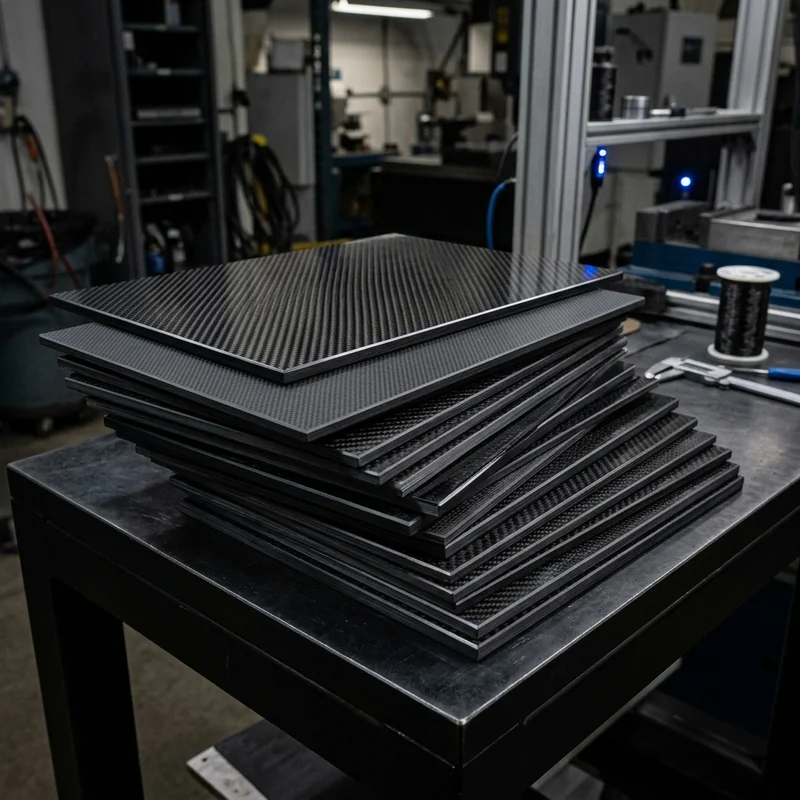
Carbon fiber standard plate-3k stripe
Lightweight, ultra-rigid standard sheets for drone fuselages, robot housings, facades and structural applications.

Square Carbon Fiber Tube — 3K Twill T700
Square cross-section carbon fiber tube manufactured with 3K twill weave for torsional strength. Preferred for structural frames, trusses, and support columns where rectangular geometry offers design flexibility.

Carbon Fiber Plate — 3K Twill T700 3.0mm
Medium-thickness 3.0mm carbon fiber plate offering significantly higher load capacity while maintaining attractive 3K twill finish. Suitable for structural brackets, reinforcement plates, and load-bearing panels.

Carbon Fiber Plate — 3K Twill T700 1.5mm
Thin 1.5mm carbon fiber plate with 3K twill weave surface. Lightweight and stiff, commonly used for covers, panels, drone bodies, and applications requiring a premium aesthetic appearance.
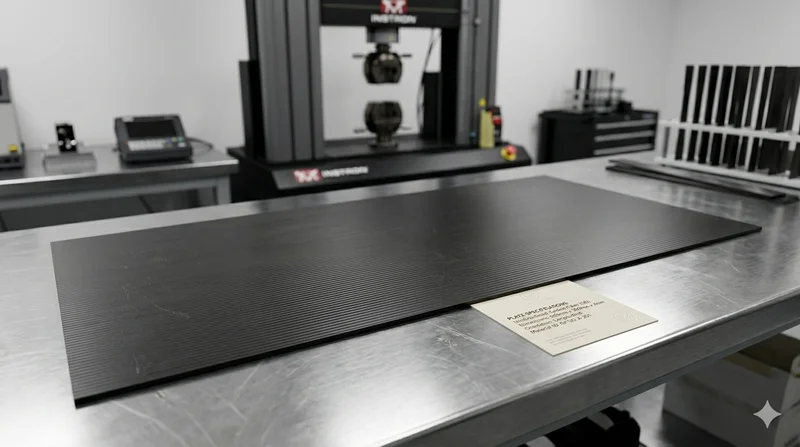
Carbon Fiber Plate — UD Unidirectional T700
Unidirectional carbon fiber plate with all fibers oriented in a single direction for maximum strength along the fiber axis. Essential for structural reinforcements, splints, and applications where load direction is predictable.