
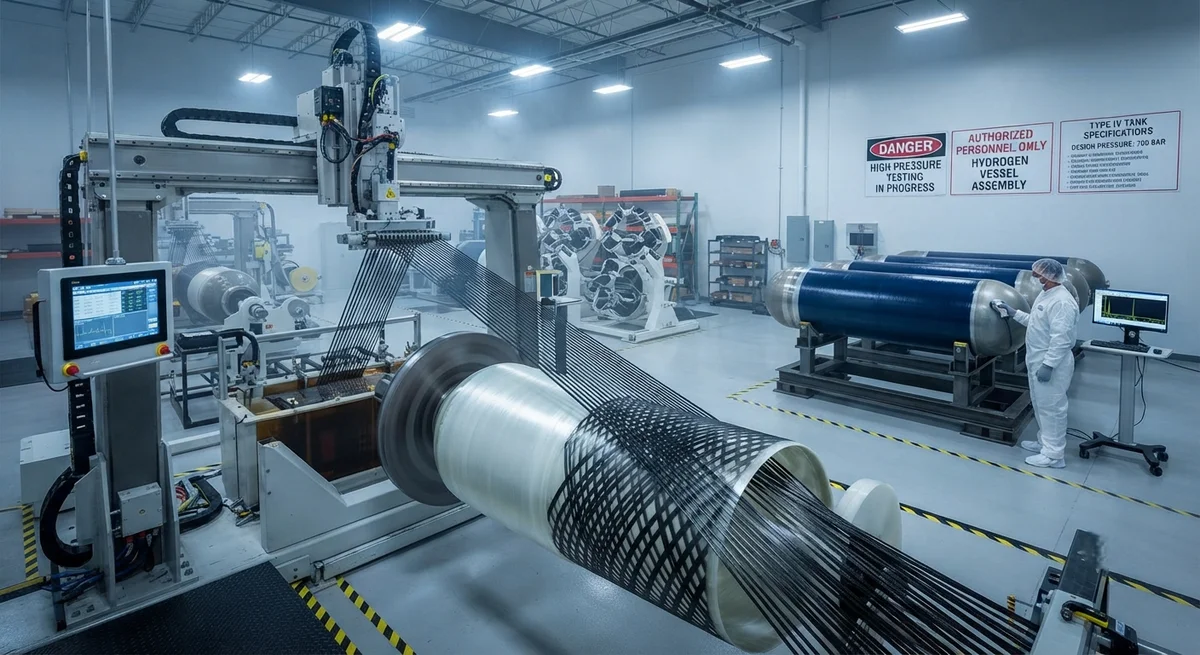
Type IV carbon fiber composite hydrogen pressure vessels manufactured through filament winding are the enabling technology for heavy-duty fuel cell electric vehicles. This article examines manufacturing process, performance comparison, carbon fiber consumption per vehicle, and cost reduction trajectories.
The Hydrogen Mobility Revolution and the Role of Carbon Fiber Tanks
Heavy-duty trucks and buses represent the hardest segment of the transportation sector to decarbonize. Battery-electric solutions face fundamental challenges for long-haul trucking: battery packs weighing 4 to 6 metric tons reduce payload capacity, charging times of 90 minutes or more disrupt fleet utilization, and cold-weather range degradation of 30 to 40 percent undermines operational reliability. Hydrogen fuel cell electric vehicles (FCEVs) offer a compelling alternative — refueling in 5 to 15 minutes, range exceeding 800 kilometers, and minimal payload penalty — but only if the onboard hydrogen storage system is lightweight, safe, and cost-effective.
Type IV composite hydrogen pressure vessels — made from carbon fiber filament wound over a polymer liner — are the enabling technology for heavy-duty hydrogen mobility. The carbon fiber shell provides the structural strength to contain hydrogen at 350 to 700 bar, while the polymer liner ensures hydrogen permeation resistance. This article examines the manufacturing process, performance characteristics, cost structure, and future developments of filament-wound carbon fiber hydrogen tanks for heavy-duty trucks and buses.
Filament Winding: The Manufacturing Process
Filament winding is the dominant manufacturing method for Type IV hydrogen storage tanks. The process involves winding continuous carbon fiber tow impregnated with epoxy resin around a rotating polymer liner in precisely controlled geometric patterns. The fiber orientation — typically a combination of helical, hoop, and polar windings — is optimized to withstand the specific stress distribution of a pressurized cylindrical vessel with hemispherical domes.
Key Process Parameters
| Parameter | Typical Range | Impact on Tank Performance |
|---|---|---|
| Fiber tension | 10 – 50 N per tow | Determines fiber volume fraction and residual stress |
| Winding angle (helical) | 10° – 25° from longitudinal axis | Controls axial load-bearing capacity |
| Winding angle (hoop) | 85° – 90° from longitudinal axis | Controls circumferential strength (dominant load direction) |
| Resin content | 30 – 40% by weight | Affects permeation barrier and fatigue life |
| Cure temperature | 120 – 160°C | Sets degree of cure and glass transition temperature |
| Dome winding pattern | Geodesic isotensoid | Optimizes fiber utilization at polar bosses |
| Liner material | HDPE or PA6 | Hydrogen permeation rate and cycle life |
Manufacturing Cycle Time
A typical 350-liter Type IV tank (suitable for a heavy-duty truck carrying 30–40 kg of hydrogen) requires approximately 45 to 90 minutes of filament winding time, depending on the number of layers and winding complexity. The subsequent curing cycle in an industrial oven takes 4 to 8 hours. Automated winding cells with robotic tow placement can produce one tank every 12 to 20 minutes in a multi-spindle configuration, though capital investment for such systems exceeds $2 million per cell.
Performance Comparison: Type IV vs Other Hydrogen Storage Technologies
| Parameter | Type IV (CFRP Linerless* / Polymer Liner) | Type III (Aluminum Liner + CFRP Wrap) | Type I (All-Metal Steel) | Liquid Hydrogen (Cryogenic) |
|---|---|---|---|---|
| Storage pressure | 350 – 700 bar | 350 – 700 bar | 200 – 300 bar | 1 – 5 bar |
| Gravimetric density | 5.5 – 6.5 wt% H₂ | 4.0 – 5.0 wt% H₂ | 1.0 – 1.5 wt% H₂ | 7.0 – 12.0 wt% H₂ |
| System weight (for 40 kg H₂) | 620 – 730 kg | 800 – 1,000 kg | 2,600 – 4,000 kg | 330 – 570 kg |
| Cycle life (pressure cycles) | 5,000 – 15,000 | 5,000 – 10,000 | 10,000+ | 2,000 – 5,000 |
| Cost per kg H₂ stored (2026 est.) | $15 – $22 | $18 – $28 | $5 – $8 | $25 – $40 |
| Boil-off / permeation loss | < 0.1% per day | < 0.1% per day | < 0.1% per day | 0.3 – 3.0% per day |
| Refueling time (full fill) | 5 – 15 min | 5 – 15 min | 10 – 20 min | 15 – 30 min |
| Maturity level | Commercial (TRL 9) | Commercial (TRL 9) | Commercial (TRL 9) | Demonstration (TRL 7) |
| Primary heavy-duty application | Trucks, buses | Light-duty vehicles, buses | Industrial forklifts, stationary | Long-haul trucks (prototype) |
Type IV tanks offer the best combination of gravimetric density, cycle life, and cost for heavy-duty applications. They are 20 to 30 percent lighter than Type III tanks for the same hydrogen capacity, which translates directly into increased payload for commercial trucking fleets. The 700 bar variant (used primarily for light-duty FCEVs) achieves 6.5 wt% but requires thicker carbon fiber walls and higher-cost tow grades, increasing system cost by approximately 30 percent over the 350 bar variant typically used for heavy-duty trucks.
Carbon Fiber Requirements: Grade, Volume, and Cost
A single 350-liter Type IV hydrogen tank for a heavy-duty truck requires approximately 80 to 120 kilograms of carbon fiber tow, depending on the design pressure and safety factor. Standard tow grades such as T700 (tensile strength 4,900 MPa, modulus 230 GPa) are widely used, while some manufacturers have begun qualifying T800 and higher-modulus grades for weight-optimized designs.
Carbon Fiber Consumption per Vehicle Segment
| Vehicle Type | H₂ Storage Capacity | Number of Tanks | CF per Tank (kg) | Total CF per Vehicle (kg) |
|---|---|---|---|---|
| Class 8 long-haul truck | 30 – 40 kg at 350 bar | 4 – 6 | 80 – 120 | 320 – 720 |
| City bus (12-meter) | 25 – 35 kg at 350 bar | 4 – 5 | 65 – 90 | 260 – 450 |
| Regional delivery truck | 10 – 20 kg at 350 bar | 2 – 3 | 50 – 80 | 100 – 240 |
| Coach / intercity bus | 35 – 45 kg at 350 bar | 5 – 7 | 90 – 130 | 450 – 910 |
To put these numbers in perspective: a single Class 8 hydrogen truck requires roughly the same carbon fiber content as 6 to 12 passenger cars (assuming 50–90 kg per car in current BEV body structures). Scaling hydrogen truck production to 100,000 units per year would create incremental carbon fiber demand of 32,000 to 72,000 metric tons annually — equivalent to roughly 15 to 35 percent of the current global carbon fiber production capacity of approximately 200,000 metric tons per year.
Safety, Certification, and Standards
Type IV hydrogen tanks must comply with rigorous international standards before deployment in commercial vehicles:
- UN ECE R134 — The primary global regulation for hydrogen fuel cell vehicle tank approval, covering burst pressure testing (2.25× service pressure), ambient temperature cycling (1,000 cycles at 0–85 bar), and fire resistance (2-minute direct flame exposure without rupture)
- ISO 19881 — Specification for gaseous hydrogen land vehicle fuel containers, detailing material qualification, design methodology, and production testing requirements
- SAE J2579 — Fuel system integrity standard for hydrogen vehicles, including leak testing and hydrogen permeation measurement
- EC79 / EU 406/2010 — European approval framework for hydrogen-powered vehicles, now incorporating Type IV tank-specific provisions
The carbon fiber composite shell must demonstrate a minimum burst pressure of 2.25 times the nominal working pressure. For a 350-bar tank, this means the design must withstand 787 bar without catastrophic failure. Certification testing includes ambient-temperature pressure cycling (at least 1,500 cycles for heavy-duty applications), extreme-temperature cycling (−40°C to +85°C), chemical exposure resistance (road salt, battery acid, diesel, washer fluid), and a bonfire test (continuous flame exposure with the tank at working pressure).
Cost Reduction Trajectory
The cost of Type IV hydrogen tanks has declined from approximately $28 per kWh of stored energy in 2020 to an estimated $18 per kWh in 2026. Industry roadmaps project further reductions to $10–12 per kWh by 2030, driven by:
- Carbon fiber cost reduction: Large-diameter PAN precursor production scaled to 50,000+ tons per annum, reducing T700-grade tow cost from $18/kg to $12/kg
- Manufacturing automation: Multi-spindle winding cells with automated resin mixing, tow tension control, and cure monitoring reduce labor cost by 60 percent
- Design optimization: Non-geodesic winding patterns and variable-thickness dome designs reduce fiber consumption by 15 to 25 percent without compromising burst pressure
- Alternative fiber qualification: Lignin-based and recycled carbon fiber precursors for non-structural layers, reducing virgin fiber consumption by 10 to 15 percent
- Liner innovation: Thinner polymer liners (reduced from 3–4 mm to 1.5–2 mm) enabled by improved permeation barrier coatings, saving both material cost and tank weight
Case Study: European Hydrogen Bus Fleet
A major European city deployed 80 fuel cell buses between 2023 and 2025 equipped with Type IV 350-bar tanks from two different suppliers. Each bus carries six 220-liter tanks storing a total of 28 kg of hydrogen, providing a range of 350 to 400 kilometers per fill. Over two years of operation, the fleet consumed 485 metric tons of hydrogen and the tank systems accumulated over 1.2 million pressure cycles across all vehicles. Zero catastrophic failures were reported; two tanks were replaced preventatively after impact damage during maintenance handling. The fleet operator reported that tank-related maintenance costs represented only 1.8 percent of total vehicle operating costs, compared to 4.5 percent for battery replacement reserves in comparable electric bus fleets.
Frequently Asked Questions
How long does a Type IV carbon fiber hydrogen tank last in heavy-duty service?
The design life of a Type IV hydrogen tank for heavy-duty vehicles is typically 15 to 20 years or 5,000 to 15,000 pressure cycles, whichever comes first. In practice, most heavy-duty trucks will reach the cycle life limit (approximately 5,000 cycles for 350-bar tanks) before the calendar life limit. A truck that refuels daily — 365 cycles per year — would reach the cycle limit in approximately 14 years. Tank life can be extended through in-service inspection programs that perform acoustic emission testing or ultrasonic scanning every 5 years to verify structural integrity.
Can damaged carbon fiber hydrogen tanks be repaired?
Generally, no. Type IV hydrogen tanks are designed as non-repairable life-limited components. Any damage that penetrates the carbon fiber structural layer — impact damage, abrasion through the outer layer, or thermal damage from a fire — requires tank replacement. However, minor cosmetic damage to the outer gel coat or protective paint layer can be repaired, provided ultrasonic inspection confirms no underlying fiber damage. Tank manufacturers typically offer 10-year warranty coverage against manufacturing defects, with prorated coverage for years 11 through 15.
What happens to hydrogen tanks at end of life?
End-of-life Type IV tanks are depressurized, purged with inert gas, and mechanically breached to prevent re-pressurization. The carbon fiber shell is separated from the polymer liner — the carbon fiber can be recycled through pyrolysis (recovering 85–95 percent of fiber tensile strength) and reused in non-structural applications such as construction reinforcement or automotive underbody panels. The polymer liner is typically incinerated for energy recovery or recycled into lower-grade plastic products. Several European recycling facilities now specialize in composite hydrogen tank recycling, with processing costs of €80 to €150 per tank.
How do Type IV tanks perform in extreme cold (–40°C) and hot (85°C) climates?
Type IV tanks are designed and certified for operation from –40°C to +85°C ambient temperature. The polymer liner must maintain adequate impact resistance at low temperatures — PA6 (nylon) liners typically meet this requirement, while HDPE liners require formulation modifications to prevent embrittlement. At high temperatures, the epoxy matrix's glass transition temperature (Tg) of 120–150°C provides adequate margin above the +85°C maximum operating temperature. Thermal cycling between extremes does accelerate matrix microcracking, but certification testing requires 1,000+ thermal cycles without leak development.
What is the current global production capacity for Type IV hydrogen tanks?
Global production capacity for Type IV hydrogen tanks was estimated at approximately 350,000 units per year in early 2026, concentrated primarily in China (45 percent), Europe (25 percent), Japan and Korea (20 percent), and North America (10 percent). Major producers include Hexagon Purus, Toyota, Faurecia (now Forvia), Quantum Fuel Systems, and several Chinese manufacturers (Sinoma Science & Technology, Beijing Tianhai Industry). Industry projections indicate capacity must reach 2 to 3 million units per year by 2030 to meet announced heavy-duty FCEV production targets, requiring approximately 200,000 to 300,000 additional metric tons of carbon fiber capacity.
Part of topic
Related Articles
- Carbon Fiber Mooring for Floating Offshore Wind: Fatigue and Corrosion in Deep Water
- Carbon Fiber Bicycle Frame Optimization: Layup Design and Manufacturing for Competitive Racing
- Carbon Fiber CFRP Retrofit for Infrastructure: Bridge and Building Seismic Strengthening
- Carbon Fiber Medical Imaging Equipment: Lightweight Gantry and Couch Structures for MRI/CT
- Carbon Fiber EV Battery Enclosures: Crash Safety and Electromagnetic Shielding Design
- Carbon Fiber Structures for Low-Altitude Economy: UAV Airframes and eVTOL Components
Interested in Our Products?
Contact our team for competitive pricing and technical specifications.
Get a QuoteRelated Products
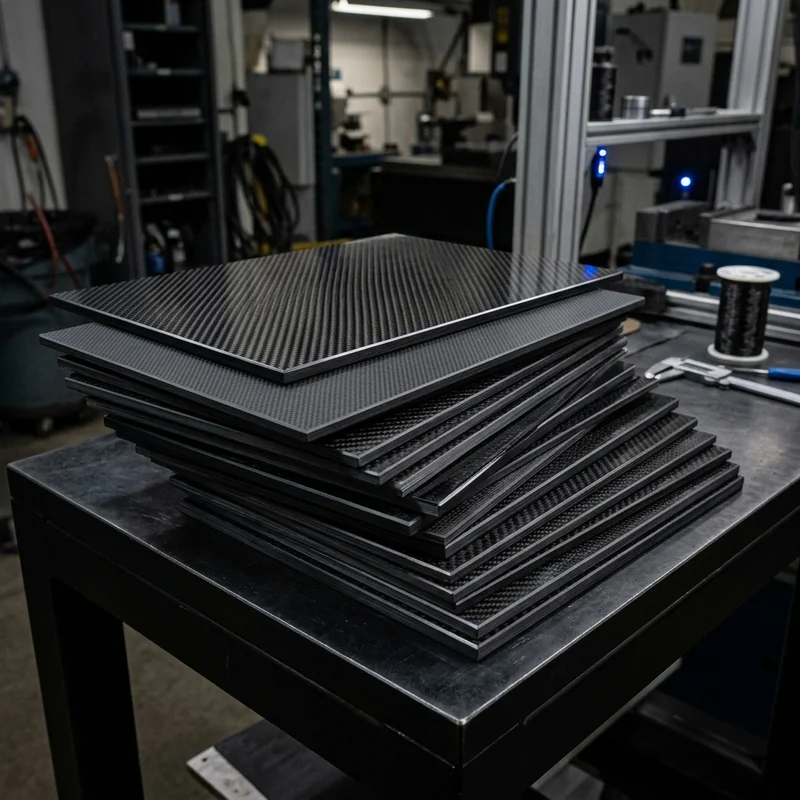
Carbon fiber standard plate-3k stripe
Lightweight, ultra-rigid standard sheets for drone fuselages, robot housings, facades and structural applications.

Carbon Fiber Plate — 3K Twill T700 1.5mm
Thin 1.5mm carbon fiber plate with 3K twill weave surface. Lightweight and stiff, commonly used for covers, panels, drone bodies, and applications requiring a premium aesthetic appearance.

Square Carbon Fiber Tube — 3K Twill T700
Square cross-section carbon fiber tube manufactured with 3K twill weave for torsional strength. Preferred for structural frames, trusses, and support columns where rectangular geometry offers design flexibility.

Carbon Fiber Plate — 3K Twill T700 3.0mm
Medium-thickness 3.0mm carbon fiber plate offering significantly higher load capacity while maintaining attractive 3K twill finish. Suitable for structural brackets, reinforcement plates, and load-bearing panels.
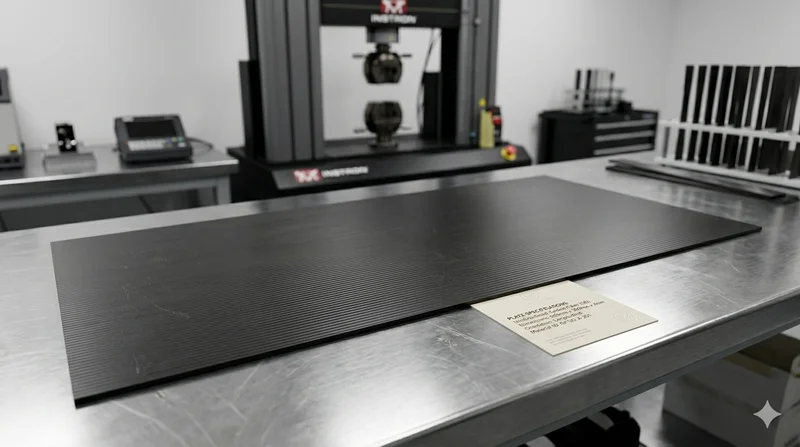
Carbon Fiber Plate — UD Unidirectional T700
Unidirectional carbon fiber plate with all fibers oriented in a single direction for maximum strength along the fiber axis. Essential for structural reinforcements, splints, and applications where load direction is predictable.