
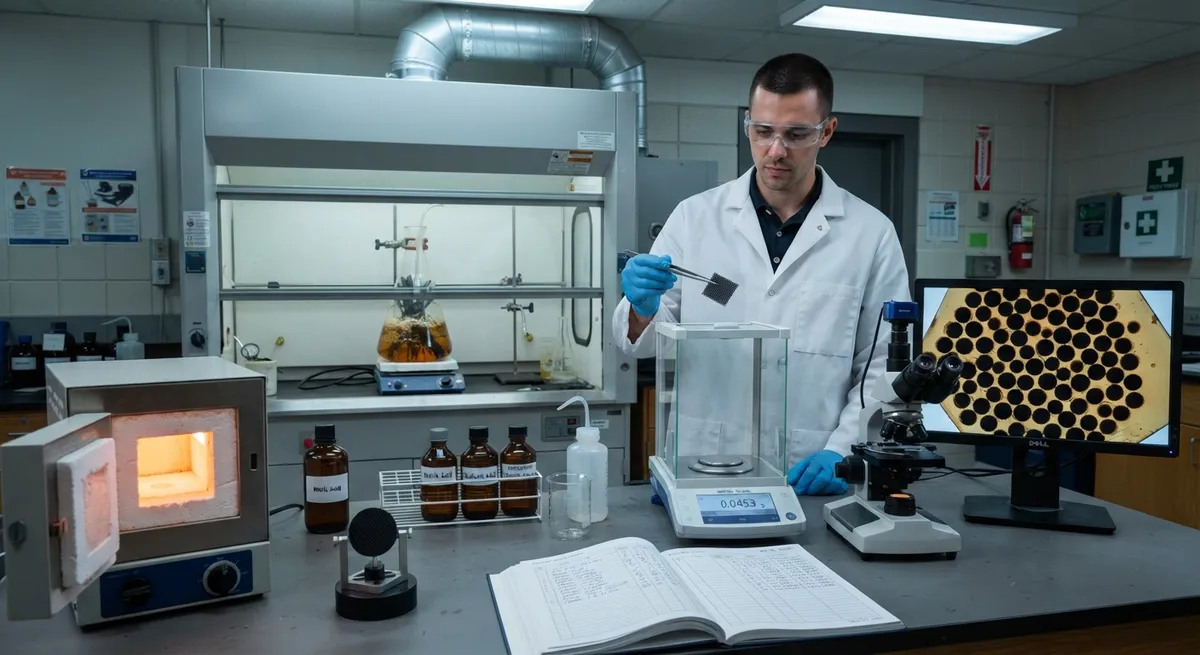
Fiber volume fraction (FVF, Vf) is the most direct link between a composite's internal structure and its mechanical performance. A change of a few percent in Vf shifts tensile modulus, compressive strength, and interlaminar shear strength by measurable amounts — which is why aerospace a
Introduction
Fiber volume fraction (FVF, Vf) is the most direct link between a composite's internal structure and its mechanical performance. A change of a few percent in Vf shifts tensile modulus, compressive strength, and interlaminar shear strength by measurable amounts — which is why aerospace acceptance specifications pin Vf to narrow windows, typically 55-65% for autoclave-cured prepreg structures. For the QC laboratory, that makes Vf measurement a routine but high-stakes operation: a result outside the window rejects a part, and a method bias of even 1-2% can systematically reject good parts or pass bad ones.
Three methods dominate industrial practice: acid digestion (matrix dissolution), ignition loss (burn-off in a furnace), and cross-section microscopy with image analysis. Each measures a slightly different physical quantity, carries different error sources, and suits different materials. This article gives a head-to-head comparison with data, explains when each method fails, and offers a practical framework for choosing and qualifying a method in your lab.
The Three Methods Compared
The table below compares acid digestion, ignition loss, and cross-section microscopy across the attributes that matter most to a QC lab:
| Attribute | Acid Digestion | Ignition Loss (Burn-off) | Cross-Section Microscopy |
|---|---|---|---|
| Principle | Matrix dissolved in hot acid, fiber mass weighed | Matrix burned off in furnace, fiber mass weighed | Polished section imaged, fiber area fraction measured |
| Typical accuracy | ±1.0-1.5% Vf | ±1.5-3.0% Vf | ±1.0-2.0% Vf (with good sampling) |
| Applicable matrices | Epoxy, bismaleimide (careful), most thermosets | Thermosets only (no high-temperature thermoplastics) | All matrices including thermoplastics |
| Fiber damage | Minimal if acid bath is controlled | Oxidation can attack carbon fiber surface | None (but section preparation is destructive) |
| Sample size | 0.5-2 g | 2-10 g | 1-4 cm² polished area |
| Time per specimen | 2-6 hours (chemical) | 3-8 hours (furnace + cooling) | 0.5-2 hours (prep + imaging) |
| Operator skill | Medium (chemical handling) | Low | High (polishing + image analysis) |
| Standard references | ASTM D3171 (Method B), ISO 14127 | ASTM D2584, D3171 (Method A) | ASTM D3171 (Method C), microscopy + image analysis |
All three methods convert a mass or area measurement into Vf using density assumptions. The density of the carbon fiber (typically 1.75-1.81 g/cm³) and the cured resin density (1.15-1.28 g/cm³) must be known or measured, and every percentage point of density error propagates into roughly a percentage point of Vf error — which is why density determination should never be an afterthought.
Acid Digestion: The Accuracy Benchmark
Acid digestion (matrix dissolution) is the reference method in most aerospace QC programs. A weighed specimen is immersed in hot sulfuric or nitric acid (often with hydrogen peroxide to accelerate attack), which dissolves the resin while leaving the carbon fibers intact. The remaining fiber mat is washed, dried, and weighed, and Vf is computed from the fiber mass fraction and the known densities.
Practical points that control accuracy:
- Complete digestion: partially dissolved resin leaves excess mass on the fibers, biasing Vf high. Verify digestion completeness by visual inspection and consistent weights across repeat runs.
- Fiber wash loss: aggressive acid or excessive washing can remove sizing or break fine filaments, biasing Vf low. Use a gentle wash sequence and collect wash water on a filter.
- Temperature control: hold the digestion temperature within the method range — boiling vigorously for too long attacks the fiber surface and falsifies the result.
- Density accuracy: determine fiber density by helium pycnometry on the same fiber lot, not from the datasheet, because density varies between lots by up to 1-2%.
With controlled technique, acid digestion routinely achieves ±1.0-1.5% Vf, which is why it remains the referee method when acceptance hinges on a borderline result.
Ignition Loss: Fast but Fiber-Sensitive
Ignition loss (burn-off) replaces the chemical step with a muffle furnace: the weighed specimen is heated to 500-600°C until the matrix is fully burned away, and the residual fiber mass is weighed. It is cheaper, faster, and requires less operator skill than acid digestion, making it attractive for high-throughput production QC on thermoset parts.
Its weakness is fiber oxidation. Carbon fiber is stable to roughly 400-450°C in air but begins to oxidize measurably above 500°C, especially with prolonged exposure. Oxidation removes carbon from the fiber surface, reducing the measured fiber mass and biasing Vf low — by 1-2% or more on thin specimens with high surface-to-volume ratio. Practical mitigation:
- Limit furnace time: use the shortest burn time that fully removes the matrix, verified on a control specimen.
- Batch consistency: run all specimens of a batch under identical temperature and duration, so bias is systematic and can be corrected with a calibration factor.
- Exclude for high-temperature thermoplastics: PEEK, PEKK, and PAEK matrices do not fully burn off cleanly or require temperatures that severely damage the fiber — use acid digestion or microscopy instead.
Cross-Section Microscopy: When You Need to See the Structure
Cross-section microscopy measures fiber area fraction directly: a polished section is imaged under an optical microscope, the fibers are segmented from the resin by image analysis, and the fiber area divided by the total area gives Vf. Its unique strength is spatial information — it shows how Vf varies across the part thickness, whether there are resin-rich zones, and whether porosity is present — which the other two methods cannot reveal.
The accuracy challenge is sampling. A 2 cm² polished section may contain only a few thousand fiber cross-sections out of millions in the part, and polishing artifacts — fiber pull-out, edge rounding, resin smearing — can shift the measured area fraction by 1-3%. Key practices:
- Take multiple sections from different locations and average; single-section results are not representative of a thick laminate.
- Minimize preparation artifacts: use progressively finer polishing media and avoid over-polishing, which rounds fiber edges and biases area fraction low.
- Threshold carefully: image analysis segmentation between fiber and resin is the largest operator-dependent source of error; validate the threshold against a known standard.
When Vf from microscopy is compared with acid digestion on the same specimen, agreement within 1-2% is expected; larger deviations usually trace to sampling or thresholding rather than to the chemistry.
How to Choose Your Method
Selection depends on your material set, throughput, and the decisions the data supports:
- Aerospace acceptance and borderline disputes: acid digestion as the referee method, with ±1.0-1.5% accuracy.
- High-throughput production QC on thermoset prepreg parts: ignition loss for speed, with a calibration factor against acid digestion on a qualification batch.
- Thermoplastic matrix parts (PEEK, PEKK, PAEK): cross-section microscopy, since burn-off damages fibers and acid resistance varies.
- Process troubleshooting: microscopy, because it shows where Vf varies and why — resin-rich zones, porosity, fiber waviness.
- Fiber volume fraction of dry fabrics or preforms: none of the three apply directly — use areal weight and thickness-based calculations.
A robust QC program typically runs two methods in parallel: a fast screening method for every batch and a referee method for qualification, disputes, and periodic cross-checks.
Frequently Asked Questions
Which method is the most accurate for measuring fiber volume fraction?
Acid digestion is generally the most accurate for thermoset carbon fiber composites, achieving ±1.0-1.5% Vf with controlled technique, which is why it is the referee method in most aerospace programs. Cross-section microscopy can match it when sampling and image analysis are well controlled (±1.0-2.0%), and it adds spatial information no other method provides. Ignition loss is the least accurate (±1.5-3.0%) because carbon fiber oxidizes above roughly 500°C, biasing results low. Accuracy also depends heavily on the density values used in the calculation — fiber density should be measured on the actual fiber lot, not taken from a datasheet.
Why is fiber volume fraction so important for composite quality?
Vf is the most direct structural link to mechanical performance: tensile modulus scales almost linearly with fiber content, and compressive strength, interlaminar shear strength, and fatigue behavior all shift measurably with a few percent change in Vf. Most acceptance specifications set a narrow window, typically 55-65% for autoclave-cured aerospace structures, because a part outside that window either underperforms (too much resin) or is over-consolidated with high residual stress (too much fiber). Vf is also the indicator for process stability — a drift of 1-2% across a production run signals a process change that needs investigation before it produces a reject.
Can fiber volume fraction be measured on thermoplastic composites?
Yes, but the method matters. Ignition loss (burn-off) is unreliable for high-temperature thermoplastics such as PEEK, PEKK, and PAEK: they do not burn off cleanly at temperatures that leave carbon fiber undamaged, and the high furnace temperatures required attack the fiber. Cross-section microscopy is the recommended method — it measures fiber area fraction directly and works with any matrix. Acid digestion can also be used if a suitable solvent system for the specific thermoplastic is available, but it is slower and more hazardous than microscopy for these materials.
Conclusion
Fiber volume fraction is the metric that connects a composite part's microstructure to its certified performance, and the three standard measurement methods serve different jobs. Acid digestion is the accuracy benchmark and referee method for thermoset systems. Ignition loss trades accuracy for throughput, provided a calibration factor guards against fiber oxidation bias. Cross-section microscopy is the only method that shows where and why Vf varies, and it is the default for thermoplastic matrices. Running a fast screening method alongside a referee method gives a QC lab both speed and confidence — and catching a systematic method bias before it produces a reject is exactly the kind of process discipline that keeps acceptance rates high.
Whatever method you standardize on, the material quality upstream sets the ceiling on what your measurements can certify. Explore our carbon fiber fabrics and prepregs with consistent areal weights, or contact our technical team for material data, density values, and qualification support for your QC program.
Related Articles
- Carbon Fiber Drone Blades and Propellers: Stiffness, Balance and Noise Reduction
- Fiberglass Filament Wound Tubes: Cost-Effective Alternative to Carbon Fiber
- Filament Wound Epoxy Tube Design: Wall Thickness, Fiber Angle and Load Optimization
- Filament Wound Epoxy Tubes: Testing Standards and Quality Assurance
- Filament Wound Epoxy Tubes Manufacturing: Process and Quality Control
- Filament Wound Fiberglass Tube: Process Parameters and Performance vs Carbon Fiber
Interested in Our Products?
Contact our team for competitive pricing and technical specifications.
Get a QuoteRelated Products
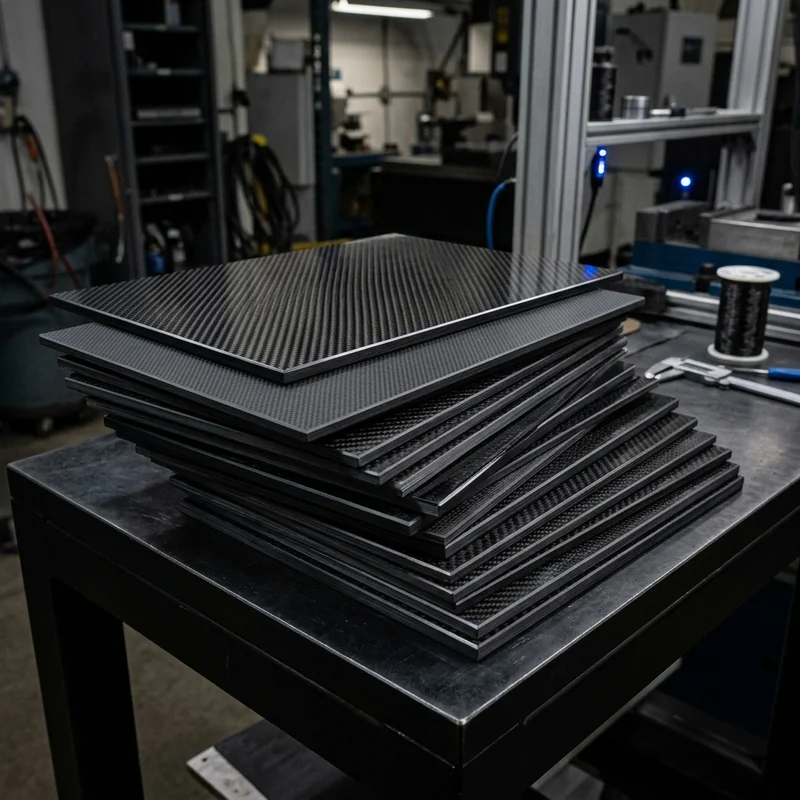
Carbon fiber standard plate-3k stripe
Lightweight, ultra-rigid standard sheets for drone fuselages, robot housings, facades and structural applications.
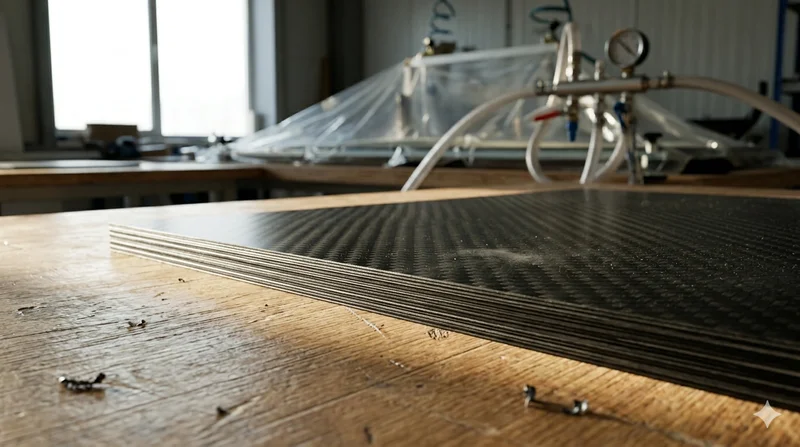
Carbon Fiber Plate — 3K Twill T700 3.0mm
Medium-thickness 3.0mm carbon fiber plate offering significantly higher load capacity while maintaining attractive 3K twill finish. Suitable for structural brackets, reinforcement plates, and load-bearing panels.
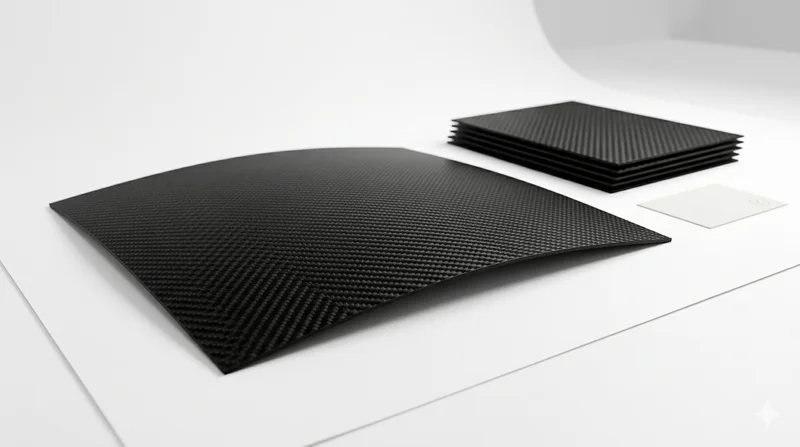
Carbon Fiber Plate — 3K Twill T700 1.5mm
Thin 1.5mm carbon fiber plate with 3K twill weave surface. Lightweight and stiff, commonly used for covers, panels, drone bodies, and applications requiring a premium aesthetic appearance.
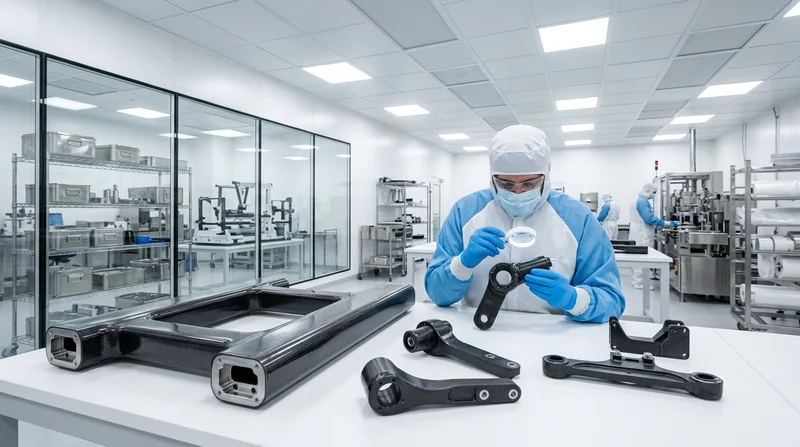
Custom Carbon Fiber Medical Device Components
Medical-grade carbon fiber components manufactured for imaging equipment, surgical instruments, and patient support systems. Carbon fiber's radiolucency (X-ray transparency) and high strength-to-weight ratio make it ideal for CT scanner beds, wheelchair frames, surgical robot arms, and MRI-compatible accessories. Biocompatible resin systems available.
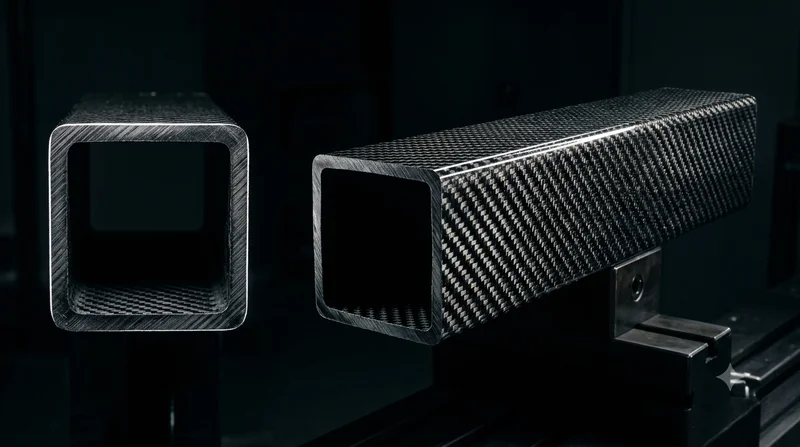
Square Carbon Fiber Tube — 3K Twill T700
Square cross-section carbon fiber tube manufactured with 3K twill weave for torsional strength. Preferred for structural frames, trusses, and support columns where rectangular geometry offers design flexibility.