
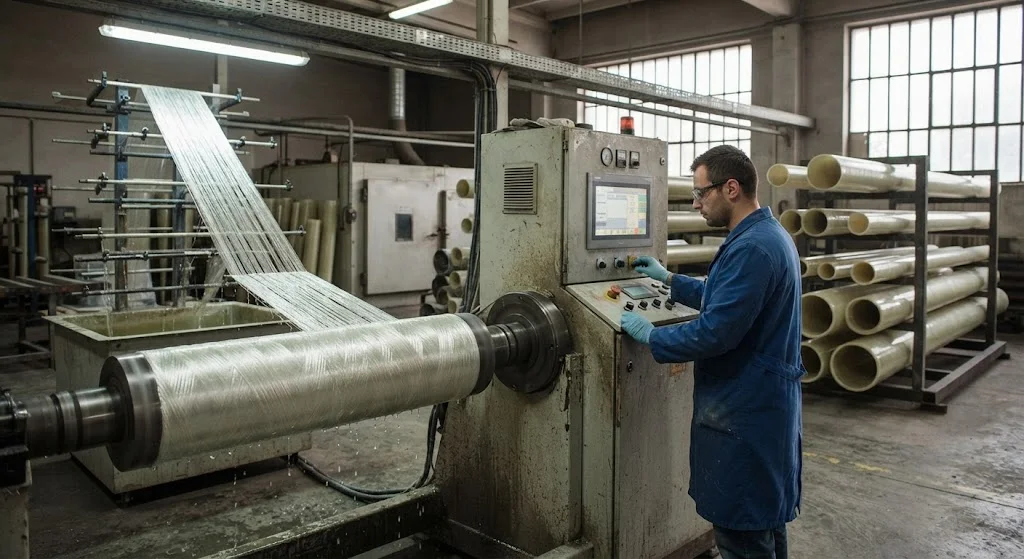
Fiberglass filament wound tubes are the most cost-effective structural tube option available to engineers who need high strength, corrosion resistance and dimensional stability without paying the premium for carbon fiber. Filament winding places continuous glass fibers at controlled angles around a
Introduction
Fiberglass filament wound tubes are the most cost-effective structural tube option available to engineers who need high strength, corrosion resistance and dimensional stability without paying the premium for carbon fiber. Filament winding places continuous glass fibers at controlled angles around a mandrel, producing a tube whose mechanical properties are engineered rather than accidental. For a large class of applications — roller covers, insulators, antenna masts, liquid transfer piping, agricultural and industrial shafts — fiberglass filament wound tubes match the performance envelope that the application needs at 20-40 percent of the cost of an equivalent carbon fiber tube. This article compares glass and carbon filament wound tubes across the properties that drive selection, identifies where the GFRP wound tube is the correct choice, and provides a specification framework for working with a glass fiber tube manufacturer.
How Filament Winding Creates Engineered Tube Properties
Filament winding is a continuous process. Glass roving is drawn through a resin bath, wrapped around a rotating mandrel at a programmed winding angle, and cured — either on the mandrel or in an oven — to produce a finished tube. The winding angle controls the mechanical response: low-angle helical wraps carry axial loads, high-angle hoop wraps carry internal pressure, and most tubes use a combination of both to balance the two.
The process gives the fiberglass composite tube three properties that matter in service. First, the fiber content is high, typically 60-75 percent by weight, which maximizes strength and stiffness per unit of material. Second, the reinforcement is continuous rather than chopped, so the tube carries load through uninterrupted fibers rather than relying on resin pockets. Third, the angle program can be tuned for the specific duty — a pressure tube gets more hoop fiber, a shaft gets more axial fiber — which is why filament wound tubes outperform pultruded or hand-laid equivalents in demanding applications.
Glass vs Carbon Filament Wound Tubes
The table below compares E-glass and standard-modulus carbon fiber in the filament winding context, using typical cured laminate properties for tubes with comparable fiber volume fraction.
| Property | E-glass wound tube | Carbon (T700) wound tube | Design implication |
|---|---|---|---|
| Tensile strength (axial) | 600-900 MPa | 1,200-1,800 MPa | Carbon roughly 2x stronger |
| Tensile modulus | 35-45 GPa | 120-140 GPa | Carbon 3-4x stiffer |
| Density | 1.9-2.0 g/cm³ | 1.55-1.60 g/cm³ | Carbon about 20% lighter |
| Relative material cost | 1.0x baseline | 3-5x | Glass 60-80% cheaper |
| Corrosion resistance | Excellent (with proper resin) | Excellent | Both outperform steel in most chemistries |
| Electrical conductivity | Insulating | Conductive | Glass is non-conductive, carbon is not |
| Fatigue behavior | Good | Excellent | Carbon superior under cyclic loading |
Two properties in this table deserve emphasis. First, electrical insulation: a fiberglass composite tube is a dielectric, which makes it the standard choice for electrical applications such as insulator rods, transformer components and antenna masts, where carbon fiber would create a short circuit path. Second, cost: the glass fiber itself is 10-20 times cheaper per kilogram than carbon fiber, and because the manufacturing process is identical, the finished tube carries most of that saving through.
Where Fiberglass Filament Wound Tubes Are the Right Choice
The decision between glass and carbon wound tubes is governed by the stiffness and weight requirements of the application, not by a general preference for one material. Fiberglass filament wound tubes are the correct choice in five common situations:
- Stiffness is not the limiting factor: If the design allows a slightly larger diameter or thicker wall, glass achieves the same stiffness at much lower cost, because stiffness scales with section geometry.
- Electrical isolation is required: Insulator rods, live-line tools, radomes and antenna structures need the dielectric properties that only glass provides.
- Chemical and corrosion resistance dominate: Glass with a vinyl ester or epoxy resin system handles most industrial fluids, and the glass fibers are not susceptible to the galvanic coupling that carbon can create with metals.
- Impact tolerance matters more than stiffness: Glass fibers are more strain-tolerant than carbon and absorb impact energy better in many configurations.
- Budget limits the program: For development prototypes and first production runs, the 60-80 percent cost saving allows more iteration and earlier revenue.
Carbon fiber becomes the correct choice when the tube must be simultaneously light, stiff and strong — for example a long-span drive shaft, a high-performance bicycle fork, or an aerospace component — where the weight and stiffness targets cannot be met by glass at any practical geometry.
Specifying GFRP Wound Tubes for Your Application
Buying fiberglass filament wound tubes from a glass fiber tube manufacturer is straightforward once the specification is clear. The specification should cover seven items:
- Winding angle program: State whether the duty is axial, pressure, or combined so the manufacturer can balance helical and hoop layers.
- Resin system: Epoxy for strength and chemical resistance, vinyl ester for corrosion-heavy service, polyester for economy and general duty.
- Glass type: E-glass for standard duty, S-glass or ECR-glass for higher strength or better acid resistance.
- Dimensions and tolerances: OD, ID, wall thickness, length, straightness and concentricity, with tolerances matched to the machining that follows.
- Fiber volume fraction: A target of 55-70 percent by weight, verified by test or by manufacturer process control.
- Surface finish: Machined, sanded, or as-wound, depending on whether the tube is a finished part or a blank for further machining.
- Test data: Axial and hoop burst or tensile data, or reference to a standard such as ASTM D2585 for winding test specimens.
A reliable glass fiber tube manufacturer will confirm the winding program for your load case, provide test certificates for production lots, and machine the tube to your tolerances if required. Asking for the fiber volume fraction and the resin system by name filters out low-quality suppliers who cannot state either.
Frequently Asked Questions
Are fiberglass filament wound tubes as strong as carbon fiber tubes?
No — carbon fiber tubes are typically twice as strong and three to four times as stiff as glass tubes of the same geometry and fiber volume fraction. But strength is rarely the deciding factor in practice. Most tube applications are limited by stiffness or by a specific requirement such as electrical insulation, chemical resistance or cost, and in those cases glass meets the requirement at a fraction of the cost. The correct question is not which material is stronger, but which material meets the engineering requirement at the lowest total cost.
How long do fiberglass filament wound tubes last outdoors?
With an appropriate resin system and UV protection, a fiberglass composite tube has a service life measured in decades. Epoxy and vinyl ester systems resist water ingress and chemical attack, while the glass fibers are inherently resistant to corrosion. For outdoor service, the main degradation driver is UV exposure on the surface resin, which is managed with UV-stable gel coats or paint systems. In ground-contact or continuously wet service, specifying a resin with low water absorption and verifying the manufacturer's process quality matters more than the glass type.
Can fiberglass filament wound tubes be machined like metal tubes?
Yes. Filament wound tubes machine cleanly with carbide tooling using standard lathe, mill and saw operations. The composite cuts well for facing, turning and drilling, provided the tooling is sharp and the work is supported to avoid delamination at the exit of cuts. For threaded connections, machined and bonded metal end fittings are the common approach, or the tube can be supplied with machined shoulders and grooves for clamp fittings. Surface grinding achieves the tightest tolerances when the tube is used as a shaft or roller.
Conclusion
Fiberglass filament wound tubes are the cost-effective engineering choice for a wide range of structural, electrical and corrosion-resistant applications. The winding process produces engineered properties at 20-40 percent of the cost of carbon fiber equivalents, and for stiffness-tolerant designs, electrical isolation requirements or chemical service, glass is not merely the cheaper option — it is the correct one. A clear specification covering winding angle, resin system, glass type and tolerances is the foundation of a successful procurement from a glass fiber tube manufacturer.
Explore our filament wound tubes and composite profiles, or contact our technical team to discuss glass and carbon winding options, specifications and test data for your application.
Part of topic
Related Articles
- Filament Wound Epoxy Tube Design: Wall Thickness, Fiber Angle and Load Optimization
- Filament Wound Epoxy Tubes: Testing Standards and Quality Assurance
- Filament Wound Epoxy Tubes Manufacturing: Process and Quality Control
- Filament Wound Fiberglass Tube: Process Parameters and Performance vs Carbon Fiber
- Pultruded Carbon Fiber Rods: Mechanical Properties and Industrial Applications
- Filament Wound Epoxy Tubes Cost: Materials, Process and Volume Pricing
Interested in Our Products?
Contact our team for competitive pricing and technical specifications.
Get a QuoteRelated Products
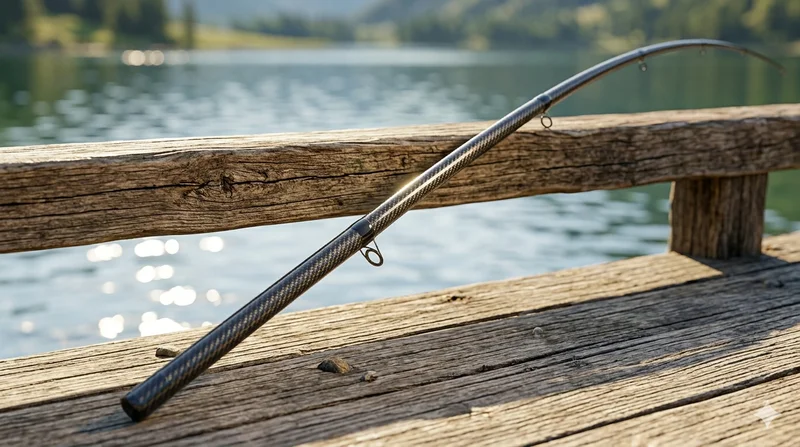
Carbon Fiber Fishing Rod Blank
High-quality carbon fiber fishing rod blank manufactured from multiple grades of Toray carbon fiber cloth. Available in a wide range of lengths, powers, and actions for freshwater and saltwater applications. Suitable for OEM rod building.

Carbon Fiber Plate — 3K Twill T700 3.0mm
Medium-thickness 3.0mm carbon fiber plate offering significantly higher load capacity while maintaining attractive 3K twill finish. Suitable for structural brackets, reinforcement plates, and load-bearing panels.

Carbon Fiber Plate — 3K Twill T700 1.5mm
Thin 1.5mm carbon fiber plate with 3K twill weave surface. Lightweight and stiff, commonly used for covers, panels, drone bodies, and applications requiring a premium aesthetic appearance.
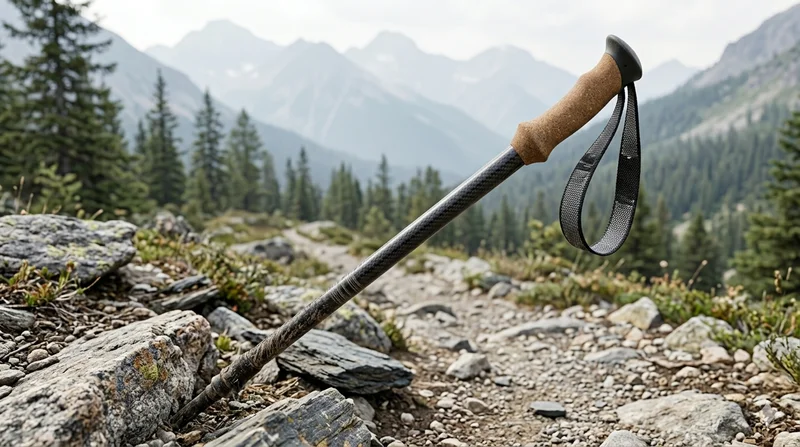
Carbon Fiber Trekking Pole
Lightweight carbon fiber trekking pole manufactured from high-grade carbon fiber tube. Weighs only 160g per pole while providing superior shock absorption and durability for hiking, trail running, and backpacking.

Square Carbon Fiber Tube — 3K Twill T700
Square cross-section carbon fiber tube manufactured with 3K twill weave for torsional strength. Preferred for structural frames, trusses, and support columns where rectangular geometry offers design flexibility.