
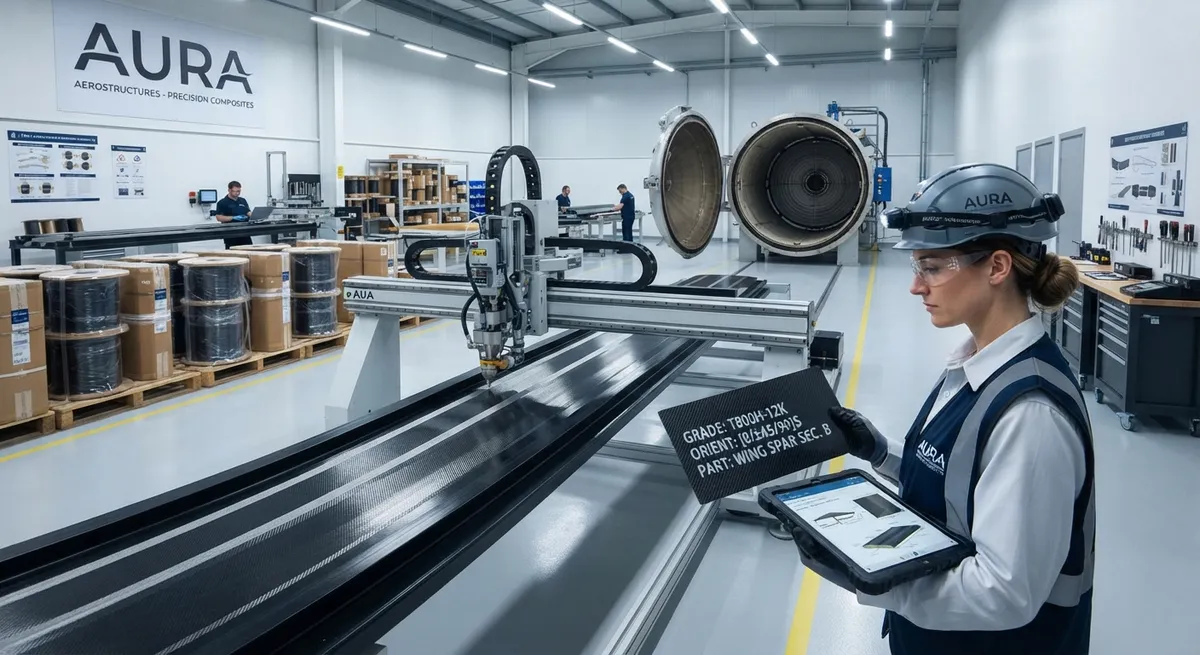
eVTOL aircraft represent one of the fastest-growing structural applications for carbon fiber composites. A typical four-to-five-passenger airframe carries 100-200 kg of composite structure, and programs now in development expect production rates in the hundreds to thousands of aircraft
Introduction
eVTOL aircraft represent one of the fastest-growing structural applications for carbon fiber composites. A typical four-to-five-passenger airframe carries 100-200 kg of composite structure, and programs now in development expect production rates in the hundreds to thousands of aircraft per year. Unlike conventional aircraft, eVTOL designs accumulate a large number of short-duration flight cycles — often several per day — which makes fatigue and damage tolerance primary design drivers rather than afterthoughts.
At the center of every material selection decision is the fiber grade. Three families dominate the conversation: T700S, the workhorse intermediate-strength standard-modulus fiber; T800S, the higher-strength intermediate-modulus fiber; and T1100, the new extreme-strength grade that promises weight savings but carries limited certification history. The choice is not simply "stronger is better." It involves a trade-off among mechanical capability, certification data maturity, cost per kilogram, and supply security — and the correct answer differs by structural region and program stage.
What the Airframe Actually Needs
An eVTOL airframe is a mix of loading environments, and no single fiber grade serves all of them optimally:
- Primary structure (wing spars, rotor support arms, fuselage frames): dominated by bending and fatigue loads, requiring high specific stiffness and strength with certified allowables.
- Secondary structure (fairings, panels, doors): stiffness-driven and cost-sensitive, where standard-modulus fiber in glass or T300-class material is often sufficient.
- Energy-absorbing structure (crashworthy subfloor, landing gear attachment): requires predictable progressive failure and high strain-to-failure, favoring fibers with good elongation rather than maximum strength.
- Battery enclosure and thermal protection: driven by fire resistance and impact containment requirements rather than by fiber strength.
This mix means the selection problem is really several selection problems: the spar and arm structure may justify an intermediate-modulus fiber, while the fairings may not justify carbon fiber at all. Smart programs specify different grades by region and avoid paying for T800-class capability in areas where T700S-class would suffice.
Candidate Grades Compared
The table below summarizes the mechanical and supply characteristics of the main candidate grades used in eVTOL airframe programs:
| Grade | Tensile Strength (MPa) | Tensile Modulus (GPa) | Elongation (%) | Relative Cost | Qualification Data Maturity |
|---|---|---|---|---|---|
| T700S | 4,900 | 230 | 2.1 | Baseline | Extensive, decades |
| T800S | 5,880 | 294 | 2.0 | 1.5-2.0x | Strong, aerospace-proven |
| T1100 | 7,000 | 294 | 2.0 | 3-4x | Limited, emerging |
| T300-class | 3,530 | 230 | 1.5 | 0.7x | Extensive, legacy |
Two observations stand out. First, T800S is not just "T700S with more strength" — its modulus is 28% higher, which matters more than strength for stiffness-critical spar and arm designs. Second, T1100's cost premium of 3-4x is not recovered in every application: the fiber saves weight only where strength is the limiting criterion, and certification of a new grade adds months to a program that is already on a tight timeline.
Certification Data Maturity
In aviation, fiber grade selection is inseparable from the certification database. Composite structures are certified using statistically derived allowables — typically B-basis values from at least 3-5 batches of material tested under controlled conditions, following the framework of CMH-17 and the relevant airworthiness guidance. For eVTOL, the applicable framework is evolving through FAA Special Condition SC-VTOL and EASA Special Condition VTOL. Designers cannot use a fiber's datasheet strength; they must use knockdown allowables that account for batch variability, environmental effects, and laminate construction.
This is where T700S and T800S hold their advantage. Their allowables databases span decades and multiple suppliers, so a certification program can rely on published material data with modest testing supplementation. T1100, by contrast, has limited public allowables data, meaning the program must fund its own qualification campaign — realistically 12-24 months and hundreds of thousands of dollars for a new material system before first structural use. For a program targeting certification in 2027-2028, that timeline is a significant constraint.
Fatigue and Damage Tolerance Considerations
eVTOL flight profiles produce stress spectra that are unlike conventional aircraft: frequent short flights, high thrust variations, and aggressive maneuver loading in urban airspace. Carbon fiber composites are generally fatigue-tolerant, but the fatigue behavior depends on the fiber-matrix interface, the laminate architecture, and the strain levels at which the structure operates. Higher-modulus fibers such as T800S reduce operating strain for a given load, which directly improves fatigue life margins and reduces the likelihood of matrix-dominated failures at bolt holes and cutouts.
Damage tolerance tells a complementary story. Barely visible impact damage (BVID) from ground handling, hail, or tool drops sets the design strain envelope. The 2.0-2.1% elongation of both T700S and T800S supports compression-after-impact performance within the typical 3,000-4,000 microstrain design envelope used for eVTOL primary structure. T1100's elongation is similar, but its higher stiffness means the same design strain carries more load — an advantage in strength-critical but not in BVID-critical regions.
Cost and Supply Security
Cost per airframe matters more for eVTOL than for any previous aircraft category, because the production rates are high and the price points must reach mass-market levels. With 100-200 kg of composite structure per airframe, every $20 per kilogram saved on fiber is worth $2,000-4,000 per aircraft — multiplied by hundreds of aircraft per year, this is a first-order economic variable. This math explains why most eVTOL programs select T700S as the default for non-critical structure and reserve T800S for stiffness-critical regions, rather than using a single premium grade everywhere.
Supply security adds another constraint. T1100 remains a relatively scarce, single-source material with limited production volume, which creates qualification-lock-in risk: once a design is certified on a specific fiber, changing suppliers requires re-qualification. T700S and T800S benefit from multiple qualified suppliers and established logistics, giving programs negotiating leverage and continuity of supply that premium grades cannot match.
Frequently Asked Questions
Why not use T1100 everywhere in the eVTOL airframe to maximize weight savings?
Because weight savings from T1100 are realized only where strength is the design-limiting criterion. In stiffness-critical regions, its modulus is identical to T800S, so no weight is saved. In BVID-critical regions, the design envelope is set by impact damage tolerance rather than tensile strength. Meanwhile the 3-4x cost premium and the limited certification database add cost and schedule risk with no structural benefit in those regions. T1100 earns its place in specific strength-critical applications — for example, highly loaded spar caps where the strength-to-weight ratio directly reduces structural mass — but a blanket "use the strongest everywhere" strategy is economically indefensible.
How does certification of an eVTOL airframe handle fiber grade changes during development?
Any change to the fiber grade, or even to the fiber batch source, triggers a material qualification review. The program must demonstrate that the new material meets the same B-basis allowables, environmental sensitivity, and process compatibility as the qualified baseline — typically through a combination of published data, supplemental testing, and a revised process specification. Changing grades late in development can invalidate earlier structural test evidence, so grade selection is effectively frozen once full-scale static and fatigue testing begins. This is why the selection decision must be made early and reviewed against supply commitments.
Is T300-class fiber ever appropriate for eVTOL secondary structure?
Yes, and it is used in several programs. For fairings, doors, and non-structural panels, standard-modulus T300-class carbon fiber — or even glass fiber — meets the stiffness and cost requirements at a fraction of the material cost. The trade-off is density of supply and the availability of aerospace-qualified versions, but where the part is not fatigue-critical, the legacy data and low cost of T300-class material make it a rational choice. Many programs find the optimal mix is T800S for primary spar and arm structure, T700S for secondary structure, and T300-class or glass for non-structural panels.
Conclusion
Fiber grade selection for eVTOL airframes is a system-level decision that balances mechanical capability against certification data maturity, cost per airframe, and supply security. T700S remains the default workhorse with decades of allowables data; T800S earns its premium in stiffness-critical primary structure where its 28% higher modulus improves fatigue margins and saves weight where it matters; T1100 offers the ultimate strength-to-weight ratio but carries a 3-4x cost premium and a certification timeline that suits only the most strength-critical applications in programs with schedule to absorb it. Most successful programs converge on a region-by-region mix rather than a single grade.
For engineers building material selection matrices, the practical recommendation is to define design strain envelopes and certification constraints first, then work backward to the fiber grade that satisfies them at minimum cost. Explore our carbon fiber grades and prepreg materials, or contact our engineering team to discuss qualification data and supply planning for your eVTOL program.
Part of topic
Related Articles
- Carbon Fiber Drone Blades and Propellers: Stiffness, Balance and Noise Reduction
- Fiberglass Filament Wound Tubes: Cost-Effective Alternative to Carbon Fiber
- Filament Wound Epoxy Tube Design: Wall Thickness, Fiber Angle and Load Optimization
- Filament Wound Epoxy Tubes: Testing Standards and Quality Assurance
- Filament Wound Epoxy Tubes Manufacturing: Process and Quality Control
- Filament Wound Fiberglass Tube: Process Parameters and Performance vs Carbon Fiber
Interested in Our Products?
Contact our team for competitive pricing and technical specifications.
Get a QuoteRelated Products
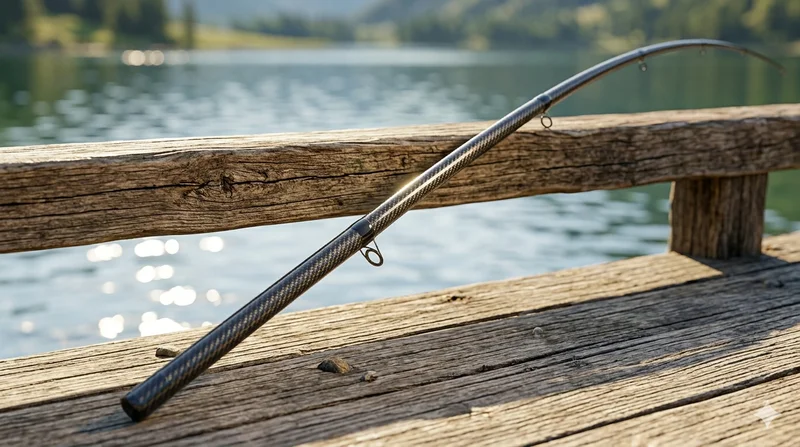
Carbon Fiber Fishing Rod Blank
High-quality carbon fiber fishing rod blank manufactured from multiple grades of Toray carbon fiber cloth. Available in a wide range of lengths, powers, and actions for freshwater and saltwater applications. Suitable for OEM rod building.
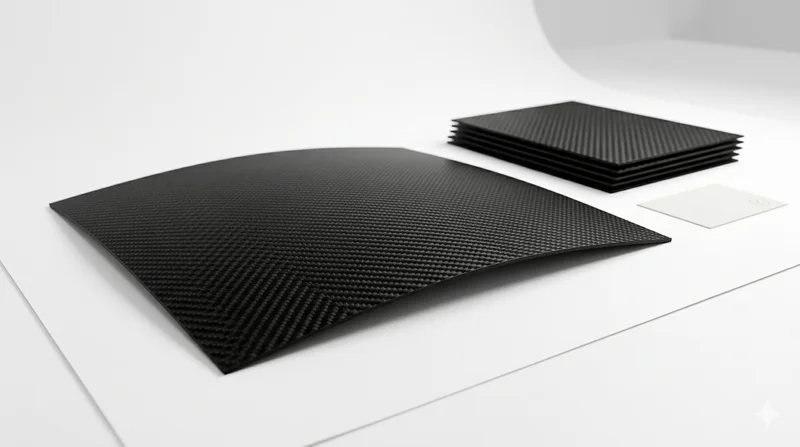
Carbon Fiber Plate — 3K Twill T700 1.5mm
Thin 1.5mm carbon fiber plate with 3K twill weave surface. Lightweight and stiff, commonly used for covers, panels, drone bodies, and applications requiring a premium aesthetic appearance.
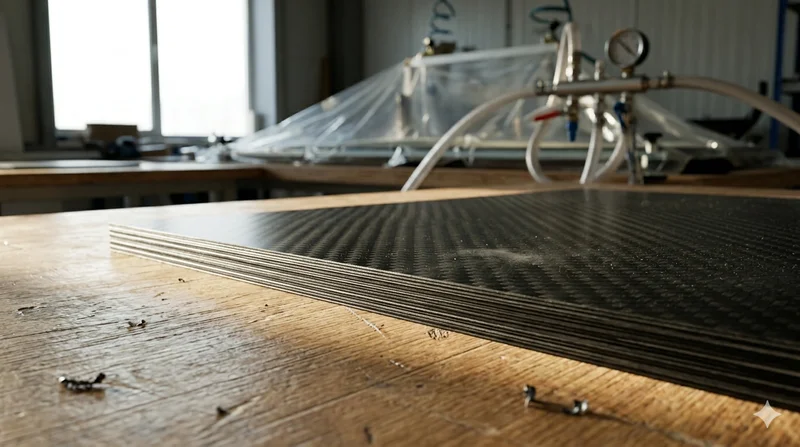
Carbon Fiber Plate — 3K Twill T700 3.0mm
Medium-thickness 3.0mm carbon fiber plate offering significantly higher load capacity while maintaining attractive 3K twill finish. Suitable for structural brackets, reinforcement plates, and load-bearing panels.
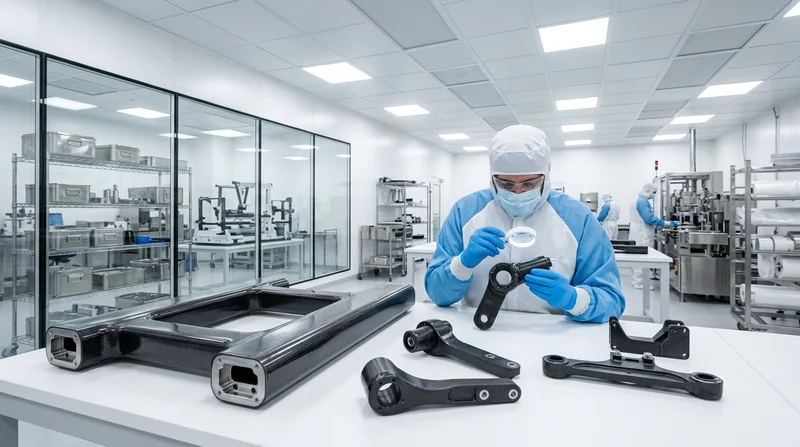
Custom Carbon Fiber Medical Device Components
Medical-grade carbon fiber components manufactured for imaging equipment, surgical instruments, and patient support systems. Carbon fiber's radiolucency (X-ray transparency) and high strength-to-weight ratio make it ideal for CT scanner beds, wheelchair frames, surgical robot arms, and MRI-compatible accessories. Biocompatible resin systems available.
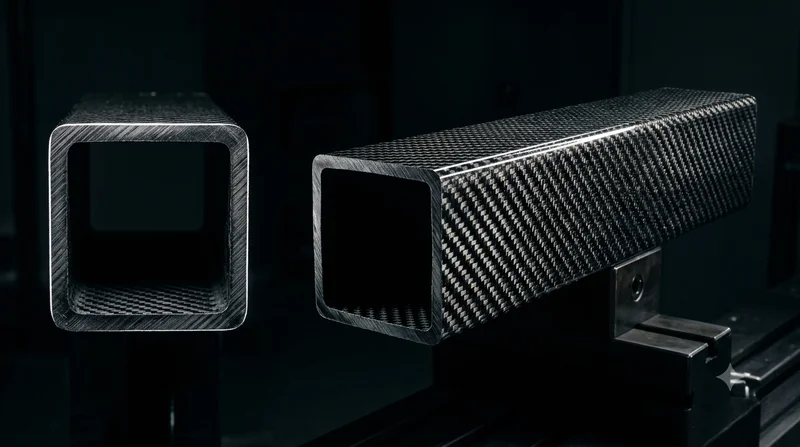
Square Carbon Fiber Tube — 3K Twill T700
Square cross-section carbon fiber tube manufactured with 3K twill weave for torsional strength. Preferred for structural frames, trusses, and support columns where rectangular geometry offers design flexibility.