
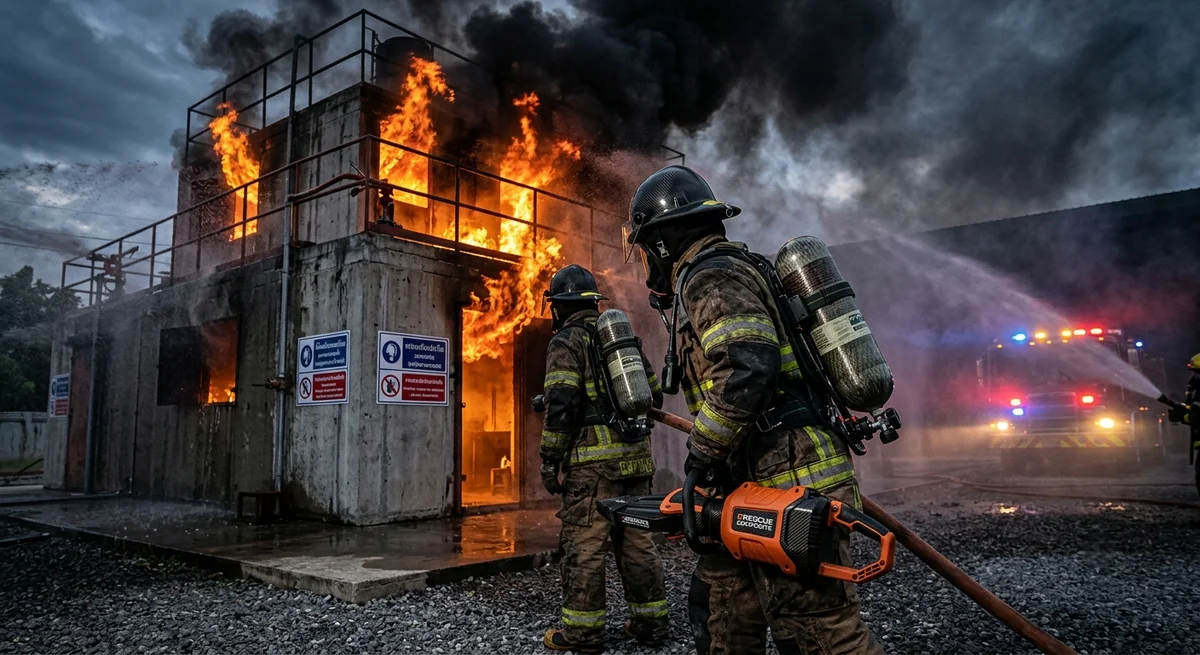
Carbon fiber composites are transforming emergency response equipment, offering significant weight reduction, improved durability, and enhanced operational efficiency for firefight
Carbon Fiber SCBA Cylinders
The most widespread adoption of carbon fiber in firefighting equipment is in SCBA cylinder manufacturing. Type III and Type IV composite cylinders — carbon fiber filament-wound over an aluminum (Type III) or polymer (Type IV) liner — have become the industry standard, replacing heavier steel cylinders.
Performance Comparison
| Parameter | Steel Cylinder | Type III Carbon Fiber | Type IV Carbon Fiber |
|---|---|---|---|
| Empty weight (6.8L, 300 bar) | 8.2 kg | 4.1 kg | 3.6 kg |
| Weight reduction vs steel | — | 50% | 56% |
| Service life | 15 years | 15 years | 15 years |
| Hydrostatic test interval | 5 years | 5 years | 5 years |
| Impact resistance | Good | Excellent | Very good |
| Cost premium vs steel | — | +60-80% | +80-100% |
The weight savings directly translate to operational benefits. A firefighter carrying a Type IV cylinder experiences approximately 4.6 kg less weight on their back compared to a steel equivalent — representing a 25-30% reduction in the combined SCBA system weight. Over a 45-minute SCBA duration, this translates to measurable reductions in metabolic workload, heart rate elevation, and perceived exertion.
Material Specifications for SCBA Cylinders
SCBA cylinder manufacturers typically specify:
- Carbon fiber tow: T700S or equivalent (standard modulus, 4,900 MPa tensile strength)
- Resin system: Epoxy with 120-150°C curing temperature
- Winding pattern: Helical + hoop layers at programmed winding angles
- Liner material: 6061 aluminum alloy (Type III) or HDPE/PA6 (Type IV)
- Safety factor: 2.25:1 minimum burst-to-service pressure ratio (ISO 11119-3)
- Standards compliance: EN 12245, DOT-SP 14533, ISO 11119-3
Rescue Tools and Cutters
Battery-powered rescue tools (spreaders, cutters, combi-tools) have increasingly adopted carbon fiber reinforced polymer housings and components to reduce overall tool weight. Whereas traditional hydraulic rescue tools weigh 18-25 kg and require a separate power unit, modern battery-powered carbon fiber rescue tools weigh 10-14 kg with integrated lithium-ion battery packs.
Specific carbon fiber components in rescue tools include:
- Motor housing: Carbon fiber reinforced PA66 or PEEK for high-temperature resistance during sustained cutting operations
- Handle assemblies: Unidirectional carbon fiber tubes wrapped with ergonomic grips
- Battery housing: Carbon fiber composite enclosures for impact protection and thermal management
- Hydraulic cylinder bodies: Filament-wound carbon fiber tubes replacing steel cylinders (reducing weight by 55-60%)
Helmets and Protective Gear
Modern firefighting helmets incorporate carbon fiber composites in shell construction. The shift from traditional thermoplastic (polycarbonate/ABS) shells to carbon fiber composites offers:
| Property | Thermoplastic Shell | Carbon Fiber Composite |
|---|---|---|
| Shell weight | 680-850 g | 420-550 g |
| Impact resistance (EN 443) | Pass | Pass (25% higher margin) |
| Heat resistance | 180°C continuous | 200°C continuous |
| Penetration resistance | Standard | Enhanced |
| Service life | 8-10 years | 10-12 years |
Carbon Fiber Helmet Shell Construction
Helmet shells are manufactured from 3-5 layers of carbon fiber fabric (200 g/m² to 400 g/m² areal weight) impregnated with high-temperature phenolic or modified epoxy resin. The layup typically includes:
1. Outer layer: 2x2 twill 3K carbon fiber for impact distribution and UV resistance
2. Middle layers: ±45° biaxial UD layers for torsional stiffness and impact energy absorption
3. Inner layer: Lighter weight fabric for smooth interior finish
Curing at 150-170°C for 45-60 minutes produces a shell with heat deflection temperature exceeding 220°C, capable of withstanding radiant heat exposure from structure fires.
Thermal Imaging Camera Housings
Handheld thermal imaging cameras (TICs) used by fire departments benefit from carbon fiber housings. The weight reduction — from 1.8 kg (aluminum housing) to 1.1 kg (carbon fiber housing) — improves ergonomics during extended use. Carbon fiber's natural thermal insulation properties also protect internal electronics from conducted heat when the camera is used in high-temperature environments.
Procurement Considerations for Emergency Services
Certification Requirements
All carbon fiber emergency response equipment sold in regulated markets must carry specific certifications:
- NFPA 1981 (SCBA): US standard for open-circuit SCBA
- EN 443 (Helmets): European standard for firefighter helmets
- NFPA 1976 (Rescue tools): Standard for powered rescue tool systems
- ISO 11119-3 (Composite cylinders): International standard for gas cylinders
Supplier Qualification
B2B buyers in the emergency services sector should evaluate suppliers on:
1. Certification documentation: Full traceability from raw material to finished product
2. Testing capabilities: In-house hydrostatic, impact, and heat resistance testing
3. Production capacity: Minimum annual volume commitments and lead time reliability
4. Material consistency: Batch-to-batch fiber and resin property documentation
5. Technical support: Assistance with specification development and regulatory compliance
FAQ
How much weight can carbon fiber SCBA cylinders save compared to steel?
Type III carbon fiber cylinders offer approximately 50% weight reduction compared to steel, while Type IV cylinders achieve approximately 56% reduction. For a typical 6.8-liter, 300-bar cylinder, this represents savings of 4.1 kg and 4.6 kg respectively.
Are carbon fiber firefighting helmets as impact-resistant as traditional ones?
Yes — carbon fiber composite helmets typically exceed impact resistance requirements by 25% or more compared to thermoplastic shells while weighing 30-40% less. They also offer superior heat resistance and longer service life (10-12 years vs 8-10 years for thermoplastic).
What certifications should carbon fiber emergency equipment have?
Key certifications include NFPA 1981 for SCBA, EN 443 for helmets, NFPA 1976 for rescue tools, and ISO 11119-3 for composite cylinders. Buyers should verify that suppliers provide full certification documentation and traceability.
Related Articles
- Carbon Fiber Mooring for Floating Offshore Wind: Fatigue and Corrosion in Deep Water
- Carbon Fiber Bicycle Frame Optimization: Layup Design and Manufacturing for Competitive Racing
- Carbon Fiber CFRP Retrofit for Infrastructure: Bridge and Building Seismic Strengthening
- Carbon Fiber Medical Imaging Equipment: Lightweight Gantry and Couch Structures for MRI/CT
- Carbon Fiber EV Battery Enclosures: Crash Safety and Electromagnetic Shielding Design
- Carbon Fiber Structures for Low-Altitude Economy: UAV Airframes and eVTOL Components
Interested in Our Products?
Contact our team for competitive pricing and technical specifications.
Get a QuoteRelated Products
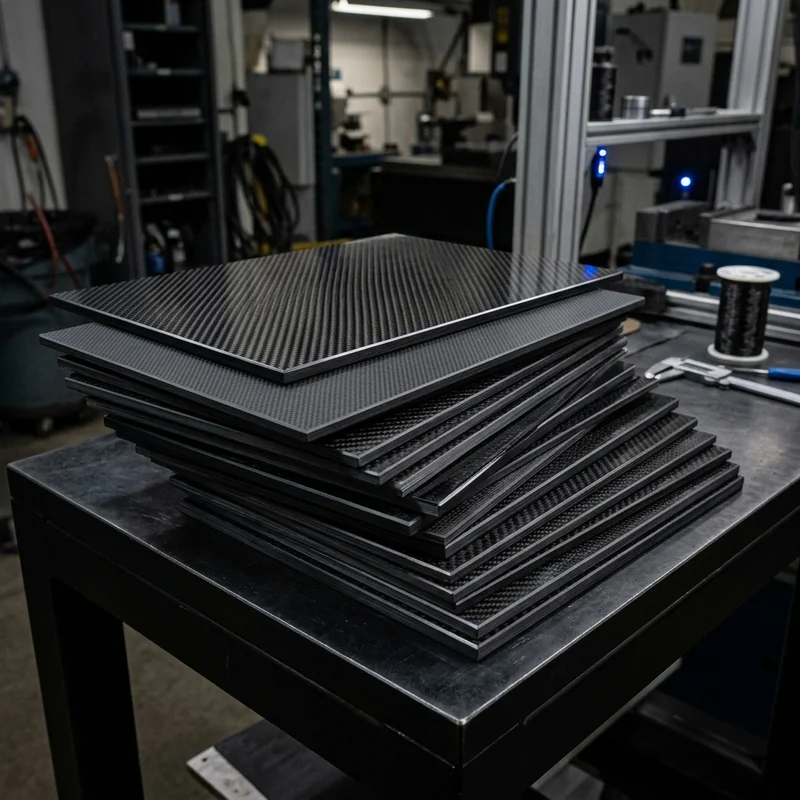
Carbon fiber standard plate-3k stripe
Lightweight, ultra-rigid standard sheets for drone fuselages, robot housings, facades and structural applications.

Carbon Fiber Plate — 3K Twill T700 1.5mm
Thin 1.5mm carbon fiber plate with 3K twill weave surface. Lightweight and stiff, commonly used for covers, panels, drone bodies, and applications requiring a premium aesthetic appearance.

Square Carbon Fiber Tube — 3K Twill T700
Square cross-section carbon fiber tube manufactured with 3K twill weave for torsional strength. Preferred for structural frames, trusses, and support columns where rectangular geometry offers design flexibility.

Carbon Fiber Plate — 3K Twill T700 3.0mm
Medium-thickness 3.0mm carbon fiber plate offering significantly higher load capacity while maintaining attractive 3K twill finish. Suitable for structural brackets, reinforcement plates, and load-bearing panels.
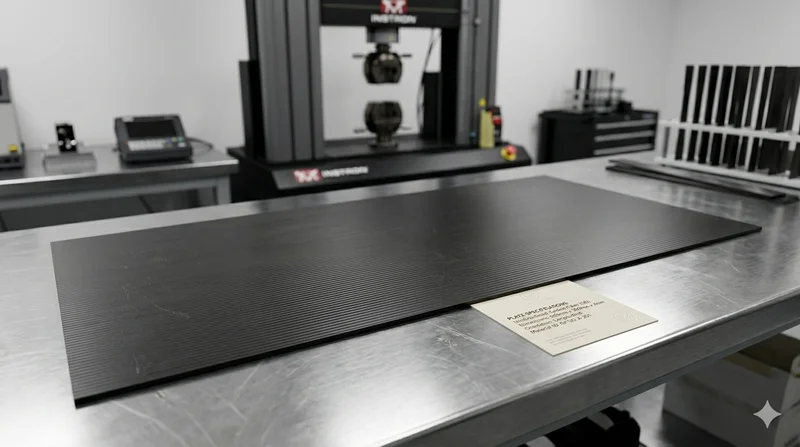
Carbon Fiber Plate — UD Unidirectional T700
Unidirectional carbon fiber plate with all fibers oriented in a single direction for maximum strength along the fiber axis. Essential for structural reinforcements, splints, and applications where load direction is predictable.