
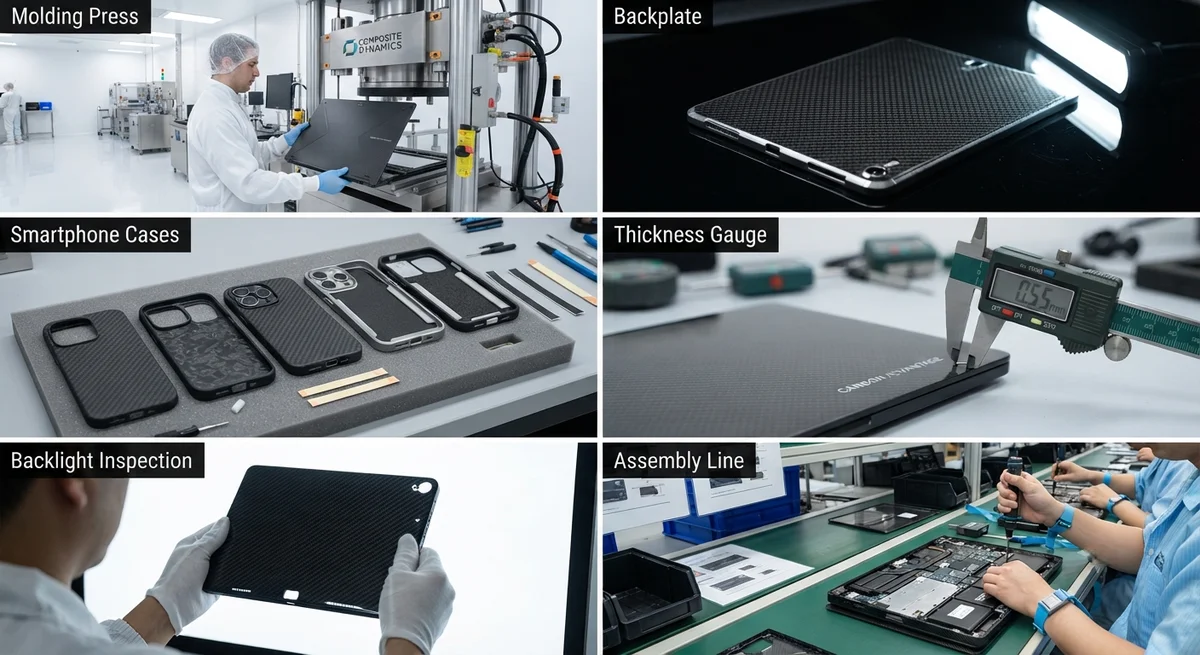
Carbon fiber composites are rapidly replacing magnesium alloys and aluminum in premium consumer electronics housings, offering weight reductions of 30–50% with superior EMI shielding, thermal management, and impact resistance. This article provides a comprehensive technical analysis of carbon fiber's application in laptop cases, tablet frames, and smartphone chassis, including material selection criteria, manufacturing processes, and mechanical performance data.
The Case for Carbon Fiber in Portable Electronics
The consumer electronics industry is engaged in a relentless pursuit of thinner, lighter, and more durable devices. Magnesium alloys—the current material of choice for premium laptop chassis—offer a density of 1.74 g/cm³ but suffer from galvanic corrosion, limited fatigue life, and poor EMI shielding performance. Aluminum unibody designs, while aesthetically appealing, weigh 30–40% more than carbon fiber equivalents of the same stiffness. Carbon fiber reinforced polymers (CFRP) address all three limitations simultaneously while enabling design freedom that is impossible with metal stamping or CNC machining.
Apple's transition to carbon fiber-reinforced structures in certain iPad Pro components and the growing adoption of carbon fiber backs on flagship smartphones from manufacturers such as Xiaomi, OnePlus, and Oppo signal a broader industry shift. The global carbon fiber consumer electronics market is projected to grow from $420 million in 2026 to $1.8 billion by 2031, representing a compound annual growth rate (CAGR) of 33.7%, driven by demand for 5G-compatible housings that do not interfere with antenna performance.
Material Property Comparison: Carbon Fiber vs. Conventional Housing Materials
The selection of housing material directly impacts device weight, durability, thermal performance, and wireless signal integrity. The following table compares the key material properties relevant to consumer electronics enclosures:
| Property | CFRP (1K/3K Plain Weave) | Magnesium AZ91D | Aluminum 6063 | Polycarbonate/ABS |
|---|---|---|---|---|
| Density (g/cm³) | 1.45 | 1.74 | 2.70 | 1.15 |
| Tensile Modulus (GPa) | 70–90 | 45 | 69 | 2.0–2.5 |
| Specific Stiffness (GPa·cm³/g) | 48–62 | 26 | 26 | 1.7–2.2 |
| Thickness for Equal Stiffness (mm) | 1.0 | 1.2 | 1.4 | 4.5 |
| EMI Shielding (dB at 1 GHz) | 55–70 | 55–65 | 60–75 | 0 (requires coating) |
| Thermal Conductivity (W/m·K) | 0.5–1.5 (through-plane) | 72 | 201 | 0.2 |
| Coefficient of Thermal Expansion (μm/m·K) | 1.5–2.5 (fiber direction) | 26 | 23 | 70–80 |
| Dielectric Constant (at 2.4 GHz) | 3.0–5.0 | N/A (conductive) | N/A (conductive) | 2.8–3.2 |
| Weight per 100 cm² Panel (g) | 14.5 (1 mm) | 20.9 (1.2 mm) | 37.8 (1.4 mm) | 51.8 (4.5 mm) |
EMI Shielding and 5G Compatibility
One of the most critical technical requirements for modern consumer electronics housings is electromagnetic interference (EMI) shielding that does not compromise wireless antenna performance. Metal housings inherently block radio frequency signals, forcing device manufacturers to incorporate plastic antenna windows or complex segmented metal frames—design compromises that add cost and reduce structural integrity. Carbon fiber composites offer a unique dual-mode solution: the carbon fiber layer provides 55–70 dB of EMI attenuation across the 100 MHz to 6 GHz spectrum (covering 5G sub-6 GHz bands), while the composite's dielectric properties can be locally tuned by modifying fiber orientation or using hybrid kevlar/carbon layups at antenna locations.
For millimeter-wave (mmWave) 5G bands at 24–40 GHz, a carbon fiber housing with a surface resistivity of 0.5–2.0 Ω/sq achieves < 3 dB insertion loss when the antenna is placed behind a 0.3–0.5 mm CFRP panel, compared to > 15 dB loss through an equivalent metal enclosure. This 12+ dB advantage translates to a 40–60% improvement in mmWave signal range, which is critical for maintaining reliable 5G connectivity in urban environments.
Key specifications for EMI-optimized carbon fiber enclosures:
- Surface resistivity: 0.3–1.5 Ω/sq (standard 1K/3K fabric), adjustable by tow size and fiber volume fraction
- EMI shielding effectiveness: 55–70 dB (100 MHz–6 GHz), 40–55 dB (24–40 GHz mmWave)
- Antenna window transmission: > 90% at 28 GHz with 0.3 mm hybrid kevlar/glass window insert
- Static dissipation: Surface charge decay < 2 seconds from 5,000 V to 50 V per MIL-STD-3010
- ESD protection: Compatible with IEC 61000-4-2 Level 4 (±15 kV air discharge, ±8 kV contact discharge)
Thin-Wall Molding and Surface Finish Capabilities
Consumer electronics housings demand wall thicknesses of 0.6–1.2 mm with Class A surface finish (Ra < 0.4 μm) and precise color matching for brand identity. Carbon fiber composite enclosures achieve these requirements through a combination of high-quality 1K or 3K fabric prepreg, precision-matched mold tooling, and specialized surface coating processes. YongXian CarbonFiber's thin-wall CFRP molding capability produces laptop A-cover panels at 0.8 mm thickness with a weight of just 29 g for a standard 14-inch laptop lid (315 mm × 220 mm)—compared to 48 g for a magnesium alloy equivalent at 1.0 mm thickness—representing a 40% weight reduction.
Surface finish options for carbon fiber electronics housings include:
- Gloss clear coat: High-gloss UV-cured polyurethane, 30–50 μm thickness, gloss value > 90 GU at 60°, DOI > 85%
- Matte soft-touch: Textured polyurethane with 5–8 μm silicone additive, gloss 3–8 GU at 60°, coefficient of friction 0.4–0.6
- Metallic paint: Vacuum metallization or physical vapor deposition (PVD) base layer with clear topcoat, enabling silver, space gray, and midnight finishes indistinguishable from anodized aluminum
- Exposed carbon fiber: Direct clear coat over the weave pattern with a UV stabilizer package, showing the 3D twill texture—popular for gaming laptops and premium smartphone backs
- Textured mold finish: Pattern transferred from the mold surface (leather grain, carbon geometric, micro-dot), eliminating secondary coating for certain applications
Manufacturing Processes for Consumer Electronics Housings
Unlike aerospace or automotive components, consumer electronics housings are produced at volumes of 100,000–5,000,000 units per model year, requiring manufacturing processes that balance speed, precision, and cost. The following table summarizes the primary CFRP manufacturing processes used for electronics enclosures:
| Process | Cycle Time | Wall Thickness | Tooling Cost | Part Cost Index | Best For |
|---|---|---|---|---|---|
| Compression Molding | 3–8 min | 0.6–1.5 mm | $$ | 1.0 (baseline) | Laptop lids, tablet back panels |
| Thin-Ply RTM | 5–15 min | 0.4–1.0 mm | $$$ | 1.3–1.6 | Smartphone frames, ultra-thin devices |
| Automated Layup + Press | 2–5 min | 0.8–2.0 mm | $$$ | 1.5–2.0 | Complex 3D geometries |
| Injection Molding (short-fiber) | 30–60 sec | 1.0–2.5 mm | $ | 0.4–0.6 | Internal brackets, low-cost components |
Thermal Management in Thin-Wall CFRP Enclosures
One of the historical limitations of carbon fiber for electronics housings has been its low through-plane thermal conductivity (0.5–1.5 W/m·K), which can trap heat generated by high-performance processors. However, this same property becomes an advantage when CFRP is used as a thermal barrier to protect external surfaces from becoming hot to the touch—a regulatory requirement under IEC 62368-1, which limits external surface temperatures to 48°C for metal and 55°C for plastic/composite enclosures under normal operating conditions.
Modern thermal management strategies for CFRP electronics enclosures include:
- Graphene-enhanced CFRP: Graphene nanoplatelet (GNP) loading at 3–8 wt% increases through-plane thermal conductivity to 15–35 W/m·K while maintaining EMI shielding performance above 55 dB
- Hybrid metal-CFRP construction: A 0.1–0.2 mm copper or aluminum heat spreader laminated between CFRP layers creates a thermal path of 150–380 W/m·K in-plane, directing heat to edge vents
- Integrated vapor chamber: A 0.4 mm flat vapor chamber bonded to the inner CFRP surface provides effective thermal conductivity of 2,000–5,000 W/m·K for hot spots exceeding 15 W/cm²
- Thermal via arrays: Periodic through-thickness copper-filled microvias (0.3 mm diameter, 1–2 mm pitch) provide localized thermal conduction paths without compromising the composite's structural integrity
Frequently Asked Questions
Does carbon fiber block Wi-Fi, Bluetooth, or cellular signals?
Standard carbon fiber composites provide 55–70 dB of EMI shielding, which can attenuate signals if the antenna is entirely enclosed within a CFRP housing without proper design provisions. However, with intentional design—such as local carbon fiber removal at antenna locations, use of hybrid kevlar/carbon layups, or dielectric window inserts—signal transmission through the housing can exceed 90% for Wi-Fi (2.4/5 GHz), Bluetooth, and 5G sub-6 GHz bands. For mmWave 5G (24–40 GHz), a 0.3 mm CFRP panel with optimized fiber orientation achieves < 3 dB insertion loss, enabling reliable connectivity.
How durable is a carbon fiber phone case against drops and impacts?
Carbon fiber composite smartphone cases demonstrate exceptional impact resistance. In controlled drop tests per MIL-STD-810H Method 516.8, a 0.8 mm CFRP back panel survived 26 drops from 1.5 m onto concrete without catastrophic failure, compared to 2–3 drops for a 0.5 mm glass back panel and 8–12 drops for a 1.0 mm polycarbonate back panel. The carbon fiber case also dissipates impact energy through controlled fiber delamination rather than brittle fracture, maintaining structural integrity even after visible surface damage. YongXian CarbonFiber's proprietary impact-modified resin system achieves Charpy impact strength of 85–120 kJ/m² at 0.8 mm thickness.
Can carbon fiber housings be recycled or repaired?
Yes, carbon fiber from electronics housings can be recycled through pyrolysis or solvolysis processes. Pyrolysis at 450–700°C in an oxygen-free atmosphere recovers carbon fibers with 85–95% of their original tensile strength. The reclaimed fibers can be used in lower-grade applications such as injection-molded short-fiber compounds for internal brackets or automotive underhood components. Mechanical recycling (grinding and compounding) is also an option. Consumers can typically not repair carbon fiber housings, but OEMs offer replacement programs. The scrap rate in manufacturing is 3–5% for compression molded CFRP housings, with most scrap being recycled.
What is the cost premium for carbon fiber vs. aluminum or plastic housings?
At production volumes of 100,000–500,000 units, a compression-molded CFRP laptop lid costs $6–$12 per unit, compared to $4–$7 for a magnesium alloy lid and $1.50–$3.00 for a PC/ABS plastic lid. The cost premium for CFRP is 1.5–2.5× over magnesium and 4–6× over plastic. However, for premium devices priced above $1,000, the cost increment is a small fraction of the total bill of materials and is justified by the weight savings (40–50% vs. magnesium), improved durability, and enhanced brand perception associated with visible carbon fiber weave patterns.
Part of topic
Related Articles
- Carbon Fiber Mooring for Floating Offshore Wind: Fatigue and Corrosion in Deep Water
- Carbon Fiber Bicycle Frame Optimization: Layup Design and Manufacturing for Competitive Racing
- Carbon Fiber CFRP Retrofit for Infrastructure: Bridge and Building Seismic Strengthening
- Carbon Fiber Medical Imaging Equipment: Lightweight Gantry and Couch Structures for MRI/CT
- Carbon Fiber EV Battery Enclosures: Crash Safety and Electromagnetic Shielding Design
- Carbon Fiber Structures for Low-Altitude Economy: UAV Airframes and eVTOL Components
Interested in Our Products?
Contact our team for competitive pricing and technical specifications.
Get a QuoteRelated Products
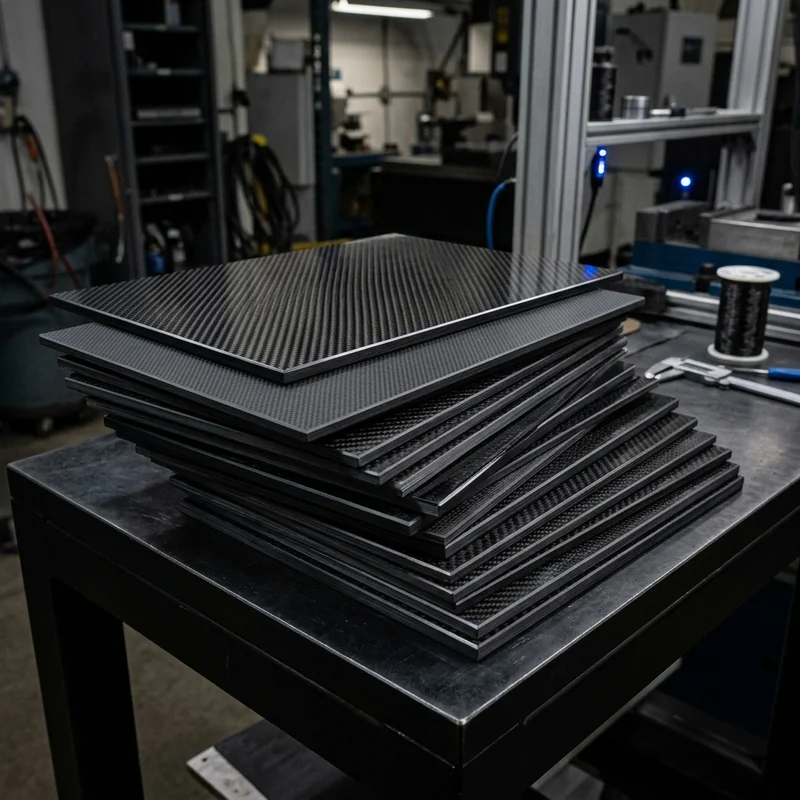
Carbon fiber standard plate-3k stripe
Lightweight, ultra-rigid standard sheets for drone fuselages, robot housings, facades and structural applications.

Carbon Fiber Plate — 3K Twill T700 1.5mm
Thin 1.5mm carbon fiber plate with 3K twill weave surface. Lightweight and stiff, commonly used for covers, panels, drone bodies, and applications requiring a premium aesthetic appearance.

Square Carbon Fiber Tube — 3K Twill T700
Square cross-section carbon fiber tube manufactured with 3K twill weave for torsional strength. Preferred for structural frames, trusses, and support columns where rectangular geometry offers design flexibility.

Carbon Fiber Plate — 3K Twill T700 3.0mm
Medium-thickness 3.0mm carbon fiber plate offering significantly higher load capacity while maintaining attractive 3K twill finish. Suitable for structural brackets, reinforcement plates, and load-bearing panels.
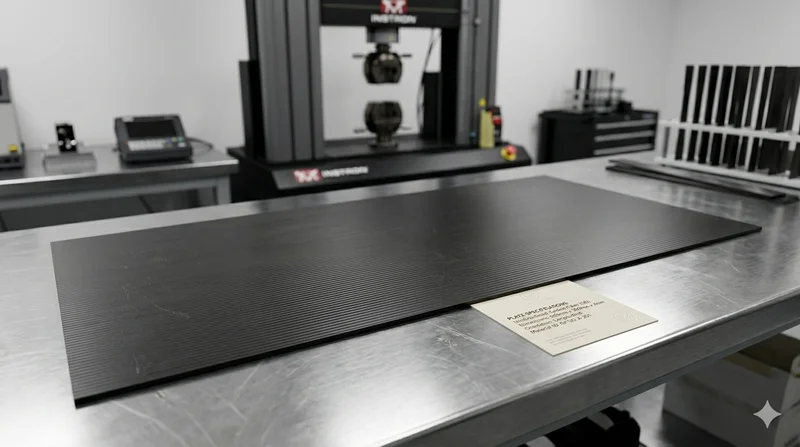
Carbon Fiber Plate — UD Unidirectional T700
Unidirectional carbon fiber plate with all fibers oriented in a single direction for maximum strength along the fiber axis. Essential for structural reinforcements, splints, and applications where load direction is predictable.