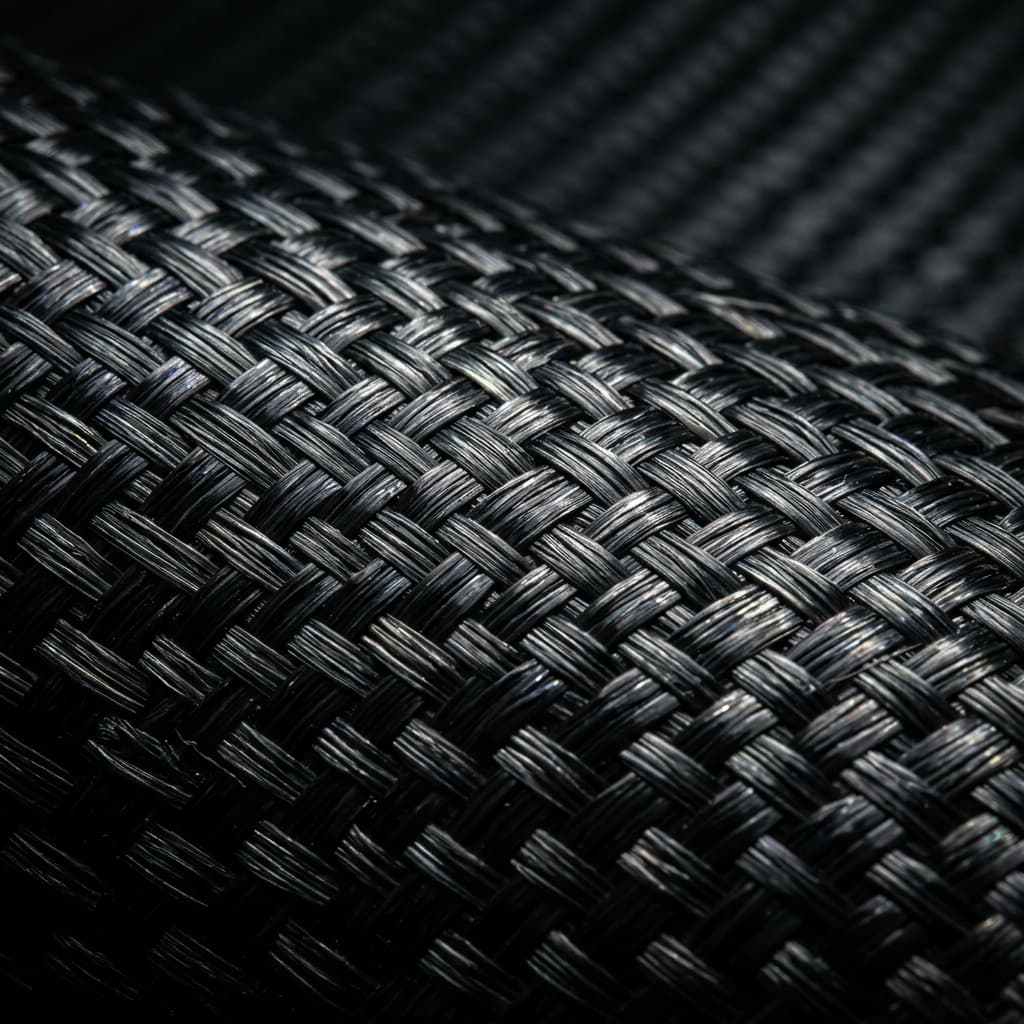
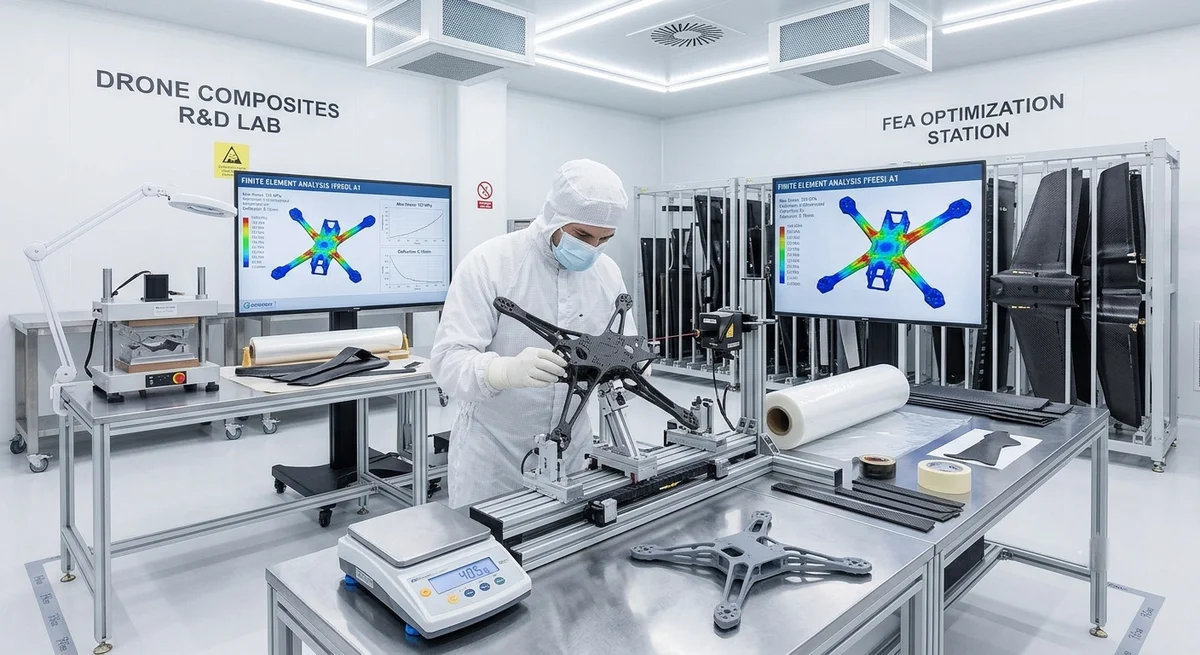
Carbon fiber drone frame design requires balancing weight (5–50 g for micro-drones to 200–800 g for heavy-lift platforms), torsional stiffness for flight stability, and manufacturability for cost-effective production. This article provides quantitative design guidelines, material selection data, and FEA validation approaches.
Carbon Fiber Drone Frame Design: Engineering the Optimal Structure
The global drone market is projected to reach $54.4 billion by 2028, with over 80% of professional-grade frames now manufactured from carbon fiber composites.
Material Selection for Drone Frames
| Material | Specific Stiffness (MN·m/kg) | Cost ($/kg) | Application |
|---|---|---|---|
| T300 3K woven | 45 | $25–35 | Entry-level racing |
| T700 3K/12K woven | 47 | $35–50 | Mid-range commercial |
| T800 UD prepreg | 103 | $55–75 | High-end racing |
| M40J UD prepreg | 141 | $90–130 | Heavy-lift, military |
Key Structural Requirements
| Parameter | Racing (250 g) | Heavy-Lift (50 kg) |
|---|---|---|
| Target frame weight | 25–35 g | 500–800 g |
| First torsional mode | >150 Hz | >50 Hz |
| Impact energy (>3 m drop) | >5 J | >30 J |
Laminate Stack Optimization
Recommended layup for T700 3K woven arms (8-ply, 2.0 mm): alternating [0/90] and [+45/−45] for balanced stiffness. For T800 UD racing arms (6-ply, 1.5 mm): T700 woven surface + 4 plies T800 UD [0°] + T700 woven bottom. FEA shows UD-dominant stack provides 2.3× bending stiffness with only 12% increase in torsional compliance.
Design for Manufacturing (DFM)
| Parameter | Compression Molding | Hand Layup + Autoclave | CNC-cut from Plate |
|---|---|---|---|
| Cycle time | 8–15 min | 90–180 min | 15–30 min |
| Part cost at 5,000/yr | $8–18 | $25–60 | $12–25 |
FAQ
Q: What is the optimal fiber orientation for drone arms?
A: For bending-dominant arms, 70% 0° UD + 30% ±45° woven provides the best balance. Pure 0° UD has excellent axial stiffness but near-zero torsional rigidity.
Q: Compression molding vs autoclave?
A: Compression molding (8–15 min, $8–18/part) for ≥1,000 units/yr. Autoclave (90–180 min, $25–60/part) for lowest void content (<0.5%). CNC cutting best for <200 units/yr.
Q: How to size arms for a given thrust?
A: t = ∛[(4 × SF × F × L³) / (E × w)]. Closed-section arms (box/tube) provide 5–20× higher torsional rigidity than open-section arms.
Part of topic
Related Articles
- Carbon Fiber Mooring for Floating Offshore Wind: Fatigue and Corrosion in Deep Water
- Carbon Fiber Bicycle Frame Optimization: Layup Design and Manufacturing for Competitive Racing
- Carbon Fiber CFRP Retrofit for Infrastructure: Bridge and Building Seismic Strengthening
- Carbon Fiber Medical Imaging Equipment: Lightweight Gantry and Couch Structures for MRI/CT
- Carbon Fiber EV Battery Enclosures: Crash Safety and Electromagnetic Shielding Design
- Carbon Fiber Structures for Low-Altitude Economy: UAV Airframes and eVTOL Components
Interested in Our Products?
Contact our team for competitive pricing and technical specifications.
Get a QuoteRelated Products
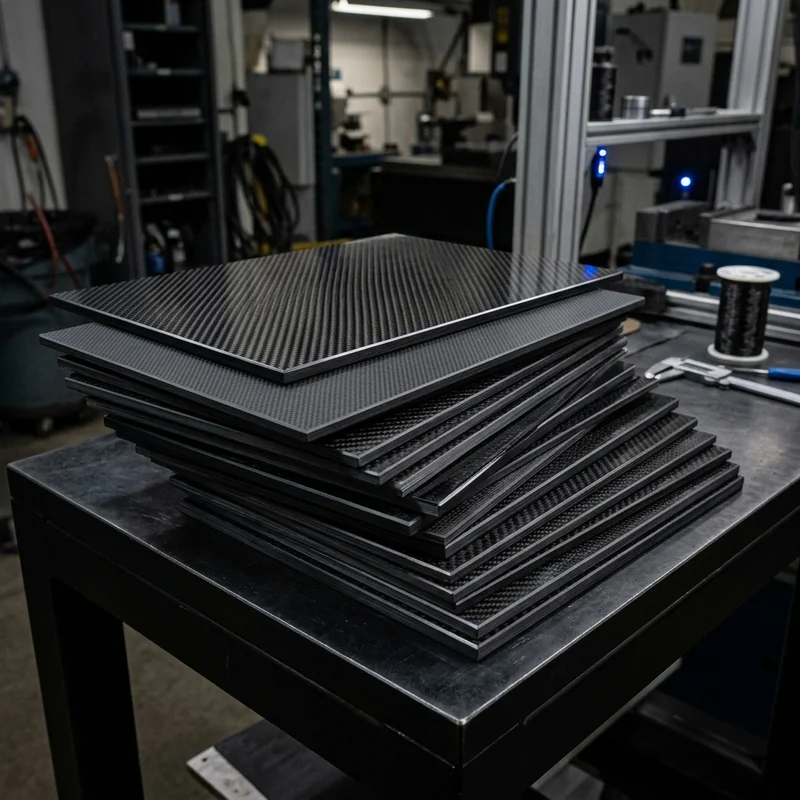
Carbon fiber standard plate-3k stripe
Lightweight, ultra-rigid standard sheets for drone fuselages, robot housings, facades and structural applications.
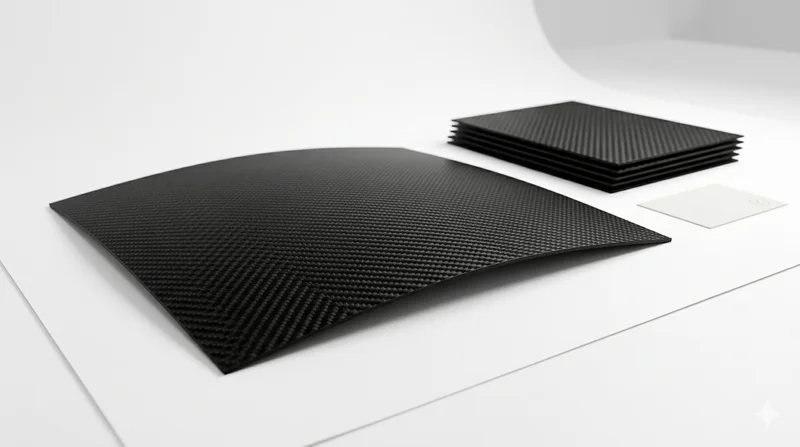
Carbon Fiber Plate — 3K Twill T700 1.5mm
Thin 1.5mm carbon fiber plate with 3K twill weave surface. Lightweight and stiff, commonly used for covers, panels, drone bodies, and applications requiring a premium aesthetic appearance.
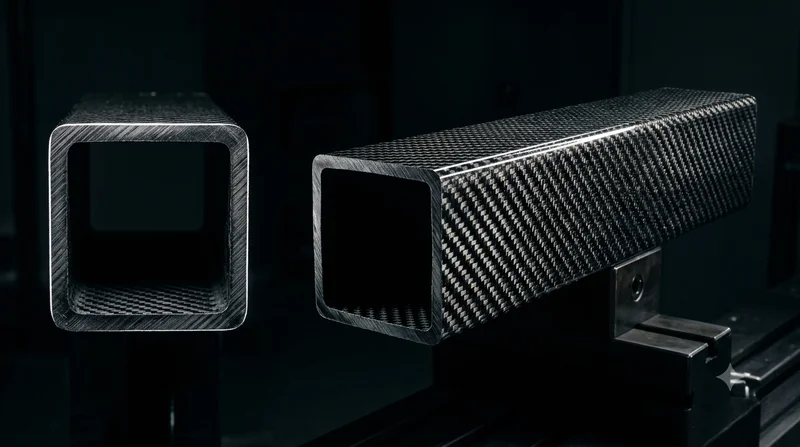
Square Carbon Fiber Tube — 3K Twill T700
Square cross-section carbon fiber tube manufactured with 3K twill weave for torsional strength. Preferred for structural frames, trusses, and support columns where rectangular geometry offers design flexibility.
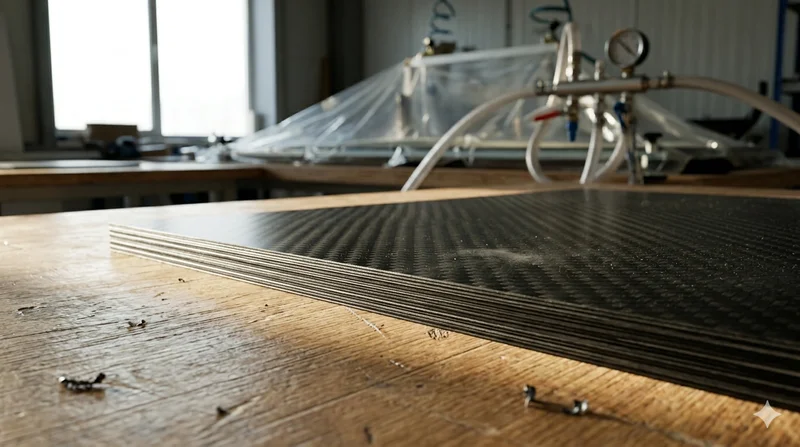
Carbon Fiber Plate — 3K Twill T700 3.0mm
Medium-thickness 3.0mm carbon fiber plate offering significantly higher load capacity while maintaining attractive 3K twill finish. Suitable for structural brackets, reinforcement plates, and load-bearing panels.
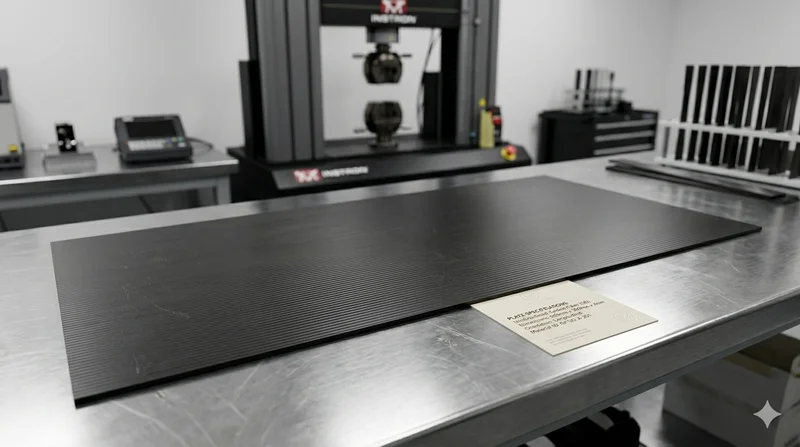
Carbon Fiber Plate — UD Unidirectional T700
Unidirectional carbon fiber plate with all fibers oriented in a single direction for maximum strength along the fiber axis. Essential for structural reinforcements, splints, and applications where load direction is predictable.