

The European Union's Ecodesign for Sustainable Products Regulation (ESPR) introduces the Digital Product Passport (DPP) as a foundational tool for circular economy compliance. For carbon fiber reinforced polymer (CFRP) components, the DPP represents more than a regulatory checkbox — it
Introduction
The European Union's Ecodesign for Sustainable Products Regulation (ESPR) introduces the Digital Product Passport (DPP) as a foundational tool for circular economy compliance. For carbon fiber reinforced polymer (CFRP) components, the DPP represents more than a regulatory checkbox — it becomes a cross-chain data carrier that connects raw material sourcing, manufacturing processes, product performance, and end-of-life recycling into a single traceable digital record.
Starting with batteries and textiles in 2027, the DPP framework will expand to cover construction products and intermediate materials, including carbon fiber composites, by 2028-2029. For CFRP manufacturers and buyers, understanding the specific data requirements now is critical to avoiding supply chain disruptions and maintaining access to the EU market. This article details the mandatory data fields, explains the technical infrastructure needed for compliance, and outlines preparation strategies for composite manufacturers at every scale.
What the EU Digital Product Passport Requires
The DPP regulation mandates that each product carry a machine-readable data carrier — typically a QR code or RFID tag — linking to a standardized digital record. For CFRP components, the regulation specifies data requirements across four categories:
- Product identification: Unique product identifier, manufacturer details, model name, serial number, and date of manufacture. The identifier must follow ISO/IEC 15459 standards for global uniqueness.
- Material composition: Fiber type ( PAN-based, pitch-based, recycled), matrix resin system (epoxy, PEEK, vinyl ester), fiber volume fraction, and total composite mass. The DPP must distinguish between virgin and recycled content with percentage breakdowns.
- Environmental footprint: Carbon footprint per kilogram of component (measured per ISO 14067), energy consumption during manufacturing, water usage, and chemical treatments applied. The Product Environmental Footprint (PEF) methodology will serve as the calculation standard.
- Circularity data: Recommended disassembly methods, recyclability score (0-100), maximum service life, maintenance intervals, and end-of-life processing instructions. Recyclers must be able to identify compatible chemical recycling processes from the DPP data.
Timeline and Implementation Phases
The EU has established a phased rollout for DPP requirements, with composite-relevant deadlines as follows:
| Phase | Product Category | Deadline | Composite Impact |
|---|---|---|---|
| Phase 1 | Batteries, EVs | February 2027 | CFRP battery enclosures in EVs require DPP |
| Phase 2 | Textiles, construction | 2028 | Carbon fiber textile intermediates covered |
| Phase 3 | Intermediate materials | 2028-2029 | CFRP preprints, fabrics, and semi-finished products |
| Phase 4 | All sustainable products | 2030 | Full coverage of all CFRP components |
Manufacturers should begin data collection infrastructure now, even before the legal deadline applies to their specific product category. The data architecture decisions made today will determine compliance costs for the next decade.
Data Infrastructure for CFRP DPP Compliance
Meeting DPP requirements demands integration across manufacturing execution systems (MES), enterprise resource planning (ERP), and supply chain management platforms. The key technical challenges for CFRP manufacturers include:
- Batch traceability: Carbon fiber production lots must be tracked from carbonization through weaving, prepregging, and final molding. Each transformation step generates new data fields that must be linked to the original material batch.
- Recycled content verification: When CFRP components contain recycled carbon fiber, the DPP must reference the recycling process used (pyrolysis, solvolysis, or mechanical) and verify the recycled fiber properties against virgin specifications.
- Carbon footprint calculation: The PEF methodology requires cradle-to-gate carbon accounting, including energy consumption at each manufacturing stage. For CFRP, the carbonization process dominates the footprint — typically 20-30 kg CO2e per kilogram of fiber produced.
- API integration: The DPP data must be accessible through standardized APIs that allow authorized supply chain partners and regulators to query specific data fields without exposing proprietary manufacturing parameters.
Industry Preparation and Best Practices
Forward-thinking composite manufacturers are already investing in DPP-ready data systems. Several practical steps can be taken now:
- Digital thread implementation: Deploy manufacturing traceability systems that capture material provenance, process parameters, and quality test results at each production stage. This digital thread becomes the backbone of DPP data.
- Blockchain for provenance: Some manufacturers are exploring distributed ledger technology to provide tamper-proof records of material origin and processing history, particularly valuable for recycled content claims.
- GS1 standards adoption: The GS1 Digital Link standard is emerging as the preferred system for DPP data carriers, enabling global interoperability between manufacturers, distributors, and recyclers.
- Supplier data agreements: Establish formal data sharing agreements with carbon fiber suppliers to ensure upstream material data (origin, production method, environmental footprint) flows reliably into your DPP records.
Frequently Asked Questions
What happens if a CFRP manufacturer does not comply with DPP requirements by the deadline?
Non-compliant products cannot be placed on the EU market. The ESPR regulation allows market surveillance authorities to prohibit the sale of products without valid DPPs, and penalties can include fines proportional to the manufacturer's EU revenue. For supply chain participants, this means that even non-EU manufacturers must provide DPP data if their components are used in products sold within the European Economic Area. Early preparation is strongly recommended — waiting until the deadline creates compliance bottlenecks and potential supply chain disruptions.
How does the DPP affect recycled carbon fiber pricing and market access?
The DPP actually strengthens the business case for recycled carbon fiber by providing standardized verification of recycled content claims. Without DPP, buyers cannot easily distinguish genuinely recycled fiber from downcycled or virgin material marketed as recycled. With DPP, recycled fiber with verified provenance can command premium pricing in EU markets where circular economy incentives favor recycled materials. The DPP recyclability score also helps recyclers identify the most valuable end-of-life CFRP streams, improving recycling economics across the value chain.
Can small and medium CFRP manufacturers afford DPP compliance?
The EU has acknowledged that SMEs face disproportionate compliance burdens and is developing simplified DPP templates for smaller manufacturers. Additionally, cloud-based DPP platforms are emerging that offer subscription-based compliance services — reducing the upfront investment in data infrastructure. For manufacturers already using digital MES or ERP systems, the incremental cost of DPP compliance is typically 5-15% of existing system costs. The investment pays for itself through improved supply chain transparency and preferential access to EU procurement programs that prioritize DPP-compliant suppliers.
Conclusion
The EU Digital Product Passport is not merely a compliance requirement — it is a strategic tool that will reshape how CFRP components are valued, traded, and recycled across global supply chains. Manufacturers who build robust data infrastructure now will gain competitive advantages in market access, customer trust, and circular economy participation. The specific data fields — product identification, material composition, environmental footprint, and circularity data — are well-defined, and the timeline provides adequate preparation runway for those who act promptly.
For CFRP manufacturers evaluating their DPP readiness, the practical starting points are material batch traceability, carbon footprint measurement, and API-based data sharing architecture. Explore our carbon fiber product range with full material traceability documentation, or contact our compliance team to discuss DPP data requirements for your specific CFRP applications.
Part of topic
Related Articles
- Bio-Based Carbon Fiber Precursors: Lignin and Polyethylene for Low-Cost Production
- Large-Tow Carbon Fiber Cost Analysis: 48K vs 60K Price-Performance Comparison
- Carbon Fiber-Resin Interface Bonding: Surface Treatment and Coupling Agent Optimization
- Digital Twin for Carbon Fiber Manufacturing: Real-Time Process Monitoring and Defect Prevention
- Thermoplastic Carbon Fiber Welding for Automotive: Ultrasonic and Induction Welding Process Windows
- Large-Tow Carbon Fiber Wet Spinning: Process Optimization for 48K/60K Production Efficiency
Interested in Custom Carbon Fiber Products?
Contact our team for competitive pricing and technical specifications.
Get a QuoteRelated Products

Carbon Fiber Drone Arm
Precision-molded carbon fiber drone arm combining unidirectional fiber for stiffness and woven layers for torsional strength. Designed for FPV, photography, and industrial drone platforms. Each arm is CNC-machined to exact specifications.

Custom Carbon Fiber Medical Device Components
Medical-grade carbon fiber components manufactured for imaging equipment, surgical instruments, and patient support systems. Carbon fiber's radiolucency (X-ray transparency) and high strength-to-weight ratio make it ideal for CT scanner beds, wheelchair frames, surgical robot arms, and MRI-compatible accessories. Biocompatible resin systems available.

Custom Carbon Fiber Gimbal & Camera Mount
Lightweight carbon fiber gimbal arms and camera mounting components for aerial photography, film production, and broadcast applications. Our precision CNC machining ensures tight tolerances for vibration-sensitive equipment. Available in custom shapes to fit specific gimbal systems.
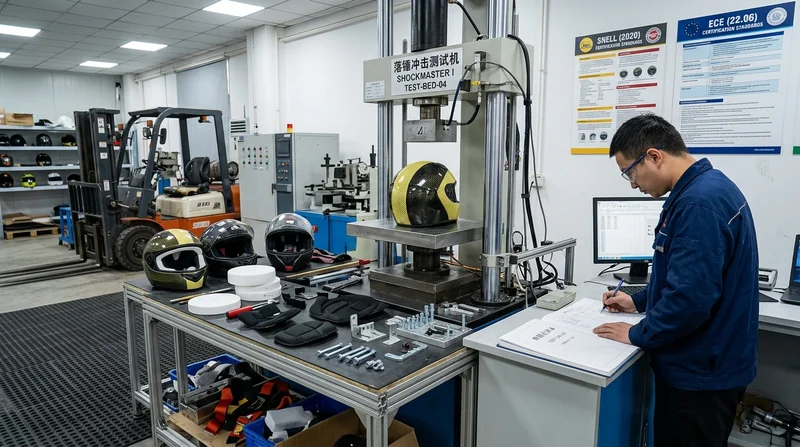
Custom Carbon Fiber Sports Protective Gear Components
High-impact carbon fiber components for protective sports gear. Our multi-layer carbon/Kevlar hybrid layups provide superior impact resistance while keeping weight minimal. Used in motorcycle helmet shells, knee brace frames, chest protectors, and shin guard inserts. EPS foam integration available for complete helmet shell manufacturing.

Custom Carbon Fiber Drone Arm — Lightweight & Vibration-Damping
High-modulus carbon fiber drone arms designed for industrial, agricultural, and surveying UAVs. Replace heavy aluminum arms with our custom-molded CFRP arms — 40-60% lighter with superior vibration damping for stable flight and sharper imaging.