
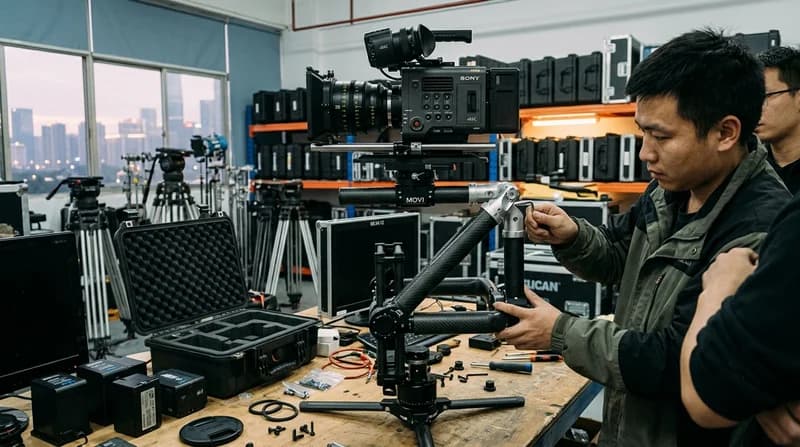
Custom Carbon Fiber Gimbal & Camera Mount
Lightweight carbon fiber gimbal arms and camera mounting components for aerial photography, film production, and broadcast applications. Our precision CNC machining ensures tight tolerances for vibration-sensitive equipment. Available in custom shapes to fit specific gimbal systems.
Key Features
Applications
Specifications
- Carbon Grade
- T700 / T800
- Fabrication
- CNC Machined / Hand Layup
- Surface Finish
- Matte clear coat / Raw carbon
- Tolerance
- ±0.1 mm
- Weight Saving vs Aluminum
- 40-50% lighter
Usually respond within 24 hours
Frequently Asked Questions
What is the minimum order quantity for carbon fiber products?
What color and finish options are available?
What is the typical lead time?
Related Articles
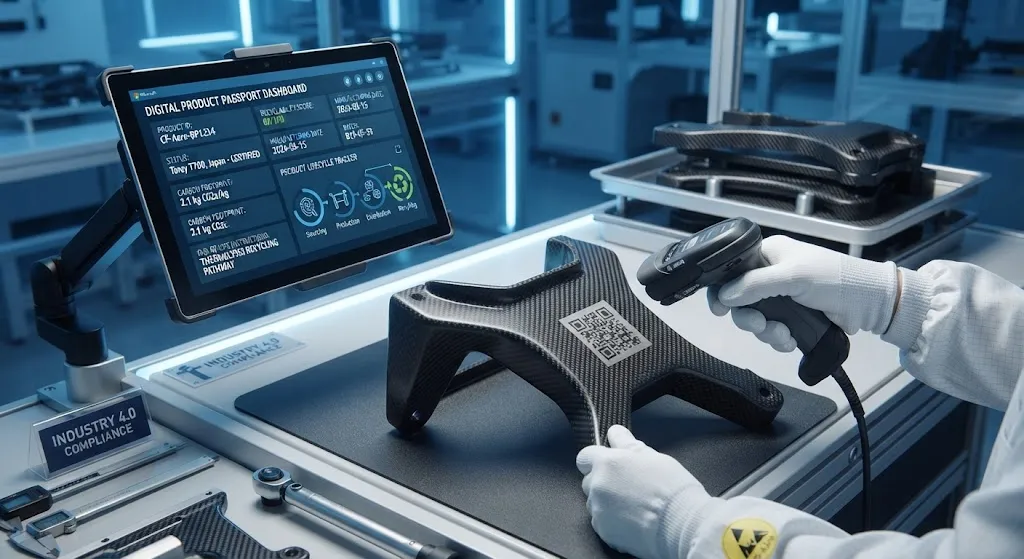
Digital Product Passport for Composites: EU DPP Data Requirements for CFRP Components
The European Union's Ecodesign for Sustainable Products Regulation (ESPR) introduces the Digital Product Passport (DPP) as a foundational tool for circular economy compliance. For carbon fiber reinforced polymer (CFRP) components, the DPP represents more than a regulatory checkbox — it
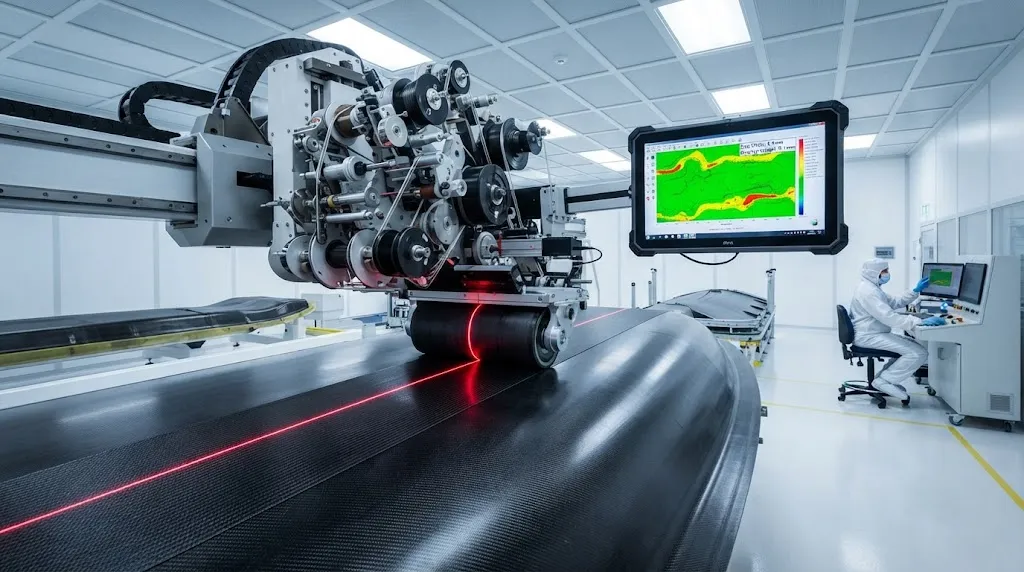
Online Laser Profiling for AFP: Real-Time Quality Control in Automated Layup
Automated fiber placement (AFP) has become the dominant manufacturing process for large composite structures in aerospace, wind energy, and defense applications. Modern AFP machines place 8-32 tows of carbon fiber prepreg simultaneously, building up laminates at rates of 5-15 kg per hou
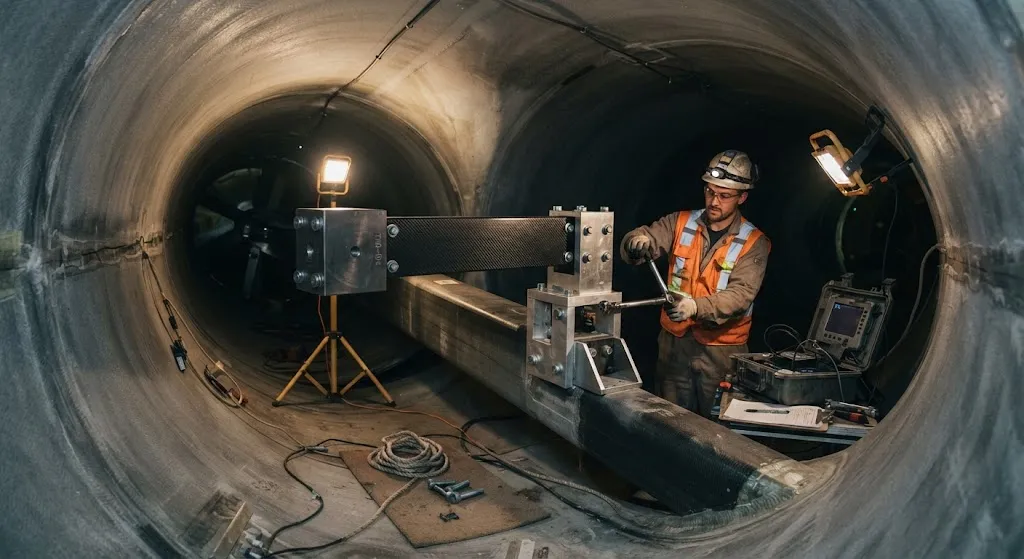
Blade Tuning Mass Damper: CFRP Solutions for Vibration Control in Large Rotors
Large rotating systems — wind turbine blades exceeding 100 meters in length, helicopter main rotor blades, and industrial gas turbine blades — are susceptible to resonant vibration modes that can cause fatigue damage, acoustic noise, and structural failure. Tuned mass dampers (TMDs) are
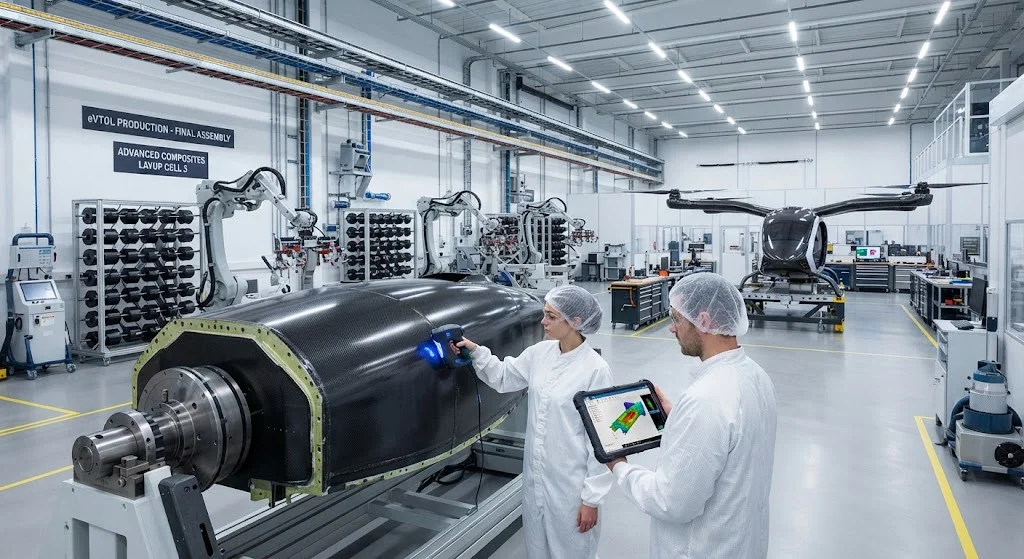
eVTOL Production Ramp Risk: Unproven Volume Timelines and Material Supply Chain Readiness
Every eVTOL program in development leans heavily on carbon fiber. Airframes, rotors, drive structures, and battery enclosures are designed around aerospace-grade composites because the entire vehicle concept depends on weight. Yet casting composite-intensive aircraft is not the hard par
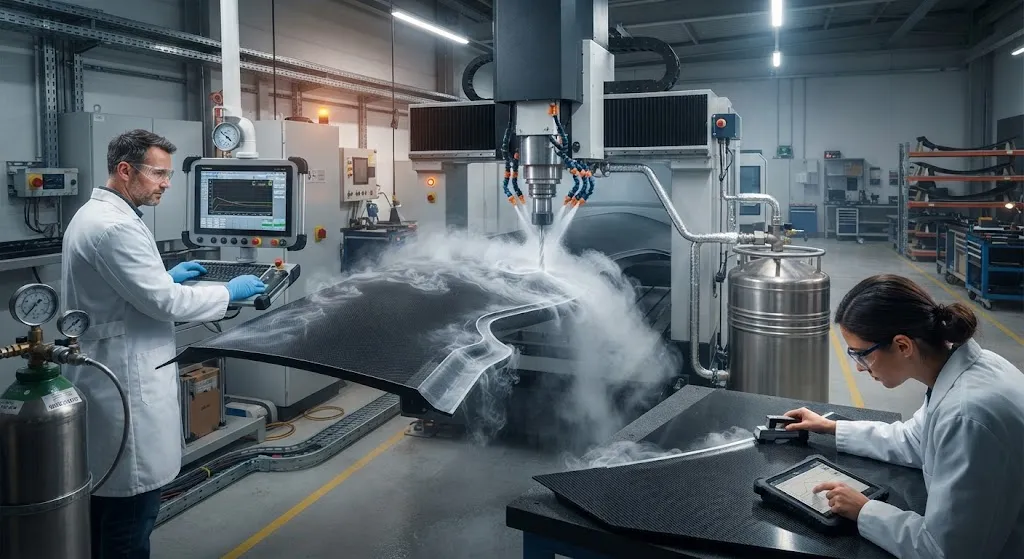
Cryogenic Machining of Composites: Liquid Nitrogen Cooling for Delamination-Free Trimming
Cryogenic machining of composites is the answer to a persistent production problem: trimming, milling, and drilling cured carbon fiber parts without damaging the edge. Conventional machining of CFRP has no shortage of effort — hardened carbide and diamond-coated tools, high-speed spindl
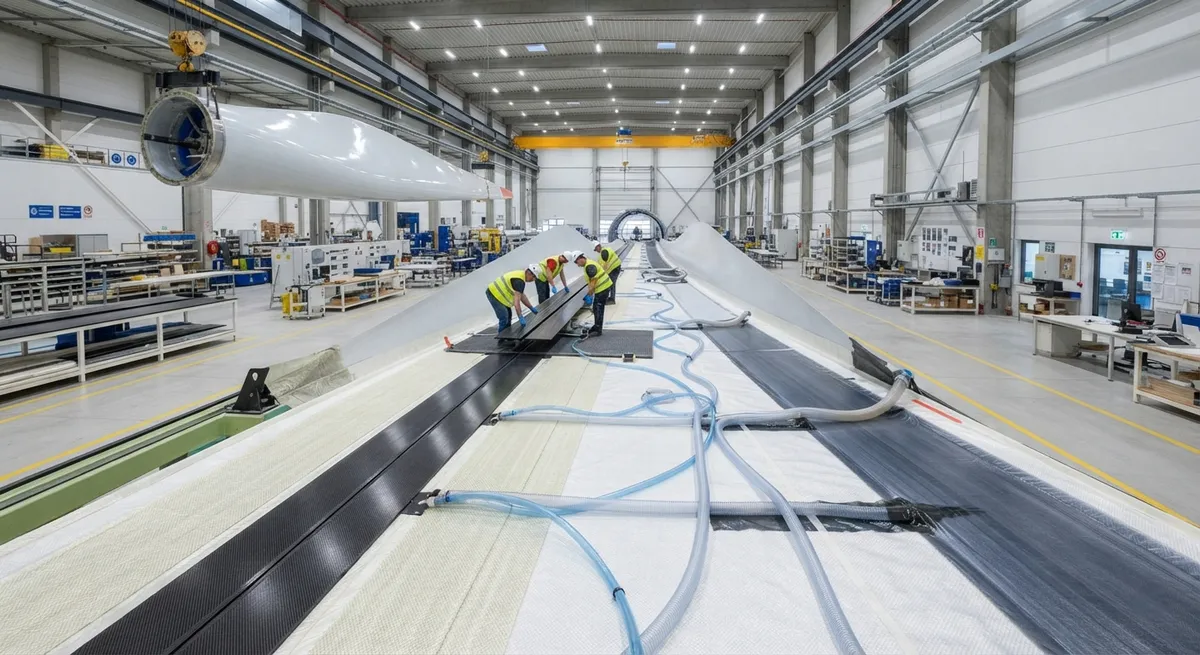
Hybrid Carbon/Glass Spar Caps for Wind Blades: Stiffness-Cost Optimization in 100m Rotor Designs
Wind blade spar caps are the primary load-carrying members of the blade: long, thick laminates that run from root to tip and resist the flapwise bending loads that dominate turbine operation. As rotor diameters have grown past 100 meters — with blades of 80-90 meters becoming standard f