
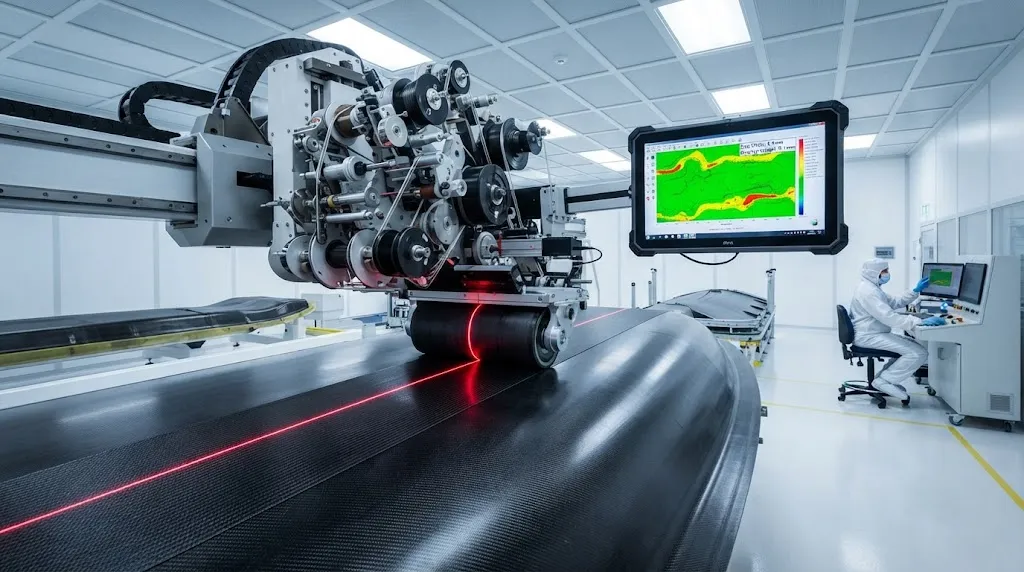
Automated fiber placement (AFP) has become the dominant manufacturing process for large composite structures in aerospace, wind energy, and defense applications. Modern AFP machines place 8-32 tows of carbon fiber prepreg simultaneously, building up laminates at rates of 5-15 kg per hou
Introduction
Automated fiber placement (AFP) has become the dominant manufacturing process for large composite structures in aerospace, wind energy, and defense applications. Modern AFP machines place 8-32 tows of carbon fiber prepreg simultaneously, building up laminates at rates of 5-15 kg per hour on complex curved geometries. The speed and automation that make AFP economically attractive also create quality challenges: gaps between tows (target 0-1 mm, defect threshold >2 mm), overlaps (target 0 mm, defect threshold >1 mm), in-plane waviness (acceptable <0.5 mm over 100 mm), out-of-plane waviness (acceptable <0.3 mm over 50 mm), and foreign object debris (FOD) trapped between plies.
Traditional quality control relied on post-layup inspection — ultrasonic scanning of completed laminates to detect subsurface defects. This approach identifies defects only after significant value has been added, requiring expensive rework or part rejection. Online laser profiling shifts defect detection to the point of creation, enabling real-time correction and reducing scrap rates from 8-15% to 2-5%. This article examines the laser profiling technology platforms, quantifies their detection capabilities, and builds the economic case for deployment in AFP production environments.
Laser Profiling Technology Platforms
Three primary sensing technologies are deployed for online AFP quality control, each with distinct capabilities and cost profiles:
| Technology | Measurement Principle | Resolution | Layup Speed Compatibility | Capital Cost |
|---|---|---|---|---|
| Laser Triangulation | Single laser line + camera angle | 0.05-0.15 mm | Up to 200 mm/s | $80,000-150,000 |
| Structured Light | Projected pattern + stereo cameras | 0.02-0.10 mm | Up to 120 mm/s | $120,000-250,000 |
| Laser Doppler Vibrometry | Doppler shift measurement | 0.01-0.05 mm | Up to 80 mm/s | $180,000-350,000 |
Laser Triangulation: The Workhorse
Laser triangulation is the most widely deployed online profiling technology for AFP, offering the best balance of resolution, speed, and cost. A collimated laser line (typically 633 nm red or 405 nm blue) projects across the layup surface perpendicular to the AFP head travel direction. A camera mounted at a known angle captures the laser line profile, and triangulation algorithms compute surface height with 0.05-0.15 mm resolution at line scan rates of 10-50 kHz.
For AFP applications, laser triangulation systems mount directly behind the compaction roller, scanning the freshly placed tow band within 50-200 mm of the deposition point. This proximity is critical: it enables detection of gaps, overlaps, and tow wander before the compaction roller sets the tow in place, allowing real-time adjustments to placement parameters. Systems from vendors such as MirrorBAE and SCAMA achieve detection of 0.5 mm gaps and 0.3 mm overlaps at AFP speeds up to 200 mm/s, with false alarm rates below 2%.
The economic case for laser triangulation is compelling: a $100,000-150,000 system typically pays for itself within 6-12 months by reducing scrap rates from 8-12% to 2-4% on a single AFP line producing $2-5M in annual composite parts.
Structured Light: Higher Resolution for Critical Applications
Structured light systems project a coded pattern (stripes, dots, or sinusoidal fringes) onto the layup surface and capture the distorted pattern with stereo cameras. By analyzing the pattern deformation, the system reconstructs a 3D surface map with 0.02-0.10 mm resolution — 2-5x finer than laser triangulation.
The higher resolution enables detection of subtle defects that laser triangulation may miss: micro-waviness (0.1-0.3 mm amplitude over 20-50 mm wavelength), tow edge fraying, and surface contamination. Structured light is particularly valuable for aerospace-grade layups where out-of-plane waviness tolerances are specified at 0.3 mm over 50 mm, requiring measurement resolution of 0.1 mm or better.
The limitation is speed: structured light systems typically operate at 60-120 mm/s, compared to 200 mm/s for laser triangulation. For high-speed AFP lines (>150 mm/s), structured light systems may require multiple camera projectors to maintain coverage, increasing cost to $200,000-400,000. CGTech's VERICUT Composite module integrates structured light data with AFP programming, enabling automated ply shape verification.
Integration with Closed-Loop AFP Control
The most advanced laser profiling installations connect directly to the AFP machine controller, creating a closed-loop quality system. When the profiler detects a gap exceeding the acceptance threshold, the controller can: (1) adjust tow tension to widen the placed tow, (2) reposition the AFP head to close the gap on the next pass, (3) flag the defect location for manual remediation, or (4) halt the machine for critical defects exceeding rework capability.
Closed-loop AFP with laser profiling reduces defect escape rate by 85-95% compared to open-loop operation. The system generates a digital quality record for each ply, mapping defect locations and remediation actions — data that supports aerospace qualification programs and provides traceability for structural integrity documentation.
Implementation requires integration between the profiling system and the AFP controller (typically Siemens, FANUC, or proprietary), with data exchange rates of 100-500 Hz for real-time correction. The integration cost adds $30,000-80,000 to the base profiling system but typically delivers 3-5x higher ROI through reduced scrap and rework.
Economic Justification
The economic case for online laser profiling rests on three measurable benefits:
Scrap reduction: A typical aerospace AFP line produces $3-8M in annual part value. Without laser profiling, scrap rates of 8-15% represent $240,000-1,200,000 in annual losses. Laser profiling reduces scrap to 2-5%, saving $160,000-800,000 per year.
Rework reduction: Post-layup ultrasonic inspection typically identifies 15-25 defects per large structure requiring manual remediation at $200-500 per defect. Online profiling reduces the number of defects reaching final inspection by 60-80%, saving $50,000-200,000 per year.
Throughput improvement: Eliminating manual in-process inspection steps (typically 2-4 hours per large structure) increases AFP machine utilization by 5-12%, enabling additional production capacity without capital investment.
Total annual benefit for a single AFP line: $260,000-1,200,000, versus profiling system cost of $100,000-350,000. Payback period: 4-18 months depending on line throughput and defect rates.
Deployment Considerations
Several practical factors influence laser profiling deployment decisions. Environmental conditions matter: AFP cleanrooms typically maintain 20-25°C and 40-60% RH, which are compatible with laser profiling. However, shop floor vibrations, ambient light interference, and reflective tool surfaces can degrade measurement quality. Shielding, wavelength filtering, and calibration protocols address these challenges but add 10-15% to system cost.
Calibration frequency is another consideration: laser triangulation systems require recalibration after AFP head changes, tool changes, or extended operation (>8 hours). Automated calibration routines reduce downtime but add $15,000-30,000 to system cost. Structured light systems are generally more tolerant of calibration drift but require periodic pattern generator maintenance.
For multi-head AFP machines (dual or quad heads), each head requires independent profiling, multiplying system cost. However, the shared software infrastructure and centralized quality database reduce the incremental cost of additional heads by 30-40%.
What defects can online laser profiling detect in AFP layup?
Online laser profiling systems detect five primary defect categories: (1) gaps between tows — measured as surface depression width and depth, detected at >0.5 mm width; (2) overlaps — measured as surface elevation, detected at >0.3 mm height; (3) in-plane waviness — measured as lateral displacement of tow edges, detected at >0.2 mm amplitude over 50 mm wavelength; (4) out-of-plane waviness — measured as surface height variation, detected at >0.15 mm over 25 mm; and (5) foreign object debris (FOD) — detected as anomalous surface features with contrast against the prepreg surface. Detection sensitivity depends on laser wavelength, camera resolution, and processing algorithms, with typical false alarm rates of 1-3% for production deployments.
How does laser profiling integrate with existing AFP quality systems?
Laser profiling data integrates with AFP quality systems through three pathways: (1) real-time control integration — profiling data feeds directly to the AFP controller for closed-loop defect correction, typically via OPC-UA or proprietary high-speed interfaces; (2) quality database integration — profiling data merges with ultrasonic inspection, thermography, and dimensional measurement data in a centralized quality management system, enabling multi-modal defect correlation; and (3) digital thread integration — profiling data contributes to the part's digital manufacturing record, supporting aerospace qualification traceability and customer quality documentation requirements.
What is the typical ROI timeline for laser profiling investment?
The typical return on investment timeline ranges from 4-18 months depending on AFP line throughput, part complexity, and current scrap rates. For high-value aerospace structures ($5M+ annual production value, 10-15% scrap rate), payback typically occurs within 4-8 months. For lower-value industrial or wind energy applications ($1-3M annual production, 5-8% scrap rate), payback extends to 12-18 months. The fastest ROI cases involve lines producing complex geometry parts (curved surfaces, variable thickness) where defect detection is most challenging and scrap rates are highest.
Conclusion
Online laser profiling has matured from a research curiosity to a production-essential technology for AFP manufacturing. Laser triangulation systems at $80,000-150,000 deliver the best balance of resolution, speed, and cost for most AFP applications, while structured light systems offer higher resolution for aerospace-grade requirements. Integration with closed-loop AFP control multiplies the economic benefit by enabling real-time defect correction rather than post-layup remediation.
For composite manufacturers evaluating quality control investments, online laser profiling represents one of the highest-ROI capital expenditures available, with typical payback under 12 months. Explore our carbon fiber fabric and reinforcement portfolio for AFP-compatible prepreg and dry fiber systems, or contact our engineering team to discuss material specifications for your AFP production requirements.
Part of topic
Related Articles
- Bio-Based Carbon Fiber Precursors: Lignin and Polyethylene for Low-Cost Production
- Large-Tow Carbon Fiber Cost Analysis: 48K vs 60K Price-Performance Comparison
- Carbon Fiber-Resin Interface Bonding: Surface Treatment and Coupling Agent Optimization
- Digital Twin for Carbon Fiber Manufacturing: Real-Time Process Monitoring and Defect Prevention
- Thermoplastic Carbon Fiber Welding for Automotive: Ultrasonic and Induction Welding Process Windows
- Large-Tow Carbon Fiber Wet Spinning: Process Optimization for 48K/60K Production Efficiency
Interested in Our Products?
Contact our team for competitive pricing and technical specifications.
Get a QuoteRelated Products
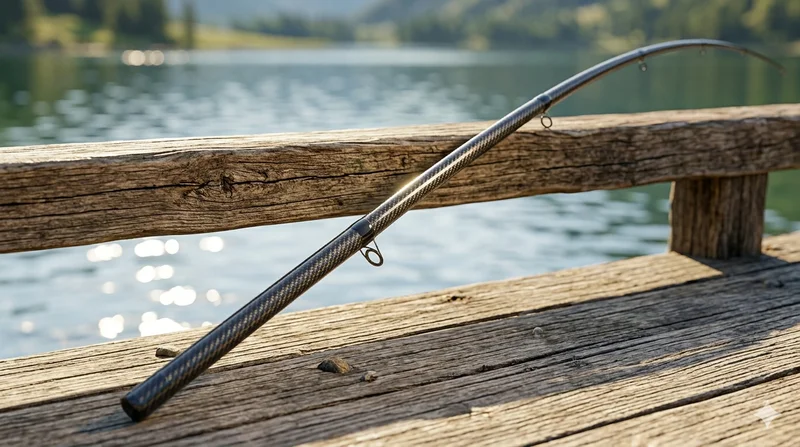
Carbon Fiber Fishing Rod Blank
High-quality carbon fiber fishing rod blank manufactured from multiple grades of Toray carbon fiber cloth. Available in a wide range of lengths, powers, and actions for freshwater and saltwater applications. Suitable for OEM rod building.
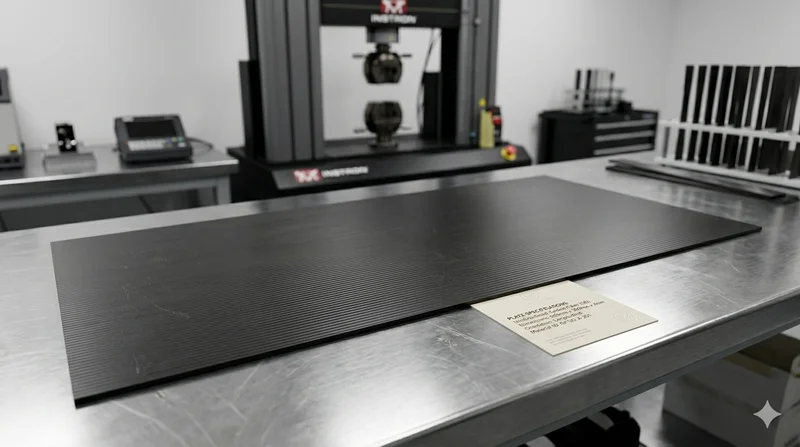
Carbon Fiber Plate — UD Unidirectional T700
Unidirectional carbon fiber plate with all fibers oriented in a single direction for maximum strength along the fiber axis. Essential for structural reinforcements, splints, and applications where load direction is predictable.
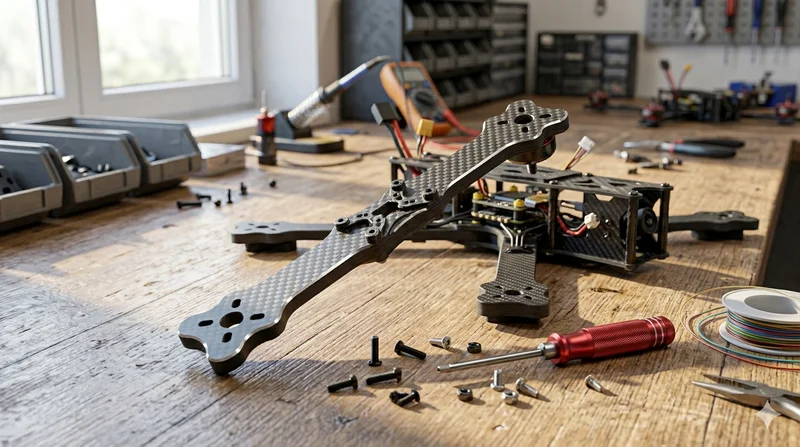
Carbon Fiber Drone Arm
Precision-molded carbon fiber drone arm combining unidirectional fiber for stiffness and woven layers for torsional strength. Designed for FPV, photography, and industrial drone platforms. Each arm is CNC-machined to exact specifications.
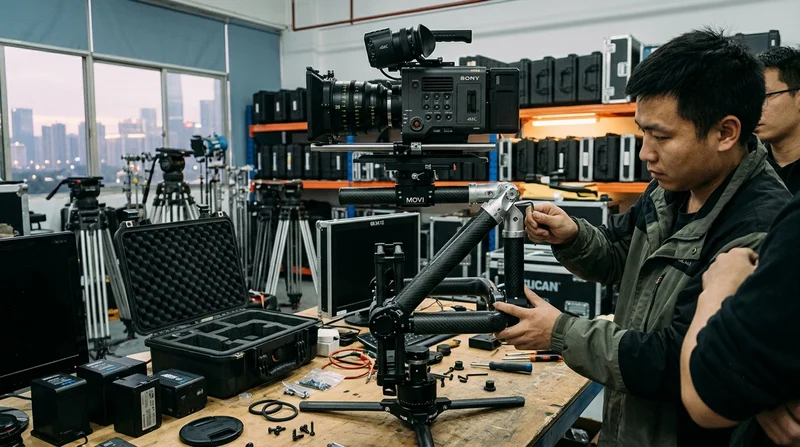
Custom Carbon Fiber Gimbal & Camera Mount
Lightweight carbon fiber gimbal arms and camera mounting components for aerial photography, film production, and broadcast applications. Our precision CNC machining ensures tight tolerances for vibration-sensitive equipment. Available in custom shapes to fit specific gimbal systems.
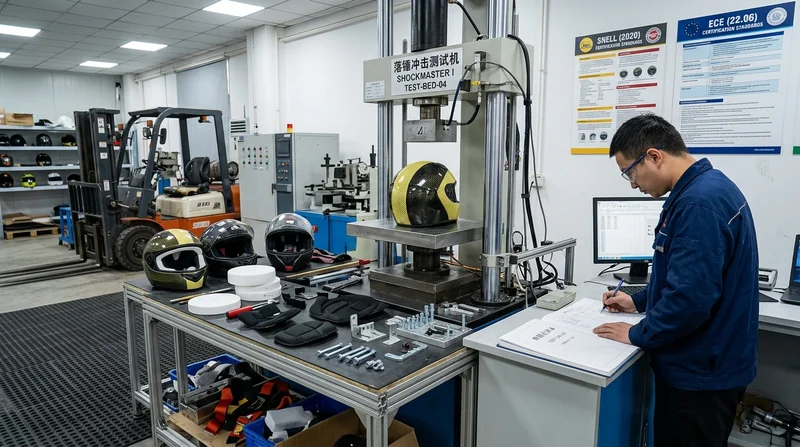
Custom Carbon Fiber Sports Protective Gear Components
High-impact carbon fiber components for protective sports gear. Our multi-layer carbon/Kevlar hybrid layups provide superior impact resistance while keeping weight minimal. Used in motorcycle helmet shells, knee brace frames, chest protectors, and shin guard inserts. EPS foam integration available for complete helmet shell manufacturing.