
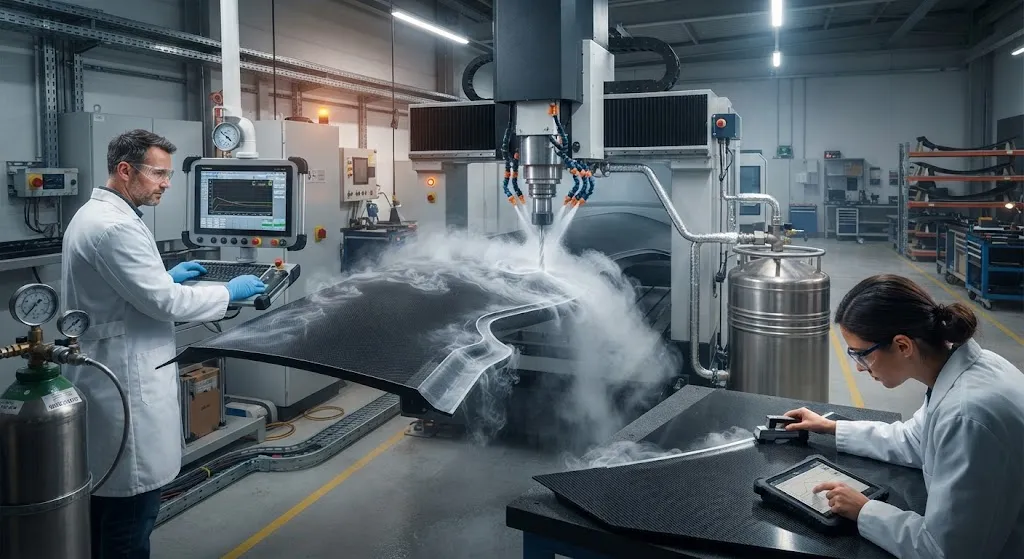
Cryogenic machining of composites is the answer to a persistent production problem: trimming, milling, and drilling cured carbon fiber parts without damaging the edge. Conventional machining of CFRP has no shortage of effort — hardened carbide and diamond-coated tools, high-speed spindl
Introduction
Cryogenic machining of composites is the answer to a persistent production problem: trimming, milling, and drilling cured carbon fiber parts without damaging the edge. Conventional machining of CFRP has no shortage of effort — hardened carbide and diamond-coated tools, high-speed spindles, and careful feed strategies — yet the defects keep returning. Fibers pull out, the matrix burns from frictional heat, tools dull in hours, and the exit side of every drilled hole shows some degree of delamination.
The approach that broke this pattern in increasingly many shops is deceptively simple: flood the cutting zone with liquid nitrogen (LN2) at its boiling point of -196 °C. At that temperature the epoxy matrix stiffens into a glassy state, cutting temperatures collapse, and the edge quality improves to the point where rework drops sharply. This article examines how cryogenic cooling works on composites, what it measurably changes, and where it earns its keep.
Why Conventional Trimming Damages CFRP
The damage mechanisms in composite machining are not the same as in metal cutting, and they are worth naming precisely. The first is exit delamination: as a drill or end mill pushes through the last plies, the uncut laminate deflects under the thrust force and peels away from the tool path, leaving a frayed white ring around the exit of holes and splits along trim edges. The second is thermal damage: carbon fibers are abrasive and their frictional heating raises the local temperature far above the epoxy's degradation point, burning the matrix and weakening the laminate in a zone around the cut. The third is tool wear: unidirectional fiber ends strike the cutting edge with the hardness of glass, so carbide tools wear unpredictably and force frequent tool changes.
These three mechanisms reinforce each other. A dull tool generates more heat and more thrust, which deepens the thermal damage and widens delamination; the damaged edge then becomes the initiation site for cracks in service. The result is that conventional trimming of aerospace-grade CFRP is expensive not because cutting is slow, but because every part needs inspection, and a measurable fraction needs rework or scrapping.
How Cryogenic Machining Works
Cryogenic machining of composites is implemented in two basic configurations. In the first, liquid nitrogen is delivered through the spindle and out through nozzles in the tool holder directly onto the cutting zone, so the chips, tool face, and workpiece surface all see the cryogenic stream. In the second, LN2 chills the workpiece in advance or the part is supported on a cold plate, and a dry or minimum-quantity-lubrication cutter removes the chilled material. The first configuration is more common because it cools exactly where heat is generated.
What happens at the material level is a change in the matrix state. At room temperature, the epoxy in a cured laminate is a viscoelastic glassy solid with moderate stiffness and low but real ductility. Cooled to -196 °C, the same matrix becomes stiff, strong, and brittle: its elastic modulus rises, the fibers are held more rigidly, and the cutting edge separates cleanly rather than tearing and smearing. The fiber itself changes little with temperature, so the laminate retains its load-bearing structure while the matrix sheds the failure modes that cause pull-out and burning.
What Changes at Cryogenic Temperatures
The table below compares the physical state that governs cutting behavior at room temperature and at -196 °C:
| Material Property | At Room Temperature | At -196 °C (LN2) | Effect on Machining |
|---|---|---|---|
| Epoxy matrix stiffness | Moderate (viscoelastic) | High (glassy, brittle) | Cleaner chip separation, less tearing |
| Cutting-zone temperature | Up to 300-400 °C | Near -196 °C at the stream | No matrix burn, no smearing |
| Fiber pull-out tendency | High | Low | Sharper edges, less fraying |
| Exit delamination | Common | Strongly reduced | Fewer cracks at hole exits and trim edges |
| Tool wear rate | Rapid | Slower (cooler tool face) | Longer intervals between tool changes |
The mechanism behind the improvement in edge quality is partly mechanical and partly thermal. Mechanically, a stiffer matrix transmits the cutting force into clean fiber fracture instead of allowing the fibers to bend and pull out of the matrix. Thermally, the LN2 stream carries the frictional heat out of the cut continuously, so the matrix never approaches its decomposition temperature even at aggressive feeds. The two effects together are what make delamination-free trimming possible at industrial speeds.
Measured Benefits in Production
Published studies and shop-floor trials consistently report three measurable outcomes for cryogenic machining of composites:
- Lower delamination factor: The delamination factor (the ratio of the maximum damaged diameter to the nominal hole diameter) typically drops from 1.5-2.2 in dry drilling to 1.1-1.3 with cryogenic cooling on aerospace-grade laminates.
- Longer tool life: Diamond-coated and carbide tools last roughly twice to four times longer because the cutting edge stays cooler and the matrix no longer smears and loads the flute.
- Better surface finish: Surface roughness values improve markedly, and fiber protrusion along trim edges drops, which reduces hand-finishing time before bonding.
For a typical aerospace trim cell producing thousands of parts a year, the practical wins are fewer rejected parts, fewer tool changes, and a measurable reduction in manual edge finishing. The payback calculation is dominated not by the price of nitrogen, but by the value of parts that no longer need rework.
Trade-Offs and Risks
Cryogenic machining is not a free lunch, and the trade-offs decide its fit. The matrix at -196 °C is brittle, and while that brittleness sharpens the cut, it also means microcracking is possible if the part is chilled and machined too aggressively — thermal shock management matters. Moisture is a second risk: the cold zone condenses ice and frost from shop air, so the process needs a dry, controlled environment or a purge sequence to keep the interface clean. LN2 is a consumable with a real cost per part, and the delivery system — vacuum-insulated lines, controlled-pressure tanks, and cryogenic-rated nozzles — adds complexity to the cell. Finally, operators must follow cryogenic safety practice: nitrogen displaces oxygen in confined spaces, so ventilation and oxygen monitoring are mandatory.
These constraints are manageable but real. In practice, cryogenic trimming is used where edge quality carries high value: aerospace structural trimming, medical-device composite parts, and high-cost R&D programs. For commodity trimming of low-value parts, the simpler routes — careful conventional milling or waterjet — often remain cheaper.
Implementation Considerations
The comparison below summarizes the practical differences for a shop evaluating the route:
| Criterion | Conventional CNC Trimming | Cryogenic CNC Trimming |
|---|---|---|
| Edge quality | Good, with inspection | Excellent, less rework |
| Tool life | Short intervals | 2-4 times longer |
| Cutting temperatures | 300-400 °C possible | Near -196 °C at the stream |
| Facility requirement | Standard | LN2 tank, vacuum lines, ventilation |
| Operating cost | Tools, inspection time | LN2 plus reduced tooling |
| Best fit | Low-value parts, general trimming | High-value aerospace and medical parts |
A practical migration path is to start on the highest-rejection trim operations, qualify the edge quality against the same acceptance criteria used for conventional work, and expand once the data confirms lower rework. Most suppliers who adopt cryogenic machining keep their conventional cells for commodity work and use the cryogenic process as the precision route.
Frequently Asked Questions
Does cryogenic machining work on thermoset and thermoplastic composites alike?
Yes, both families respond well, though for different reasons. Thermoset epoxy laminates benefit most from the suppression of matrix burning and the cleaner chip separation. Thermoplastic composites, whose matrices are tougher and more ductile at room temperature, become easier to machine cleanly because the matrix stiffens into a glassy state that cuts instead of smearing. In both cases the fibers are unaffected by the temperature, and the edge quality gain comes from the behavior of the matrix at -196 °C.
Is liquid nitrogen too expensive for production trimming?
Nitrogen cost is modest compared with the cost of the defects it removes. A cryogenic trim cell consumes liquid nitrogen at a rate that depends on feed, nozzle design, and duty cycle, but suppliers typically report that the reduction in rework and tooling dominates the nitrogen bill. The process is economically strongest on high-value parts where a single scrapped aerospace component costs more than many hours of LN2 consumption.
Does cryogenic cooling make CFRP brittle enough to microcrack during machining?
It can, if the process is mishandled. The matrix at -196 °C has low ductility, so aggressive feeds, vibration, or thermal shock can produce microcracks in the resin-rich regions. This is why cryogenic process development controls feed, speed, and LN2 delivery together, and why parts are inspected for microcracking on the same schedule as conventional trim quality checks. Handled correctly, the process produces edges that are cleaner than conventional machining, not more damaged.
Conclusion
Cryogenic machining of composites turns the matrix into an ally rather than a liability: at -196 °C the epoxy cuts cleanly, the heat stays out of the laminate, and the exit-side delamination that plagues conventional drilling and trimming largely disappears. The technology pays for itself wherever edge quality gates part value — aerospace structures, medical devices, and high-cost development programs. Buyers should ask suppliers for delamination factor data and edge micrographs, and shops evaluating the route should pilot it on their highest-rejection operation first.
YongXian supplies carbon fiber fabrics, unidirectional prepreg, and reinforcement materials for components that are machined and trimmed in production. Explore our carbon fiber product range or contact our engineering team to discuss material systems and machining support for your application.
Related Articles
- Bio-Based Carbon Fiber Precursors: Lignin and Polyethylene for Low-Cost Production
- Large-Tow Carbon Fiber Cost Analysis: 48K vs 60K Price-Performance Comparison
- Carbon Fiber-Resin Interface Bonding: Surface Treatment and Coupling Agent Optimization
- Digital Twin for Carbon Fiber Manufacturing: Real-Time Process Monitoring and Defect Prevention
- Thermoplastic Carbon Fiber Welding for Automotive: Ultrasonic and Induction Welding Process Windows
- Large-Tow Carbon Fiber Wet Spinning: Process Optimization for 48K/60K Production Efficiency
Interested in Custom Carbon Fiber Products?
Contact our team for competitive pricing and technical specifications.
Get a QuoteRelated Products

Carbon Fiber Fishing Rod Blank
High-quality carbon fiber fishing rod blank manufactured from multiple grades of Toray carbon fiber cloth. Available in a wide range of lengths, powers, and actions for freshwater and saltwater applications. Suitable for OEM rod building.
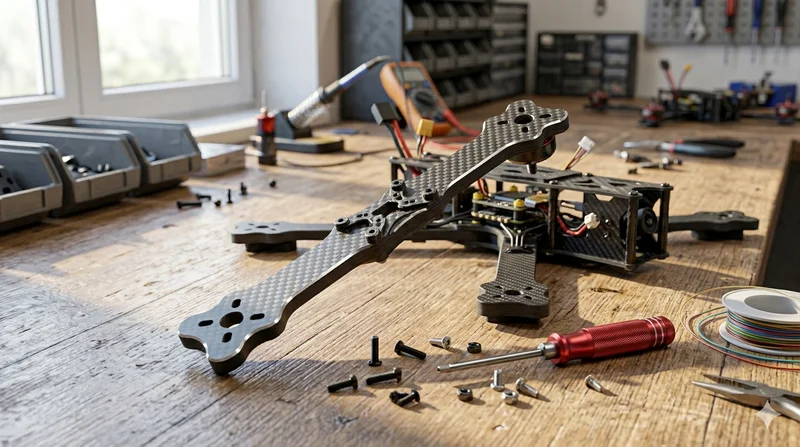
Carbon Fiber Drone Arm
Precision-molded carbon fiber drone arm combining unidirectional fiber for stiffness and woven layers for torsional strength. Designed for FPV, photography, and industrial drone platforms. Each arm is CNC-machined to exact specifications.
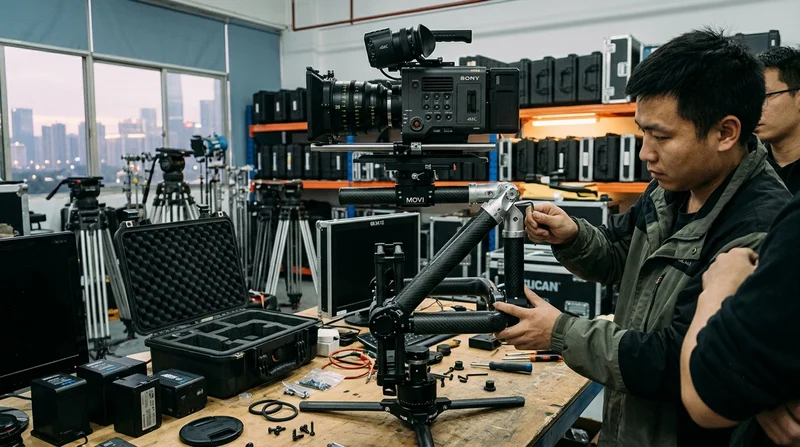
Custom Carbon Fiber Gimbal & Camera Mount
Lightweight carbon fiber gimbal arms and camera mounting components for aerial photography, film production, and broadcast applications. Our precision CNC machining ensures tight tolerances for vibration-sensitive equipment. Available in custom shapes to fit specific gimbal systems.