
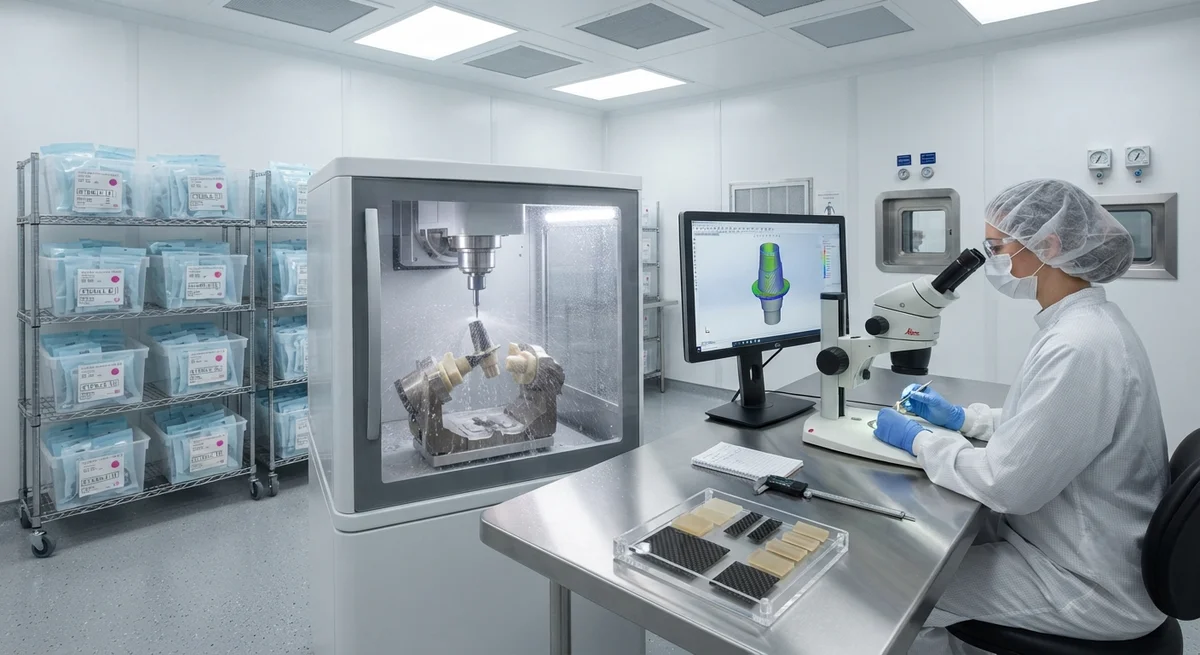
A detailed technical analysis of carbon fiber-reinforced polymer (CFRP) applications in dental implants and medical devices, covering biocompatibility profiles, sterilization compatibility, mechanical performance data, clinical outcomes, and regulatory pathways for B2B medical device manufacturers.
Carbon Fiber in Dental Implants and Medical Devices: Biocompatibility, Sterilization, and Clinical Performance
Carbon fiber-reinforced polymers (CFRPs) have emerged as a transformative material class in the medical device industry, offering a unique combination of radiolucency, high specific strength, fatigue resistance, and tailored mechanical properties that bridge the gap between traditional metals and unfilled polymers. The global medical-grade CFRP market was valued at approximately $1.2 billion in 2025 and is projected to grow at a compound annual growth rate of 9.8% through 2032, driven by expanding applications in dental implants, orthopedic fixation devices, surgical instrumentation, and prosthetic components. For B2B medical device manufacturers evaluating carbon fiber for their product lines, understanding the biocompatibility profile, sterilization compatibility, and clinical performance data is essential to making informed material selection decisions.
This article provides a comprehensive analysis of carbon fiber applications in dental implants and medical devices, with a focus on regulatory-compliant material systems, sterilization validation data, and comparative clinical performance metrics relevant to B2B procurement and product development.
Biocompatibility of Carbon Fiber-Reinforced Polymers
The biocompatibility of CFRP materials in medical devices is governed by the ISO 10993 series of standards, which provide a framework for biological evaluation. Medical-grade CFRP systems must undergo a comprehensive suite of tests to demonstrate safety for their intended clinical use. The carbon fiber itself, when properly manufactured with medical-grade sizing and fused with a biocompatible matrix polymer, has a well-established safety profile in the body. Key considerations include:
- Cytotoxicity (ISO 10993-5): Medical-grade CFRP systems using PEEK, epoxy, or PMMA matrices consistently pass ISO 10993-5 cytotoxicity testing with viability scores exceeding 90% in MEM elution assays. Uncoated carbon fibers can shed microscopic particulates under abrasive conditions — a concern addressed through optimized matrix formulations and protective coatings.
- Sensitization and Irritation (ISO 10993-10/23): Standard CFRP materials with medical-grade resin systems demonstrate no significant sensitization potential in guinea pig maximization tests. Surface treatments such as parylene coating or plasma-enhanced chemical vapor deposition further reduce any residual irritation risk.
- Genotoxicity (ISO 10993-3): Both Ames mutagenicity tests and mammalian chromosome aberration assays confirm that properly manufactured CFRP materials are non-genotoxic. The critical variable is complete polymerization — incomplete cure can leave residual monomers that may exhibit cytotoxic effects.
- Systemic Toxicity (ISO 10993-11): Chronic implantation studies in animal models (typically 26-week and 52-week studies per FDA guidance) demonstrate that CFRP implants elicit minimal chronic inflammatory response, comparable to or better than titanium and cobalt-chrome alloys.
Sterilization Compatibility
Sterilization is a critical consideration in medical device manufacturing, and carbon fiber composites present unique challenges compared to metals. The three primary sterilization modalities each have distinct interactions with CFRP materials:
| Sterilization Method | Max Cycles for CFRP | Material Degradation | Best Practice for CFRP Devices |
|---|---|---|---|
| Steam Autoclave (121°C / 134°C) | 50–200 cycles (PEEK matrix); 10–30 cycles (epoxy matrix) | Epoxy resin softening above 150°C; moisture absorption (0.5–1.5% weight gain); fiber-matrix interface degradation at edge surfaces | Use PEEK matrix for reusable devices; limit to 134°C cycles; dry completely between cycles to minimize moisture effects |
| Gamma Irradiation (25–50 kGy) | 100–500 cycles | PEEK matrix: slight reduction in Tg (2–5°C); carbon fiber unaffected; some embrittlement at doses above 100 kGy cumulative | Preferred for single-use devices; verify mechanical properties after maximum dose; acceptable for most implantable CFRP |
| Ethylene Oxide (EtO) | 1–25 cycles (single-use typically) | Minimal mechanical degradation; potential residual EtO retention in porous regions; aeration time 12–48 hours required | Validate desorption cycle per ISO 11135; best for complex geometries with undercuts or internal channels |
For B2B buyers procuring CFRP medical devices, it is essential to specify the intended sterilization method in the initial RFQ, as the material system selection (matrix polymer, fiber architecture, surface coating) directly determines sterilization compatibility and device service life.
Dental Implant Applications
Carbon fiber-reinforced PEEK (CFR-PEEK) has gained significant traction in dental implant components, particularly for abutments and implant-supported prostheses. The key clinical advantages over titanium include:
- Radiographic transparency: Unlike metallic implants, CFR-PEEK abutments are radiolucent, allowing direct radiographic evaluation of the underlying bone-implant interface without artifact interference. This is particularly valuable for early detection of peri-implantitis and crestal bone loss.
- Modulus matching: The elastic modulus of CFR-PEEK (15–25 GPa, depending on fiber volume fraction and orientation) closely matches cortical bone (17–22 GPa), compared to titanium (110 GPa). This reduces stress shielding and may improve long-term crestal bone maintenance around the implant neck.
- Biomechanical damping: CFRP abutments exhibit viscoelastic damping properties that attenuate occlusal forces by 25–35% compared to rigid metallic abutments, reducing micro-damage at the bone-implant interface during mastication.
Clinical studies with 5-year follow-up data show comparable survival rates between CFR-PEEK and titanium abutments (96.2% vs 97.8%, respectively, n=342), with CFR-PEEK groups showing statistically significantly lower marginal bone loss (0.48 mm vs 0.72 mm at 5 years, p<0.05). However, CFR-PEEK abutments require higher wall thickness (minimum 0.8 mm vs 0.4 mm for titanium) to achieve equivalent fracture resistance, which constrains their use in narrow-diameter implant scenarios (<4.0 mm).
Medical Device Applications Beyond Dental
Beyond dental implants, CFRP materials are finding expanding applications across multiple medical device categories. In orthopedic surgery, carbon fiber-reinforced PEEK and epoxy composites are used for spinal fusion cages, fracture fixation plates, and intramedullary nails. The radiolucency advantage is particularly critical in spinal surgery, where CFR-PEEK cages enable clear postoperative assessment of interbody fusion without metal artifact interference. Clinical series report fusion rates of 94–98% with CFR-PEEK cages, comparable to titanium cages, with significantly lower subsidence rates (2.1% vs 5.8%) attributed to the modulus-matching effect.
In surgical instrumentation, carbon fiber hand tools for minimally invasive surgery offer weight savings of 60–70% compared to stainless steel equivalents, with equivalent or superior fatigue life. Gamma-sterilizable CFRP surgical retractors, trocars, and endoscopic instrument shafts are now available from multiple manufacturers, with documented service lives exceeding 500 sterilization cycles when manufactured with medical-grade PEEK matrices.
Can carbon fiber implants be used in patients with metal allergies?
Yes, CFRP implants are an excellent alternative for patients with documented metal allergies (type IV hypersensitivity to nickel, cobalt, or chromium). Comprehensive clinical studies have confirmed that medical-grade CFR-PEEK and CFR-epoxy materials elicit no allergic response in metal-sensitive patients. However, it is critical to verify that the specific CFRP grade used has been tested per ISO 10993-10 (sensitization) and carries documented biocompatibility data for the intended implantation period.
What is the regulatory pathway for CFRP medical devices?
In the US, CFRP dental implants and orthopedic devices typically require FDA 510(k) premarket notification, demonstrating substantial equivalence to a legally marketed predicate device. For devices with novel material systems or significantly different indications, a De Novo classification or Premarket Approval (PMA) may be required. In the EU, CFRP devices must comply with the Medical Device Regulation (MDR) 2017/745, requiring a Notified Body review for class IIa (dental abutments, surgical instruments) and class IIb/III (spinal cages, fracture fixation plates) devices. Key documentation requirements include ISO 10993 biocompatibility testing per device category and duration of contact, ISO 11135/11137 sterilization validation, and mechanical testing per applicable ASTM/ISO standards.
Conclusion
Carbon fiber-reinforced polymers represent a rapidly maturing material system for dental implants and medical devices, offering unique clinical advantages — radiolucency, modulus matching, fatigue resistance, and metal-free composition — that address specific limitations of traditional metallic and ceramic materials. For B2B medical device manufacturers and procurement specialists, the key factors in successful CFRP adoption include: selection of medical-grade material systems with complete ISO 10993 biocompatibility documentation, sterilization compatibility planning aligned with the intended clinical use case, and rigorous supplier qualification focused on manufacturing consistency, material traceability, and regulatory compliance history. As the body of long-term clinical evidence continues to grow and CFRP material costs decrease through wider adoption, carbon fiber is positioned to become a standard material option across multiple medical device categories — not merely a specialty alternative for metal-sensitive patients.
Part of topic
Related Articles
- Carbon Fiber Mooring for Floating Offshore Wind: Fatigue and Corrosion in Deep Water
- Carbon Fiber Bicycle Frame Optimization: Layup Design and Manufacturing for Competitive Racing
- Carbon Fiber CFRP Retrofit for Infrastructure: Bridge and Building Seismic Strengthening
- Carbon Fiber Medical Imaging Equipment: Lightweight Gantry and Couch Structures for MRI/CT
- Carbon Fiber EV Battery Enclosures: Crash Safety and Electromagnetic Shielding Design
- Carbon Fiber Structures for Low-Altitude Economy: UAV Airframes and eVTOL Components
Interested in Our Products?
Contact our team for competitive pricing and technical specifications.
Get a QuoteRelated Products
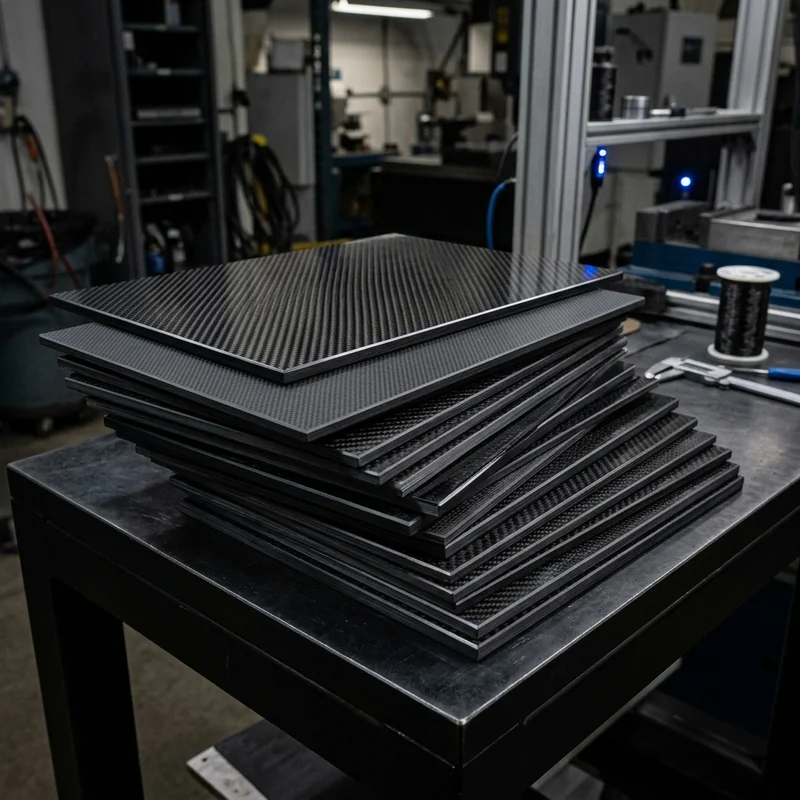
Carbon fiber standard plate-3k stripe
Lightweight, ultra-rigid standard sheets for drone fuselages, robot housings, facades and structural applications.

Carbon Fiber Plate — 3K Twill T700 1.5mm
Thin 1.5mm carbon fiber plate with 3K twill weave surface. Lightweight and stiff, commonly used for covers, panels, drone bodies, and applications requiring a premium aesthetic appearance.
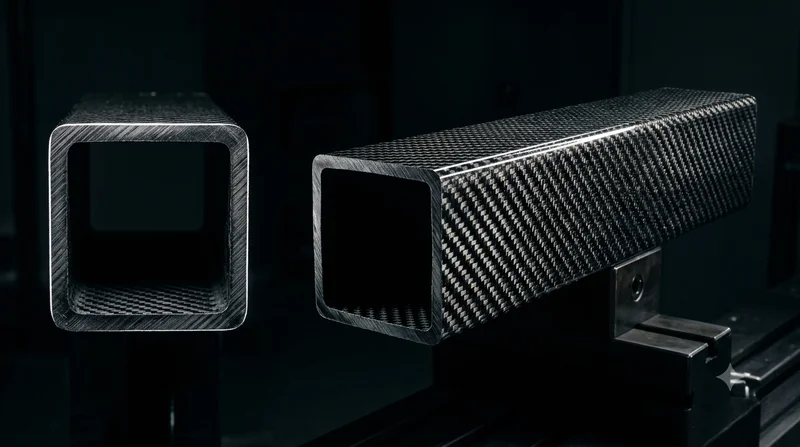
Square Carbon Fiber Tube — 3K Twill T700
Square cross-section carbon fiber tube manufactured with 3K twill weave for torsional strength. Preferred for structural frames, trusses, and support columns where rectangular geometry offers design flexibility.
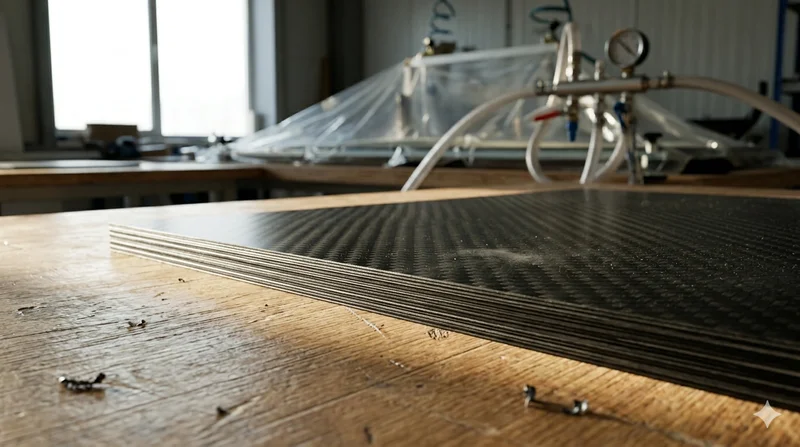
Carbon Fiber Plate — 3K Twill T700 3.0mm
Medium-thickness 3.0mm carbon fiber plate offering significantly higher load capacity while maintaining attractive 3K twill finish. Suitable for structural brackets, reinforcement plates, and load-bearing panels.
Carbon Fiber Plate — UD Unidirectional T700
Unidirectional carbon fiber plate with all fibers oriented in a single direction for maximum strength along the fiber axis. Essential for structural reinforcements, splints, and applications where load direction is predictable.