
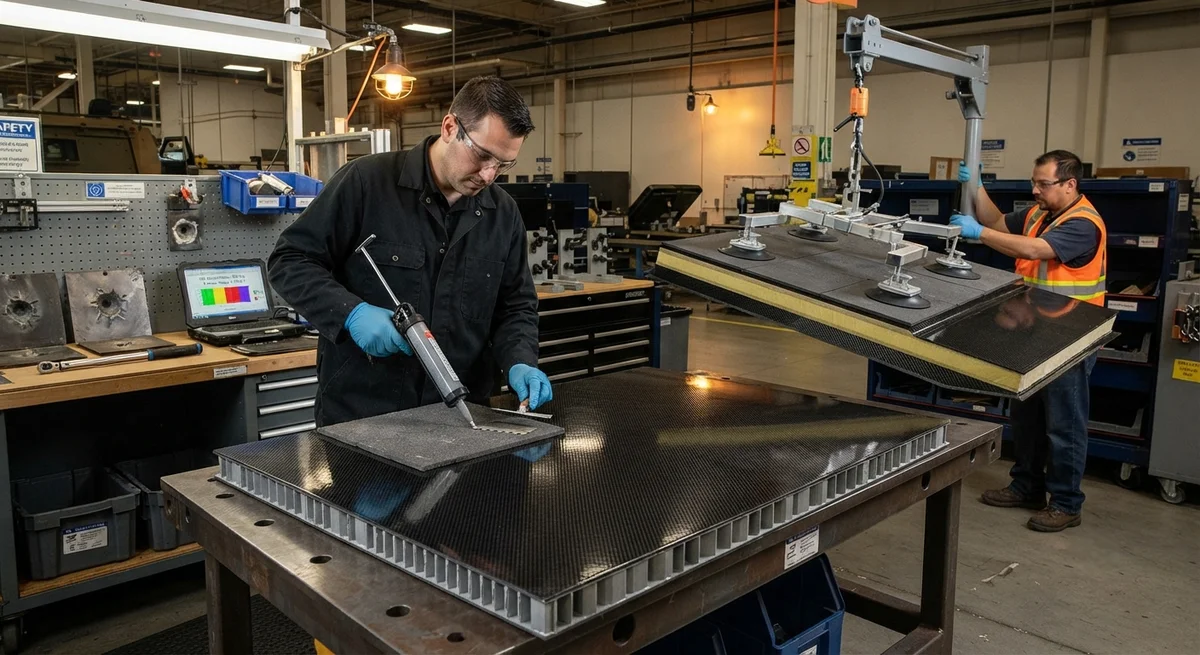
Carbon fiber armored vehicle hatches and doors represent one of the highest-value applications of composites in land defense. Unlike hull armor, which is bonded or bolted directly to the vehicle structure, hatches and doors must be movable, sealable, and repeatedly opened under field co
Introduction
Carbon fiber armored vehicle hatches and doors represent one of the highest-value applications of composites in land defense. Unlike hull armor, which is bonded or bolted directly to the vehicle structure, hatches and doors must be movable, sealable, and repeatedly opened under field conditions. They must simultaneously meet ballistic protection requirements and remain light enough for a single soldier or crew member to operate them, especially in combat scenarios where mechanical assistance may be unavailable.
Modern tactical wheeled vehicles — mine-resistant ambush protected vehicles, infantry mobility vehicles, and light tactical trucks — increasingly specify hybrid composite armor for their doors and hatches. These systems combine a hard ceramic strike face, an intermediate ballistic textile layer, and a carbon fiber structural substrate to achieve protection levels that rival steel at a fraction of the weight. This article examines the ballistic requirements defined by STANAG 4569, the hybrid armor architectures used in practice, manufacturing considerations, and the measurable benefits of composite hatch and door systems for defense vehicle programs.
Ballistic Requirements: STANAG 4569 Protection Levels
Ballistic protection for armored vehicles is standardized under STANAG 4569, the NATO agreement that defines protection levels against specific threats. The table below summarizes the key protection levels relevant to hatches and doors on tactical wheeled vehicles:
| Protection Level | Threat | Typical Projectile | Areal Density (kg/m²) — Composite Armor |
|---|---|---|---|
| Level 1 | Rifle ammunition | 5.56 × 45 mm SS109 / M193 | 18-25 |
| Level 2 | Armor-piercing rifle ammunition | 7.62 × 39 mm API BZ | 28-38 |
| Level 3 | Armor-piercing rifle ammunition | 7.62 × 54R B32 API | 38-52 |
| Level 4 | Heavy machine gun armor-piercing | 14.5 × 114 mm B32 API | 70-95 |
| Level 5 | Autocannon ammunition | 25 mm APDS-T | 145-180 |
For comparison, a steel armor solution at Level 3 typically requires an areal density of 75-100 kg/m², meaning a hybrid composite hatch can achieve the same protection at roughly half the weight. The exact values depend on projectile velocity, obliquity angle, and multi-hit requirements, and every production system must be validated through ballistic testing rather than relying on nominal figures.
Hybrid Armor Architecture for Hatches and Doors
A modern composite hatch or door is not a single material but a carefully engineered laminate stack. The typical architecture, from the exterior strike face inward, comprises:
- Ceramic strike face: Alumina (Al₂O₃) or silicon carbide (SiC) tiles, typically 6-12 mm thick, that blunt and fracture the incoming projectile, converting its kinetic energy into ceramic fragmentation.
- Adhesive and spall liner: A compliant interlayer that captures ceramic fragments and maintains the integrity of the strike face after the first impact, supporting multi-hit capability.
- Ballistic textile layer: Aramid (Kevlar) or ultra-high-molecular-weight polyethylene (UHMWPE) layers that absorb the residual kinetic energy and stop fragments and spall.
- Carbon fiber structural substrate: A woven carbon fiber laminate, often 2-4 mm thick, that carries the mechanical loads of the hatch — hinge attachments, latches, seals — and provides the structural stiffness the panel needs to resist deformation under blast and impact.
This architecture exploits the complementary strengths of each material: ceramics excel at defeating hard, fast projectiles; ballistic textiles absorb energy and stop secondary fragments; and carbon fiber provides stiffness and structural function at low density. The result is a panel that meets STANAG 4569 Levels 1-3 in practical thicknesses while remaining operable by hand.
Weight Reduction and Vehicle-Level Benefits
Weight reduction is the primary driver behind composite hatch adoption. Reducing mass at the vehicle's extremities — doors, hatches, and roof panels — lowers the center of gravity, improving stability on slopes and reducing rollover risk. The vehicle-level benefits compound across a fleet:
- Improved mobility: A 20-30% weight reduction on doors and hatches translates directly into better payload margin, higher road speeds, and lower fuel consumption.
- Reduced ballistic protection gap: Weight saved on doors can be reinvested in additional armor elsewhere on the hull, improving overall protection without increasing gross vehicle weight.
- Simpler operator interface: Lighter hatches require smaller pneumatic or electric actuators, or allow fully manual operation where actuators would otherwise be mandatory.
- Corrosion resistance: Carbon fiber and ceramic systems eliminate the corrosion and coating maintenance burden associated with steel armor panels in maritime and high-humidity environments.
A typical composite hatch for an infantry mobility vehicle at STANAG Level 3 weighs 30-45 kg compared with 60-85 kg for a steel equivalent — a saving of 35-45% per panel. On a vehicle with six or more hatches and doors, the cumulative reduction is substantial.
Manufacturing Processes and Integration
Hatch and door assemblies are manufactured using processes that balance cost, cycle time, and dimensional accuracy. Common manufacturing routes include:
- Prepress autoclave curing: Used for the carbon fiber substrate where maximum mechanical properties and surface finish are required, typically combined with co-cured or co-bonded metallic inserts.
- Resin transfer molding (RTM): Increasingly preferred for medium-volume production, offering good surface finish on both faces and shorter cycle times than autoclave processing.
- Vacuum infusion: Cost-effective for larger panels and lower volumes, using dry fiber preforms and low-viscosity resin systems.
- Ceramic tile application: Tiles are bonded to the substrate with structural adhesives, and the assembled panel is covered with a ballistic textile and outer weatherproof layer, often a polyurethane coating or thin composite skin.
Integration with the vehicle is equally critical. Hinge brackets, latch mechanisms, and sealing surfaces require precision machining of metallic inserts or bonded-in threaded bushes. Environmental sealing against water, dust, and nuclear-biological-chemical contamination demands gasketed interfaces and coated edge surfaces. Because hatches operate in extreme conditions, designers must also address thermal expansion mismatches between the composite panel, ceramic tiles, and metallic hardware through compliant adhesive layers and slotted fastener holes.
Testing and Qualification
Ballistic qualification follows documented test procedures. Panels are tested against the relevant STANAG 4569 threat at defined impact velocities and obliquity angles, with acceptance criteria covering both penetration resistance and back-face deformation (blunt trauma). Multi-hit testing assesses the panel's ability to stop a cluster of impacts within a defined dispersion zone. Beyond ballistics, hatches must pass environmental testing — temperature cycling, salt spray, humidity, and UV exposure — as well as structural tests for hinge loads, slam loads, and seal integrity. V50 (the velocity at which 50% of projectiles are stopped) is the standard metric used to characterize ballistic limits, and production panels are typically tested to demonstrate performance above the specification requirement.
Frequently Asked Questions
How much weight do carbon fiber hatches save compared with steel armor?
At STANAG 4569 Level 3, a hybrid composite hatch typically weighs 35-45% less than a steel equivalent — around 30-45 kg versus 60-85 kg per panel. At Level 1, the saving is smaller in absolute terms because the panel is thinner, but the proportional advantage of composite construction remains significant. Weight savings compound across the six or more hatches and doors typically found on a tactical wheeled vehicle.
Can carbon fiber hatches meet high STANAG protection levels like Level 4 or 5?
Yes, but the armor architecture must evolve. At Level 4 (14.5 mm API) and Level 5 (25 mm APDS-T), the ceramic strike face becomes thicker, often with multiple ceramic layers or higher-density silicon carbide, and the areal density rises to 70-95 kg/m² and 145-180 kg/m² respectively. At these levels the panels are heavier and usually require power-assisted operation, but the composite substrate still contributes significant weight savings and structural performance compared with all-metallic solutions.
What are the main challenges in manufacturing composite hatches and doors?
The key challenges are controlling thermal expansion between ceramic, composite, and metallic components; achieving reliable multi-hit performance through ceramic tile size and layout optimization; maintaining dimensional accuracy for seal interfaces; and validating ballistic performance on production panels, not just prototypes. Co-bonding metallic inserts, environmental sealing, and thermal cycling compatibility are the engineering details that determine long-term field reliability.
How does multi-hit performance affect ceramic tile design?
Multi-hit performance is governed by tile geometry. Smaller tiles confine damage to the immediate impact zone, allowing the surrounding tiles to retain protection, while larger tiles offer better single-hit efficiency but fail over a wider area when hit. Designers balance these factors by optimizing tile size, edge gap, and the interlayer adhesive, then verifying the result through ballistic tests at defined dispersion patterns.
Conclusion
Carbon fiber armored vehicle hatches and doors deliver a compelling combination of ballistic protection and weight reduction for tactical wheeled vehicles. Hybrid armor architectures that layer ceramic strike faces, ballistic textiles, and carbon fiber substrates achieve STANAG 4569 Levels 1-3 at roughly half the areal density of steel, while carbon fiber's structural function and corrosion resistance improve long-term reliability. For defense vehicle programs, the weight saved on hatches and doors converts directly into mobility, payload, and survivability benefits.
YongXian supplies carbon fiber fabrics and reinforcement materials used in defense and ballistic applications. Explore our carbon fiber product range or contact our engineering team to discuss material specifications for your armored vehicle program.
Part of topic
Related Articles
- Carbon Fiber Mooring for Floating Offshore Wind: Fatigue and Corrosion in Deep Water
- Carbon Fiber Bicycle Frame Optimization: Layup Design and Manufacturing for Competitive Racing
- Carbon Fiber CFRP Retrofit for Infrastructure: Bridge and Building Seismic Strengthening
- Carbon Fiber Medical Imaging Equipment: Lightweight Gantry and Couch Structures for MRI/CT
- Carbon Fiber EV Battery Enclosures: Crash Safety and Electromagnetic Shielding Design
- Carbon Fiber Structures for Low-Altitude Economy: UAV Airframes and eVTOL Components
Interested in Our Products?
Contact our team for competitive pricing and technical specifications.
Get a QuoteRelated Products
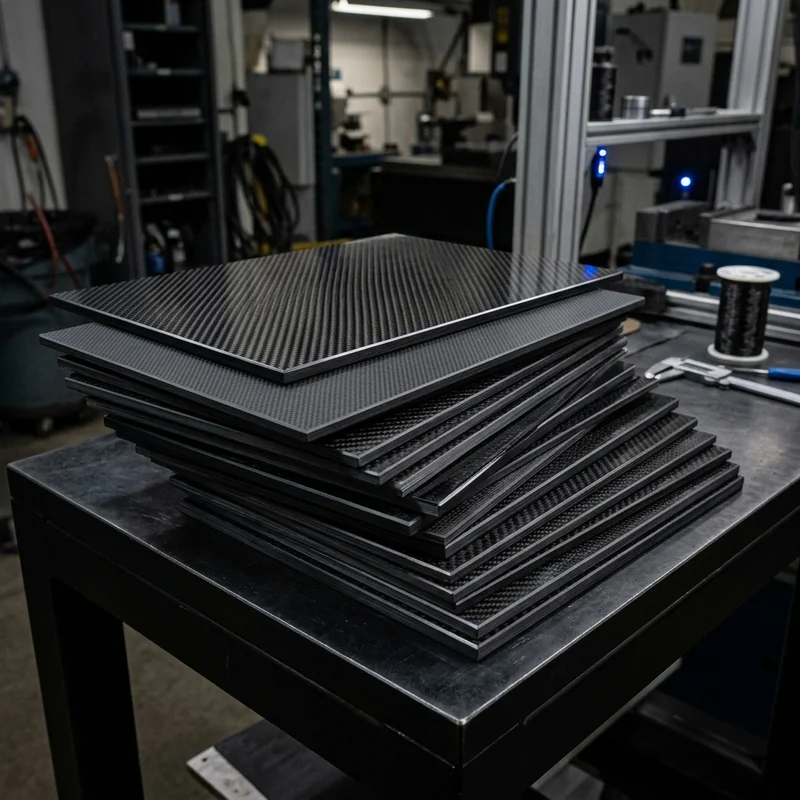
Carbon fiber standard plate-3k stripe
Lightweight, ultra-rigid standard sheets for drone fuselages, robot housings, facades and structural applications.

Carbon Fiber Plate — 3K Twill T700 3.0mm
Medium-thickness 3.0mm carbon fiber plate offering significantly higher load capacity while maintaining attractive 3K twill finish. Suitable for structural brackets, reinforcement plates, and load-bearing panels.

Carbon Fiber Plate — 3K Twill T700 1.5mm
Thin 1.5mm carbon fiber plate with 3K twill weave surface. Lightweight and stiff, commonly used for covers, panels, drone bodies, and applications requiring a premium aesthetic appearance.

Square Carbon Fiber Tube — 3K Twill T700
Square cross-section carbon fiber tube manufactured with 3K twill weave for torsional strength. Preferred for structural frames, trusses, and support columns where rectangular geometry offers design flexibility.
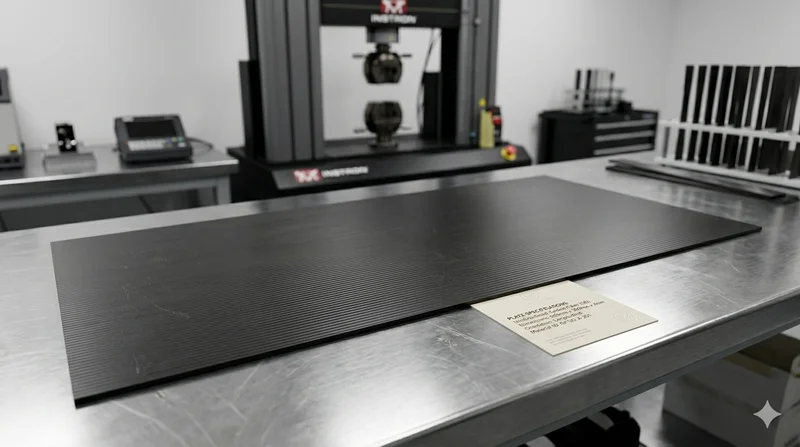
Carbon Fiber Plate — UD Unidirectional T700
Unidirectional carbon fiber plate with all fibers oriented in a single direction for maximum strength along the fiber axis. Essential for structural reinforcements, splints, and applications where load direction is predictable.