

For decades, the highest-quality carbon fiber structures were made the slow way: prepreg laid up by hand or machine into molds, vacuum bagged, and cured for hours in an autoclave. Autoclave curing delivers excellent properties, but it is expensive, energy-intensive, and fundamentally sl
Introduction
For decades, the highest-quality carbon fiber structures were made the slow way: prepreg laid up by hand or machine into molds, vacuum bagged, and cured for hours in an autoclave. Autoclave curing delivers excellent properties, but it is expensive, energy-intensive, and fundamentally slow — a single large aerospace part can occupy an autoclave for four to eight hours. Compression molding of thermoset prepreg offers a different balance: it keeps the fiber volume fraction and mechanical consistency of prepreg while replacing the bag-and-autoclave cycle with a matched steel die press that cures a part in minutes.
The process is being adopted wherever structural quality must meet medium-to-high production volumes: automotive body and chassis components, EV battery enclosures, wind blade spar caps, and aerospace secondary structures. This article explains the three process windows — pressure, temperature, and time — that control the result, the tooling that makes the process work, and the trade-offs that decide whether compression molding with prepreg is the right route for a given part.
What Compression Molding of Prepreg Delivers
Compression molding with thermoset prepreg is methodical: a charge of prepreg — either a stack of flat plies stamped to shape, or a preformed stack consolidated by heat and light pressure — is placed on the lower mold half, the press closes, and heat plus pressure cure the part in a single shot. The defining characteristics of the route are:
- Two-sided class A surfaces: both faces of the part are formed against precision steel mold surfaces, eliminating the bag-side finish variation of autoclave processing.
- Short cycle times: with rapid-cure epoxies, press cycles of 10-20 minutes are routine and 3-8 minute cycles are achievable for thin, simply shaped parts.
- High fiber volume fraction: because the charge is pre-impregnated and consolidated under full mold pressure, fiber volumes of 55-65 percent are achieved without the injection-mediated variability of liquid molding.
- Repeatable dimensional accuracy: matched dies hold thickness, planarity, and net-edge geometry tightly, reducing post-mold machining.
- Repeatable dimensions with automation: the same process steps repeat part after part, making the route suitable for robotic charge handling and press-fed production lines.
The trade-off is that the process depends on the prepreg having the right flow and cure behavior for molding, and on mold design that vents trapped air and fills complex geometry at the available pressure. These constraints define the process windows described next.
Process Windows: Pressure, Temperature, and Time
Three variables control whether a compression-molded prepreg part comes out void-free, fully cured, and dimensionally correct. The table below gives typical windows for structural epoxy prepreg — the dominant matrix system for structural parts — with rapid-cure grades noted where they differ:
| Parameter | Typical Window (Structural Epoxy) | Rapid-Cure Grades | Effect of Moving Outside the Window |
|---|---|---|---|
| Mold temperature | 130-160°C | 140-160°C | Too low: slow or incomplete cure; too high: scorching, degraded matrix |
| Mold pressure | 1.0-3.0 MPa | 1.5-3.0 MPa | Too low: voids and porosity; too high: fiber wash, resin squeeze-out |
| Heat-up rate to cure temperature | 5-15°C/min | 10-20°C/min | Too fast in thick parts: exotherm spikes, internal voids |
| Holding time at cure temperature | 15-40 min | 3-10 min | Too short: undercure, low Tg; too long: unnecessary cycle cost |
| Charge temperature at mold entry | 20-40°C (or preheated to 60-80°C) | Drapable at 20-30°C, preheat optional | Warm charges flow more readily; overheated charges partially B-stage before flow |
| Total press cycle | 20-40 min | 8-15 min | Drives cost per part; the reason rapid-cure grades exist |
The interaction between the three windows matters as much as the individual values. A thicker section stores more heat, so exotherm management — keeping the internal temperature below the degradation limit of roughly 200°C while the surface reaches cure temperature — often dictates a slower heat-up than the ideal part-rate value. Similarly, pressure must rise to full value early enough to consolidate the resin before viscosity drops to its minimum and the resin begins to gel; delayed full pressure produces edge voids even on simple flat panels.
Mold Design and Tooling Considerations
Compression molding succeeds or fails on the mold. Presses for structural CFRP parts range from 500 tonnes for large flat panels to 2,000-3,000 tonnes for deep automotive parts, and the mold must withstand both the closing force and the cure temperature. The key tooling decisions are:
- Mold steel: P20 and H13 tool steels are standard. P20 suits lower-volume and lower-temperature tools; H13 takes higher pressures, higher temperatures, and longer production runs without soft spots or heat check cracking.
- Sealing and venting: the platen closes on a shear edge or pinch-off that traps resin and lets air escape through deliberate vents. Vent channels of 0.05-0.15 mm at the parting line bleed trapped air and excess resin; poor venting is the most common cause of edge porosity.
- Heating: cartridge or high-pressure steam heating through the bolsters holds mold temperature uniform to ±5°C across the cavity. Uneven heating produces cure gradients that warp thin parts.
- Surface finish: hardened, polished or nickel-plated cavity surfaces give the class A finish, release cleanly, and resist the abrasion of carbon fiber charges.
- Ejection and draft: parts with deep geometry need draft angles of 1-3 degrees and ejector pins to leave the cavity without damage.
Tooling cost is the process's main barrier: a matched steel die for a mid-size automotive panel can cost three to five times an equivalent single-sided mold. The investment is recovered only when production volume justifies it — generally above several thousand parts per year, or when cycle time savings on lower volumes still outweigh the tooling write-off.
Compression Molding vs Autoclave vs RTM
Compression molding of prepreg competes with the established liquid molding and autoclave routes. The comparison below uses representative structural carbon fiber parts:
| Criteria | Prepreg Compression Molding | Prepreg + Autoclave | RTM / HP-RTM |
|---|---|---|---|
| Typical cycle time per part | 10-20 min | 2-6 hours (incl. cure + heat-up) | 30-90 min (RTM) / 2-5 min (HP-RTM) |
| Fiber volume fraction | 55-65% | 55-65% | 45-55% (RTM) / 55-62% (HP-RTM) |
| Mold pressure | 1-3 MPa matched die | 0.5-0.7 MPa bag pressure | 0.3-1.5 MPa injection; 8-12 MPa HP-RTM clamping |
| Surface finish | Class A both sides | Class A one side (bag side textured) | Class A both sides |
| Void content | 0.5-1.5% | 0.2-1.0% | 1-2% (RTM); 1-1.5% (HP-RTM) |
| Tooling cost | High (matched steel dies) | Low-moderate (single-sided + bag/autoclave) | Moderate-high (closed molds, RTM injection equipment) |
| Best fit | Medium-volume structural parts with two good surfaces | Low-volume, high-performance aerospace primary structure | High-volume automotive, complex net-shape ribbed parts |
The snapshot is that compression molding with prepreg occupies the middle ground: faster than autoclave, with better fiber content and two-sided finish than most RTM, while HP-RTM remains the volume champion where cycle time above everything else is the driver. Selection depends on part geometry, required void level, and annual volume.
Applications Driving Adoption
The strongest adoption signals for prepreg compression molding are in structural applications where cycle time and two-sided finish matter simultaneously:
- Automotive body and chassis parts: seat shells, floor panels, and structural brackets cured in 10-20 minute cycles make CFRP viable for premium and performance vehicles that cannot wait on autoclave turnarounds.
- EV battery enclosures: large flat protective panels benefit from two-sided finish, dimensional stability for seal surfaces, and fire-resistant epoxy systems — a rapidly growing application class.
- Wind blade spar caps: the prepreg route for spar caps is the fastest-growing process line in blade manufacturing (roughly 7.4 percent CAGR), where long flat unidirectional laminates are pressed flat in matched dies with high fiber volume and low void content.
- Aerospace secondary and interior structures: galley frames, seat tracks, and access panels use compression molding where thousands of parts per year justify matched tooling.
- Industrial plates and covers: thick flat panels for jigs, riser plates, and machine guards exploit the dimensional repeatability of the matched-die route.
Common Defects and Quality Control
Compression molding with prepreg has a well-understood defect set, and each defect traces back to a process window:
- Porosity and voids: usually low pressure or rapid pressure rise that traps air; mitigation is faster full-pressure application and better venting, not longer cure.
- Resin starvation or dry fibers: excessive pressure or flash squeeze-out; mitigated by higher charge viscosity and charge weight control.
- Fiber wash or ply wrinkling: resin flowing too fast early in the cycle drags fibers; mitigated by slower heat-up and staged pressure.
- Under-cure: visible as low Tg and soft parts; verified by differential scanning calorimetry on coupons and corrected by longer hold at temperature.
- Springback and warpage: differential cooling between thick and thin sections; mitigated by controlled cooling rates or by press dwell during cool-down.
Production quality control mirrors autoclave practice for the parts that matter: ultrasonic inspection for porosity, coupon testing for Tg and fiber volume by acid digestion, and dimensional checks on a sampling basis. Because the process is repetitive, first-article validation of the mold and the charge pattern is the highest-value step in the whole quality system.
Frequently Asked Questions
Can compression molding with prepreg match autoclave mechanical properties?
For equivalent layup and fiber volume fraction, yes for most structural properties. Compression-molded parts with 55-65 percent fiber volume and 0.5-1.5 percent voids show tensile, flexural, and compression strengths within a few percent of autoclave-cured counterparts; interlaminar shear strength is typically similar at equal void content. The differences are on the margins: autoclave processing achieves slightly lower voids (0.2-1.0 percent versus 0.5-1.5 percent) and therefore somewhat higher fatigue allowables on critical laminates, and it permits large, single-sided geometry that cannot fit matched dies. For medium-volume structural parts, the mechanical penalty of compression molding is small, and the cycle-time and finish advantages usually dominate the decision.
What cure cycles do compression molding prepregs use?
Conventional structural epoxy prepregs for compression molding cure at 130-160°C with holds of 15-40 minutes, giving total press cycles of 20-40 minutes including dwell and cooling. Rapid-cure grades — developed specifically for compression molding — cure in 3-10 minutes at 140-160°C, with total cycles of 8-15 minutes. The rapid-cure systems trade some prepreg out-time and handling life for speed: they typically allow only a few days of out-time at room temperature before the advancing B-stage reaction changes flow behavior, so frozen storage and short assembly sequences become part of the process design.
Is compression molding with prepreg cost-effective for my part volume?
It becomes cost-effective when the volume justifies matched steel tooling and the cycle time buys real capacity. As a rule of thumb, tooling for a mid-size structural part costs three to five times an equivalent single-sided autoclave mold, so the route pays off above roughly several thousand parts per year, or earlier when two-sided finish or dimensional repeatability are mandatory and autoclave turnarounds would force additional capacity investment. For annual volumes below a few hundred, autoclave or oven-vacuum processing with tooling-grade molds is usually cheaper. The correct analysis is total cost per part over the program life: tooling amortization, cycle-driven capacity, energy per part (compression presses consume roughly an order of magnitude less energy per part than autoclave cycles), and quality yield.
Conclusion
Compression molding of thermoset prepreg converts the material quality of prepreg into a fast, repeatable, two-sided-finished process that fits the middle of the structural composites market. Pressure windows of 1-3 MPa, temperature windows of 130-160°C, and 10-20 minute cycles with rapid-cure grades give automotive, wind, aerospace-secondary, and industrial parts a route that autoclave cannot match on throughput and that RTM cannot match on fiber volume and finish.
For manufacturers evaluating the route, the three levers that decide success are the cure profile of the chosen prepreg, the venting and heating design of the matched dies, and honest cost modeling of tooling against annual volume. Explore our carbon fiber prepreg, fabric, and laminate materials for compression molding, or contact our technical team for process window support, rapid-cure material selection, and mold design guidance for your part.
Part of topic
Related Articles
- Filament Wound Epoxy Tubes Advantages: Over Metal and Pultruded Alternatives
- Carbon Fiber Tube Strength: Analysis Methods and Design Allowables
- Filament Wound Epoxy Tubes: Mechanical Properties and Material Data Sheets
- Carbon Fiber Drone Blades and Propellers: Stiffness, Balance and Noise Reduction
- Fiberglass Filament Wound Tubes: Cost-Effective Alternative to Carbon Fiber
- Filament Wound Epoxy Tube Design: Wall Thickness, Fiber Angle and Load Optimization
Interested in Our Products?
Contact our team for competitive pricing and technical specifications.
Get a QuoteRelated Products
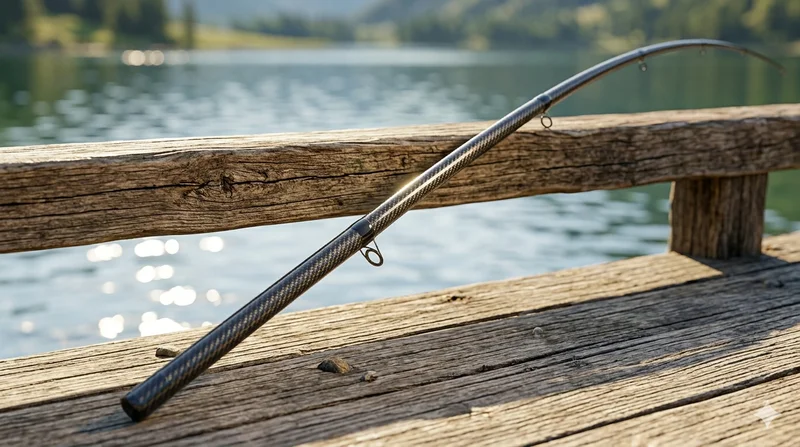
Carbon Fiber Fishing Rod Blank
High-quality carbon fiber fishing rod blank manufactured from multiple grades of Toray carbon fiber cloth. Available in a wide range of lengths, powers, and actions for freshwater and saltwater applications. Suitable for OEM rod building.

Carbon Fiber Plate — 3K Twill T700 1.5mm
Thin 1.5mm carbon fiber plate with 3K twill weave surface. Lightweight and stiff, commonly used for covers, panels, drone bodies, and applications requiring a premium aesthetic appearance.

Carbon Fiber Plate — 3K Twill T700 3.0mm
Medium-thickness 3.0mm carbon fiber plate offering significantly higher load capacity while maintaining attractive 3K twill finish. Suitable for structural brackets, reinforcement plates, and load-bearing panels.
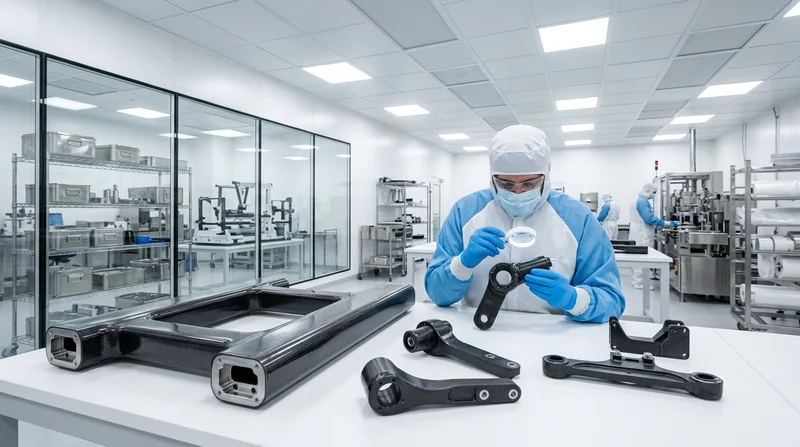
Custom Carbon Fiber Medical Device Components
Medical-grade carbon fiber components manufactured for imaging equipment, surgical instruments, and patient support systems. Carbon fiber's radiolucency (X-ray transparency) and high strength-to-weight ratio make it ideal for CT scanner beds, wheelchair frames, surgical robot arms, and MRI-compatible accessories. Biocompatible resin systems available.

Square Carbon Fiber Tube — 3K Twill T700
Square cross-section carbon fiber tube manufactured with 3K twill weave for torsional strength. Preferred for structural frames, trusses, and support columns where rectangular geometry offers design flexibility.