
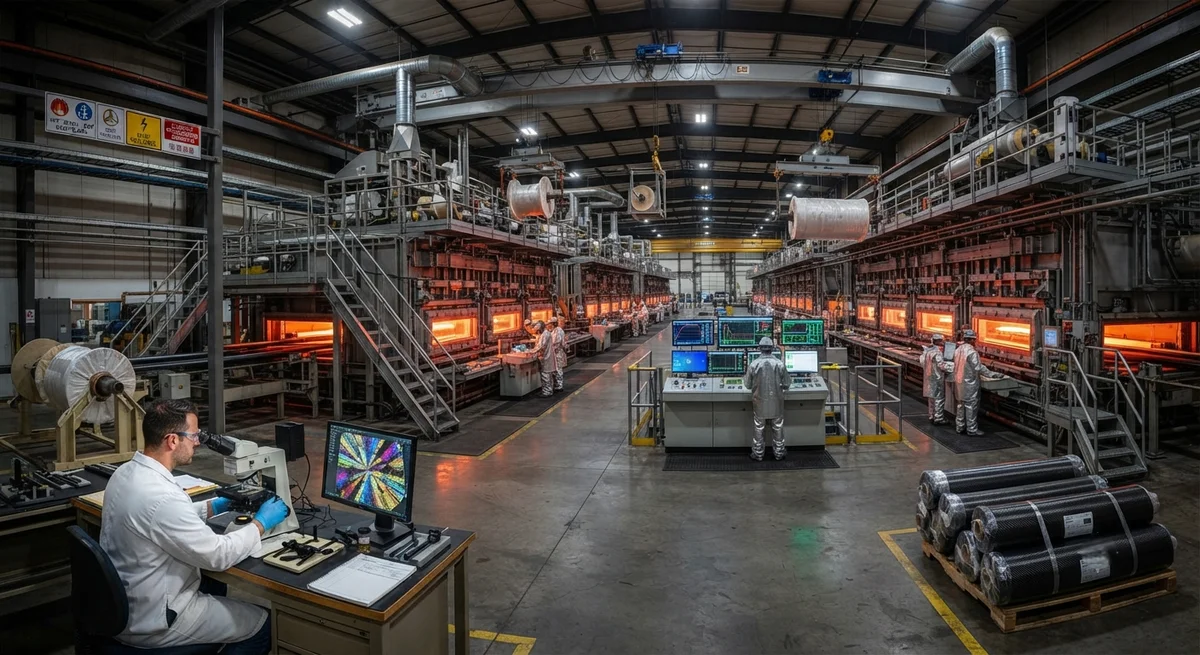
The global composites market is projected to reach $224 billion by 2035 at an 8.5% CAGR according to Precedence Research. This comprehensive analysis examines carbon fiber's expanding share across aerospace, automotive, wind energy, and construction sectors — including application-specific adoption rates, regional breakdowns, pricing trends, and technology drivers that position carbon fiber to capture 28–32% of the advanced composites market by value within the decade.
Global Composites Market Poised for Record Growth
The global composites market is on a trajectory to reach $224 billion by 2035, according to a comprehensive forecast by Precedence Research. This projection represents a compound annual growth rate (CAGR) of approximately 8.5% from 2025, driven by accelerating demand across aerospace, automotive, wind energy, and construction sectors. Within this expanding market, carbon fiber composites — valued for their exceptional strength-to-weight ratio, corrosion resistance, and fatigue performance — are capturing an increasingly significant share.
Carbon fiber-reinforced polymers (CFRP) currently account for approximately 18–22% of the total advanced composites market by value, and this share is projected to grow to 28–32% by 2035. The underlying drivers include manufacturing cost reductions through规模化 production, improved recycling technologies, and the development of high-volume processing methods such as automated fiber placement (AFP) and resin transfer molding (RTM) that make carbon fiber economically viable for mid-range applications.
Aerospace: The Traditional Stronghold Expands
Aerospace remains the largest single market for carbon fiber composites, consuming approximately 35% of global carbon fiber production. The Boeing 787 Dreamliner and Airbus A350 XWB — both comprising over 50% composite materials by weight — have demonstrated the durability and lifecycle cost advantages of CFRP in commercial aviation. Looking ahead, the next generation of narrow-body aircraft, expected to enter service around 2030–2035, is anticipated to push composite content even higher, potentially reaching 60–65% by structural weight.
Key aerospace drivers for carbon fiber demand include:
- Next-generation single-aisle aircraft: Boeing and Airbus are developing replacements for the 737 MAX and A320neo families, expected to feature composite wing structures and fuselage barrels, doubling carbon fiber consumption per aircraft from approximately 20 tonnes to 40–50 tonnes.
- Urban air mobility (UAM): The emerging eVTOL (electric vertical takeoff and landing) market, projected to reach $30 billion by 2035, relies heavily on carbon fiber composites for airframe structures, rotor blades, and battery enclosures — each vehicle using 200–400 kg of CFRP.
- Defense applications: Military aircraft programs, including the US Air Force's Next Generation Air Dominance (NGAD) platform and the UK's Global Combat Air Programme (GCAP), specify advanced carbon fiber composites for stealth structures and high-temperature engine components.
Automotive: Electric Vehicles Drive Carbon Fiber Adoption
The automotive sector is the fastest-growing market for carbon fiber composites, driven by the global transition to electric vehicles (EVs). Weight reduction is critical for EVs because every kilogram of mass reduction extends battery range by approximately 0.5–0.7 km. For a typical EV weighing 2,000 kg, a 15% weight reduction through carbon fiber components translates to 150–200 km of additional range — a compelling value proposition for OEMs.
| Application | Material Replaced | Weight Saving | CF Volume per Vehicle | 2025 Adoption | 2035 Projected |
|---|---|---|---|---|---|
| Battery enclosures | Steel / Aluminum | 40–55% | 15–25 kg | 12% | 45% |
| Body panels (closures) | Steel / Aluminum | 45–60% | 30–50 kg | 5% | 20% |
| Chassis / subframe | Steel | 50–65% | 40–70 kg | 3% | 18% |
| Interior / trim | Plastic / Wood | 35–50% | 5–15 kg | 8% | 35% |
| Drive shafts / suspension | Steel | 60–75% | 10–20 kg | 2% | 15% |
Automotive carbon fiber consumption is projected to grow at a CAGR of 14–18% through 2035, outpacing all other end-use sectors. The key enabler is the continued decline in carbon fiber pricing — from $35–45/kg in 2020 to a projected $18–25/kg by 2030 for industrial-grade tow — driven by production scale-up from major manufacturers including Toray, SGL Carbon, and Chinese producers Zhongfu Shenying and Jiangsu Hengshen.
Wind Energy: Blades Reach for the Sky
The wind energy sector is an increasingly significant consumer of carbon fiber, primarily for rotor blades. As turbine manufacturers push toward 15–18 MW offshore turbines with blade lengths exceeding 120 meters, the structural demands on blade materials become extreme. Carbon fiber's higher specific stiffness — approximately 2.5 times that of S-glass fiber — enables longer, lighter blades that capture more wind energy per turbine.
Vestas, Siemens Gamesa, and GE Renewable Energy have all adopted carbon fiber spar caps and shear webs in their largest turbine models. Industry estimates suggest carbon fiber consumption for wind energy will reach 40,000–50,000 tonnes annually by 2030, up from approximately 18,000 tonnes in 2025. However, challenges remain:
- Carbon fiber blades are more susceptible to lightning strike damage, requiring integrated conductive mesh protection systems that add cost and weight.
- End-of-life recycling for carbon fiber composite blades remains an unsolved challenge, though companies like Siemens Gamesa are developing recyclable blade technologies using thermoset-epoxy systems designed for chemical depolymerization.
- Supply chain concentration — over 60% of global carbon fiber production capacity is located in Japan, China, and the United States — creates logistical and geopolitical risks for European wind turbine manufacturers.
Construction and Infrastructure: Emerging Growth Frontier
The construction sector represents a smaller but rapidly growing market for carbon fiber composites, primarily for structural reinforcement and seismic retrofitting. Carbon fiber-reinforced polymer (CFRP) wraps and laminates offer compelling advantages over traditional steel jacketing: they are lightweight (1/4 the density of steel), corrosion-proof, and can be installed in a fraction of the time without heavy lifting equipment.
| Application | Traditional Solution | CFRP Solution | Installation Time | Service Life | Cost Index |
|---|---|---|---|---|---|
| Column wrapping | Steel jacket (12 mm) | CFRP wrap (3–5 layers) | 70% faster | 50+ years | 0.7–1.2x |
| Beam strengthening | Steel plate bonding | CFRP laminate bonding | 60% faster | 40+ years | 0.8–1.5x |
| Slab reinforcement | Steel rebar | CFRP rebar / grid | 50% faster | 100+ years | 1.5–3.0x |
| Seismic retrofit | Concrete jacketing | CFRP wrap system | 80% faster | 50+ years | 0.6–1.0x |
Japan, a global leader in seismic retrofit technology, has been using CFRP for building reinforcement since the 1995 Kobe earthquake. Chinese infrastructure projects are now the largest volume consumer of CFRP reinforcement materials, driven by the government's commitment to upgrading the nation's aging bridges, tunnels, and building stock. The Chinese CFRP construction market alone is expected to exceed $1.2 billion by 2030.
Regional Breakdown: Asia-Pacific Leads, North America and Europe Follow
The Asia-Pacific region dominates global carbon fiber consumption, accounting for approximately 45% of demand in 2025, driven by China's massive manufacturing base, Japan's established aerospace-grade fiber production, and the rapid industrialization of Southeast Asia. China alone consumed an estimated 85,000–95,000 tonnes of carbon fiber in 2025, representing nearly 50% of global demand, with domestic production capacity expanding rapidly.
North America accounts for approximately 25% of global carbon fiber demand, with strong representation in aerospace (Boeing, Lockheed Martin), automotive (Ford, General Motors), and wind energy (GE Renewable Energy). The US Department of Energy's Composite Materials Initiative, launched in 2024, includes $75 million in funding for low-cost carbon fiber precursor development and recycling infrastructure.
Europe represents approximately 20% of consumption, led by the aerospace sector (Airbus, Dassault Aviation), premium automotive manufacturing (BMW, Mercedes-Benz, Ferrari), and wind energy (Vestas, Siemens Gamesa). The European Union's Critical Raw Materials Act, which lists carbon fiber precursors as strategic materials, is expected to spur investment in domestic production capacity.
The remaining 10% is distributed across the Middle East, Africa, and South America, with emerging applications in oil and gas exploration, marine structures, and sports equipment manufacturing.
Frequently Asked Questions
What is driving the 8.5% CAGR in the global composites market through 2035?
Several converging factors are driving this growth: (1) aerospace's transition to composite-intensive next-generation narrow-body aircraft, which will double carbon fiber content per airframe; (2) automotive lightweighting driven by EV range requirements, with every 10% mass reduction yielding approximately 14% range improvement; (3) offshore wind turbine blade lengths exceeding 120 meters, which require carbon fiber reinforcement for structural feasibility; (4) infrastructure modernization programs in China, Japan, and Europe emphasizing CFRP for seismic retrofit and corrosion-proof reinforcement; and (5) declining carbon fiber production costs as manufacturing scale increases and precursor costs decrease through alternative feedstocks such as lignin and polyacrylonitrile (PAN) from recycled sources.
Which carbon fiber grade will see the highest demand growth?
Industrial-grade (standard modulus, 230–250 GPa) carbon fiber, typically 50K–60K tow formats, is projected to see the highest volume growth, driven by automotive and wind energy applications. These grades currently cost $18–25/kg and are the primary target for cost reduction through large-tow production technology. Intermediate modulus (280–350 GPa) grades, primarily used in aerospace, will see steady growth tied to aircraft production rates. High modulus (>350 GPa) grades remain niche products for specialized applications such as satellite structures and precision instrument components. Toray's T700-grade (standard modulus) and its Chinese equivalents are expected to remain the most widely consumed carbon fiber products globally through 2035.
Will carbon fiber prices continue to decline, and by how much?
Yes, carbon fiber prices are projected to continue their long-term decline. Industrial-grade carbon fiber (50K+ tow) is expected to fall from the current range of $20–30/kg to $15–20/kg by 2030 and $12–17/kg by 2035, driven by: (1) larger production lines with capacities exceeding 5,000 tonnes per year, now standard for new Chinese plants; (2) alternative precursor sources including lignin-based carbon fiber from companies like Oak Ridge National Laboratory spin-offs and melt-spun PAN technologies that reduce conversion costs by 30–40%; (3) improved processing efficiency with higher carbonization yields (currently 50–55%, targeting 60–65%); and (4) increased recycling of carbon fiber from end-of-life components and manufacturing scrap, which currently supplies 8,000–10,000 tonnes annually of recycled fiber at prices 40–60% below virgin fiber. However, aerospace-grade fibers are expected to see more modest price declines of 2–4% annually due to stringent qualification and certification requirements that limit production efficiency improvements.
Related Articles
- Recycled Carbon Fiber Market Forecast 2030: Technology Maturity and Commercialization Path
- South Korea Carbon Fiber Market 2026: Hydrogen Economy and Shipbuilding Innovation
- Wind Turbine Blade Leading Edge Protection 2026: Polyurethane, Tape, and Metallic Shield Solutions
- China Carbon Fiber Overcapacity 2026: Price War Impact and Industry Consolidation
- India Carbon Fiber Market 2026: Wind Energy, Aerospace, and Defense Expansion
- PAN Precursor Market 2026: Acrylonitrile Supply and Carbon Fiber Cost Structure
Interested in Our Products?
Contact our team for competitive pricing and technical specifications.
Get a QuoteRelated Products
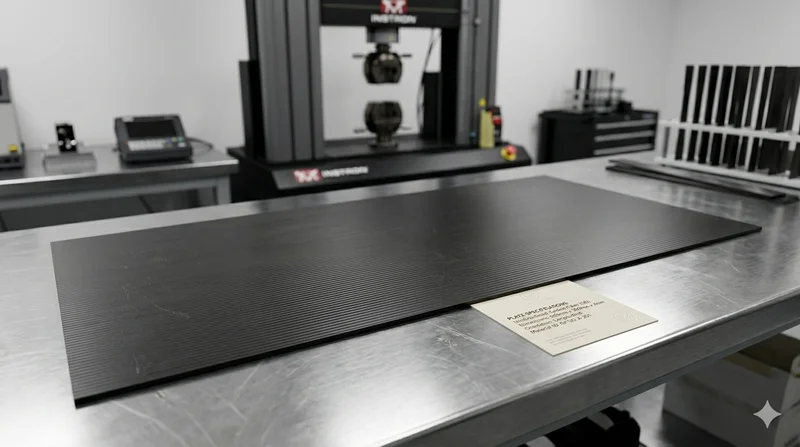
Carbon Fiber Plate — UD Unidirectional T700
Unidirectional carbon fiber plate with all fibers oriented in a single direction for maximum strength along the fiber axis. Essential for structural reinforcements, splints, and applications where load direction is predictable.

Carbon Fiber Fishing Rod Blank
High-quality carbon fiber fishing rod blank manufactured from multiple grades of Toray carbon fiber cloth. Available in a wide range of lengths, powers, and actions for freshwater and saltwater applications. Suitable for OEM rod building.
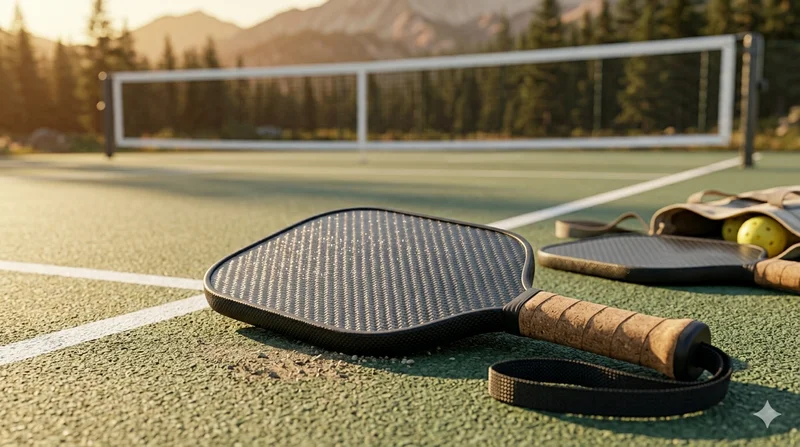
Carbon Fiber Pickleball Paddle
High-performance pickleball paddle with Toray T700 carbon fiber face and polypropylene honeycomb core. Delivers excellent power-to-weight ratio, spin generation, and vibration dampening for competitive play.

Carbon Fiber Drone Arm
Precision-molded carbon fiber drone arm combining unidirectional fiber for stiffness and woven layers for torsional strength. Designed for FPV, photography, and industrial drone platforms. Each arm is CNC-machined to exact specifications.
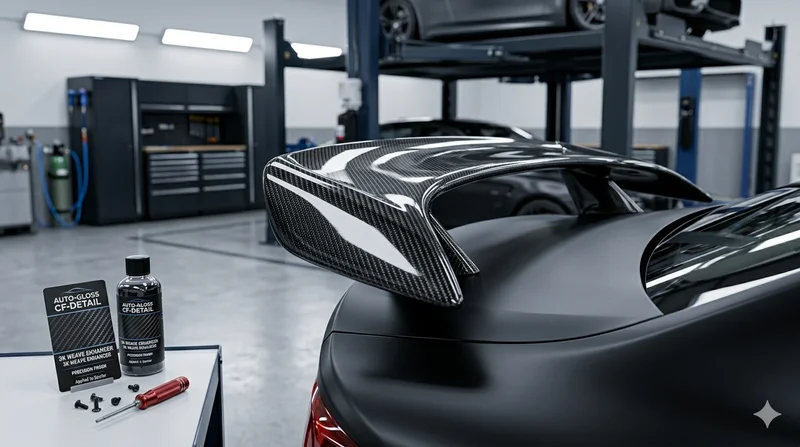
Carbon Fiber Automotive Spoiler
Automotive-grade carbon fiber spoiler manufactured using autoclave-cured pre-preg technology. Each spoiler is vacuum-bagged and oven-cured for optimal fiber-to-resin ratio, strength, and a flawless cosmetic finish.