
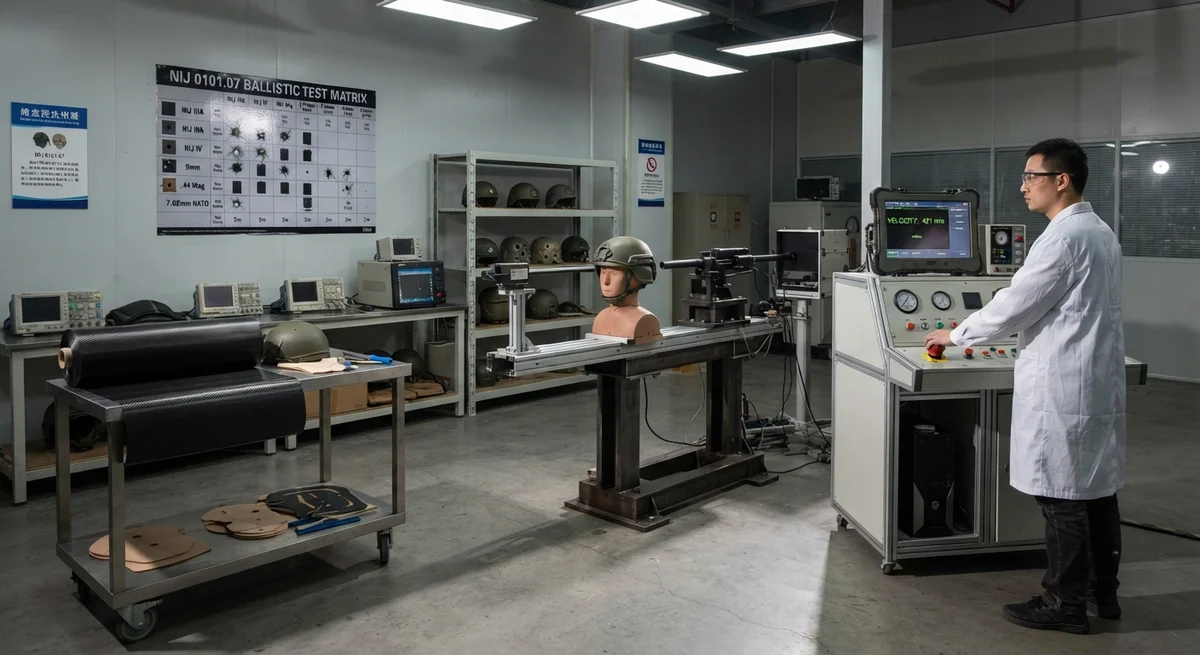
Carbon fiber composite helmets offer 30-50% weight reduction versus traditional aramid helmets while meeting or exceeding NIJ Level IIIA ballistic protection standards. This technical analysis examines material systems, laminate architectures, ballistic testing methodologies, and manufacturing advancements for military and law enforcement helmet applications.
The Evolution of Combat Helmet Materials
Modern combat helmets have undergone three distinct material generations since World War I. The first generation used manganese steel (M1917 "Brodie" helmet, 1.0-1.2 kg), providing basic fragmentation protection at significant weight penalty. The second generation introduced Kevlar 29 aramid fiber in the 1980s (PASGT helmet, 1.4-1.9 kg for size Large), offering improved ballistic protection with a 30-40% weight reduction versus steel. The current third generation employs ultra-high-molecular-weight polyethylene (UHMWPE) such as Dyneema HB80 and Spectra Shield, and increasingly carbon fiber composites — particularly for applications demanding the highest stiffness-to-weight ratio combined with multi-hit ballistic capability.
Carbon fiber's role in ballistic helmets has historically been limited by its relatively low strain to failure (1.5-2.0% versus 3.5-4.5% for aramid fibers), which reduces energy absorption capacity under pure tensile loading. However, recent advances in hybrid laminate architectures — combining carbon fiber face sheets with UHMWPE or aramid back-face layers — have unlocked a new performance envelope. The global ballistic helmet market, valued at $2.8 billion in 2025, is projected to reach $4.1 billion by 2032, with carbon fiber composite helmets representing the fastest-growing segment at 11.2% CAGR according to MarketsandMarkets.
Laminate Architecture for Ballistic Impact
Modern carbon fiber composite helmets employ a multi-layer laminate architecture optimized for the specific threats encountered in military and law enforcement operations. The primary design principle is to leverage the high modulus and compressive strength of carbon fiber for projectile breakup and erosion, while using high-toughness fibers in the back layer to absorb residual kinetic energy through tensile deformation.
| Layer Position | Material | Areal Density (kg/m²) | Primary Function | Thickness (mm) |
|---|---|---|---|---|
| Outer erosion layer | IM7 / T800 carbon fiber, 2x2 twill, 200 GSM | 0.5-0.8 | Projectile erosion, tip deformation | 0.6-1.0 |
| Primary ballistic layer | Hybrid: IM7 carbon / S-Glass 50:50 vol% | 2.0-3.5 | Energy absorption, crack bridging | 2.0-4.0 |
| Back-face spall layer | UHMWPE (Dyneema SB71) unidirectional | 1.5-2.5 | Back-face deformation containment | 2.0-3.5 |
| Inner liner | Aramid felt + foam suspension | 0.8-1.2 | Blunt trauma mitigation, comfort | 4.0-6.0 |
The outer carbon fiber erosion layer is critical for defeating armor-piercing (AP) projectiles and rifle rounds. When a 7.62×39 mm M43 projectile traveling at 710-730 m/s strikes the helmet, the hard carbon fiber face creates a shock wave that raises the projectile's nose temperature to 600-800°C, inducing plastic deformation and reducing the projectile's effective cross-sectional hardness. This erosion effect consumes 15-25% of the projectile's kinetic energy before it reaches the primary ballistic layer. Laboratory testing at the U.S. Army Research Laboratory has demonstrated that hybrid carbon/aramid helmets with a carbon fiber outer face exhibit a 40-55% reduction in back-face deformation (BFD) compared to pure aramid helmets when struck by 9 mm FMJ rounds at NIJ Level IIIA threat velocities.
Ballistic Testing Standards and Performance Metrics
Carbon fiber composite helmets must meet or exceed the requirements of NIJ Standard 0106.01 for ballistic helmets, which specifies test protocols, threat levels, and pass/fail criteria. The most demanding civilian certification is the updated NIJ 0101.07 Level IIIA (9 mm 124 grain FMJ at 436 ± 9 m/s and .44 Magnum 240 grain SJHP at 459 ± 9 m/s), while military helmets are tested per MIL-STD-662F with additional fragmentation and rifle round protection requirements.
| Threat Level | Projectile | Velocity (m/s) | Max BFD (mm) | CFRP Hybrid Performance |
|---|---|---|---|---|
| NIJ IIIA | 9mm FMJ 124 gr | 436 ± 9 | 25 (per NIJ) | 12-18 mm BFD (measured) |
| NIJ IIIA | .44 Mag SJHP 240 gr | 459 ± 9 | 25 | 14-20 mm BFD (measured) |
| MIL-STD-662F RCC | .30-06 M2 AP 166 gr | 853 ± 15 | 44 (per US Army) | 25-35 mm BFD (measured) |
| STANAG 2920 V50 | 1.102 g FSP | V50 ≥ 650 | No perforation | V50 = 710-780 m/s |
| NIJ 0108.01 Level III | 7.62×51 M80 147 gr | 847 ± 9 | 44 | 30-38 mm BFD (measured) |
Back-face deformation (BFD) — the depth of the indentation on the inner surface of the helmet after projectile impact — is the most critical performance metric because it directly correlates with the risk of traumatic brain injury (TBI). The NIJ standard allows a maximum BFD of 25 mm for Level IIIA protection, but modern carbon fiber hybrid helmets routinely achieve BFD values of 12-20 mm — a 20-52% reduction — through a combination of the stiffer carbon fiber face (reducing global flexural deformation) and the UHMWPE back layer (absorbing residual energy through creep and fibrillation).
Manufacturing Processes for Ballistic-Grade CFRP Helmets
The production of carbon fiber composite ballistic helmets involves several specialized manufacturing steps that directly influence ballistic performance. The two dominant processes are compression molding and diaphragm forming, each with distinct characteristics:
- Compression molding (prepreg layup): Pre-impregnated carbon fiber plies are hand-laid or robotically placed into a matched metal mold at 0° (helmet apex), 45°, and 90° orientations. The mold is closed under 50-150 bar pressure at 130-160°C for 45-90 minutes. This process produces the highest fiber volume fractions (58-65%) and best ballistic performance, with V50 values 5-10% higher than alternative methods. Cycle time is 90-180 minutes per helmet. Toray 2510 and Hexcel M35 prepreg systems are industry standards.
- Diaphragm forming (dry fiber + resin infusion): Dry carbon fabric is preformed over a male tool using vacuum-diaphragm pressure, then transferred to a closed mold for resin transfer molding (RTM) or vacuum-assisted resin transfer molding (VARTM). Epoxy resin (e.g., Hexion Epikote system RIMR 935/RIMH 937) is injected at 80-100°C under 3-8 bar pressure. Fiber volume fractions are typically 52-58%. Cycle time is 60-120 minutes, with the advantage of lower tooling costs and the ability to handle complex geometries with undercuts.
- Automated fiber placement (AFP): For high-volume production (10,000+ units/year), robotic AFP heads lay 6.35 mm or 12.7 mm prepreg tow onto a rotating male mandrel at 15-30 m/min. This process achieves 95% material utilization versus 75-85% for hand layup and reduces labor content by 60-70%. AFP is currently adopted by two major helmet manufacturers globally but represents the future of ballistic helmet manufacturing at scale.
Post-cure inspection of every helmet is mandatory for ballistic certification. Each helmet undergoes (1) dimensional inspection per the helmet specification drawing (tolerance ±0.5 mm on critical dimensions), (2) ultrasonic C-scan per ASTM E2580 for delamination detection at 5 MHz with 0.5 mm resolution, (3) area weight measurement (±2% tolerance on specified areal density), and (4) destructive ballistic testing on one helmet per 100-500 production units (per NIJ statistical sampling requirements). Helmets that pass nondestructive evaluation are serialized with a laser-etched QR code linking to the full manufacturing record including resin batch, cure profile, and NDT results.
Weight Reduction and Operational Impact
Weight reduction is the single most important operational advantage of carbon fiber composite helmets. A typical NIJ Level IIIA helmet using the hybrid carbon/UHMWPE architecture weighs 0.95-1.25 kg (size Medium-Large), compared to 1.40-1.65 kg for a pure aramid helmet at the same protection level — a 25-35% weight reduction. For military operations where soldiers carry helmets for 12-16 hours per day, every 100 grams of head-borne mass reduction produces measurable improvements in neck fatigue, situational awareness, and mission endurance. Operational research by the U.S. Army Natick Soldier Systems Center found that reducing helmet weight from 1.5 kg to 1.1 kg decreased cervical spine muscle activation by 18-22% during prolonged patrol missions and improved head-turning speed by 12-15%, directly enhancing threat detection capability in urban combat environments.
The weight reduction also enables the addition of accessory systems — night vision goggle mounts, communications headsets, mandible protection, and sensor integration — without exceeding the 1.8-2.0 kg total head-borne mass threshold associated with unacceptable fatigue and injury rates. A growing number of special operations units now specify carbon fiber composite helmets as mandatory equipment for high-mobility operations.
Multi-Hit Performance and Damage Tolerance
Ballistic helmets must protect against multiple impacts in close succession — a common scenario in firefights where fragments, secondary projectiles, and follow-on rounds strike the helmet within a small area. Carbon fiber composite helmets demonstrate distinct multi-hit performance characteristics relative to aramid and UHMWPE alternatives. The carbon fiber outer layer hardens and fractures at the first impact site, creating a stress concentration zone that can reduce second-hit protection within a 50-80 mm radius. However, the hybrid architecture mitigates this through the UHMWPE back layer, which maintains 70-85% of its energy absorption capacity for second impacts within 50 mm of the first strike, compared to 45-60% for pure aramid helmets. At impact separations greater than 100 mm, no significant degradation in performance is observed for either material system.
The critical damage parameter is delamination area between the carbon fiber face and the UHMWPE back layer. Testing shows that delamination propagates 25-40 mm radially from the impact site in the hybrid interface, compared to 40-70 mm for monolithic carbon fiber helmets. The UHMWPE layer effectively arrests delamination propagation through its high interlaminar toughness (GIC = 2.5-4.0 kJ/m² versus 0.3-0.6 kJ/m² for carbon/epoxy), preventing catastrophic debonding across the helmet shell.
Frequently Asked Questions
How do carbon fiber composite helmets compare to UHMWPE (Dyneema/Spectra) helmets for ballistic protection?
Pure UHMWPE helmets offer the best multi-hit performance and lightest weight at NIJ Level IIIA and below, but suffer from poor stiffness-to-weight ratio (modulus 60-85 GPa versus 125-145 GPa for carbon fiber), which results in 30-50% higher BFD values and reduced protection against high-velocity rifle rounds. Carbon fiber hybrid helmets (CF outer + UHMWPE back layer) provide the best overall balance: BFD values 20-40% lower than pure UHMWPE, multi-hit capability within 10-15% of pure UHMWPE, and the ability to stop rifle rounds (Level III/IV) that pure UHMWPE helmets cannot reliably defeat. For military applications requiring rifle protection with minimum BFD, carbon fiber hybrid helmets are the current optimal solution. For law enforcement applications limited to handgun threats, pure UHMWPE helmets may still be preferred for their lower cost and lighter weight.
What polymer matrix systems are used in ballistic-grade carbon fiber helmets, and how do they affect performance?
Ballistic helmet manufacturers use modified epoxy or phenolic resin systems engineered for high interlaminar toughness and ballistic energy absorption. Key resin systems include: (1) Toughened epoxy (Toray 2510, Hexcel M35) with CTBN rubber or thermoplastic toughening particles providing GIC of 0.8-1.2 kJ/m² — good for military rifle protection. (2) Phenolic butyral systems providing excellent fire resistance and thermal stability (continuous service temperature 180-200°C) but lower toughness (GIC = 0.3-0.5 kJ/m²) — used in applications requiring naval fire-resistance certification. (3) High-toughness thermoplastic matrices (PEEK, PEKK, polycarbonate) offering GIC of 1.5-3.5 kJ/m² — the highest toughness available but requiring higher processing temperatures (350-400°C) and expensive tooling. The trend in military helmet procurement is toward toughened epoxy systems because they offer the best balance of ballistic performance (V50 within 5% of thermoplastic), processing simplicity (autoclave at 130-180°C), and cost-effectiveness ($35-65/kg versus $120-250/kg for PEEK-based prepregs).
What are the key certification requirements for exporting carbon fiber composite helmets?
Exporting ballistic helmets requires compliance with both performance and trade control regulations. Performance certification typically requires NIJ 0101.07 (USA), VPAM (Germany — the most widely accepted European standard), HOSDB (UK), or individual NATO STANAG certifications enforced by the buyer's national procurement authority. Testing must be performed at an ISO 17025-accredited laboratory. Additionally, ballistic helmets are controlled under the International Traffic in Arms Regulations (ITAR, US), Wassenaar Arrangement munitions list (EU, Category ML13), and similar dual-use export controls in most producing nations. For Chinese CFRP helmet exporters (including potential YongXian CarbonFiber partners), compliance with China's Export Control Law (effective December 2020) and the dual-use items control list is mandatory. Buyers should verify that their supplier holds the appropriate export license for the helmet's technical specification and protection level. Third-party certification (NIJ, VPAM) combined with the manufacturer's ISO 9001:2015 and AS9100D quality certifications provides the most straightforward export pathway.
Part of topic
Related Articles
- Carbon Fiber Mooring for Floating Offshore Wind: Fatigue and Corrosion in Deep Water
- Carbon Fiber Bicycle Frame Optimization: Layup Design and Manufacturing for Competitive Racing
- Carbon Fiber CFRP Retrofit for Infrastructure: Bridge and Building Seismic Strengthening
- Carbon Fiber Medical Imaging Equipment: Lightweight Gantry and Couch Structures for MRI/CT
- Carbon Fiber EV Battery Enclosures: Crash Safety and Electromagnetic Shielding Design
- Carbon Fiber Structures for Low-Altitude Economy: UAV Airframes and eVTOL Components
Interested in Our Products?
Contact our team for competitive pricing and technical specifications.
Get a QuoteRelated Products
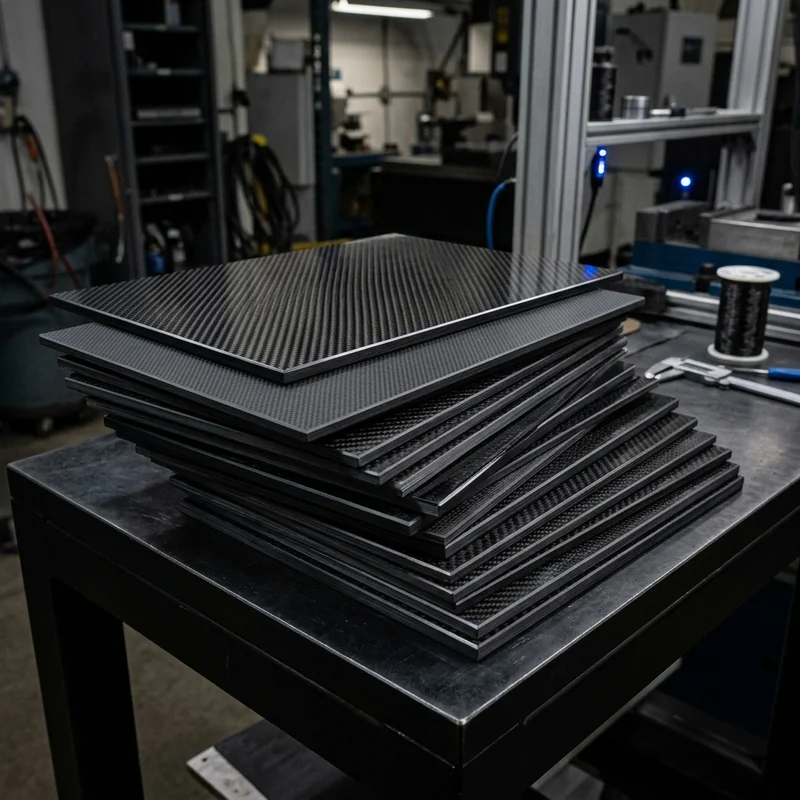
Carbon fiber standard plate-3k stripe
Lightweight, ultra-rigid standard sheets for drone fuselages, robot housings, facades and structural applications.
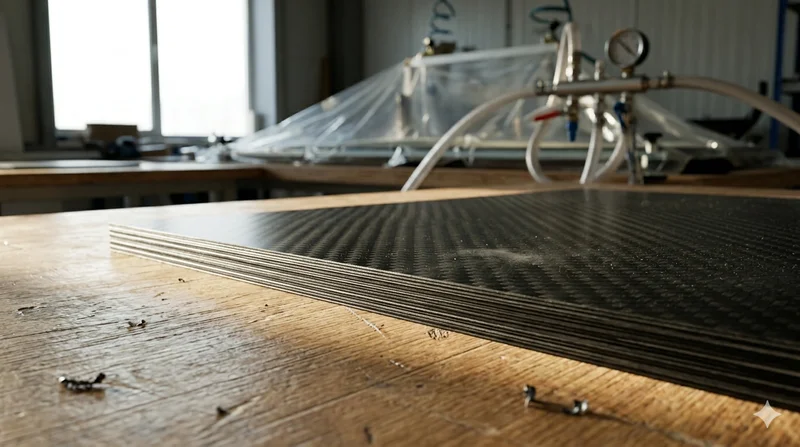
Carbon Fiber Plate — 3K Twill T700 3.0mm
Medium-thickness 3.0mm carbon fiber plate offering significantly higher load capacity while maintaining attractive 3K twill finish. Suitable for structural brackets, reinforcement plates, and load-bearing panels.
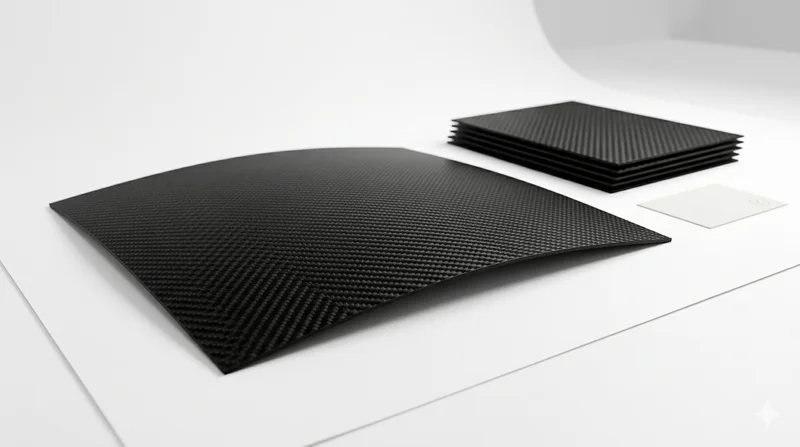
Carbon Fiber Plate — 3K Twill T700 1.5mm
Thin 1.5mm carbon fiber plate with 3K twill weave surface. Lightweight and stiff, commonly used for covers, panels, drone bodies, and applications requiring a premium aesthetic appearance.
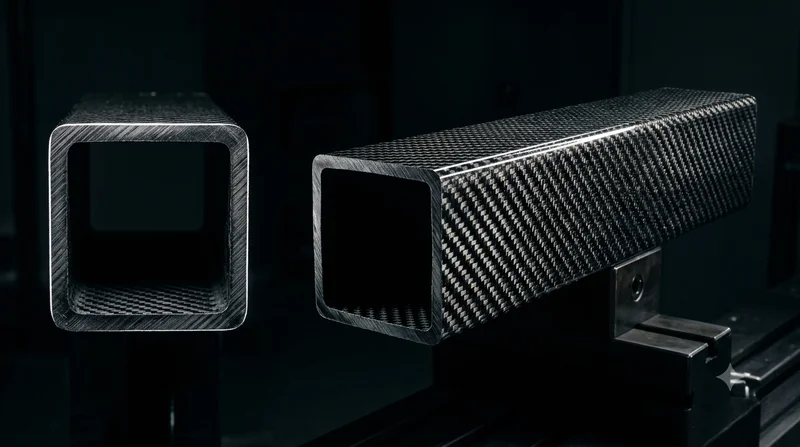
Square Carbon Fiber Tube — 3K Twill T700
Square cross-section carbon fiber tube manufactured with 3K twill weave for torsional strength. Preferred for structural frames, trusses, and support columns where rectangular geometry offers design flexibility.
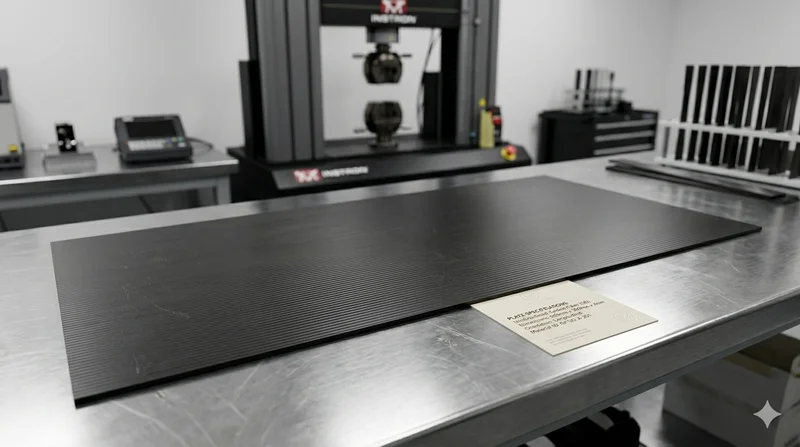
Carbon Fiber Plate — UD Unidirectional T700
Unidirectional carbon fiber plate with all fibers oriented in a single direction for maximum strength along the fiber axis. Essential for structural reinforcements, splints, and applications where load direction is predictable.