
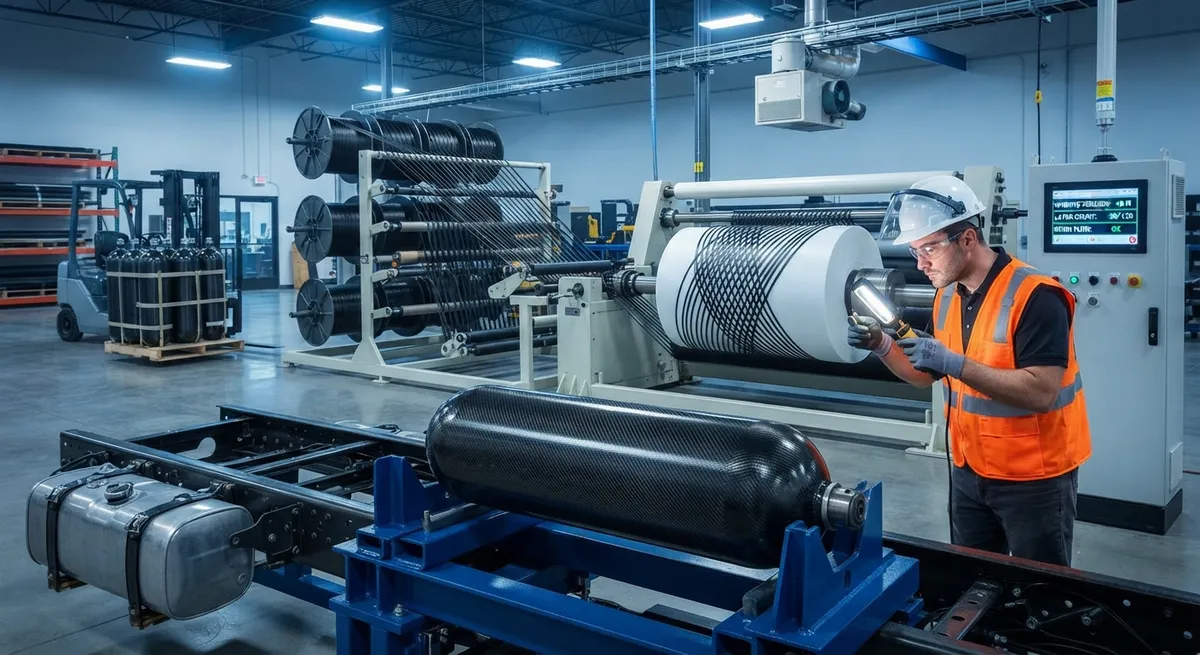
Compressed natural gas has quietly become one of the most practical lower-emission fuels for heavy commercial vehicles. Unlike battery-electric trucks, which still face payload penalties and charging downtime, CNG trucks can refuel in minutes and carry a fuel tank whose energy capacity
Introduction
Compressed natural gas has quietly become one of the most practical lower-emission fuels for heavy commercial vehicles. Unlike battery-electric trucks, which still face payload penalties and charging downtime, CNG trucks can refuel in minutes and carry a fuel tank whose energy capacity scales directly with stored volume. The constraint has always been weight: steel and aluminium cylinders used for compressed gas are heavy, and on a commercial vehicle every kilogram of tank displaces a kilogram of cargo.
Type IV cylinders change that equation. A Type IV vessel is a fully wrapped composite cylinder with a polymer liner (typically high-density polyethylene, HDPE) rather than a metal liner, overwrapped with carbon fiber reinforced composite. In commercial vehicles the result is a gas storage system that is 60-70% lighter than equivalent steel, with a fatigue life and safety envelope that meet the most demanding transport standards. This article explains how carbon fiber winding builds the Type IV cylinder, how permeation and burst requirements govern its design, and what fleet operators should verify before they commit to a CNG program.
Why CNG Cylinders Matter for Commercial Fleets
Natural gas trucks are a proven route to lower fuel cost and reduced CO2 emissions without changing refueling habits. A heavy-duty CNG truck carrying six Type IV cylinders in the 260 to 300 litre water-volume range stores roughly the energy equivalent that lets it run a regional distribution route, and refreshing the pack takes the same minutes as diesel refueling. On a typical 8,000 km per month route, the fuel cost saving versus diesel can be 30-45%, which quickly outweighs the higher upfront price of the gas tank system.
But payload is the hidden cost. A steel CNG tank pack on a rigid truck can weigh 800-1,200 kg; aluminium types reduce that to around 550-800 kg; a carbon Type IV pack releases another 200-300 kg. On a vehicle already operating near its gross vehicle weight, that recovered weight is pure cargo-carrying capacity on every trip — which is why Type IV carbon cylinders have become standard on high-utilization CNG trucks, delivery vans, and bus programs.
How Carbon Fiber Winding Builds a Type IV Cylinder
A Type IV cylinder is manufactured in three core steps. First, the HDPE liner is injection-molded or blow-molded to form a continuous, weld-free inner surface. Second, carbon fiber tow is applied under tension by a filament winding machine, typically in a helical pattern over the cylindrical body and polar winding over the domes, to build the composite overwrap. Third, the vessel is cured, hydrotested, and fitted with an integrated valve and protective boss.
- Weight efficiency is the headline advantage: a Type IV vessel is lighter because the polymer liner carries no structural load — the carbon fiber laminate bears nearly all of it.
- Helical and hoop winding control fiber orientation along the cylinder axis and circumference, giving the vessel directional stiffness where pressure loading is highest.
- Integrated liner and valve reduce leak paths by reducing the number of sealed interfaces compared with metal-lined designs.
The filament winding specification determines performance, so a commercial buyer should demand the fiber type, winding angle, layer count, and cure profile from the supplier. Higher-modulus carbon fiber (T700-class) with an optimized hoop-to-helical ratio yields the lowest weight for a given service pressure, while the liner guards leaking paths under permeation testing.
Permeation, Burst, and Flammability Standards for Type IV
| Property | Type IV carbon-wrapped CNG cylinder | Type I all-metal steel | Type II hoop-wrapped |
|---|---|---|---|
| Typical service pressure (bar) | 200-250 | 200-250 | 200-250 |
| Weight per litre of storage (kg/L) | 0.18-0.28 | 0.65-0.95 | 0.55-0.85 |
| Approx. weight saving vs steel | 60-70% | Baseline | 25-35% |
| Final burst test limit | ≥2.5x service pressure | Same | Same |
| Liner | HDPE polymer | Steel | Steel with carbon hoop |
| Permeation test (ISO 11439) | Compliant | Negligible | Negligible |
| Utilization on over-gross vehicle | High (light pack) | Low (heavy pack) | Medium |
The governing standard for CNG vehicle cylinders in most markets is ISO 11439, which specifies hydraulic burst tests of at least 2.5x above service pressure, cyclic fatigue testing over many millions of cycles, and a permeation limit that caps the amount of gas escaping through the liner. Type IV vessels certified under European norms and R110 also face hydraulic minimum-burst verification. Because the polymer liner is inherently slightly permeable, the permeation gate is the key acceptance criterion for a Type IV cylinder; a compliant liner and boss seal must hold leakage far below the limit across the design life.
Fleet Payload and Cost Benefits
The payload benefit compounds over the vehicle life. On a distribution truck, recovering 200-700 kg of tare weight lets an operator carry the same cargo in fewer trips or recover the equivalent of several-hundred kilograms of allowed load per trip. Over a typical 100,000 km a year and a 5-year program, a weight saving of around 300 kg produces thousands of additional tonne-kilometers of paid freight — a strong payback in addition to the fuel saving.
Because carbon winding is the expensive step, Type IV cylinders carry a higher first cost than steel, but they are now mature industrial products with declining fiber prices. Combined with their impact on payload and their compatibility with hydrogen storage at moderate pressure, they represent the most weight-efficient way to store gas on a working commercial vehicle.
Frequently Asked Questions
What is the difference between Type III and Type IV CNG cylinders?
Type III cylinders have a full metal (usually aluminium) liner overwrapped with carbon fiber, while Type IV cylinders have a polymer (HDPE) liner overwrapped with carbon fiber and no metal liner. Type IV is the lightest, eliminates the metal liner's structural load and protects permeation with a sealed polymer surface, but it is somewhat more sensitive to the liner's permeation and temperature limits. For commercial gas storage, Type IV wins where payload and weight efficiency are the priorities.
What are the key safety inspections for a Type IV cylinder?
Independent of the material, CNG cylinders must pass hydraulic burst testing (confirmed minimum burst in the order of 2.5× service pressure), cyclic fatigue testing, and — uniquely for polymer liners, Type IV — a permeation test to ISO 11439. In operation, the fleet must follow periodic requalification (typically every 3-5 years depending on local rules), inspect the liner and composite for damage or leakage, and never exceed the service pressure or fill-temperature limits.
How long does a carbon fiber CNG cylinder last?
Type IV cylinders are designed for a service life of 15-20 years and roughly 10,000 refill-equivalent cycles at working pressure before requalification is recommended. The composite body has no corrosion limits, but the liner can degrade with repeated thermal soak and permeation effects, so the manufacturer's declared service life and the applicable RE (Regulatory/European) requirements govern end-of-life. Periodic inspection and correct over-fill protection are essential to reaching the full life.
Conclusion
Type IV CNG cylinders unlock the payload advantage that makes natural gas competitive on hard-working commercial vehicles. Carbon fiber winding delivers a gas storage tank that is 60-70% lighter than steel, while the polymer liner meets the permeation limits of ISO 11439, and fleet operators recover 200-700 kg of payload per truck. For buyers, the spec essentials are winding quality (fiber type, angle, layup), liner seal evidence, and a verified inspection schedule.
To engineer a carbon fiber Type IV cylinder program for your fleet, explore our carbon fiber cylinder overwrap materials and composite profiles, or contact our engineering team for winding and liner supply guidance and a cylinder system evaluation.
Part of topic
Related Articles
- Carbon Fiber Tube for Sale: Comparing Listings and Avoiding Bad Specs
- Carbon Fiber Engine Parts: High-Temperature Performance for Racing and Performance Vehicles
- Carbon Fiber Body Parts: Automotive Exterior Panels and Structural Components
- Carbon Fiber Drone Body Manufacturing: Monocoque Design and Production Methods
- Carbon Fiber Drone Parts Supplier: FPV Frames, Arms and Structural Components
- Filament Wound Epoxy Tubes: Industrial Applications from Oil and Gas to Aerospace
Interested in Our Products?
Contact our team for competitive pricing and technical specifications.
Get a QuoteRelated Products
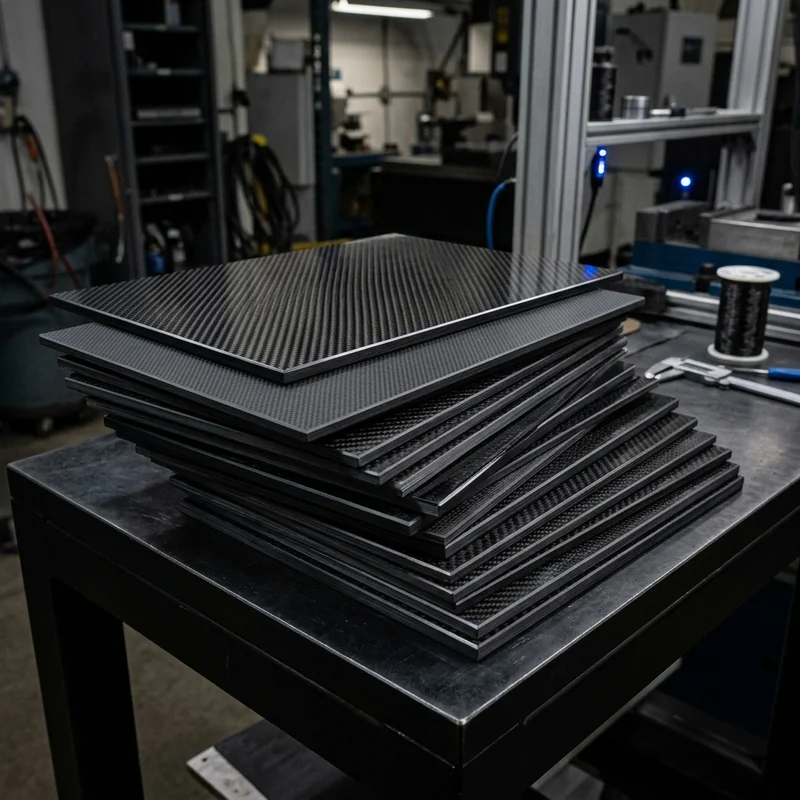
Carbon fiber standard plate-3k stripe
Lightweight, ultra-rigid standard sheets for drone fuselages, robot housings, facades and structural applications.
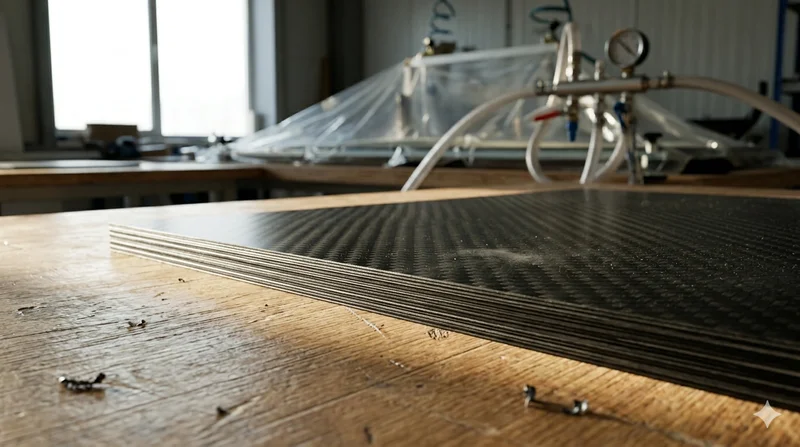
Carbon Fiber Plate — 3K Twill T700 3.0mm
Medium-thickness 3.0mm carbon fiber plate offering significantly higher load capacity while maintaining attractive 3K twill finish. Suitable for structural brackets, reinforcement plates, and load-bearing panels.
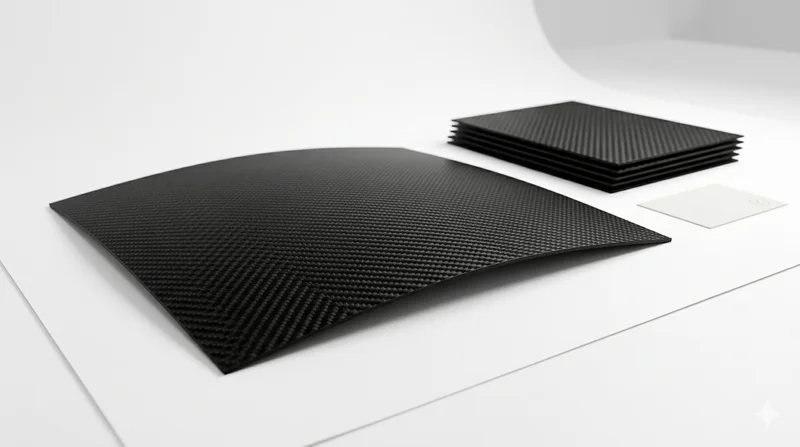
Carbon Fiber Plate — 3K Twill T700 1.5mm
Thin 1.5mm carbon fiber plate with 3K twill weave surface. Lightweight and stiff, commonly used for covers, panels, drone bodies, and applications requiring a premium aesthetic appearance.
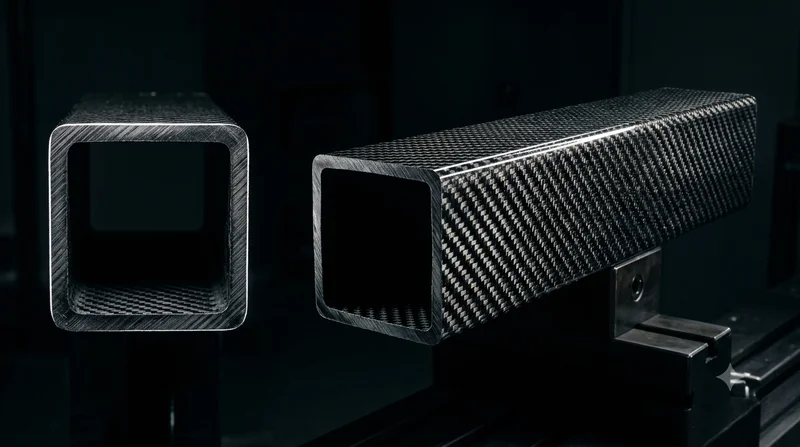
Square Carbon Fiber Tube — 3K Twill T700
Square cross-section carbon fiber tube manufactured with 3K twill weave for torsional strength. Preferred for structural frames, trusses, and support columns where rectangular geometry offers design flexibility.
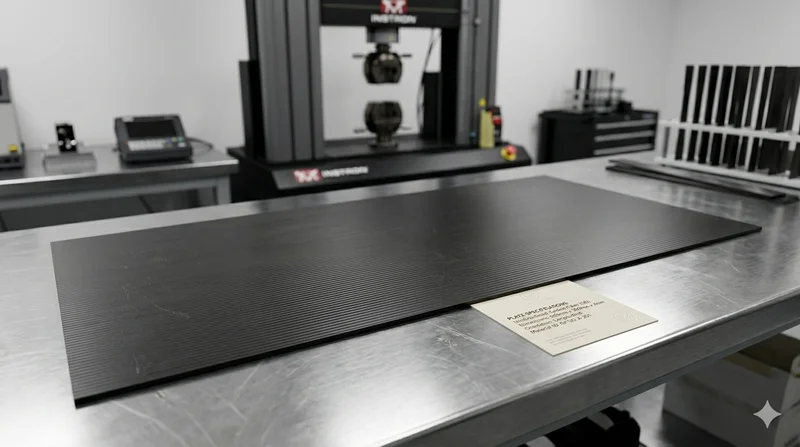
Carbon Fiber Plate — UD Unidirectional T700
Unidirectional carbon fiber plate with all fibers oriented in a single direction for maximum strength along the fiber axis. Essential for structural reinforcements, splints, and applications where load direction is predictable.