
China's carbon fiber industry has undergone a remarkable transformation over the past decade. In 2024, China surpassed Japan's Toray Industries to claim approximately 50% of global carbon fiber production capacity — a milestone that has fundamentally altered the competitive dynamics of
Introduction
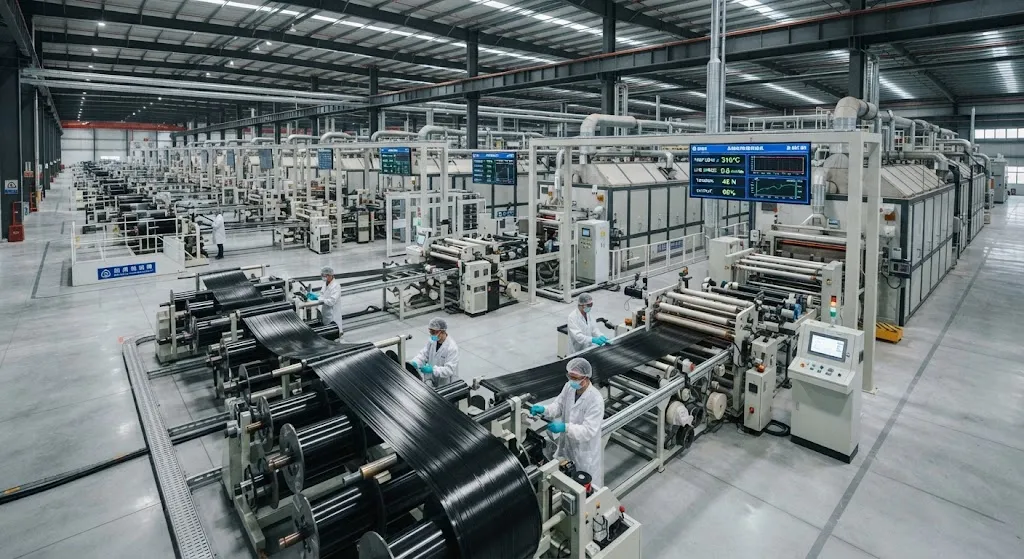
China's carbon fiber industry has undergone a remarkable transformation over the past decade. In 2024, China surpassed Japan's Toray Industries to claim approximately 50% of global carbon fiber production capacity — a milestone that has fundamentally altered the competitive dynamics of the composites industry. This achievement reflects years of strategic industrial policy, massive capital investment, and a domestic market that consumed over 60% of the world's carbon fiber in 2023. For B2B buyers and supply chain managers, understanding the structure of China's carbon fiber market and its implications for global trade is no longer optional — it is a strategic necessity.
The shift in production capacity has created both opportunities and risks. Chinese producers now offer cost-competitive materials across multiple grades, from standard modulus to high-strength variants, while the scale of domestic consumption provides a buffer against export market fluctuations. However, the rapid expansion has also raised questions about quality consistency, intellectual property protection, and the geopolitical dimensions of supply chain dependence. This article examines the market structure, policy drivers, and trade implications that define China's carbon fiber landscape in 2026.
China's Carbon Fiber Market Structure
China's carbon fiber industry is organized around several large state-owned and private enterprises, with production concentrated in eastern coastal provinces. The market structure features distinct tiers:
- Tier 1 producers (1,000+ tons/year): Companies like Zhongfu Shenying, Huahong New Materials, and Shanghai Petrochemical have achieved scale production of T300-T800 grade carbon fiber, with some facilities producing T1000-T1100 grades. These producers have integrated operations from precursor to finished fiber.
- Tier 2 producers (100-1,000 tons/year): Regional producers focused on specific applications or grades, often with technical partnerships or licensing agreements with foreign technology providers.
- Tier 3 producers (<100 tons/year): Specialized producers serving niche markets or developing new carbon fiber technologies, including pitch-based and recycled carbon fibers.
The top five Chinese producers now account for approximately 70% of domestic production capacity, with Zhongfu Shenying alone operating multiple production lines with annual capacity exceeding 15,000 tons. This concentration reflects both the capital intensity of carbon fiber production and the government's preference for supporting large-scale, strategically important enterprises.
Policy Drivers Behind Capacity Expansion
China's carbon fiber capacity expansion has been driven by a combination of industrial policy, market demand, and strategic considerations:
| Policy Driver | Key Elements | Impact on Market |
|---|---|---|
| 14th Five-Year Plan (2021-2025) | Carbon fiber designated as strategic material; production targets set | Directed investment and R&D resources |
| Made in China 2025 | Advanced materials priority sector; localization targets | Reduced dependence on imports |
| Dual circulation strategy | Emphasis on domestic market development | Consumption growth outpaced export growth |
| Subsidies and tax incentives | Direct production subsidies, R&D tax credits | Lowered effective production costs |
| Export controls response | Development of indigenous technology | Reduced vulnerability to foreign restrictions |
The strategic rationale extends beyond economics. Carbon fiber is critical for defense applications, aerospace, and advanced industrial systems, making domestic production capacity a national security priority. The government's willingness to provide sustained financial support — estimated at $2-3 billion in cumulative subsidies and tax benefits since 2015 — has enabled producers to achieve scale faster than market forces alone would have permitted.
Global Supply Chain Implications
China's dominant capacity position has created several significant implications for global supply chains:
Price competition: Chinese producers have driven down global carbon fiber prices by 15-25% over the past five years, particularly in standard modulus grades. This has compressed margins for Japanese and European producers while making carbon fiber more accessible for price-sensitive applications. B2B buyers in wind energy, automotive, and industrial sectors have benefited from lower material costs, though concerns about quality consistency remain.
Supply diversification: The expansion of Chinese production capacity has provided an alternative supply source for buyers previously dependent on Japanese or European producers. This diversification has reduced supply chain risk for some applications, though it has also created new dependencies. Buyers must now evaluate suppliers across multiple geographies with different quality standards, certification requirements, and trade compliance considerations.
Technology transfer dynamics: Much of China's initial carbon fiber technology was acquired through licensing agreements, joint ventures, or technology transfer arrangements with foreign producers. As Chinese producers have developed indigenous capabilities, the nature of technology relationships has shifted from acquisition to competition. This has implications for intellectual property protection and the future direction of technology development.
Trade Considerations for B2B Buyers
The market structure created by China's capacity expansion presents specific trade considerations for B2B buyers:
- Quality verification: While Chinese producers have achieved significant quality improvements, verification through independent testing and certification remains important. Buyers should request material test reports, process certifications, and reference customer lists for the specific grades they are considering.
- Supply chain resilience: Over-reliance on any single geography creates vulnerability. Best practice is to qualify at least two suppliers from different regions, with clear contingency plans for supply disruption scenarios.
- Trade compliance: Carbon fiber is subject to export controls in multiple jurisdictions. Buyers must verify that their supply chain arrangements comply with applicable regulations, particularly for defense and aerospace applications.
- Total cost of ownership: Material price is only one component of total cost. Logistics, inventory carrying costs, quality assurance expenses, and supply chain management overhead must be factored into sourcing decisions.
Frequently Asked Questions
How does Chinese carbon fiber quality compare to Japanese and European producers?
Chinese carbon fiber quality has improved significantly over the past decade, with major producers achieving certification to international standards (ISO, ASTM) and customer qualification by major OEMs in wind energy, automotive, and sporting goods. For standard modulus grades (T300-T700), quality is generally comparable to Japanese and European equivalents, with some producers achieving superior consistency through advanced process control. For high-modulus and specialized grades, Japanese producers (Toray, Mitsubishi, Toho) and European producers (Hexcel, SGL) still maintain quality advantages in some applications. The key for buyers is to specify quality requirements clearly, conduct independent verification, and work with suppliers who have demonstrated track records in their specific application areas.
What are the risks of relying on Chinese carbon fiber suppliers?
Risks include quality consistency variability across producers and production runs, intellectual property protection challenges, potential supply disruption due to geopolitical tensions or policy changes, and logistics complexity for time-sensitive applications. Mitigation strategies include qualifying multiple suppliers, maintaining safety stock, establishing clear quality specifications and acceptance criteria, and developing relationships with suppliers who have demonstrated commitment to long-term partnerships. For critical applications, dual-sourcing from both Chinese and non-Chinese producers provides the most robust supply chain resilience.
How might future trade policies affect carbon fiber supply chains?
Several policy developments could impact carbon fiber supply chains. Export controls on advanced materials remain active in multiple jurisdictions, with potential for tightening. Carbon border adjustment mechanisms (CBAM) in the EU may affect the cost structure of imported carbon fiber products. Subsidy programs in the US and EU could support domestic production capacity, potentially altering competitive dynamics. B2B buyers should monitor policy developments and maintain supply chain flexibility to adapt to changing trade conditions. Long-term supply agreements with volume commitments can provide some protection against market volatility, but should include provisions for price adjustment and supply continuity.
Conclusion
China's achievement of 50% global carbon fiber capacity represents a structural shift in the composites industry with far-reaching implications for B2B supply chains. The combination of massive production scale, cost-competitive pricing, and a large domestic consumption base has created a market landscape that buyers must navigate strategically. While the opportunities for cost reduction and supply diversification are real, they come with requirements for rigorous quality verification, supply chain resilience planning, and trade compliance management. For B2B buyers evaluating their carbon fiber sourcing strategies, the key is to approach the Chinese market with informed pragmatism — recognizing both the capabilities that Chinese producers have developed and the risk management measures that prudent supply chain practice requires.
To explore carbon fiber sourcing options and discuss material specifications for your applications, browse our carbon fiber product range or contact our technical team for supply chain consultation.
Part of topic
Related Articles
- Recycled Carbon Fiber Market Forecast 2030: Technology Maturity and Commercialization Path
- South Korea Carbon Fiber Market 2026: Hydrogen Economy and Shipbuilding Innovation
- Wind Turbine Blade Leading Edge Protection 2026: Polyurethane, Tape, and Metallic Shield Solutions
- China Carbon Fiber Overcapacity 2026: Price War Impact and Industry Consolidation
- India Carbon Fiber Market 2026: Wind Energy, Aerospace, and Defense Expansion
- PAN Precursor Market 2026: Acrylonitrile Supply and Carbon Fiber Cost Structure
Interested in Our Products?
Contact our team for competitive pricing and technical specifications.
Get a QuoteRelated Products
Carbon Fiber Watch Strap — 20mm/22mm Quick-Release
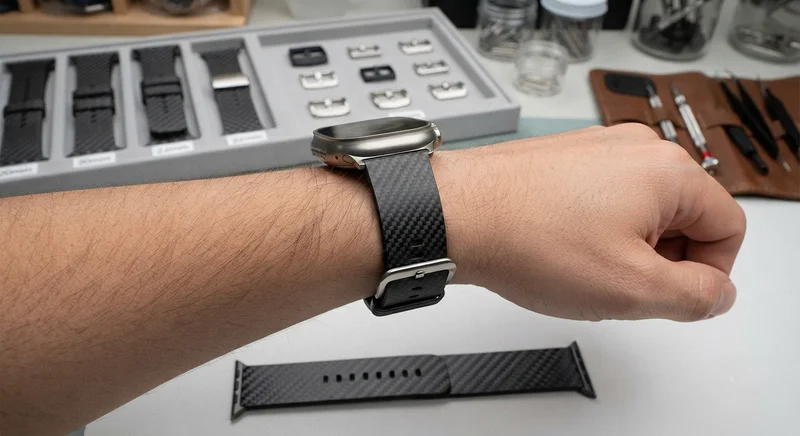
Premium carbon fiber watch strap with quick-release spring bars. Woven from T700 3K twill prepreg with a flexible resin system that conforms to the wrist. Available in 20mm and 22mm lug widths, compatible with Apple Watch, Samsung Galaxy Watch, Garmin, and traditional mechanical watches. Features a stainless steel buckle and carbon fiber keepers. The natural weave pattern makes each strap unique.

Carbon Fiber Fishing Rod Blank
High-quality carbon fiber fishing rod blank manufactured from multiple grades of Toray carbon fiber cloth. Available in a wide range of lengths, powers, and actions for freshwater and saltwater applications. Suitable for OEM rod building.

Carbon Fiber Plate — 3K Twill T700 1.5mm
Thin 1.5mm carbon fiber plate with 3K twill weave surface. Lightweight and stiff, commonly used for covers, panels, drone bodies, and applications requiring a premium aesthetic appearance.
Carbon Fiber Plate — 3K Twill T700 3.0mm
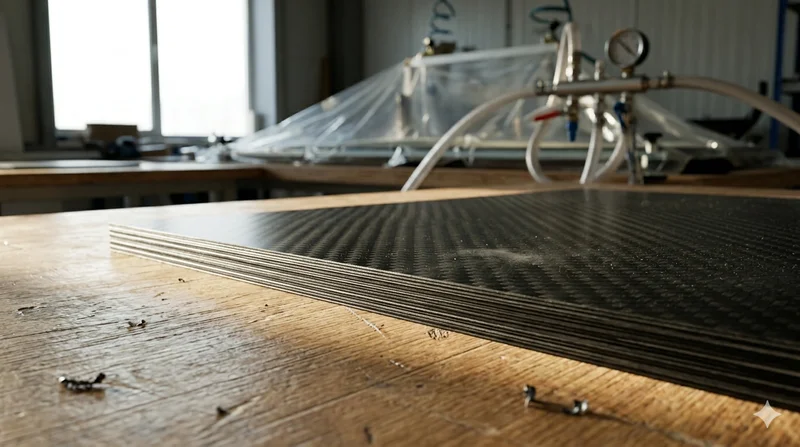
Medium-thickness 3.0mm carbon fiber plate offering significantly higher load capacity while maintaining attractive 3K twill finish. Suitable for structural brackets, reinforcement plates, and load-bearing panels.

Carbon Fiber Trekking Pole
Lightweight carbon fiber trekking pole manufactured from high-grade carbon fiber tube. Weighs only 160g per pole while providing superior shock absorption and durability for hiking, trail running, and backpacking.