

Carbon fiber production is among the most geographically concentrated advanced materials industries in the world. China accounts for approximately 52.5% of global carbon fiber production capacity, followed by Japan (18%), the United States (12%), and Europe (8%). This concentration crea
Introduction
Carbon fiber production is among the most geographically concentrated advanced materials industries in the world. China accounts for approximately 52.5% of global carbon fiber production capacity, followed by Japan (18%), the United States (12%), and Europe (8%). This concentration creates significant supply chain security risks for manufacturers in aerospace, defense, automotive, and energy sectors who depend on carbon fiber for critical structural applications. The 2020-2022 supply disruptions caused by COVID-19, logistics bottlenecks, and geopolitical tensions exposed the vulnerability of concentrated supply chains, prompting a reassessment of sourcing strategies across the industry.
This article examines the current state of carbon fiber production geography, quantifies the supply chain risks associated with concentration, and presents actionable risk mitigation strategies that B2B manufacturers can implement to ensure supply continuity. The analysis reflects 2026 market conditions and incorporates lessons learned from recent supply chain disruptions.
Global Carbon Fiber Production Geography
The carbon fiber industry's geographic distribution reflects historical investment patterns, technology licensing agreements, and regional demand drivers. The table below presents the 2026 production landscape by region:
| Region | Production Capacity (kt/year) | Global Share | Key Producers | Primary Applications |
|---|---|---|---|---|
| China | 85-90 | 52.5% | Zhongfu Shenying, Jilin Carbon Valley, Weihai Guangwei, China National Carbon | Wind energy, sporting goods, automotive, industrial |
| Japan | 29-31 | 18% | Toray, Mitsubishi Chemical, Teijin | Aerospace, industrial, automotive |
| United States | 19-21 | 12% | Hexcel, Solvay, Cytec (Solvay), Zoltek (Toray) | Aerospace, defense, industrial |
| Europe | 13-15 | 8% | SGL Carbon, Hexcel Europe, Toho Tenax Europe | Aerospace, automotive, industrial |
| Taiwan/Korea | 8-10 | 5% | Taichung Fiber, Hyosung, Kolon | Sports, automotive, industrial |
| Others | 4-6 | 3% | Various smaller producers | Regional industrial applications |
China's dominance has grown rapidly from less than 20% global share in 2018, driven by massive state-subsidized investment in carbon fiber capacity and growing domestic demand from wind energy and automotive sectors. However, the quality gap between Chinese production and aerospace-grade specifications remains significant: Chinese producers dominate the T300-T700 standard modulus segment but have limited penetration in high-modulus (M40J, M50J) and high-strength (T800, T1000, T1100) grades that are critical for aerospace applications.
Supply Chain Risk Assessment
Carbon fiber supply chain risks fall into four primary categories, each with distinct mitigation requirements:
- Geopolitical risk: Trade restrictions, export controls, and sanctions can suddenly disrupt supply flows. The U.S.-China technology competition has created uncertainty around carbon fiber technology transfer and equipment exports. Export control regulations (EAR, ITAR) impose licensing requirements on certain carbon fiber grades and manufacturing equipment, creating compliance burdens for multinational supply chains.
- Natural disaster and logistics risk: Concentration of production in earthquake-prone regions (Japan, Taiwan) and flood-vulnerable areas (China coastal provinces) creates natural disaster exposure. The 2011 Tohoku earthquake disrupted Toray's production for months, affecting aerospace supply chains globally. Maritime logistics bottlenecks — as demonstrated during 2020-2022 — can extend lead times by 4-8 weeks.
- Quality and specification risk: Aerospace applications require carbon fiber meeting stringent specifications (AMS, BMS, DMS standards) with documented traceability. Not all production capacity meets these requirements, creating qualification gaps that limit supply alternatives. Chinese T700-class fiber has achieved aerospace qualification at some producers but lacks the track record and qualification breadth of Japanese and American suppliers.
- Demand-supply imbalance risk: The carbon fiber industry operates with long lead times (6-12 months for aerospace-grade material) and capital-intensive expansion cycles. Rapid demand growth — particularly from wind energy (15-20% annual growth) and hydrogen storage — can outpace capacity additions, creating allocation constraints during peak demand periods.
Risk Mitigation Strategies
Manufacturers implementing supply chain security programs typically employ a combination of the following strategies:
- Geographic diversification: Qualifying at least two suppliers in different geographic regions for each critical carbon fiber grade. This dual-source approach increases procurement cost by 5-15% but eliminates single-source dependency. Best practice is one supplier in Asia and one in the Americas or Europe for aerospace applications.
- Strategic inventory buffer: Maintaining 3-6 months of safety stock for critical carbon fiber grades. The carrying cost (typically 15-25% of material value annually) is justified by the cost of supply disruption, which can exceed $1 million per day for aerospace production lines. Inventory levels should be calibrated to supplier reliability, lead time variability, and production criticality.
- Alternative material qualification: Pre-qualifying alternative fiber types (glass fiber, basalt fiber, aramid) for non-structural or semi-structural applications to provide substitution options during supply constraints. This strategy requires upfront investment in material testing but provides flexibility when carbon fiber allocation is limited.
- Long-term supply agreements: Securing 3-5 year supply agreements with volume commitments and price stabilization mechanisms. These agreements provide suppliers with demand visibility to justify capacity investment while giving manufacturers allocation priority during shortage periods. Agreements should include force majeure provisions and quality escalation protocols.
- Vertical integration assessment: Evaluating the economics of in-house carbon fiber production for manufacturers with sufficiently large and stable demand. Vertical integration provides maximum supply security but requires significant capital investment ($50-200 million for a production line) and technical expertise. This strategy is suitable only for Tier 1 aerospace suppliers and large automotive programs.
Industry Response and Government Initiatives
Governments in key aerospace markets have recognized carbon fiber supply chain security as a national security concern and implemented support programs:
- United States: The Defense Production Act Title III program has allocated $200+ million for domestic carbon fiber capacity expansion, targeting aerospace and defense-grade material. The CHIPS and Science Act includes provisions for advanced materials supply chain resilience.
- Europe: The EU Carbon Fibre Initiative and national programs in Germany, France, and the UK are investing in domestic production capacity and recycling capabilities to reduce import dependency.
- Japan: METI's carbon fiber industry support programs focus on maintaining technology leadership and capacity expansion for aerospace applications, with emphasis on next-generation high-performance fibers.
- China: State subsidies continue to drive capacity expansion, but quality improvement and aerospace qualification remain priorities under the Made in China 2025 initiative.
Supplier Qualification Framework
Qualifying a new carbon fiber supplier for aerospace applications requires a systematic process that typically spans 12-24 months:
| Qualification Phase | Duration | Key Activities | Decision Gate |
|---|---|---|---|
| Initial assessment | 1-2 months | Facility audit, capacity verification, specification review | Go/No-go for detailed evaluation |
| Material testing | 3-6 months | Mechanical property testing, processability evaluation, environmental conditioning | Material performance acceptance |
| Process qualification | 3-6 months | Pilot production runs, process parameter optimization, quality system verification | Process capability confirmation |
| First article inspection | 2-3 months | Complete qualification testing per applicable specification (AMS, BMS) | First article acceptance |
| Ongoing monitoring | Continuous | Lot-by-lot testing, periodic audits, performance trend analysis | Continued qualification status |
The total qualification cost for a new aerospace carbon fiber supplier ranges from $500,000 to $2 million, making it a significant investment that must be justified by supply chain security benefits.
Frequently Asked Questions
How does Chinese carbon fiber quality compare to Japanese and American production for aerospace applications?
Chinese carbon fiber production has improved significantly but maintains a quality gap in critical areas. Standard modulus T700-class fiber from leading Chinese producers (Zhongfu Shenying, Jilin Carbon Valley) has achieved aerospace qualification at several programs, with mechanical properties meeting AMS specifications. However, limitations persist in: (1) fiber consistency — lot-to-lot variation remains higher than Japanese production; (2) sizing compatibility — resin system integration requires additional optimization; (3) high-modulus and high-strength grades — Chinese production of M40J, T800, T1000 is limited and not yet qualified at major aerospace primes; and (4) documentation and traceability — audit requirements may need additional investment. For non-structural and semi-structural applications, Chinese T700 is a viable alternative; for flight-critical structures, Japanese and American production remains preferred.
What is the cost impact of implementing a dual-source supply chain strategy for carbon fiber?
Dual-sourcing increases procurement costs by 5-15% through: (1) reduced volume discounts — splitting orders between suppliers reduces leverage for price negotiation; (2) qualification costs — initial testing and qualification of the second supplier ($500K-$2M); (3) inventory overhead — maintaining safety stock at higher levels; and (4) quality management — managing two supplier quality systems. However, this cost must be weighed against the cost of supply disruption, which typically exceeds $1 million per day for aerospace production lines. For manufacturers with annual carbon fiber spend exceeding $5 million, dual-sourcing typically provides positive ROI within 2-3 years when supply disruption risk is properly quantified.
How are carbon fiber recycling and circular economy initiatives affecting supply chain security?
Carbon fiber recycling is emerging as a supplementary supply source that can partially offset primary production concentration. Recycled carbon fiber (from pyrolysis or solvolysis processes) currently provides 5-10% of industrial-grade fiber at 30-50% lower cost than virgin material. While recycled fiber does not meet aerospace mechanical property requirements, it is suitable for non-structural automotive, sporting goods, and industrial applications, freeing up virgin fiber capacity for critical applications. European initiatives (CFK Valley, RecyComp) and Japanese programs are scaling recycling capacity, with projected supply of 15-20 kt/year by 2030. Recycled carbon fiber enhances supply chain resilience by providing an alternative material source during primary production disruptions.
Conclusion
Carbon fiber supply chain security requires proactive risk management strategies that address geographic concentration, geopolitical uncertainty, and demand-supply dynamics. The 52.5% concentration of global production in China creates strategic vulnerabilities for manufacturers dependent on carbon fiber for critical applications. Effective mitigation combines geographic diversification, strategic inventory, alternative material qualification, and long-term supply agreements — implemented through a structured supplier qualification framework that ensures quality and traceability requirements are maintained. As government initiatives support domestic production expansion and recycling capabilities develop, supply chain resilience will improve, but manufacturers must act now to establish the multi-source strategies needed for long-term supply continuity.
For manufacturers evaluating supply chain risk mitigation strategies, the key considerations are application criticality, production volume, and current supplier concentration. Explore our diversified carbon fiber product portfolio with multiple supply sources across standard modulus, intermediate modulus, and high-strength grades, or contact our supply chain team to discuss qualification strategies and dual-source implementations for your manufacturing operations.
Part of topic
Related Articles
- Recycled Carbon Fiber Market Forecast 2030: Technology Maturity and Commercialization Path
- South Korea Carbon Fiber Market 2026: Hydrogen Economy and Shipbuilding Innovation
- Wind Turbine Blade Leading Edge Protection 2026: Polyurethane, Tape, and Metallic Shield Solutions
- China Carbon Fiber Overcapacity 2026: Price War Impact and Industry Consolidation
- India Carbon Fiber Market 2026: Wind Energy, Aerospace, and Defense Expansion
- PAN Precursor Market 2026: Acrylonitrile Supply and Carbon Fiber Cost Structure
Interested in Our Products?
Contact our team for competitive pricing and technical specifications.
Get a QuoteRelated Products
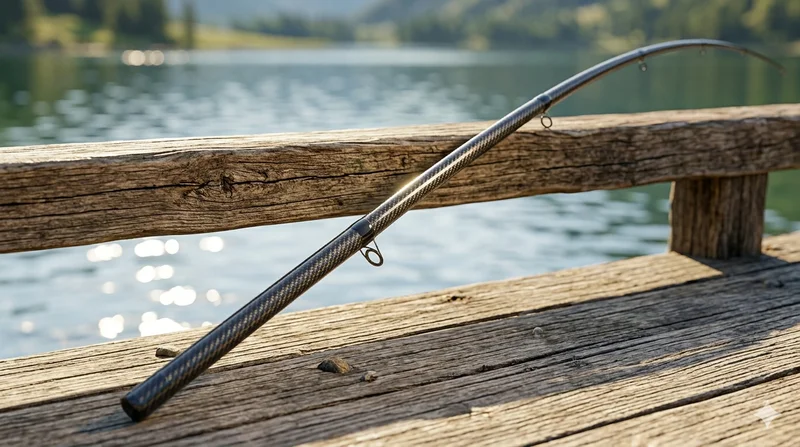
Carbon Fiber Fishing Rod Blank
High-quality carbon fiber fishing rod blank manufactured from multiple grades of Toray carbon fiber cloth. Available in a wide range of lengths, powers, and actions for freshwater and saltwater applications. Suitable for OEM rod building.

Carbon Fiber Plate — 3K Twill T700 1.5mm
Thin 1.5mm carbon fiber plate with 3K twill weave surface. Lightweight and stiff, commonly used for covers, panels, drone bodies, and applications requiring a premium aesthetic appearance.

Carbon Fiber Plate — 3K Twill T700 3.0mm
Medium-thickness 3.0mm carbon fiber plate offering significantly higher load capacity while maintaining attractive 3K twill finish. Suitable for structural brackets, reinforcement plates, and load-bearing panels.

Square Carbon Fiber Tube — 3K Twill T700
Square cross-section carbon fiber tube manufactured with 3K twill weave for torsional strength. Preferred for structural frames, trusses, and support columns where rectangular geometry offers design flexibility.
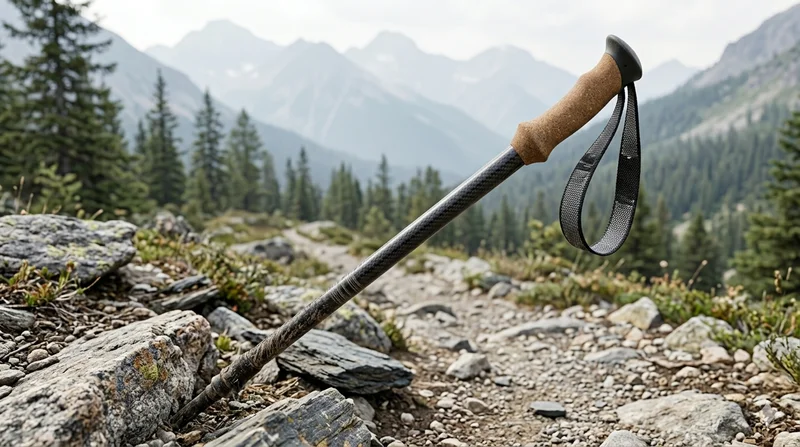
Carbon Fiber Trekking Pole
Lightweight carbon fiber trekking pole manufactured from high-grade carbon fiber tube. Weighs only 160g per pole while providing superior shock absorption and durability for hiking, trail running, and backpacking.