A carbon fiber rod catalog is the fastest way to understand what a supplier actually keeps in stock before you commit to a custom run. Rather than starting from a blank specification sheet, buyers who work from a catalog can compare diameters, fiber grades and standard lengths in one place, then dec
Introduction
A carbon fiber rod catalog is the fastest way to understand what a supplier actually keeps in stock before you commit to a custom run. Rather than starting from a blank specification sheet, buyers who work from a catalog can compare diameters, fiber grades and standard lengths in one place, then decide which items qualify as stock and which need to be manufactured to order. The catalog structure of a carbon fiber rod supplier tells you a great deal about the factory behind it: wide stocked ranges suggest pultrusion lines running continuously, while narrow ranges suggest make-to-order production with longer lead times.
This article walks through how to read a carbon fiber rod catalog entry, which stock items appear most often in 2026, and how a carbon fiber rod manufacturer prices catalog items versus custom work. The goal is to give procurement teams a defensible basis for comparing quotations from different carbon fiber rod suppliers.
Carbon Fiber Rod Catalog: How to Read an Entry
Every line in a carbon fiber rod catalog is a compact specification. A typical entry gives outer diameter, length tolerance, fiber grade, surface finish and the quantity at which the quoted price applies. Reading the entry correctly prevents the most common ordering mistakes: assuming a listed diameter is the finished diameter when it is the pultrusion die size, or missing a length tolerance that will not suit a CNC fixture.
| Catalog Field | Typical Stock Range | What to Verify |
|---|---|---|
| Outer diameter | 1-50 mm | Finished size after sanding, not die size |
| Length | 1000 mm / 1200 mm standard bars | Cut tolerance, usually ±1 mm |
| Fiber grade | T300, T700, T800 | Grade stated per tow, not per rod batch |
| Tow size | 1K, 3K, 6K, 12K | Surface finish vs cost trade-off |
| Price basis | Per piece at 10 / 100 / 500 pcs | Whether cut-to-size fees are included |
The grade line deserves particular attention. A carbon fiber rod manufacturer who lists T300 and T700 side by side is usually quoting two different tensile modulus classes at similar diameters; the price difference between them can reach 40 to 60 percent for the same geometry. Catalog buyers who compare only diameter across suppliers routinely miss this grade substitution, which is why the entry must be read as a whole rather than field by field.
Choosing Stock Items from the Carbon Fiber Rod Catalog
Stock items exist because demand repeats. The carbon fiber rod catalog of a typical supplier covers a predictable core: round pultruded rods from 2 mm to 12 mm in 1000 mm bars, square and rectangular profiles for frames, and solid round stock for machining blanks. Anything outside that core is quoted as custom, with tooling and setup folded into the first-order price.
- Round pultruded rods: the highest-volume stock category, typically 3-10 mm diameter, used for arrow shafts, kite spars, antenna elements and robotics linkages.
- Square and flat profiles: stocked in a few cross-sections for frame builders who need bonding surfaces instead of tangent points.
- Machining blanks: oversize solid rods held for buyers who face the rod on a CNC lathe; priced per kilogram rather than per piece.
- Roll-wrapped tubes sold as rods: thinner wall, higher stiffness-to-weight, stocked only in popular drone and RC diameters.
When a carbon fiber rod for sale is listed with a per-piece price and a stated stock quantity, it usually ships within three to five working days. When the same catalog shows only "on request," the item is almost certainly made to order, and lead time becomes the dominant commercial term rather than unit price.
Pricing Signals in a Carbon Fiber Rod Catalog
Catalog pricing from a carbon fiber rod supplier follows quantity breaks more strictly than custom pricing does, because stock items amortize tooling across many buyers. A rod quoted at 2.80 USD per piece for ten units often falls to 1.60 USD at one hundred units and below 1.10 USD at five hundred, with the steepest drop between the first two breaks. Cut-to-length beyond the standard bar adds a per-cut fee, commonly 0.20 to 0.60 USD depending on diameter.
Grade and finish move the number as much as volume. Moving from T300 to T700 at the same diameter adds roughly 30 to 50 percent; a polished finish adds 10 to 15 percent over sanded stock because an extra pass through the sizing and polishing stage is required. Buyers comparing a carbon fiber rod catalog across three suppliers should normalize all three variables — grade, finish and order quantity — before treating any price as a genuine comparison.
Frequently Asked Questions
What diameters does a typical carbon fiber rod catalog stock?
Most stock catalogs cover round rods from 1 mm to 50 mm, with the deepest inventory in the 2-12 mm range where pultrusion demand is highest. Square, rectangular and hexagonal profiles are usually stocked in three to six cross-sections, and anything outside the published range is quoted as custom production with a tooling charge.
How is a carbon fiber rod catalog price different from a custom quote?
Catalog prices are per piece at published quantity breaks and assume standard lengths and finishes. A custom quote adds die costs for non-standard diameters, setup time for short runs and per-cut charges for special lengths, so first-order custom pricing can be 35 to 70 percent above the equivalent catalog line even at the same fiber grade.
Can a carbon fiber rod manufacturer cut catalog stock to size?
Yes, and most list cut-to-size as an option on stock items. Expect a per-cut fee of 0.20 to 0.60 USD and a tolerance of about ±1 mm on general industrial cuts; tighter tolerances are available but move the item out of catalog pricing into machining rates.
Conclusion
A carbon fiber rod catalog works best as a shortlist tool, not a final specification. Use it to identify which diameters and grades a supplier holds as stock, normalize prices across grade, finish and quantity, and treat anything marked on request as a custom negotiation with lead time at the center of the discussion. Buyers who arrive at the quotation stage already knowing the catalog line they want close faster and with fewer specification surprises.
To review stocked diameters, grades and current catalog pricing for your application, browse our carbon fiber rod range or contact our engineering team with your diameter, grade and annual volume.
Part of topic
Related Articles
- Buy Carbon Fiber Sheet Online: How to Buy Safely
- Carbon Fiber Rod Supplier Near Me: Local Suppliers and Buying Options
- Carbon Fiber Plate Supplier Near Me: Local Suppliers and Buying Options
- Carbon Fiber Rod Buyer Guide: How to Choose a Supplier
- Carbon Fiber Plate Buyer Guide: How to Choose a Supplier
- Carbon Fiber Tube Buyer Guide: How to Choose a Supplier
Interested in Our Products?
Contact our team for competitive pricing and technical specifications.
Get a QuoteRelated Products
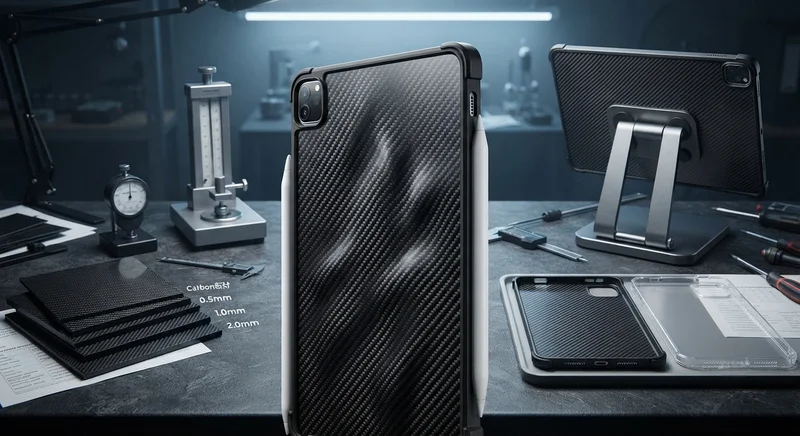
Carbon Fiber Tablet Case — Ultra-Light Protective Shell
Lightweight carbon fiber protective case for tablets and iPads. Molded from T700 3K prepreg with reinforced corner protection. Adds minimal weight while providing superior rigidity and drop protection compared to polycarbonate or silicone cases. Ideal for field workers, enterprise deployments, and professionals requiring durable tablet protection.
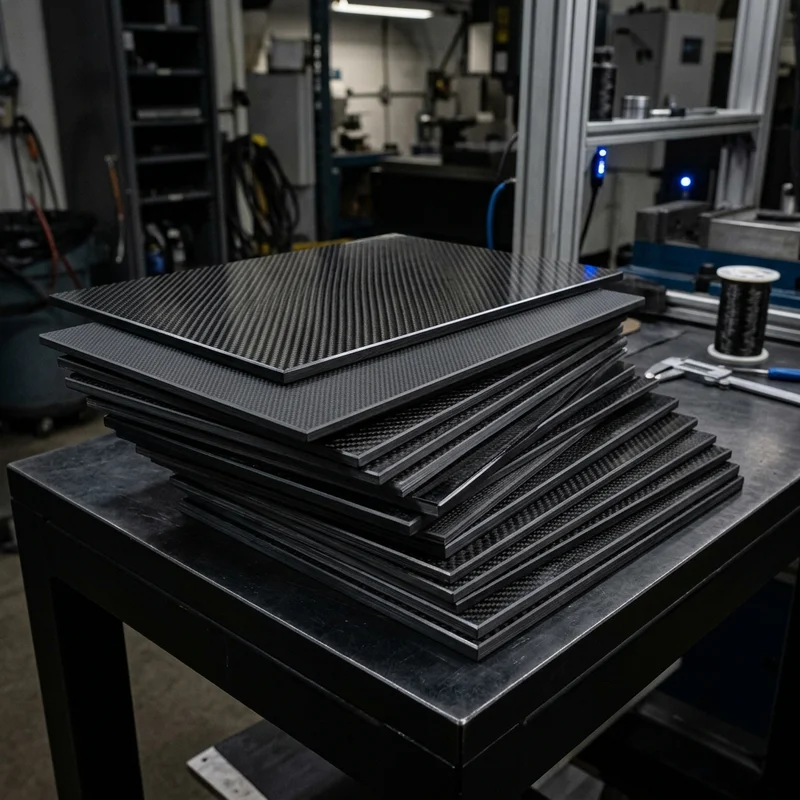
Carbon fiber standard plate-3k stripe
Lightweight, ultra-rigid standard sheets for drone fuselages, robot housings, facades and structural applications.
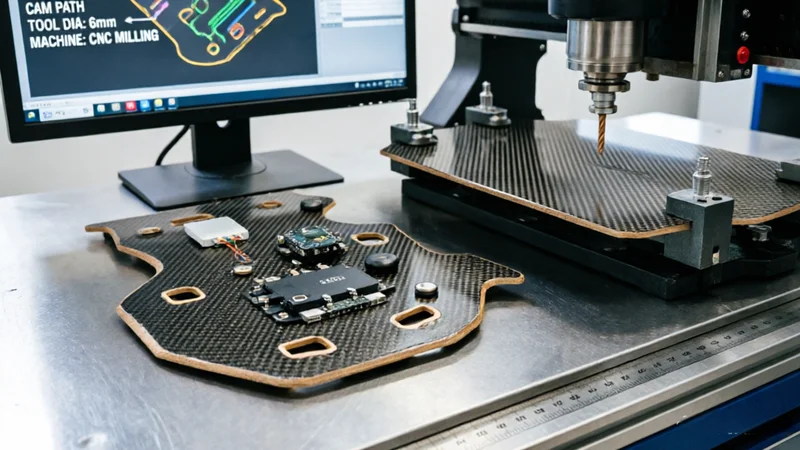
Carbon Fiber Drone Frame Base Plate — 3K Twill T700
CNC-machined carbon fiber base plates for drone frame assemblies. Cut from 3K twill weave T700 prepreg with precision CNC routing. Pre-drilled mounting patterns compatible with common flight controller and power distribution board layouts. Available in 1.5mm to 5mm thickness.
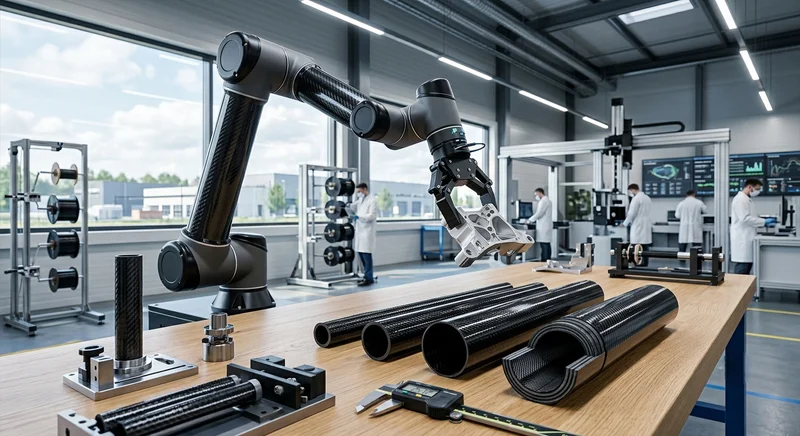
Carbon Fiber Robotic Arm Tube — High-Stiffness Lightweight Replacement
Precision-wound carbon fiber tubes for robotic arm links, replacing steel or aluminum in collaborative robots (cobots) and industrial manipulators. Achieve 3× the specific stiffness of aluminum with significant weight reduction, enabling faster acceleration and higher payload capacity.
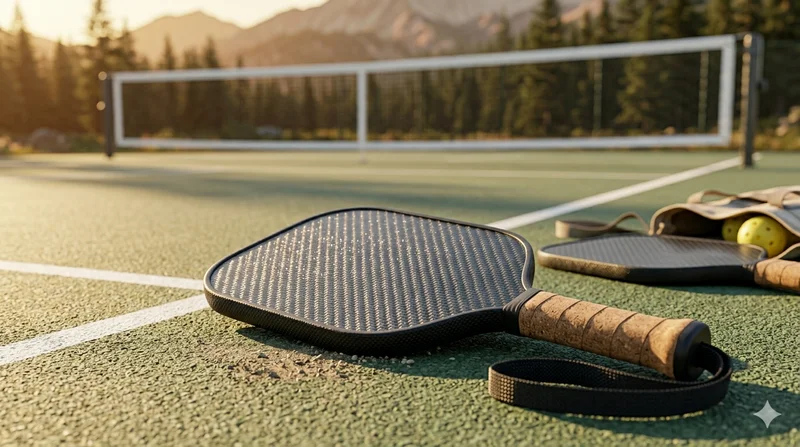
Carbon Fiber Pickleball Paddle
High-performance pickleball paddle with Toray T700 carbon fiber face and polypropylene honeycomb core. Delivers excellent power-to-weight ratio, spin generation, and vibration dampening for competitive play.