Knowing where to buy carbon fiber is only half the problem — when you buy carbon fiber sheet online, the sheet you receive depends on listing accuracy, seller honesty and shipping care rather than what you saw on a granite plate in person. Online channels give you the widest selection of thicknesses
Introduction
Knowing where to buy carbon fiber is only half the problem — when you buy carbon fiber sheet online, the sheet you receive depends on listing accuracy, seller honesty and shipping care rather than what you saw on a granite plate in person. Online channels give you the widest selection of thicknesses, weaves and grades at competitive prices, but they also hide dry cloth sold as plate, uncertified aerospace claims and warpage that only shows up after the box is opened. This guide walks through the whole purchase safely, from shortlisting sellers to inspecting the delivery.
You will learn how to read a listing for the data that matters, when carbon fiber sheets for sale prices are too good to be true, which documents a serious seller provides without being asked, and how payment, packaging and return terms should look before you click buy. The goal is simple: one clean first order, then a reorder specification you can trust.
Where to Buy Carbon Fiber: Choosing an Online Channel
Where to buy carbon fiber online splits into four channel types, each with a different risk profile. Match the channel to the job before comparing prices:
- Manufacturer direct stores: best certificates and custom cut sizes; higher unit price, longer lead time, but the layup data comes from the source.
- Industrial distributors with e-commerce: strong on standard stock sizes and consistent grading; good for repeat orders of 2 mm to 10 mm plate.
- Marketplace sellers: lowest headline prices and widest variety; verify seller history, return rate and whether photos are original before paying.
- Specialty composites shops: smaller catalogs, but staff who answer layup and cure questions; ideal for first prototypes.
The table summarizes what each channel typically gives you when you buy carbon fiber sheet online:
| Channel | Certificates | Cut-to-size | Return window | Price level |
|---|---|---|---|---|
| Manufacturer direct | Full batch COA | Yes, ±0.5 mm | 14-30 days | 100 |
| Distributor e-commerce | Mill COA on request | Stock sizes only | 7-14 days | 95-110 |
| Marketplace seller | Rarely | Often listed, inconsistent | 7-30 days varies | 70-95 |
| Specialty shop | Usually included | Yes | 14 days | 105-125 |
Price index 100 equals a manufacturer direct price for 3 mm quasi-isotropic 3K twill sheet at 300 x 400 mm, five pieces. Marketplace listings below 70 almost always mean dry cloth, mixed weave defects or missing post-cure — not a bargain on the same material.
How to Read a Carbon Fiber Sheet Listing
A serious listing answers six questions without making you ask. Treat anything missing as a red flag:
- Fiber grade and weave: T300, T700 or equivalent, 3K twill, plain or unidirectional — named grade, not just "carbon fiber".
- Layup and thickness tolerance: quasi-isotropic schedule and thickness tolerance (±0.1 to ±0.2 mm is normal for plate).
- Sheet size and cut tolerance: exact dimensions and how cut edges are finished.
- Resin and cure: epoxy system, cure and post-cure temperature — this separates plate from soft, under-cured stock.
- Certificate availability: batch COA offered, not "certification available upon request" with no process behind it.
- Flatness claim: warp limit per 300 mm; if flatness is never mentioned, assume commercial grade only.
Cross-check photos: real plate photos show a sealed cut edge and consistent weave under raking light; stock renders or fabric close-ups are a warning that the seller may not hold the physical sheet.
Carbon Fiber Sheets for Sale: Price Benchmarks
Use these 2026 online benchmarks to judge whether a listing for carbon fiber sheets for sale is fair, high or suspicious. Figures are per sheet for 3K twill quasi-isotropic stock:
| Thickness | Typical size | Fair online price | Suspicious if under |
|---|---|---|---|
| 2 mm | 300 x 400 mm | 40-65 USD | 28 USD |
| 3 mm | 300 x 400 mm | 55-90 USD | 38 USD |
| 5 mm | 300 x 600 mm | 100-160 USD | 70 USD |
| 10 mm | 400 x 500 mm | 240-400 USD | 160 USD |
| Certified T700 3 mm | 300 x 400 mm | 120-200 USD | 90 USD |
Shipping matters as much as unit price: rigid packaging with corner protectors adds 5-15 USD but prevents the edge chips that void most returns. When comparing two sellers, add freight and packaging to the unit price before deciding.
Verifying the Seller and the Delivery
Before you buy carbon fiber sheet online from a new seller, run a short verification pass; after delivery, inspect within the return window:
- Seller history: at least one year of transactions, recent positive reviews mentioning plate specifically, and clear photos of stock they actually hold.
- Pre-purchase questions: ask for the batch number and COA sample; a seller who answers with data is a seller who keeps data.
- Unboxing checks: measure thickness at three points, roll the sheet on a flat surface for warp, inspect edges under raking light for delamination.
- Document match: certificate batch number must match the label on the packaging; mismatch means the paperwork belongs to another lot.
Photograph everything on arrival before discarding packaging — those images are your evidence if a return or claim becomes necessary. Freeze the accepted specification into a one-page reorder note so the second order matches the first.
Frequently Asked Questions
Is it safe to buy carbon fiber sheet online from a marketplace?
Yes, if you treat the listing as a claim to verify rather than a fact. Choose sellers with at least a year of history and reviews that mention plate specifically, ask for batch number and COA before paying, and stay inside the return window while you measure thickness and roll-test for warp. Avoid listings with only renders, no size tolerance and prices far below the benchmarks above — those are the common sources of dry cloth and under-cured stock.
How do I know the sheet is real carbon fiber and not painted fiberglass?
Three checks catch almost every fake: look at a cut edge — real plate shows layered plies and fiber ends, not a uniform white or gray core; tap the sheet — carbon has a dull, dead click while fiberglass rings slightly; and weigh it — carbon plate is roughly 40 percent lighter than glass at the same thickness. For high-value orders, ask for a burn-off or density statement on the COA, and keep the unboxing photos.
What payment and return terms should I look for?
Prefer payment methods with buyer protection — credit card, PayPal or platform escrow — over direct bank transfer for a first order. Return terms should state who pays return freight for defects, the inspection deadline (7-14 days from delivery is normal) and whether opened sheets are eligible when the defect is dimensional. Write your acceptance criteria — thickness tolerance, flatness, certificate match — into the order notes so a dispute has a clear standard.
Conclusion
To buy carbon fiber sheet online safely, choose the channel that matches your certificate and cut-size needs, read every listing for grade, layup, tolerance and flatness, and treat prices far below the benchmarks as a warning rather than a win. Verify the seller before payment, inspect thickness, warp and edges inside the return window, and keep packaging photos until the batch number matches the certificate. Do that once and reordering becomes a one-page specification instead of a gamble. To review certified stock, cut-to-size options and current pricing, browse our carbon fiber sheets for sale or contact our team with your size, thickness and volume.
Part of topic
Related Articles
- Carbon Fiber Rod Supplier Near Me: Local Suppliers and Buying Options
- Carbon Fiber Plate Supplier Near Me: Local Suppliers and Buying Options
- Carbon Fiber Rod Buyer Guide: How to Choose a Supplier
- Carbon Fiber Plate Buyer Guide: How to Choose a Supplier
- Carbon Fiber Tube Buyer Guide: How to Choose a Supplier
- Carbon Fiber Sheet Import Guide: Tariffs, Documents and Tips
Interested in Our Products?
Contact our team for competitive pricing and technical specifications.
Get a QuoteRelated Products
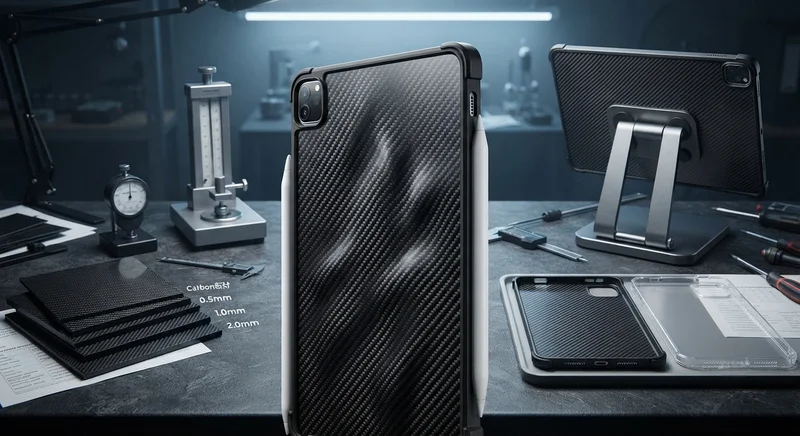
Carbon Fiber Tablet Case — Ultra-Light Protective Shell
Lightweight carbon fiber protective case for tablets and iPads. Molded from T700 3K prepreg with reinforced corner protection. Adds minimal weight while providing superior rigidity and drop protection compared to polycarbonate or silicone cases. Ideal for field workers, enterprise deployments, and professionals requiring durable tablet protection.

Carbon Fiber Robotic Arm Tube — High-Stiffness Lightweight Replacement
Precision-wound carbon fiber tubes for robotic arm links, replacing steel or aluminum in collaborative robots (cobots) and industrial manipulators. Achieve 3× the specific stiffness of aluminum with significant weight reduction, enabling faster acceleration and higher payload capacity.
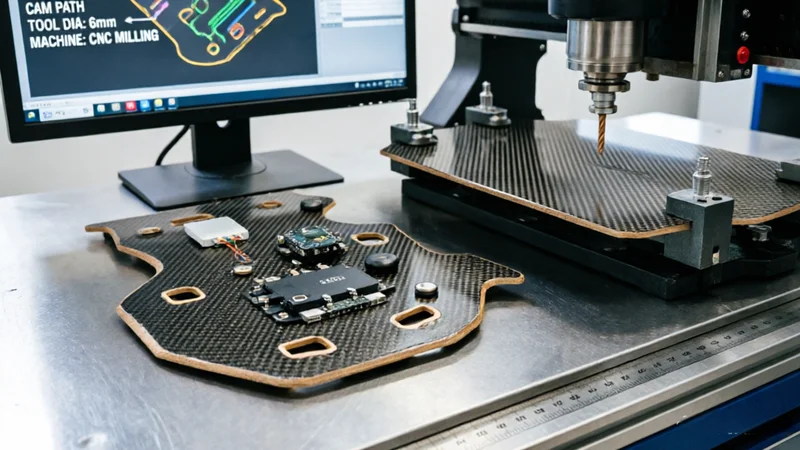
Carbon Fiber Drone Frame Base Plate — 3K Twill T700
CNC-machined carbon fiber base plates for drone frame assemblies. Cut from 3K twill weave T700 prepreg with precision CNC routing. Pre-drilled mounting patterns compatible with common flight controller and power distribution board layouts. Available in 1.5mm to 5mm thickness.
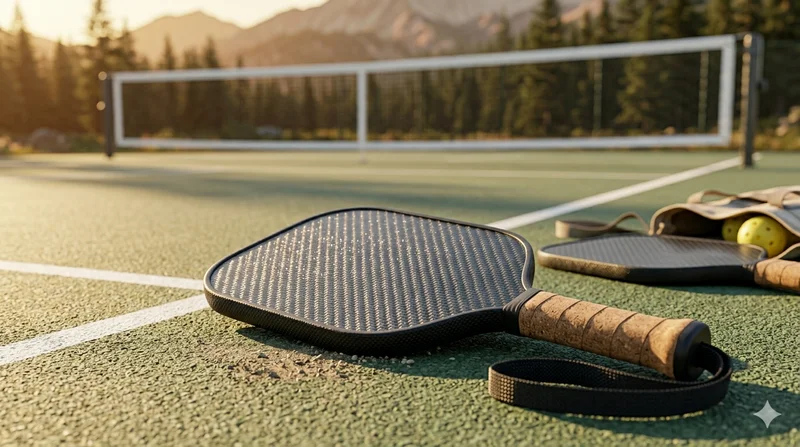
Carbon Fiber Pickleball Paddle
High-performance pickleball paddle with Toray T700 carbon fiber face and polypropylene honeycomb core. Delivers excellent power-to-weight ratio, spin generation, and vibration dampening for competitive play.
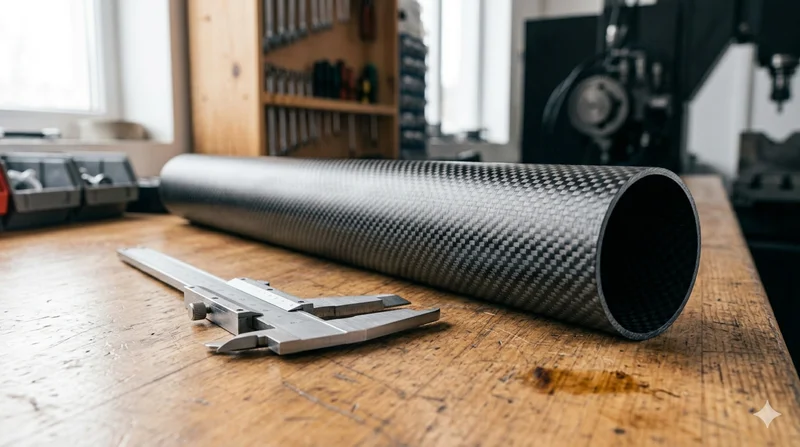
Round Carbon Fiber Tube — 3K Plain Weave T700
Standard round carbon fiber tube manufactured from Toray T700 grade fiber with 3K plain weave. Offers balanced strength and stiffness for general industrial applications including robotics, automation, sports equipment, and aerospace structures.