This carbon fiber tube buyer guide is written for engineers, product designers, and procurement teams who need to source tubes that perform as specified, not just look good on a quote. Carbon fiber tubes are used in drones, automation arms, camera rigs, medical devices, sporting goods, and industria
Introduction
This carbon fiber tube buyer guide is written for engineers, product designers, and procurement teams who need to source tubes that perform as specified, not just look good on a quote. Carbon fiber tubes are used in drones, automation arms, camera rigs, medical devices, sporting goods, and industrial frames because they combine high stiffness, low weight, and corrosion resistance. But the market is uneven: two tubes with the same outer diameter can behave very differently depending on fiber grade, layup, resin system, and process control. Choosing the right carbon fiber tube supplier starts with a clear specification and a disciplined evaluation process.
Whether you are buying a few prototypes or negotiating annual volume, the same fundamentals apply. You must define mechanical and dimensional requirements, understand how manufacturing method affects performance, and verify that the supplier can document what they ship. The sections below walk through the decisions that matter most, from material selection to inspection reports, so you can compare quotes on equal terms and avoid costly rework.
Define Your Tube Requirements Before You Request Quotes
A precise specification is the foundation of any successful purchase. Before contacting carbon fiber tube manufacturers, document the requirements that drive fit, function, and cost. Vague requests produce vague quotes, and vague quotes hide risk.
- Geometry: Outer diameter, inner diameter or wall thickness, length, straightness, and roundness. Note whether ends will be cut, chamfered, or bonded into fittings.
- Mechanical targets: Bending stiffness, axial load, torsional load, or deflection limit. If you know the load case, share it; a good supplier can recommend a layup.
- Environment: Operating temperature, UV exposure, moisture, chemicals, and impact risk. These determine resin choice and surface finish.
- Surface and appearance: Matte or gloss, clear coat, paint, 3K weave visibility, or a purely functional finish.
- Volume and cadence: Prototype quantity, pilot run, and annual forecast. Volume drives process selection and pricing.
When requirements are clear, you can compare a carbon fiber tube for sale from different sources without guessing what is inside the laminate.
Compare Manufacturing Methods and Material Options
Not all carbon fiber tubes are made the same way. The manufacturing process sets the baseline for strength, consistency, cosmetic quality, and price. The table below summarizes the most common options you will encounter when evaluating a carbon fiber tube supplier.
| Method | Typical Strengths | Limitations | Best For |
|---|---|---|---|
| Roll-wrapped | High stiffness, good cosmetic weave, flexible layup design | Higher labor cost, size limits by mandrel | High-performance structural tubes, camera rigs, robotics |
| Pultruded | Consistent axial properties, efficient for volume, competitive price | Mostly unidirectional fibers, limited layup customization | Long straight profiles, trusses, industrial frames |
| Filament-wound | Excellent hoop strength, good for pressure or torsion | Surface finish less cosmetic, winding angle constraints | Drive shafts, pressure sleeves, torsional members |
Material choice matters just as much. Standard modulus carbon fiber (such as T300 or equivalent) covers most structural needs at a reasonable cost. Intermediate or high modulus fibers raise stiffness but increase price and can be more brittle. Resin systems range from standard epoxy to high-temperature or toughened formulations. A capable supplier will explain trade-offs instead of pushing a single stock option.
How to Evaluate a Carbon Fiber Tube Supplier
Price is visible on every quote, but capability is what prevents failure in the field. When you shortlist carbon fiber tube manufacturers, evaluate them on evidence, not claims. A reliable carbon fiber tube supplier should be transparent about process control, inspection, and traceability.
- Quality documentation: Ask for dimensional inspection reports, material certificates, and, for critical parts, mechanical test data or coupons from the same batch.
- Process control: Confirm how they control fiber orientation, resin content, cure cycle, and mandrel extraction. Consistency comes from process, not inspection alone.
- Machining and finishing: Check whether they can cut to length, drill, slot, or bond end fittings in-house. Fewer handoffs reduce tolerance stack-up.
- Communication and engineering support: A good partner asks about your load case and suggests improvements. Slow or vague answers during quoting often predict problems later.
- Lead time and capacity: Verify prototype lead time, production lead time, and what happens when demand spikes.
Request a sample or first-article part before committing to volume. A small upfront check is cheaper than discovering a tolerance problem after assembly.
Carbon Fiber Tube Buyer Guide: Cost, MOQ, and Mistakes
Understanding cost drivers helps you negotiate intelligently and avoid false economies. The price of a carbon fiber tube for sale is shaped by fiber grade, layup complexity, mandrel size, surface finish, secondary machining, and order quantity. Tight tolerances and cosmetic finishes add cost quickly, so specify them only where they matter.
Common mistakes include choosing solely on unit price, ignoring straightness tolerances, and failing to specify how tubes will be joined. Another frequent error is over-specifying high modulus fiber when a well-designed standard modulus layup would meet the stiffness target at lower cost. Finally, buyers sometimes skip incoming inspection. Even with a trusted carbon fiber tube supplier, you should verify critical dimensions and record batch data on first deliveries.
If your project needs custom lengths, drilled holes, or bonded inserts, ask for a delivered-part quote rather than a raw-tube quote. The cheapest tube can become the most expensive part after scrap and rework.
Frequently Asked Questions
What information should I send to a carbon fiber tube supplier for an accurate quote?
Send a drawing or a clear spec with outer diameter, inner diameter or wall thickness, length, quantity, tolerance, surface finish, and application. If you know the load or deflection limit, include it. Mention the environment and any secondary operations such as cutting, drilling, or bonding. The more specific your input, the more comparable and reliable the quotes will be.
Are pultruded tubes always cheaper than roll-wrapped tubes?
Pultruded tubes are often cheaper per meter for straight, constant-section profiles, especially at volume, because the process is continuous and labor-efficient. Roll-wrapped tubes can cost more but allow tailored layups, better cosmetic finishes, and higher performance in bending or torsion for certain designs. The right choice depends on the load case, appearance requirements, and quantity, not on price alone.
How do I verify quality when I receive carbon fiber tubes?
Start with visual inspection for surface defects, then measure outer diameter, inner diameter, length, and straightness against your drawing. For critical applications, request batch traceability, resin and fiber certificates, and test coupons. On a new supplier, run a first-article inspection and keep records so future batches can be compared against an approved baseline.
Conclusion
A good sourcing decision balances performance, consistency, and total cost. Use this carbon fiber tube buyer guide as a checklist: define the specification, match the manufacturing method to the load case, and vet suppliers on process control and documentation rather than price alone. When you are ready to discuss a custom requirement or compare options for your next build, explore our carbon fiber products or contact our team for a quote and engineering support.
Part of topic
Related Articles
- Carbon Fiber Rod Buyer Guide: How to Choose a Supplier
- Carbon Fiber Plate Buyer Guide: How to Choose a Supplier
- Carbon Fiber Sheet Import Guide: Tariffs, Documents and Tips
- Carbon Fiber Tube Export China: Process, Cost and Documents
- Carbon Fiber Tube CIF Price: Cost Breakdown, Documents and Tips
- Carbon Fiber Tube Lead Time: Factors, Benchmarks and Planning
Interested in Our Products?
Contact our team for competitive pricing and technical specifications.
Get a QuoteRelated Products
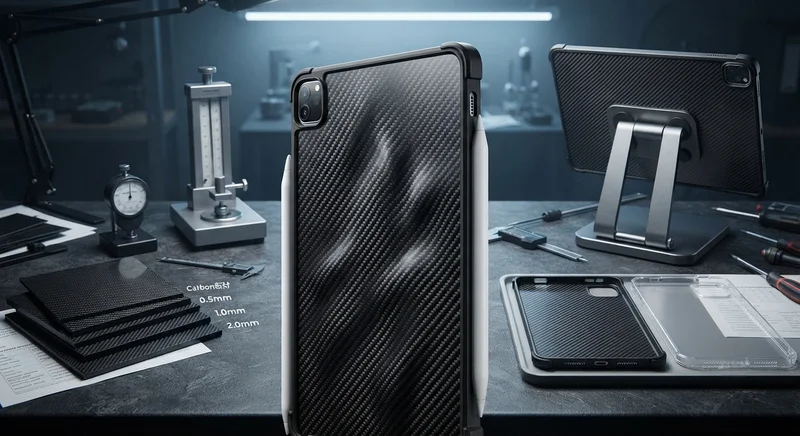
Carbon Fiber Tablet Case — Ultra-Light Protective Shell
Lightweight carbon fiber protective case for tablets and iPads. Molded from T700 3K prepreg with reinforced corner protection. Adds minimal weight while providing superior rigidity and drop protection compared to polycarbonate or silicone cases. Ideal for field workers, enterprise deployments, and professionals requiring durable tablet protection.
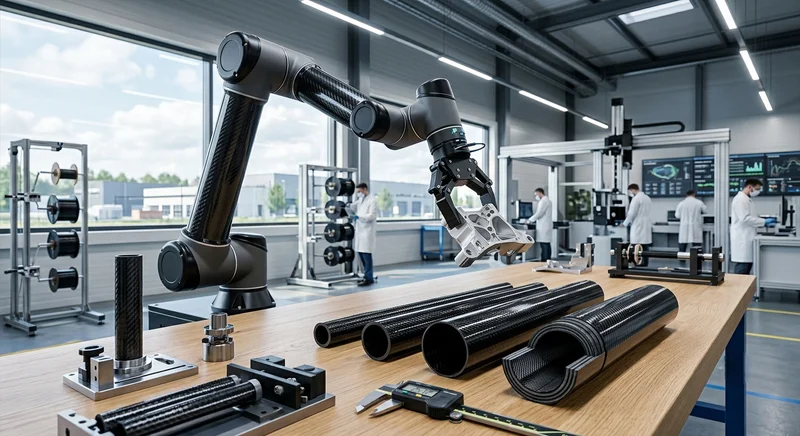
Carbon Fiber Robotic Arm Tube — High-Stiffness Lightweight Replacement
Precision-wound carbon fiber tubes for robotic arm links, replacing steel or aluminum in collaborative robots (cobots) and industrial manipulators. Achieve 3× the specific stiffness of aluminum with significant weight reduction, enabling faster acceleration and higher payload capacity.
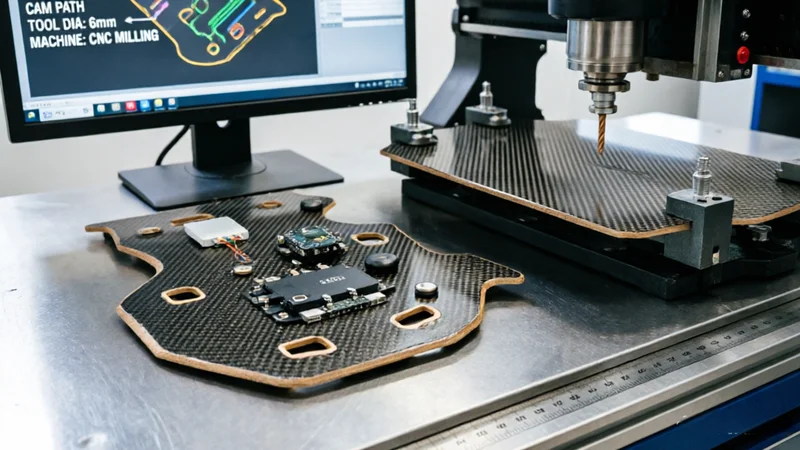
Carbon Fiber Drone Frame Base Plate — 3K Twill T700
CNC-machined carbon fiber base plates for drone frame assemblies. Cut from 3K twill weave T700 prepreg with precision CNC routing. Pre-drilled mounting patterns compatible with common flight controller and power distribution board layouts. Available in 1.5mm to 5mm thickness.
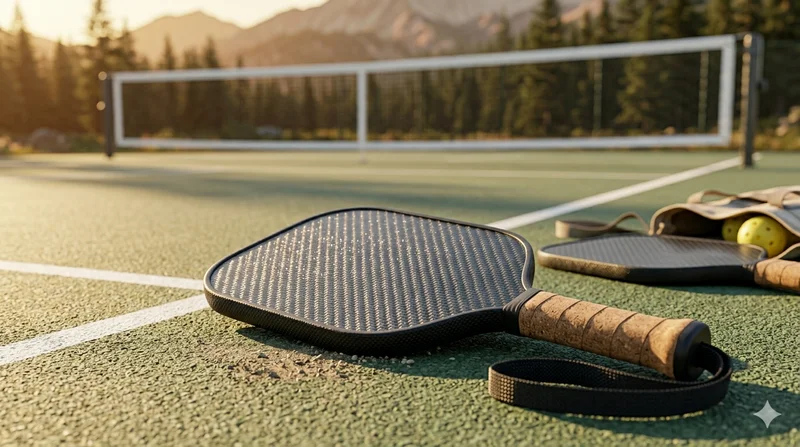
Carbon Fiber Pickleball Paddle
High-performance pickleball paddle with Toray T700 carbon fiber face and polypropylene honeycomb core. Delivers excellent power-to-weight ratio, spin generation, and vibration dampening for competitive play.
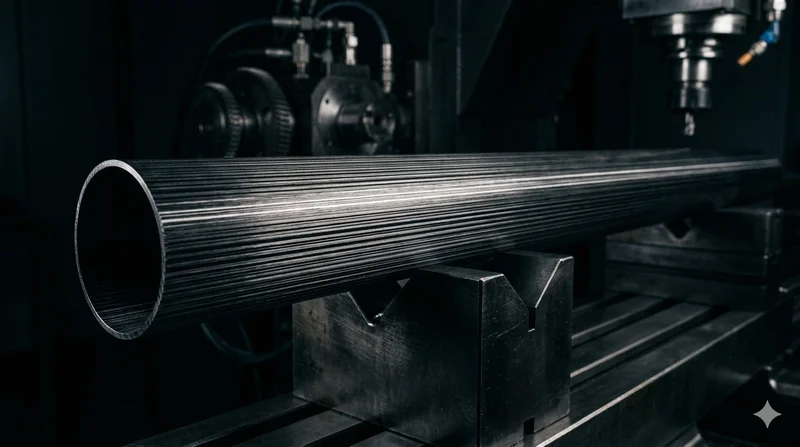
Round Carbon Fiber Tube — UD Unidirectional T700
Unidirectional (UD) round tube with all fibers aligned axially for maximum longitudinal stiffness. Ideal for applications requiring high bending rigidity with minimal weight, such as shafts, struts, and structural reinforcements.