This carbon fiber plate buyer guide helps engineers, buyers, and fabricators choose sheet material that meets real-world performance and budget targets. Carbon fiber plates are widely used for drone frames, robotic end effectors, medical imaging components, jigs, automotive panels, and lightweight s
Introduction
This carbon fiber plate buyer guide helps engineers, buyers, and fabricators choose sheet material that meets real-world performance and budget targets. Carbon fiber plates are widely used for drone frames, robotic end effectors, medical imaging components, jigs, automotive panels, and lightweight structural parts. They look similar in photos, but plate quality varies significantly across fiber type, resin system, layup schedule, and curing control. Selecting the right carbon fiber plate supplier is less about chasing the lowest quote and more about matching material construction to your application.
Before you compare offers, clarify what the plate must do: carry load, stay flat, resist heat, accept machining, or deliver a cosmetic surface. Once those needs are defined, you can evaluate thickness, weave, finish, and tolerance with confidence. The guide below outlines the key decisions, typical cost drivers, and the questions that separate dependable carbon fiber plate manufacturers from resellers with limited process control.
Start With the Application and Plate Construction
Every purchasing decision should begin with the load case and environment. A plate that works on a camera rig may fail in a heated fixture or a stiffness-critical automation arm. Define whether the plate is structural, semi-structural, or cosmetic, and note any exposure to heat, chemicals, moisture, or repeated impact.
Plate construction determines behavior. Common options include quasi-isotropic layups for balanced in-plane stiffness, unidirectional laminates for directional strength, and forged carbon for complex molded shapes rather than flat sheets. Most buyers of flat sheets choose woven carbon fiber in 3K twill or plain weave because it balances stiffness, handling, and appearance.
- Fiber grade: Standard modulus fiber suits most plates; high modulus is used when deflection control is critical.
- Resin system: Standard epoxy works for room-temperature service; high-Tg epoxy is needed near elevated temperatures.
- Core or solid: Solid plates maximize stiffness and machinability; sandwich panels reduce weight but limit edge machining.
- Surface finish: Gloss, matte, or peel-ply finishes affect bonding, paint adhesion, and appearance.
Clear construction requirements let you compare a carbon fiber plate price across suppliers on an equal basis instead of guessing what is inside the laminate.
Select Thickness, Tolerance, and Finish
Thickness is the fastest lever on stiffness, but it also drives weight and cost. Bending stiffness rises roughly with the cube of thickness, so small changes matter. Common stock thicknesses range from 0.5 mm to 6 mm, with thicker plates available on a carbon fiber plate custom order.
| Specification | What to Define | Why It Matters |
|---|---|---|
| Thickness | Nominal value and tolerance (for example, 2.0 mm ±0.1 mm) | Affects stiffness, fit, and stack-up in assemblies |
| Flatness | Maximum deviation across the sheet | Critical for bonding, sealing, and precision fixtures |
| Surface | Gloss, matte, one-side cosmetic, or peel-ply | Impacts appearance, coating, and secondary bonding |
| Cut size | Stock sheet, cut-to-size, or CNC-machined part | Determines yield, edge quality, and delivered cost |
Do not over-specify. Tight flatness and cosmetic requirements on both faces can raise scrap rates and lead time. Specify strict controls only where the function demands them, and allow standard tolerances elsewhere to keep the carbon fiber plate price competitive.
Evaluate a Carbon Fiber Plate Supplier for Quality
A dependable carbon fiber plate supplier should be able to explain how plates are made and how quality is verified. Look for evidence of controlled layup, proper cure cycles, and consistent inspection. Press-cured plates generally deliver better flatness and fiber volume consistency than low-cost vacuum-bag-only sheets.
- Material traceability: Batch numbers for fiber and resin, plus certificates of conformity when required.
- Inspection records: Thickness, flatness, and visual inspection reports for production lots.
- Machining capability: CNC routing or waterjet cutting with dust control and edge sealing options.
- Packaging: Protective film and rigid packaging to prevent corner damage and warping in transit.
- Engineering support: Willingness to review drawings, recommend layups, and flag design risks before production.
Ask for sample coupons or a small pilot order. A supplier who welcomes verification usually has the process discipline to support repeat orders.
Carbon Fiber Plate Buyer Guide: Cost and Ordering Checklist
Plate pricing is driven by fiber grade, resin type, thickness, sheet size, finish, tolerance, and order volume. Custom layups, high-Tg resins, and tight flatness requirements add cost. CNC machining, countersinks, and threaded inserts also increase the delivered part price, but they may reduce your in-house labor and scrap.
Lead time depends on whether you buy stock sheets or place a carbon fiber plate custom order. Stock sizes ship quickly; custom thicknesses, special layups, and machined parts require tooling and scheduling time. Confirm lead time in writing and ask how the supplier handles urgent reorders.
Before placing a purchase order, confirm the full specification in one document: material, layup, thickness and tolerance, finish, flatness, dimensions, quantity, inspection requirements, and packaging. Clear documentation protects both sides and speeds up issue resolution if a shipment falls short.
Frequently Asked Questions
What is the difference between stock carbon fiber plate and a custom plate?
Stock plates come in fixed sizes, thicknesses, and layups, so they ship fast and cost less per sheet. A custom plate is built to your specified thickness, layup, resin, or finish. Choose stock when it fits your design; choose custom when performance, flatness, or thickness requirements cannot be met by off-the-shelf options.
How do I choose the right thickness for a carbon fiber plate?
Start from the load case, span, and allowable deflection. Bending stiffness increases sharply with thickness, so small increases can eliminate flex. If you are unsure, ask your supplier to review a simple load sketch. Prototype two adjacent thicknesses when weight and stiffness are both critical.
Can carbon fiber plates be machined after purchase?
Yes. Carbon fiber plates can be CNC routed, drilled, and waterjet cut, but the process requires abrasive tooling, dust extraction, and proper feeds and speeds to avoid delamination. Many buyers prefer to source finished parts from the plate supplier to control edge quality and reduce handling risk.
Conclusion
A successful plate purchase comes from matching construction, tolerance, and finish to the job, then verifying the supplier can deliver consistently. Use this carbon fiber plate buyer guide as your checklist when requesting quotes and reviewing samples. If you need help selecting a layup or confirming a specification, visit our carbon fiber products page or contact our team to discuss your project requirements.
Part of topic
Related Articles
- Carbon Fiber Rod Buyer Guide: How to Choose a Supplier
- Carbon Fiber Tube Buyer Guide: How to Choose a Supplier
- Carbon Fiber Sheet Import Guide: Tariffs, Documents and Tips
- Carbon Fiber Tube Export China: Process, Cost and Documents
- Carbon Fiber Tube CIF Price: Cost Breakdown, Documents and Tips
- Carbon Fiber Tube Lead Time: Factors, Benchmarks and Planning
Interested in Our Products?
Contact our team for competitive pricing and technical specifications.
Get a QuoteRelated Products
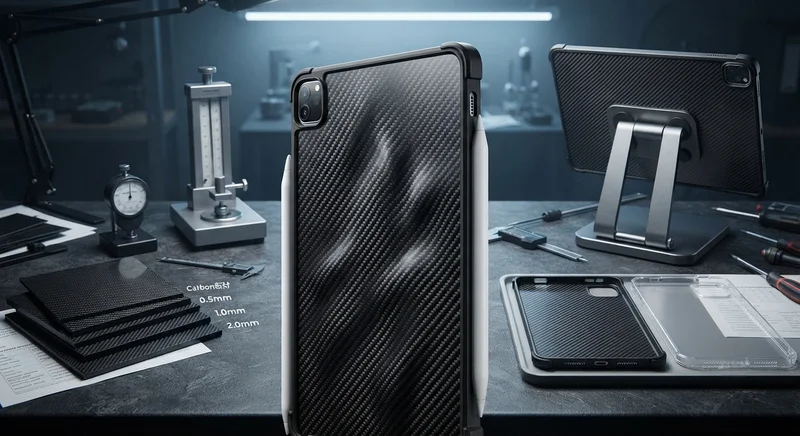
Carbon Fiber Tablet Case — Ultra-Light Protective Shell
Lightweight carbon fiber protective case for tablets and iPads. Molded from T700 3K prepreg with reinforced corner protection. Adds minimal weight while providing superior rigidity and drop protection compared to polycarbonate or silicone cases. Ideal for field workers, enterprise deployments, and professionals requiring durable tablet protection.
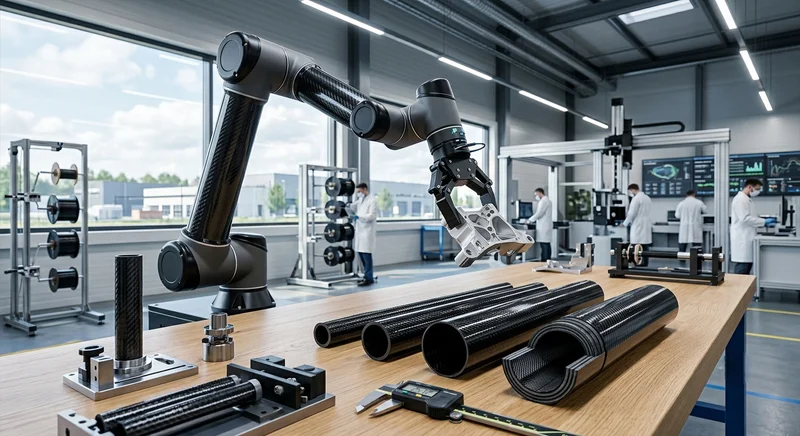
Carbon Fiber Robotic Arm Tube — High-Stiffness Lightweight Replacement
Precision-wound carbon fiber tubes for robotic arm links, replacing steel or aluminum in collaborative robots (cobots) and industrial manipulators. Achieve 3× the specific stiffness of aluminum with significant weight reduction, enabling faster acceleration and higher payload capacity.
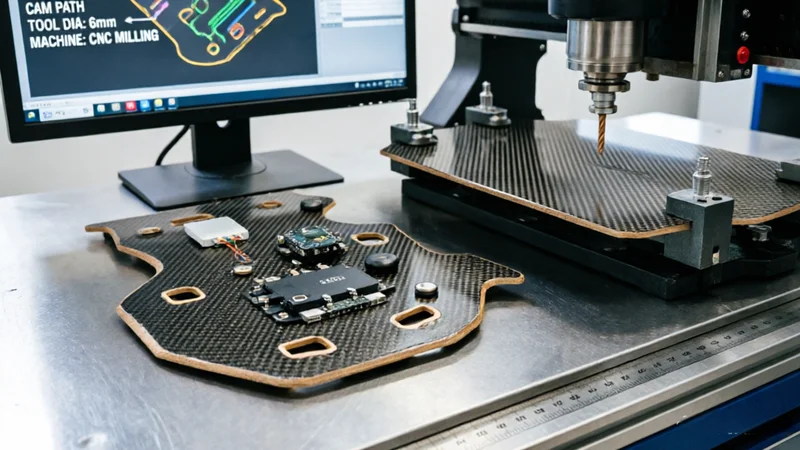
Carbon Fiber Drone Frame Base Plate — 3K Twill T700
CNC-machined carbon fiber base plates for drone frame assemblies. Cut from 3K twill weave T700 prepreg with precision CNC routing. Pre-drilled mounting patterns compatible with common flight controller and power distribution board layouts. Available in 1.5mm to 5mm thickness.
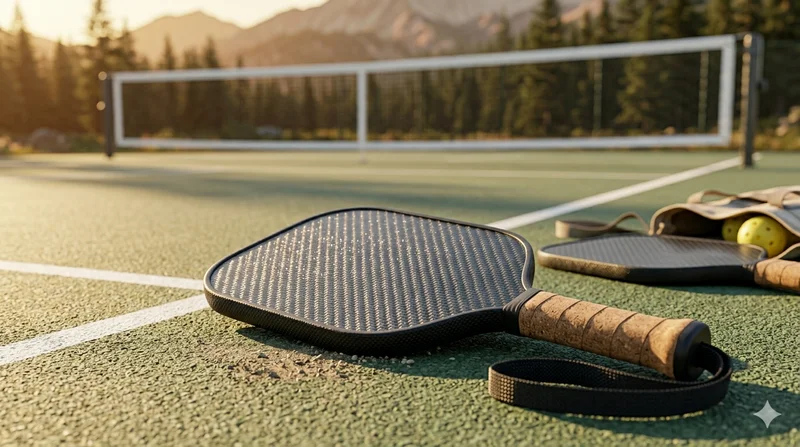
Carbon Fiber Pickleball Paddle
High-performance pickleball paddle with Toray T700 carbon fiber face and polypropylene honeycomb core. Delivers excellent power-to-weight ratio, spin generation, and vibration dampening for competitive play.
Round Carbon Fiber Tube — 3K Plain Weave T700
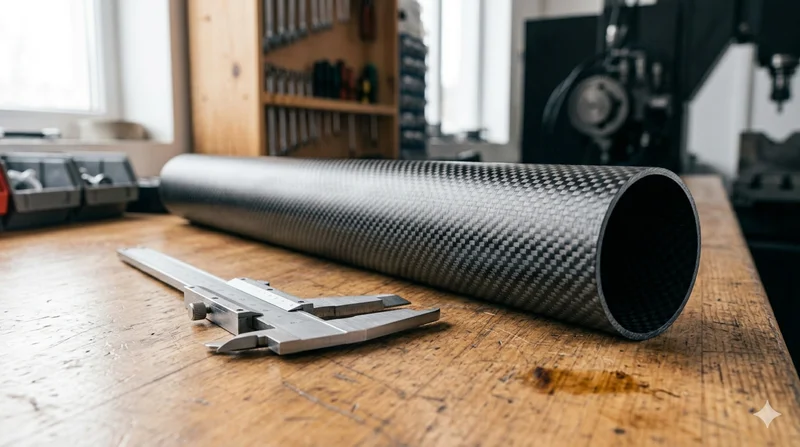
Standard round carbon fiber tube manufactured from Toray T700 grade fiber with 3K plain weave. Offers balanced strength and stiffness for general industrial applications including robotics, automation, sports equipment, and aerospace structures.