
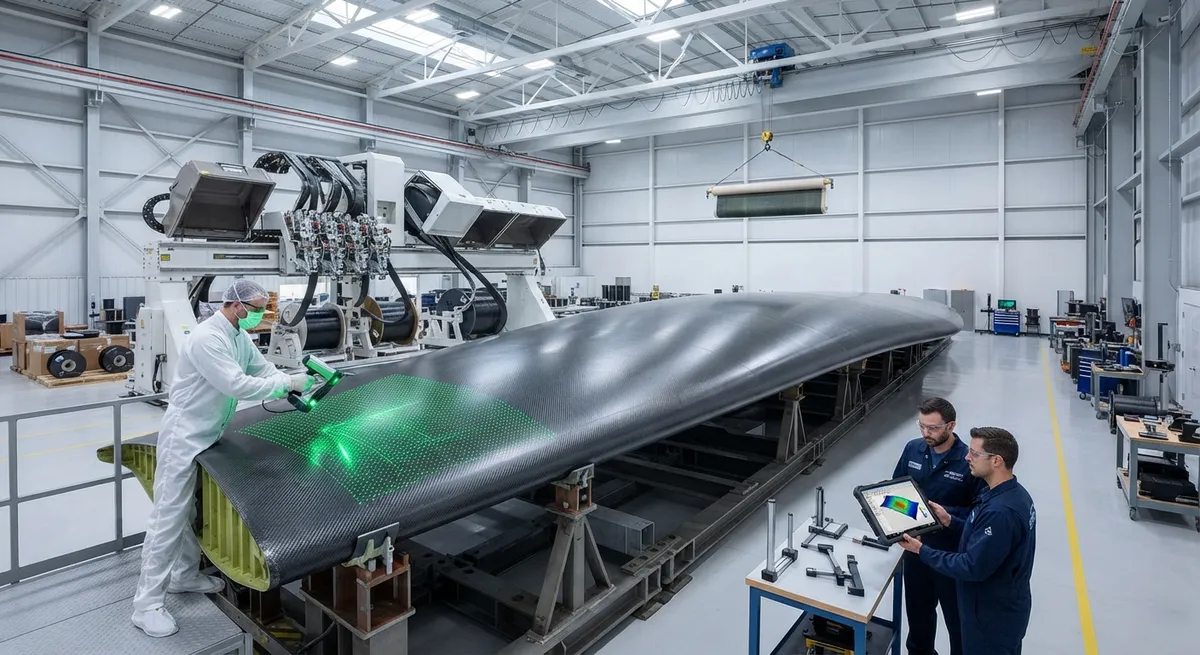
The classic tube-and-wing airframe has defined the look of commercial aviation for seven decades, but its aerodynamic and structural limits are now well mapped. The blended wing body — an aircraft where the fuselage and wing merge into a single lifting surface — attacks both limits at o
Introduction
The classic tube-and-wing airframe has defined the look of commercial aviation for seven decades, but its aerodynamic and structural limits are now well mapped. The blended wing body — an aircraft where the fuselage and wing merge into a single lifting surface — attacks both limits at once: it reduces aerodynamic drag by integrating the body into the lift generation, and it gives the structure a dramatically different load path than a pressurized cylinder hanging off a wing spar box. JetZero, a California-based startup, is building the Z4, a 200-250 seat blended wing body demonstrator with a target of first flight in 2027, backed by the US Air Force and supported by industrial partners. The keystone of the design is that the Z4 airframe is being built as a carbon fiber composite structure — the category of manufacturing that makes the BWB economically and structurally viable at all.
This article examines how composite materials enable the BWB architecture, what producing a Z4-class airframe demands from manufacturing technology, and what the program implies for the aerospace composites industry and its supply chain.
Why the BWB Needs Composites
The BWB's structural advantage is also its manufacturing problem. A tube-and-wing fuselage carries pressure loads in a simple cylinder — a shape that is inherently efficient in hoop stress and easy to fabricate with barrel winding or even metal panels. A BWB center body is a wide, flattened, pressurizable shell whose cross section changes continuously from a cylindrical cockpit pressure vessel toward wide lifting sections; its load paths flow through a complex blend of skin, spars, ribs, and frames that must carry both pressure loads and bending loads without a clean cylindrical load path to fall back on.
Metallic construction becomes impractical for that geometry: a complex, doubly-curved metallic shell would require thousands of individually formed and joined panels, with an enormous weight penalty from joints and fasteners. Composite construction, by contrast, allows large, seamless, doubly-curved skins to be laid up and co-cured as single parts, with fibers oriented to carry the exact local load paths. This is the decisive advantage — the BWB structure and composite manufacturing were effectively invented for each other. The table below summarizes the comparison:
| Attribute | Tube-and-Wing | Blended Wing Body |
|---|---|---|
| Load path | Pressurized cylinder + separate wing box | Integrated multi-directional shell |
| Efficient metal construction | Yes (cylinder geometry) | No (complex double curvature) |
| Efficient composite construction | Good (barrel + panels) | Excellent (seamless co-cured shells) |
| Pressure + bending coupling | Decoupled, well understood | Coupled, requires analysis and testing |
| Skin joint count | High (panels, stringers, frames) | Low (large co-cured parts) |
In practice, the Z4-class airframe is designed as a near-fully composite structure, with the center body, wing skins, and lifting surfaces built from carbon fiber reinforced polymer panels and co-cured assemblies.
The Composite Manufacturing Challenge
Producing a blended wing body airframe pushes every stage of aerospace composite manufacturing. Four themes dominate:
- Large-part autoclave and out-of-autoclave capability: BWB skins are among the largest single composite parts ever planned for passenger aircraft — center body skin panels sizing well beyond conventional fuselage barrels. Programs like the Z4 depend on facilities with very large autoclaves and the automation to move and cure such parts.
- Automated fiber placement (AFP): Doubly-curved, variable-thickness skins with steering fiber paths are the domain of AFP machines, which place narrow tow courses on tooling with precision and speed that hand layup cannot match. AFP processing rate and head uptime become gating factors for BWB rate.
- Tooling and tolerance: Aerodynamic smoothness on a blended wing body is a hard requirement — the lift surface is the body — so skin tolerances, lap joints, and fastener flushness must be held to aerospace standards across much larger and more curved surfaces than on a fuselage barrel.
- Assembly and pressure-vessel integration: The pressurized center body must mate with the lifting surfaces while meeting the same failsafe and damage-tolerance requirements as a conventional fuselage, requiring co-curing and hybrid joining strategies that are still maturing.
The manufacturing themes are not theoretical — they describe the engineering program JetZero and its partners, including the supply chain, are executing to reach a 2027 first flight.
Efficiency Gains and Program Economics
The justification for the BWB's structural complexity is operational efficiency. Blended wing body designs claim fuel consumption reductions on the order of 30-50% versus comparable tube-and-wing aircraft, driven by lower induced and wetted-area drag, and they offer more usable cabin volume for the same structural footprint. For the US Air Force — the Z4 program's anchor customer — the value is also mission-oriented: higher efficiency and longer endurance for tanker and transport missions. For commercial operators, a 30%+ fuel burn reduction at current fuel prices is a decisive cost advantage, which is why every major airframer is studying BWB derivatives while JetZero is the first to commit to flying one at passenger scale.
The counterweight is development and manufacturing cost: a new airframe architecture, new tooling, new assembly sequence, and certification of novel structure types. BWB economics only close if composite manufacturing can produce the large integrated parts affordably and at sufficient rate — the point where composite supply chain maturity, not aerodynamics, governs the schedule.
What It Signals for the Composites Supply Chain
For the aerospace composites industry, the Z4 program is a demand signal for a specific set of capabilities:
- Wide carbon fiber fabric and prepreg formats: Large BWB skins reward wide-format (2-3 meter) reinforcements that reduce splices and increase AFP and layup throughput.
- Out-of-autoclave and automated rates: The economics of BWB production favor OoA prepregs and AFP-driven processes that avoid bottlenecking on massive autoclave cycles.
- New material qualification: Novel structural configuration means extensive new allowables testing, creating demand for statistically complete material datasets across fibers, resins, and formats.
None of these capabilities are exotic individually — they are the same trend lines (automation, OoA, large formats) driving aerospace composites generally. The BWB accelerates them in one program because the entire aircraft, not just selected parts, is composite.
Frequently Asked Questions
What is a blended wing body aircraft and why is it more efficient?
A blended wing body merges the fuselage and wings into a single lifting surface, so the body itself generates lift instead of being a passive passenger tube hanging from a wing. This reduces so-called wetted area and induced drag: there is no sharp junction between fuselage and wing, and the entire aircraft participates in generating lift. The result is fuel savings typically estimated at 30-50% versus comparable tube-and-wing designs, plus extra cabin volume for the same structural footprint. The structural trade-off is a complex, pressurizable, doubly-curved shell instead of a simple cylindrical fuselage — the reason BWB aircraft are only practical with composite manufacturing that can produce large seamless curved skins efficiently.
Why is carbon fiber composite construction essential for blended wing body aircraft?
Because the BWB's geometry defeats efficient metal construction. A metal BWB would require thousands of individually formed and joined doubly-curved panels, with strength lost at every joint and fastener line. Composites allow the same geometry to be laid up as large, seamless, co-cured skins with fibers oriented to the local load paths, so the structure is lighter and the joints that would dominate a metal airframe mostly disappear. Composites also deal well with the coupled pressure-and-bending loading of a BWB center body. Without composite manufacturing, the BWB would weigh too much and cost too much to build — the architecture and the material class are mutually dependent.
What is the current status of the JetZero Z4 program?
JetZero is developing the Z4, a blended wing body demonstrator in the 200-250 seat class, with the US Air Force as anchor customer and partners including major aerospace suppliers. The program's stated target is first flight in 2027, with the airframe being built as a carbon fiber composite structure. The Z4 is positioned as a full-scale technology and integration demonstrator that could inform a production blended wing body transport for military missions and, potentially, commercial applications. As with all such programs, the schedule is ambitious, and the gating risk is in large-part composite manufacturing and certification of the novel structure rather than in the aerodynamics, which are well validated by prior research programs and wind tunnel testing.
Conclusion
The blended wing body is the clearest candidate for the next generation of passenger aircraft, and it is, structurally, a carbon fiber program from the first skin to the last frame. JetZero's Z4, targeting first flight in 2027, is the program that will prove whether BWB economics close at passenger scale — a question decided less by aerodynamics than by composite manufacturing maturity: large-part capability, AFP throughput, OoA processing, and new material qualification. For the aerospace composites industry, the Z4 is a concrete demand signal for exactly the capabilities the industry is already building.
For engineers and program teams evaluating materials for next-generation airframe concepts, the relevant questions are wide-format reinforcement availability, OoA qualification status, and manufacturing partnerships that scale with large integrated parts. Explore our aerospace-grade carbon fiber fabrics and reinforcements, or contact our engineering team to discuss material formats and qualification support for blended wing body and next-generation airframe programs.
Part of topic
Related Articles
- Carbon Fiber Tube for Sale: Comparing Listings and Avoiding Bad Specs
- Carbon Fiber Engine Parts: High-Temperature Performance for Racing and Performance Vehicles
- Carbon Fiber Body Parts: Automotive Exterior Panels and Structural Components
- Carbon Fiber Drone Body Manufacturing: Monocoque Design and Production Methods
- Carbon Fiber Drone Parts Supplier: FPV Frames, Arms and Structural Components
- Filament Wound Epoxy Tubes: Industrial Applications from Oil and Gas to Aerospace
Interested in Our Products?
Contact our team for competitive pricing and technical specifications.
Get a QuoteRelated Products
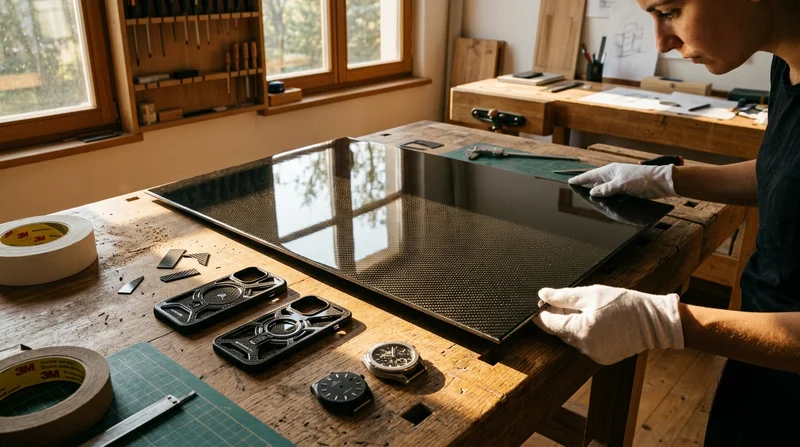
Carbon Fiber Plate — High-Gloss Decorative
High-gloss decorative carbon fiber plate with a mirror-like surface finish. The glossy coating enhances the visible 3K twill weave, creating a premium aesthetic for consumer-facing applications. Lightweight yet stiff, available in thin gauges for easy cutting and forming.
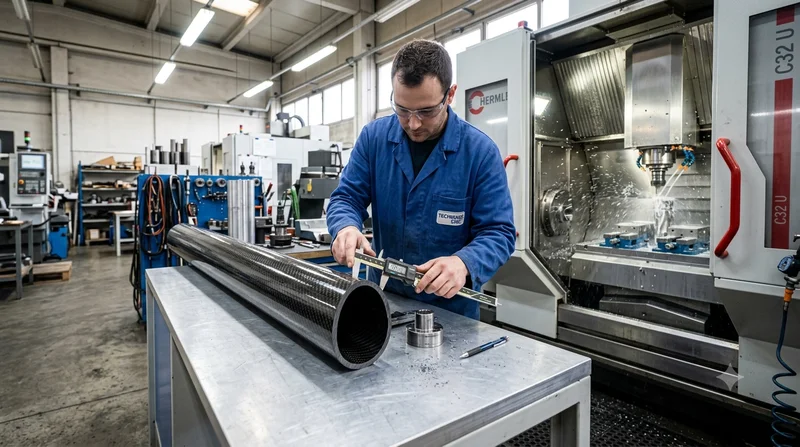
Oval/Streamline Carbon Fiber Tube
Streamline oval carbon fiber tube offering unique cross-section properties. Higher bending stiffness in the major axis direction while maintaining a slim profile. Perfect for aerodynamic applications and weight-optimized structures where space constraints demand non-round profiles.