
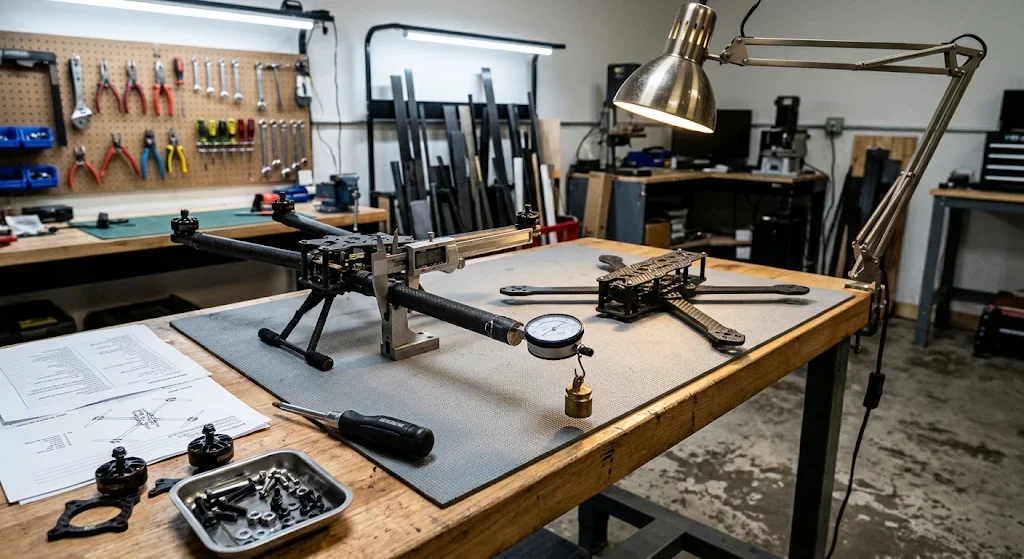
Finding the best carbon fiber drone frame is less about brand reputation and more about measurable criteria: stiffness-to-mass ratio, arm geometry, motor mount durability, and how the frame behaves after a crash. A frame that looks premium in product photos can still flex under load if the layup is
Introduction
Finding the best carbon fiber drone frame is less about brand reputation and more about measurable criteria: stiffness-to-mass ratio, arm geometry, motor mount durability, and how the frame behaves after a crash. A frame that looks premium in product photos can still flex under load if the layup is thin at the arm root, and a cheaper custom carbon fiber drone frame can outperform it if the geometry is right.
This guide ranks the criteria that actually separate frames, and shows where carbon fiber drone frame price tracks performance and where it does not. Buyers comparing the best drone frames on the market should run the checklist below before reading any marketing copy.
Best Carbon Fiber Drone Frame: Stiffness-to-Mass Ratio
The governing metric for any frame is stiffness per gram, because it directly determines how much motor power goes into thrust instead of frame flex. A frame plate that bends under hard acceleration wastes torque and can detune the flight controller's vibration profile. Standard 3K twill laminate at 1.5-2 mm delivers 45-60 GPa flexural modulus at roughly 1.6 g/cm³ density; pultruded tube arms push axial modulus to 120-150 GPa, which is why serious builds pair a thin cloth plate with tube arms rather than cutting arms from plate stock.
The stiffness check itself is simple: clamp the arm root, hang a known mass at the motor position, and measure deflection. A good frame shows less than 1 mm of visible deflection at a load representing full-throttle acceleration. If the arm visibly nods under that load, the frame will waste energy in every punch-out and the flight controller will see vibration it was never tuned for. This single test separates marketing claims from structural reality faster than any feature list.
Mass matters equally. Every gram above the minimum structural requirement shortens flight time and dulls throttle response. The best carbon fiber drone frame in a given class is usually the lightest one that still passes the stiffness check, not the heaviest one with the thickest walls. Vendors who publish both mass and stiffness data on the same datasheet make this comparison possible; vendors who publish only diameter or colour do not.
| Criterion | What to measure | Good threshold | Red flag |
|---|---|---|---|
| Stiffness-to-mass | Plate flex under motor load | No visible flex at full throttle punch-out | Arm visibly bends under 3 g acceleration |
| Arm geometry | Wall thickness, diameter, root joint | ≥1.5 mm wall, bonded or CNC joint | Thin wall, press-fit only, no root fillet |
| Motor mount | Hole pattern, edge distance, insert type | Metal insert or reinforced layup, ≥3 mm edge | Bare holes in thin laminate, no hard-point |
| Crash design | Replaceable parts, sacrificial mounts | Arms swap without disturbing main plate | Monolithic frame, one crack scraps everything |
The table compresses the evaluation into four checks that can be done from photos and a datasheet. A frame that fails any one of them is not the best carbon fiber drone frame for a working build, regardless of how the listing reads. Custom carbon fiber drone frame buyers should apply the same table before releasing a purchase order.
- Stiffness first: a frame that flexes wastes power and confuses the flight controller.
- Geometry second: wall thickness and root fillets matter more than outer diameter marketing.
- Mounts third: motor hard-points are where most frame failures start.
- Repairability last but not least: crash design determines total cost of ownership.
Carbon Fiber Drone Frame Price vs Real Performance
Carbon fiber drone frame price correlates with performance up to a point, then flattens. Below a structural minimum, cheaper frames fail the stiffness check and are not worth buying at any price. In the mid-range, price buys better layup consistency, metal inserts, and cleaner machining — all real gains. Above the mid-range, price increasingly buys brand, packaging, and cosmetics rather than measurable stiffness or durability.
A useful rule: compare frames within a price band, not across bands. Two frames at the same price point that differ in arm wall thickness or mount design are worth comparing carefully; a frame twice the price is usually not twice as stiff, because the stiffness ceiling is set by the material and layup, not by the invoice. Ask for the flex test number, not the brand story.
One exception worth noting: frames with metal motor inserts, replaceable arms, and published layup drawings sit above the pure price-to-stiffness curve, because those features reduce lifetime cost even when the initial stiffness is similar. When total cost of ownership is the goal, a mid-price frame with replaceable arms often beats a premium monolithic frame that must be replaced whole after every significant crash.
Frequently Asked Questions
What makes the best carbon fiber drone frame for racing?
For racing, stiffness-to-mass and replaceable arms dominate. A stiff, light frame with tube arms on sacrificial mounts will outlast a heavier monolithic frame at the same price, because crashes are frequent and repairs must be fast.
How does carbon fiber drone frame price relate to quality?
Price tracks layup consistency and machining quality in the mid-range, but flattens above it. Compare frames within a band using the four-criterion table rather than assuming the most expensive option is the stiffest.
Should I choose a custom carbon fiber drone frame or an off-the-shelf one?
Off-the-shelf wins for standard geometries and quick replacement. Custom wins when your payload, motor spacing, or sensor mounting does not match any stock frame; the extra cost buys the exact geometry you need.
Conclusion
The best carbon fiber drone frame is the one that passes the stiffness check at the lowest mass, has durable motor mounts, and can be repaired after a crash without scrapping the whole frame. Price buys consistency in the mid-range and cosmetics above it, so compare frames with numbers, not listings. YongXian supplies tube, plate, and layup services for custom carbon fiber drone frame builds, so send your geometry and target mass before ordering. browse drone frame stock or request a custom frame quote.
Related Articles
- Carbon Fiber Rods for Fishing: Blank Selection for Builders
- Carbon Fiber Toe Plates: Rocker Design in Footwear
- Carbon Fiber Drones (carbon fiber drones): Airframes, Payloads, and Cost Impact
- Best Carbon Fiber Rod: Application-Based Picks
- The Crust Carbon Fiber: What the Term Means in Searches
- Carbon Fiber Rod for Drone: Spars, Arms, and Sizing
Interested in Our Products?
Contact our team for competitive pricing and technical specifications.
Get a QuoteRelated Products

Round Carbon Fiber Tube — 3K Plain Weave T700
Standard round carbon fiber tube manufactured from Toray T700 grade fiber with 3K plain weave. Offers balanced strength and stiffness for general industrial applications including robotics, automation, sports equipment, and aerospace structures.

Square Carbon Fiber Tube — 3K Twill T700
Square cross-section carbon fiber tube manufactured with 3K twill weave for torsional strength. Preferred for structural frames, trusses, and support columns where rectangular geometry offers design flexibility.

Round Carbon Fiber Tube — 3K Twill
Lightweight and ultra-stiff round tubes ideal for drone frames, robotics, and structural applications.
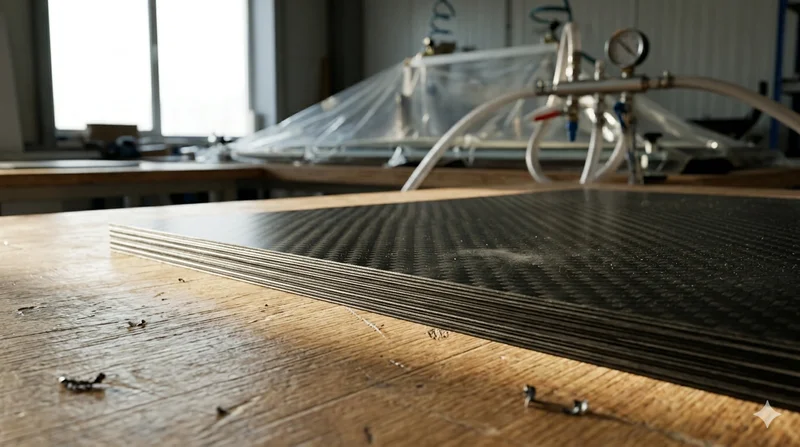
Carbon Fiber Plate — 3K Twill T700 3.0mm
Medium-thickness 3.0mm carbon fiber plate offering significantly higher load capacity while maintaining attractive 3K twill finish. Suitable for structural brackets, reinforcement plates, and load-bearing panels.
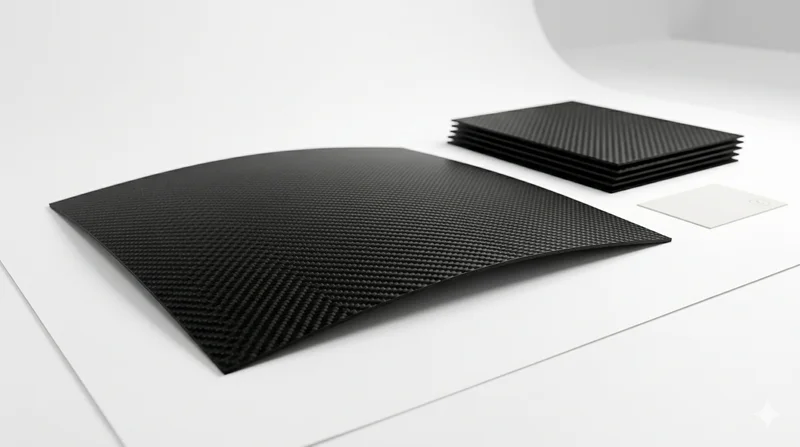
Carbon Fiber Plate — 3K Twill T700 1.5mm
Thin 1.5mm carbon fiber plate with 3K twill weave surface. Lightweight and stiff, commonly used for covers, panels, drone bodies, and applications requiring a premium aesthetic appearance.