
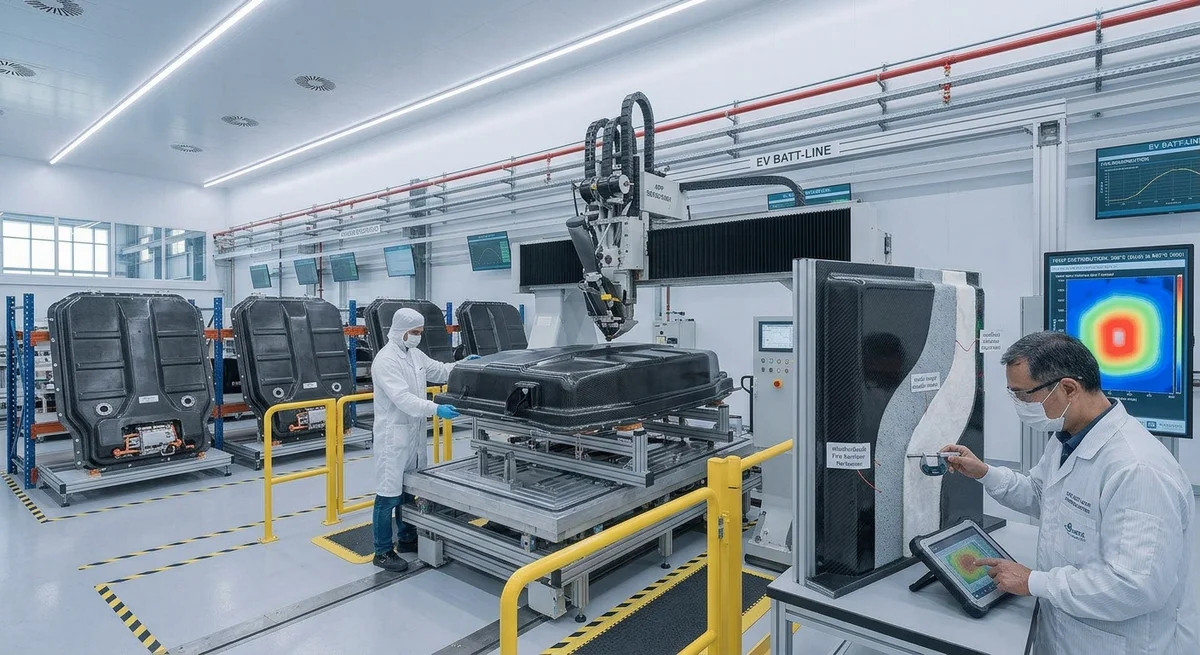
Carbon fiber composite battery enclosures are transforming electric vehicle safety and performance. This article examines fire resistance requirements (UN R100, GB 38031), thermal runaway containment strategies, crash protection performance, and cost comparison with aluminum alternatives for B2B buyers in the EV supply chain.
Electric vehicle battery enclosures represent one of the most demanding structural applications for carbon fiber composites. These under-floor structures must simultaneously provide fire resistance, thermal management, crash protection, and electromagnetic shielding — while adding minimal weight to the vehicle. With global EV sales projected to exceed 30 million units by 2030 and battery enclosure weight ranging from 80-150 kg per vehicle, the addressable market for carbon fiber battery enclosures is estimated at $2.4-3.6 billion annually. Major OEMs including Tesla, BMW, Lucid, and NIO have invested heavily in composite enclosure development programs.
Regulatory Requirements for Battery Enclosures
Battery enclosure fire safety is governed by multiple international and regional standards:
| Standard | Region | Key Requirement | Test Condition |
|---|---|---|---|
| UN R100 (Rev. 3) | UN-ECE (global) | Thermal runaway propagation resistance — fire exposure for at least 5 minutes without breach | Direct flame at 890°C for 60 sec, then indirect exposure |
| GB 38031-2020 | China | 5-minute thermal runaway warning before passenger cabin breach; fire resistance for 10+ minutes | Nail penetration + overcharge + heater test sequence |
| SAE J2464 | US (recommended) | Abuse testing including thermal, mechanical, and electrical abuse scenarios | Crush, penetration, overcharge, short circuit |
| ECE R100.03 | Europe | Thermal propagation test — no fire or explosion for 60 min after trigger | Heater-induced thermal runaway in one cell |
| FMVSS 305 | US | Post-crash electrical safety — no electrolyte leakage beyond enclosure | 30 mph frontal, 33.5 mph side, 50 mph rear impact |
Fire Safety Performance of Carbon Fiber Enclosures
Carbon fiber composites present both advantages and challenges for fire safety in battery enclosures:
Inherent Fire Resistance
Carbon fiber itself has excellent thermal stability — carbon fibers retain structural integrity up to 2,000°C in inert atmosphere. However, the polymer matrix (epoxy, vinyl ester, or polyurethane) is combustible. Fire-resistant formulations using phenolic, bismaleimide (BMI), or ceramic-modified resins can achieve the following performance:
- Phenolic resin composites: Pass UN R100 fire test at 3-5 mm thickness. Char formation during combustion provides an insulating barrier. Limiting oxygen index (LOI): 38-45%. Self-extinguishing within 5-15 seconds.
- Epoxy with fire-retardant additives: 10-25% additive loading (aluminum trihydrate, magnesium hydroxide, phosphorus-based). LOI: 30-38%. Pass UN R100 at 4-6 mm thickness. Reduced mechanical properties (10-20% loss).
- Ceramic-precursor resin systems: Form a ceramic char layer during combustion. LOI: >50%. Pass UN R100 at 2-4 mm. Higher cost but best fire performance.
- Intumescent coating systems: Applied to inner surface; expand 10-40x on heating to form insulating foam. Provides 30-60 minutes of additional thermal protection.
Thermal Runaway Containment
Thermal runaway — a self-accelerating exothermic reaction in a lithium-ion cell — releases temperatures of 800-1,000°C within seconds. Carbon fiber enclosures address this through:
- Multi-layer construction: Outer structural CF layer (2-4 mm) + aerogel blanket (3-8 mm) + inner fire-barrier layer (1-2 mm ceramic fiber or mica sheet). Total thickness: 6-14 mm.
- Thermal break design: Isolating enclosure mounting points with 0.5-2 mm silicone or ceramic spacers to prevent heat conduction to the vehicle chassis.
- Directed venting channels: Pressure-relief vents and channels designed into the composite layup, directing hot gases away from the passenger cabin. Burst pressure: 30-50 kPa for vent membranes.
- Phase-change material (PCM) integration: PCM layers (paraffin wax, salt hydrates) embedded between CF plies absorb 150-250 kJ/kg of thermal energy during phase transition, delaying temperature rise by 5-15 minutes.
Advances in Crash Protection
Battery enclosures must protect against side-impact intrusion at speeds up to 50 mph (80 km/h) and withstand 10-20 tonne crush loads from vehicle rollover. Carbon fiber composites offer exceptional specific energy absorption (SEA):
| Material | Density (g/cm³) | SEA (kJ/kg) | Specific Stiffness (GPa·cm³/g) | Impact Failure Mode |
|---|---|---|---|---|
| Carbon fiber/epoxy (unidirectional) | 1.55 | 50-80 | 85-135 | Brittle fracture, progressive crushing |
| Carbon fiber/epoxy (woven fabric) | 1.50 | 60-90 | 50-80 | Delamination, fiber fracture |
| CF/aluminum hybrid (CFRP face sheet + Al honeycomb) | 1.20-1.40 | 45-70 | 40-70 | Progressive crushing with stable plateau |
| Aluminum 6061-T6 (baseline) | 2.70 | 20-30 | 25-27 | Plastic deformation, tearing |
| Steel (DP 600) | 7.85 | 8-15 | 2.5-3.0 | Plastic buckling, tearing |
Carbon fiber enclosures achieve 40-60% weight reduction compared to aluminum and 60-75% compared to steel while maintaining or improving crash energy absorption. Key design strategies include:
- Crushable crash rails: Integrally molded carbon fiber energy absorbers in the enclosure perimeter, designed for controlled progressive crushing at 100-150 kN crush force.
- Composite-metal hybrid construction: Carbon fiber face sheets bonded to aluminum honeycomb core for the enclosure sandwich panel. Provides optimal stiffness-to-weight ratio.
- Ribbed and hat-section structures: Co-cured stiffening ribs in load paths prevent buckling under 10+ tonne rollover loads.
- Bolt-boss integration: Co-molded or bonded titanium or stainless steel inserts for enclosure-to-chassis mounting points. Pull-out strength: 8-15 kN per insert.
Thermal Management Integration
Carbon fiber's anisotropic thermal conductivity (200-800 W/m·K along fibers, 5-15 W/m·K through-thickness) offers unique design possibilities for battery thermal management:
- In-plane heat spreading: High fiber-direction conductivity can spread localized hot spots from cells with elevated internal resistance. A 0.5 mm carbon fiber face sheet can conduct 10-15 kW/m² of heat laterally.
- Through-thickness insulation: Low through-thickness conductivity reduces heat transfer to the vehicle cabin. A 4 mm composite enclosure wall provides equivalent thermal insulation to 30-50 mm of aluminum.
- Integrated cooling channel designs: Carbon fiber composites can be molded with integral cooling channels (5-15 mm diameter) for liquid cooling systems. No additional metal tubing required — reduces system complexity and weight by 15-25%.
Cost Analysis: Carbon Fiber vs Aluminum
| Cost Factor | Aluminum (baseline) | Carbon Fiber (conventional epoxy) | CF (fast-cure epoxy, cycle <5 min) | CF + integrated cooling |
|---|---|---|---|---|
| Material cost per enclosure | $120-180 | $250-400 | $280-450 | $320-520 |
| Manufacturing cost | $80-150 (stamping/welding) | $120-200 (prepreg/autoclave) | $90-160 (HP-RTM or SMC) | $110-190 (co-cure) |
| Weight per enclosure | 35-50 kg | 15-22 kg | 18-25 kg | 14-20 kg |
| Tooling cost | $500K-2M | $200K-800K | $300K-1M | $400K-1.2M |
| Cooling system integration | $40-80 (separate) | $30-60 (separate) | $25-50 (separate) | Included |
| Total system cost (annual 50K units) | $280-390 per unit | $420-600 per unit | $340-510 per unit | $360-480 per unit |
While carbon fiber enclosures currently carry a 20-40% cost premium over aluminum, the weight reduction of 20-30 kg per vehicle translates to significant battery range improvement (approximately 8-12 km per kg saved) or battery cost reduction. At scale (>100,000 units/year) with fast-cure HP-RTM processes, carbon fiber enclosures are projected to reach cost parity with aluminum by 2028-2029.
FAQ
Do carbon fiber battery enclosures meet UN R100 fire safety requirements?
Yes, when properly designed with fire-resistant resin systems and thermal barrier layers. Phenolic-based CFRP enclosures pass UN R100 at 3-5 mm thickness. For epoxy systems, fire-retardant additives (10-25% ATH or phosphorus-based) combined with an inner ceramic-fiber intumescent layer provide compliant performance at 4-6 mm total wall thickness. Titanium or stainless steel fire shields (0.5-1 mm) are also used as a fallback layer in some designs.How much weight can carbon fiber save compared to aluminum battery enclosures?
Carbon fiber composite battery enclosures typically achieve 40-60% weight reduction compared to aluminum and 60-75% compared to steel. A typical SUV battery enclosure in aluminum weighs 45-55 kg; in carbon fiber it weighs 18-25 kg — a saving of 27-30 kg. This weight reduction translates to approximately 120-135 km additional driving range or a reduction of 8-12 kWh in battery capacity for the same range, saving $800-1,200 in battery cost at current cell prices.What manufacturing processes are used for carbon fiber battery enclosures?
Three primary processes are used: (1) High-pressure resin transfer molding (HP-RTM) — cycle time 3-8 minutes, suitable for 50,000-200,000 units/year; (2) Compression molding with fast-cure prepreg or SMC — cycle time 2-5 minutes, lowest cost at high volume; and (3) Autoclave-cured prepreg layup — cycle time 60-180 minutes, used for low-volume premium EVs. HP-RTM is the most common process for production EVs, offering the best balance of cycle time, part quality, and tooling cost.Part of topic
Related Articles
- Carbon Fiber Mooring for Floating Offshore Wind: Fatigue and Corrosion in Deep Water
- Carbon Fiber Bicycle Frame Optimization: Layup Design and Manufacturing for Competitive Racing
- Carbon Fiber CFRP Retrofit for Infrastructure: Bridge and Building Seismic Strengthening
- Carbon Fiber Medical Imaging Equipment: Lightweight Gantry and Couch Structures for MRI/CT
- Carbon Fiber EV Battery Enclosures: Crash Safety and Electromagnetic Shielding Design
- Carbon Fiber Structures for Low-Altitude Economy: UAV Airframes and eVTOL Components
Interested in Our Products?
Contact our team for competitive pricing and technical specifications.
Get a QuoteRelated Products
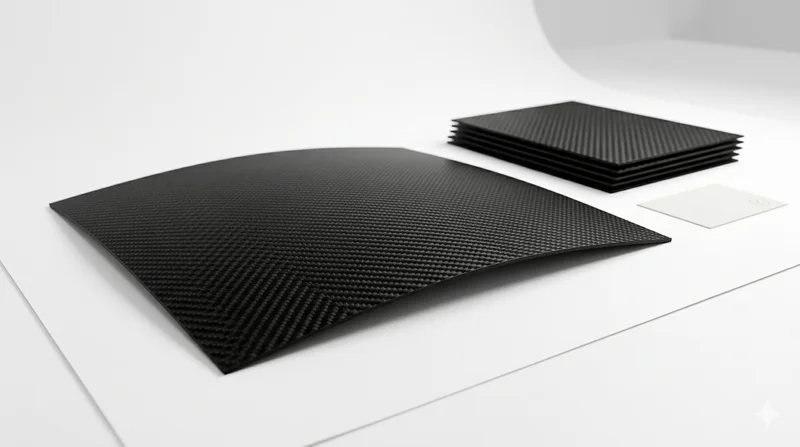
Carbon Fiber Plate — 3K Twill T700 1.5mm
Thin 1.5mm carbon fiber plate with 3K twill weave surface. Lightweight and stiff, commonly used for covers, panels, drone bodies, and applications requiring a premium aesthetic appearance.
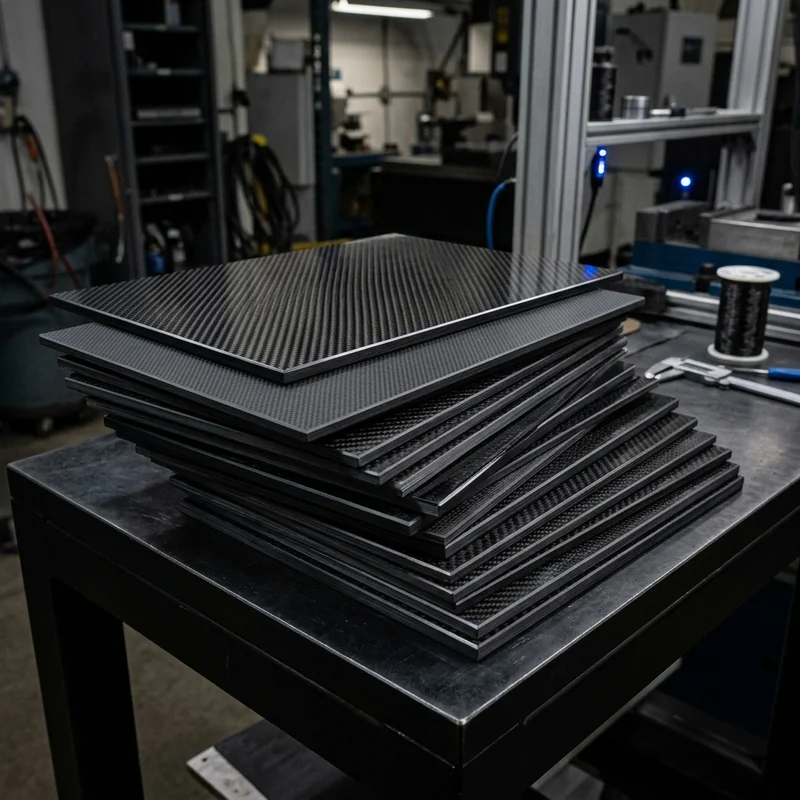
Carbon fiber standard plate-3k stripe
Lightweight, ultra-rigid standard sheets for drone fuselages, robot housings, facades and structural applications.
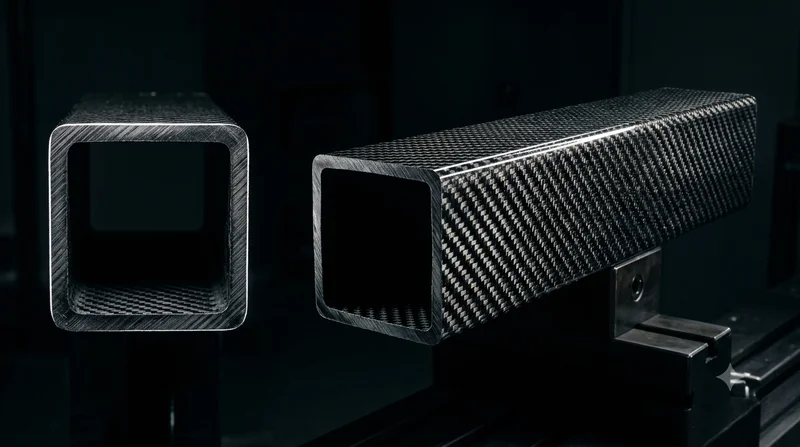
Square Carbon Fiber Tube — 3K Twill T700
Square cross-section carbon fiber tube manufactured with 3K twill weave for torsional strength. Preferred for structural frames, trusses, and support columns where rectangular geometry offers design flexibility.
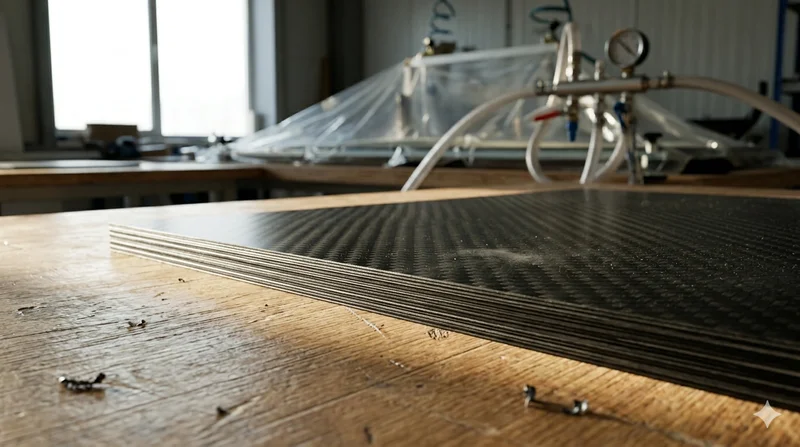
Carbon Fiber Plate — 3K Twill T700 3.0mm
Medium-thickness 3.0mm carbon fiber plate offering significantly higher load capacity while maintaining attractive 3K twill finish. Suitable for structural brackets, reinforcement plates, and load-bearing panels.
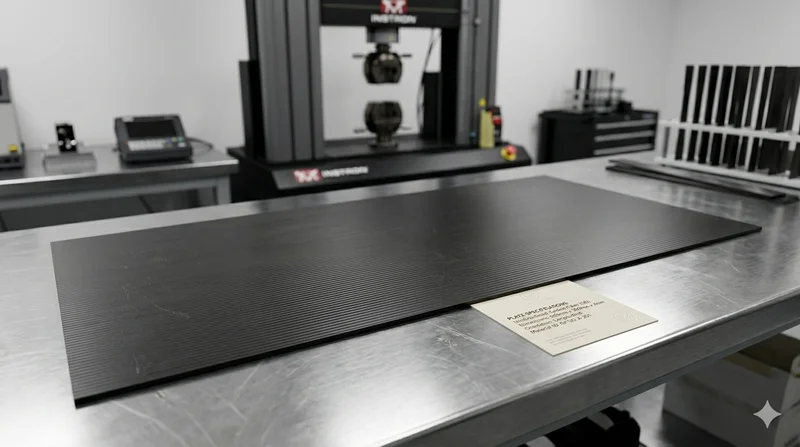
Carbon Fiber Plate — UD Unidirectional T700
Unidirectional carbon fiber plate with all fibers oriented in a single direction for maximum strength along the fiber axis. Essential for structural reinforcements, splints, and applications where load direction is predictable.