
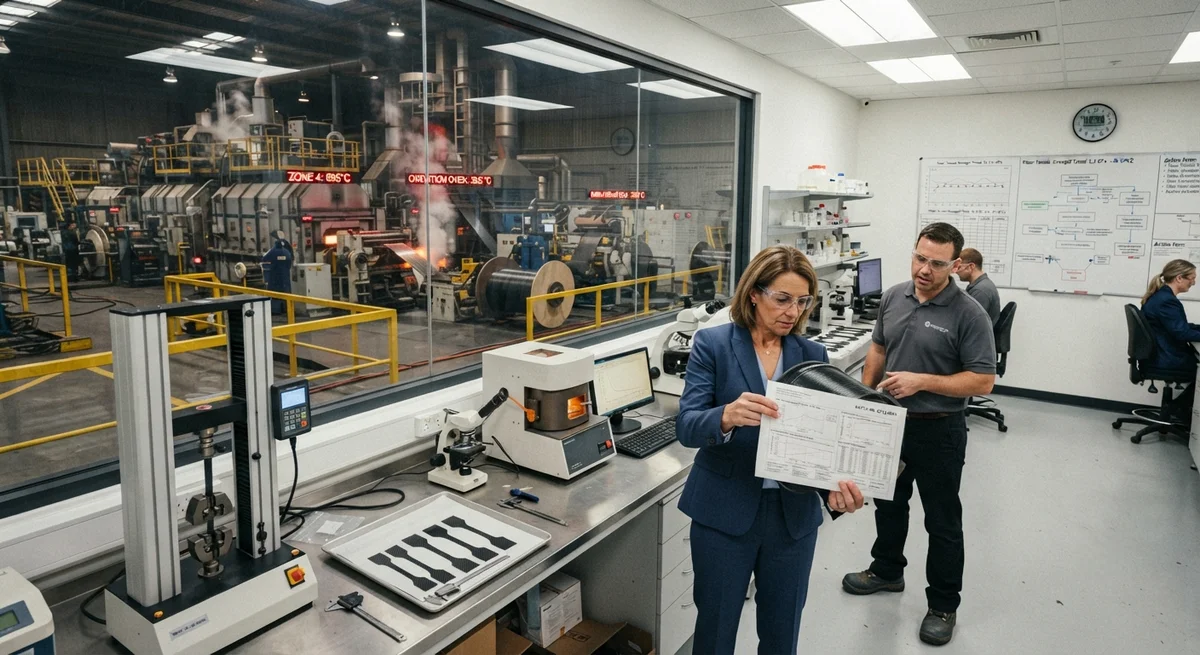
A structured quality audit is essential before committing to a carbon fiber supplier. This comprehensive B2B guide covers QMS certification, raw fiber production, prepreg manufacturing, logistics, cold chain, and scoring methodology.
Introduction
In the global carbon fiber market, the difference between a reliable supplier and an unreliable one can cost a buyer millions of dollars in rejected shipments, production delays, and compromised final product quality. A structured quality audit is the most effective tool for evaluating potential carbon fiber suppliers before committing to a long-term procurement agreement. This guide provides a comprehensive B2B quality audit framework specifically designed for carbon fiber materials, covering raw fibre production, prepreg manufacturing, quality management systems, and logistics capabilities.
The audit framework is structured around four assessment domains, each with specific evaluation criteria, scoring methodology, and minimum acceptable thresholds. We have drawn on industry standards including AS9100D, ISO 9001:2015, Nadcap (Non-Metallic Materials Testing and ACE 7109/7110), and the SAC (Supply Chain Audit) guidelines.
Audit Domain 1: Quality Management System (QMS)
| Evaluation Criteria | Score Weight | Minimum Acceptable | Best Practice |
|---|---|---|---|
| QMS certification (ISO 9001:2015) | 15% | Currently certified | AS9100D or IATF 16949 |
| Document control system | 10% | Controlled documents with revision history | Electronic QMS (e.g., SAP Quality, Unicom QMS) |
| Non-conformance management | 10% | Formal CAPA system with root cause analysis | 8D methodology with 90-day closure rate >85% |
| Internal audit program | 5% | Annual internal audits | Semi-annual audits with certified lead auditors |
| Supplier management program | 5% | Approved supplier list with annual re-evaluation | Risk-based supplier management with on-site audits |
| Continuous improvement programme | 5% | Quality objectives with quarterly reviews | Six Sigma / Lean manufacturing programme |
Audit Domain 2: Raw Fiber Production and Quality Control
- Precursor source and traceability: The supplier must provide full traceability of PAN precursor back to the manufacturer, batch number, and spinning line. Ask for evidence of precursor quality consistency across at least 20 consecutive production lots — the coefficient of variation for tensile strength should be ≤3% and for tensile modulus ≤2%.
- Carbonisation line parameters: Verify that oxidation furnace temperatures (±2°C), low-temperature carbonisation (±5°C), and high-temperature carbonisation (±5°C) are monitored and recorded with automated SPC. The line speed and tension must be controlled within ±2% of setpoint.
- Surface treatment and sizing application: The electrolytic surface treatment current density must be controlled within ±5%. Sizing content should be verified by thermogravimetric analysis (TGA) per lot, with a target of 0.8–1.2% for epoxy-compatible sizing and a lot-to-lot tolerance of ±0.15%.
- Mechanical testing frequency: Minimum one tensile test per 10 kg of produced fibre (ASTM D4018 or ISO 10618). For aerospace-grade fibre, the frequency increases to one test per spool.
- Winding and packaging: Inspect the winding tension consistency (±5%), spool quality (no sharp edges or debris), and packaging integrity (desiccant + vacuum-sealed PE bag inside a cardboard box or plywood drum).
Audit Domain 3: Prepreg Manufacturing
- Resin formulation control: The resin batch-to-batch viscosity tolerance should be ±10% at the target temperature. The gel time at 120°C should be specified with a tolerance of ±15%. Request statistical evidence of resin consistency over at least 50 production batches.
- Impregnation line parameters: Line speed, resin bath temperature (±1°C), nip roller pressure (±5%), and hot melt film thickness uniformity (±2%) must all be validated. The prepreg areal weight tolerance should be ±3% for the target value.
- Out-life and tack characterisation: The supplier should provide out-life curves showing tack, drape, and flow behaviour at 21°C and 40–60% RH over a period equal to the specified out-life. ASTM D3536 or similar methods should be used.
- In-process quality checks: Verify that the supplier conducts in-line resin content monitoring (every 5 metres minimum), off-line volatile content testing per lot, and monthly gel permeation chromatography (GPC) for resin molecular weight distribution.
Audit Domain 4: Logistics, Cold Chain, and Storage
| Parameter | Requirement | Verification Method |
|---|---|---|
| Frozen storage temperature | −18°C ± 3°C | Continuous data logger, verified annually |
| Cold chain transport | −18°C throughout (prepreg), ambient OK for dry fibre | Temperature data loggers in each shipment |
| Maximum frozen storage duration | 12 months from date of manufacture | Batch traceability system check |
| Thaw protocol | 24–48 hours in sealed bag at 21°C, no condensation allowed | Written procedure review |
| Reshipment eligibility | Prepreg that has been thawed cannot be refrozen for reshipment | Inventory tracking system audit |
Supplier Audit Scoring
Each audit criterion is scored 0–5 (0 = non-compliant, 3 = compliant, 5 = exceeds requirements). The total weighted score across all domains determines the supplier qualification level:
- ≥90%: Preferred supplier — full qualification, no conditions
- 75–89%: Qualified supplier — conditional approval with 6-month follow-up audit
- 60–74%: Provisional — require corrective actions before first order
- <60%: Not qualified — re-audit after minimum 12 months
FAQ
Q: How long does a comprehensive carbon fiber supplier audit typically take?
A full on-site audit covering all four domains requires 2–3 days on-site plus 3–5 days of documentation review before and after. For initial qualification of a new supplier, budget 3–4 weeks total from audit planning to final report. Remote audits (video conference + document sharing) can reduce on-site time but should include at minimum a live video walkthrough of the production line and the QC laboratory.Q: Can we use a supplier's ISO 9001 certification in lieu of a quality audit?
No — ISO 9001 certification is a necessary baseline but is not sufficient for carbon fiber specific qualification. The ISO 9001 audit scope may not cover carbon fiber-specific processes such as carbonisation line control, sizing chemistry verification, or prepreg out-life testing. A material-specific audit is essential.Q: What are the most common non-conformances found during carbon fiber supplier audits?
The five most common findings (based on audit data from 2023–2025): (1) inadequate cold chain temperature monitoring and data logging (34% of audits); (2) insufficient mechanical testing frequency or non-standard test methods (28%); (3) poor lot-to-lot sizing content consistency, with CV > 0.2% (22%); (4) incomplete raw material traceability from precursor to finished fibre (18%); and (5) undocumented or inadequate thaw protocols for frozen prepreg (15%).Q: How often should we re-audit an approved carbon fiber supplier?
The recommended audit frequency depends on the supplier's performance rating: Preferred suppliers — every 24 months; Qualified suppliers — every 12 months; Provisional suppliers — every 6 months until upgraded. Additionally, a re-audit is triggered by: (1) change in ownership or key management; (2) addition of a new production line; (3) change in PAN precursor source; (4) any safety incident affecting product quality; or (5) three or more non-conformance incidents in a 12-month rolling period.Q: What documents should the buyer prepare before the audit?
Before the audit, the buyer should prepare and share: (1) the audit scope and detailed agenda; (2) specific product and specification requirements; (3) a pre-audit questionnaire covering the four domains above; (4) the scoring methodology and qualification criteria; (5) a confidentiality agreement (NDA) covering process parameters, formulations, and test data; and (6) a list of required documentation for review (quality manual, test method standards, calibration certificates, and supplier performance history).Part of topic
Related Articles
- Recycled Carbon Fiber Market Forecast 2030: Technology Maturity and Commercialization Path
- South Korea Carbon Fiber Market 2026: Hydrogen Economy and Shipbuilding Innovation
- Wind Turbine Blade Leading Edge Protection 2026: Polyurethane, Tape, and Metallic Shield Solutions
- China Carbon Fiber Overcapacity 2026: Price War Impact and Industry Consolidation
- India Carbon Fiber Market 2026: Wind Energy, Aerospace, and Defense Expansion
- PAN Precursor Market 2026: Acrylonitrile Supply and Carbon Fiber Cost Structure
Interested in Our Products?
Contact our team for competitive pricing and technical specifications.
Get a QuoteRelated Products

Carbon Fiber Plate — 3K Twill T700 1.5mm
Thin 1.5mm carbon fiber plate with 3K twill weave surface. Lightweight and stiff, commonly used for covers, panels, drone bodies, and applications requiring a premium aesthetic appearance.

Square Carbon Fiber Tube — 3K Twill T700
Square cross-section carbon fiber tube manufactured with 3K twill weave for torsional strength. Preferred for structural frames, trusses, and support columns where rectangular geometry offers design flexibility.

Carbon Fiber Plate — 3K Twill T700 3.0mm
Medium-thickness 3.0mm carbon fiber plate offering significantly higher load capacity while maintaining attractive 3K twill finish. Suitable for structural brackets, reinforcement plates, and load-bearing panels.
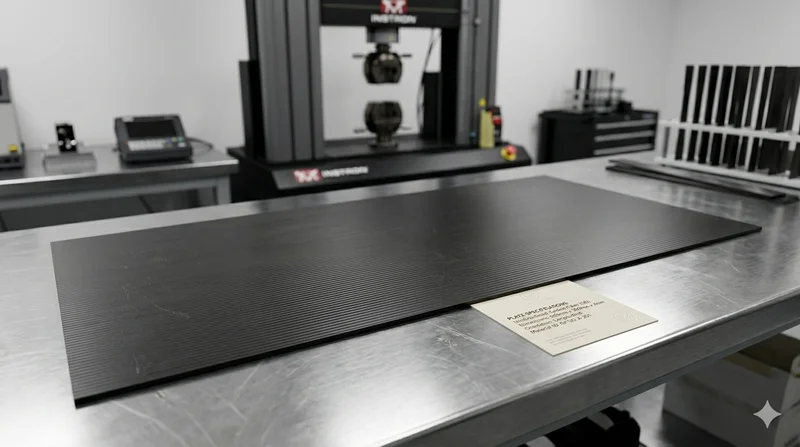
Carbon Fiber Plate — UD Unidirectional T700
Unidirectional carbon fiber plate with all fibers oriented in a single direction for maximum strength along the fiber axis. Essential for structural reinforcements, splints, and applications where load direction is predictable.
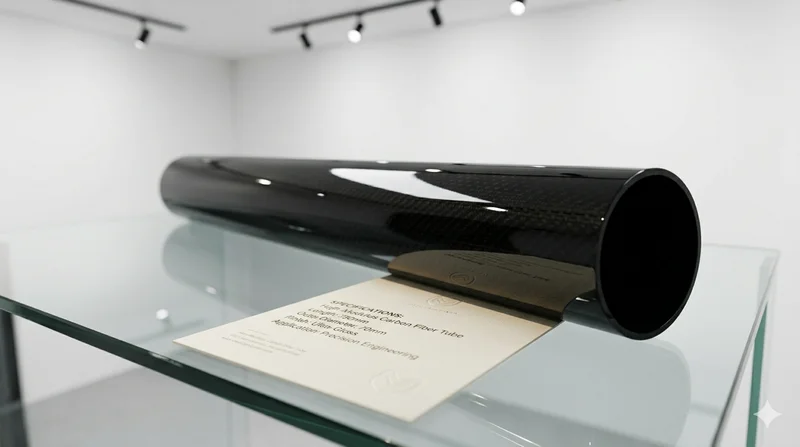
High Modulus Round Carbon Fiber Tube — M40
High modulus round tube manufactured with M40 grade fiber (tensile modulus 400 GPa). Designed for applications where maximum stiffness-to-weight ratio is critical, such as optical systems, precision machinery, and aerospace structures.