
An economy-class aircraft seat weighs roughly 11-13 kilograms, and a narrowbody airliner carries 150 to 200 of them. In an industry where a single kilogram saved on an aircraft is worth roughly $3,000 in fuel and emissions costs over its service life, seats are one of the most concentra
Introduction
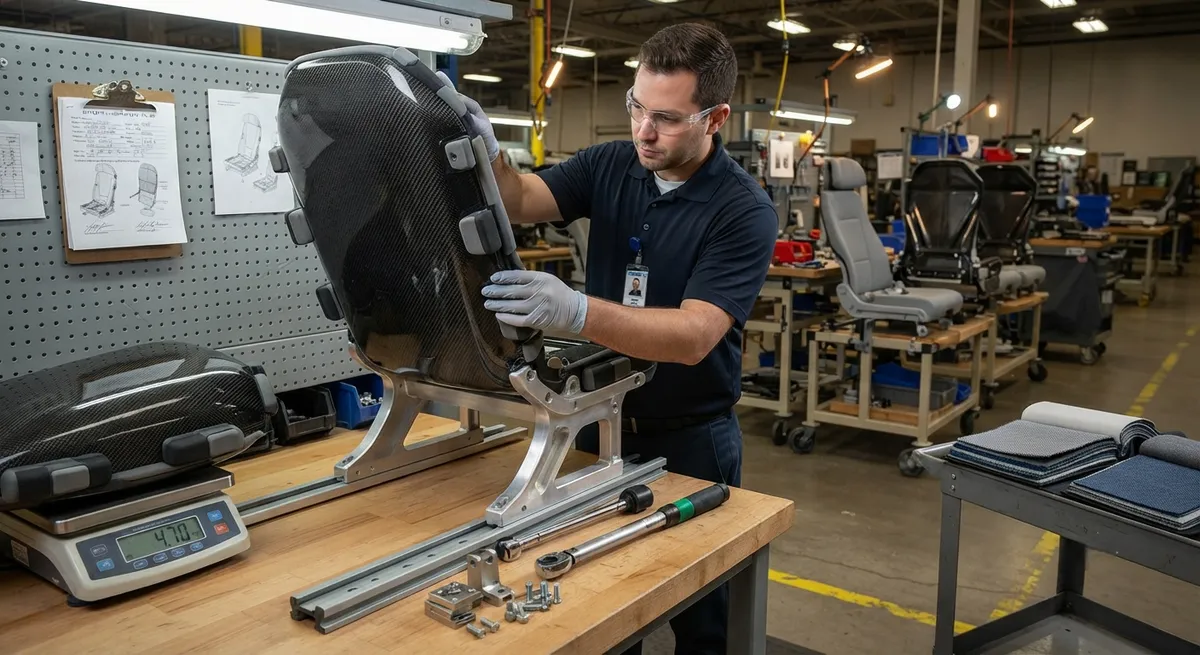
An economy-class aircraft seat weighs roughly 11-13 kilograms, and a narrowbody airliner carries 150 to 200 of them. In an industry where a single kilogram saved on an aircraft is worth roughly $3,000 in fuel and emissions costs over its service life, seats are one of the most concentrated lightweighting opportunities in the cabin. Carbon fiber has been the material of choice for premium seat shells for years, but falling material costs and maturing certification data are now pushing full carbon seat structures into economy class as well.
This article examines why seat weight matters financially, how carbon fiber seat frames and back shells achieve 30-45% weight reduction against aluminum equivalents, and what seat and cabin furniture suppliers must prove to certify their structures under FAR 25.853 and 16g dynamic seat testing.
The Weight Economics: Why Seats Are Priced by the Kilogram
Airlines treat seat weight as a direct operating cost line item. Industry rule-of-thumb figures place the lifetime value of one kilogram of saved weight at $3,000-$5,000 per aircraft, combining fuel burn, emissions charges, and payload capacity. A 180-seat narrowbody that saves 4 kg per seat removes 720 kg of structural weight — equivalent to roughly six to eight passengers of payload allowance, or the fuel savings of flying several hundred kilometers closer to the aircraft's range limit on every sector.
The economics compound over a seat's 10-15 year service life. Seat manufacturers such as Recaro, Safran, and Collins have all introduced carbon fiber structural components, and the weight savings are now being quoted as hard numbers in airline RFP documents rather than as qualitative selling points.
| Seat Component | Aluminum Baseline (kg) | Carbon Fiber (kg) | Weight Reduction |
|---|---|---|---|
| Economy back shell | 2.8 | 1.5-1.8 | 35-45% |
| Seat frame / leg structure | 3.5 | 2.1-2.5 | 30-40% |
| Armrest and table structure | 1.6 | 1.0-1.2 | 25-35% |
| Luggage frame and shields | 2.2 | 1.4-1.6 | 30-40% |
| Business class suite frame | 18-25 | 11-15 | 35-45% |
The biggest wins are in premium cabins, where a single business class suite can weigh 60-90 kg including the lie-flat mechanism. Cutting 15-20 kg from each of 30 suites removes more than half a tonne from a widebody — a saving that directly converts into cargo revenue or longer range.
Carbon Fiber Seat Structures: Frames, Back Shells, and Integration
Carbon fiber enters the seat in two structural roles. The back shell is the classic application: a thin-walled, doubly curved laminate that must feel rigid under passenger lean loads while remaining light enough to justify the material premium. Modern economy back shells are 1.2-1.8 mm thick twill or plain weave carbon fiber laminates, often co-molded with foam padding mounts and integrated armrest and tray attachment points.
The frame and leg structure is the more demanding role. Seat legs must carry the 9g forward and 16g vertical crash loads defined by dynamic testing, and they must interface with seat tracks machined into the cabin floor. Carbon fiber frames handle these loads with a specific strength roughly three times that of aluminum, but the attachment hardware — seat track fittings, tie rods, and restraint anchors — remains metallic and must be designed to transfer load into the composite without crushing it.
- Co-molded integration: Foam mounts, cable channels, and accessory bosses molded into the shell eliminate secondary assembly and reduce part count.
- Hybrid layups: Carbon fiber reinforced with glass or aramid plies at attachment points improves bearing strength and energy absorption in crash zones.
- Fire-hardened resins: Phenolic or fire-retarded epoxy systems meet FAR 25.853(a) flammability while retaining structural properties.
Certification: FAR 25.853 and 16g Dynamic Testing
Seat certification is dominated by two regulations. FAR 25.853 governs flammability: seat cushions, fabrics, and structural plastics must pass vertical burn tests, with the structural shell additionally required to demonstrate heat release and smoke generation limits under FAA guidance. Carbon fiber with fire-retarded resin systems performs well here — the fibers themselves are non-combustible, and the resin is formulated to self-extinguish.
The second requirement is 16g dynamic testing. Seats must protect an occupant during a 16g vertical impact and a 9g forward impact using anthropomorphic test dummies, with the structure required to manage energy without generating hazardous debris or violating injury criteria. Carbon fiber's high specific energy absorption makes it attractive for these load cases, but the failure mode — sudden, brittle fracture if not designed correctly — means suppliers must carefully manage the transition from composite structure to metallic fittings. The industry answer is a hybrid approach: carbon fiber for the mass-efficient shell and frame, aluminum or titanium for load introduction, with energy-absorbing elements tuned by test.
Comfort and the Secondary Benefits of Lightweight Structures
Weight is not the only argument for carbon fiber seats. The material's high stiffness-to-weight ratio allows thinner shells that enclose more passenger space within the same seat pitch envelope, and its fatigue resistance — essentially unlimited for carbon fiber at cabin load levels — keeps the shell looking and feeling solid over the seat's full service life. Molded-in features also reduce the number of sharp edges and hard points, a genuine comfort and safety improvement in the constrained space of an economy cabin.
For cabin furniture — galley structures, crew seats, lavatory walls, and partition panels — the same logic applies at larger scale. A galley built from aluminum honeycomb with carbon fiber skins can save 20-30% of structure weight versus all-aluminum construction, and its panel stiffness reduces vibration and noise transmitted into the cabin.
Frequently Asked Questions
How much fuel does a carbon fiber aircraft seat actually save?
The standard industry estimate is that one kilogram of structural weight saved on an aircraft is worth $3,000-$5,000 over its service life when fuel, emissions, and payload effects are combined. A 180-seat narrowbody saving 4 kg per seat removes about 720 kg, translating to roughly $2.2-$3.6 million of lifetime value for a single aircraft. Airlines flying 100+ aircraft see this as a fleet-scale operating cost reduction.
Do carbon fiber seats pass flammability and smoke regulations?
Yes, when built with fire-retarded resin systems. The carbon fibers themselves are non-combustible, and fire-retarded epoxy or phenolic matrices are formulated to pass FAR 25.853 vertical burn, heat release, and smoke generation tests. Certification requires a full qualification program including burn testing of finished shells, and the same test evidence chain applies to cabin furniture and partitions.
Why are metal fittings still used in carbon fiber seat frames?
Load introduction points — seat track fittings, tie rod attachments, and restraint anchors — remain metallic because composite bearing strength is much lower than its tensile strength, and because crash loads require predictable, ductile load paths at attachment points. The standard engineering approach is a hybrid structure: carbon fiber where mass and stiffness matter, aluminum or titanium where load must be transferred into metal track systems, with crash energy absorbed by tuned elements.
Conclusion
Aircraft seats and cabin furniture are the most accessible high-value lightweighting market in commercial aviation. Carbon fiber back shells, frames, and galley structures deliver 30-45% weight reduction with certified flammability and crash performance, and the economics are strong enough that weight is now quoted in airline procurement documents rather than marketing brochures. The material shift from premium-only to economy-class seat structures is well underway, and the suppliers who master co-molded integration and hybrid metal-composite load paths will define the next generation of cabin equipment.
If your company designs or manufactures seat and cabin structures, browse our carbon fiber product range for laminates, sandwich panels, and molded shells, or contact our engineering team to discuss material selection, co-molding, and certification support for your next seat program.
Part of topic
Related Articles
- Carbon Fiber Tube for Sale: Comparing Listings and Avoiding Bad Specs
- Carbon Fiber Engine Parts: High-Temperature Performance for Racing and Performance Vehicles
- Carbon Fiber Body Parts: Automotive Exterior Panels and Structural Components
- Carbon Fiber Drone Body Manufacturing: Monocoque Design and Production Methods
- Carbon Fiber Drone Parts Supplier: FPV Frames, Arms and Structural Components
- Filament Wound Epoxy Tubes: Industrial Applications from Oil and Gas to Aerospace
Interested in Our Products?
Contact our team for competitive pricing and technical specifications.
Get a QuoteRelated Products
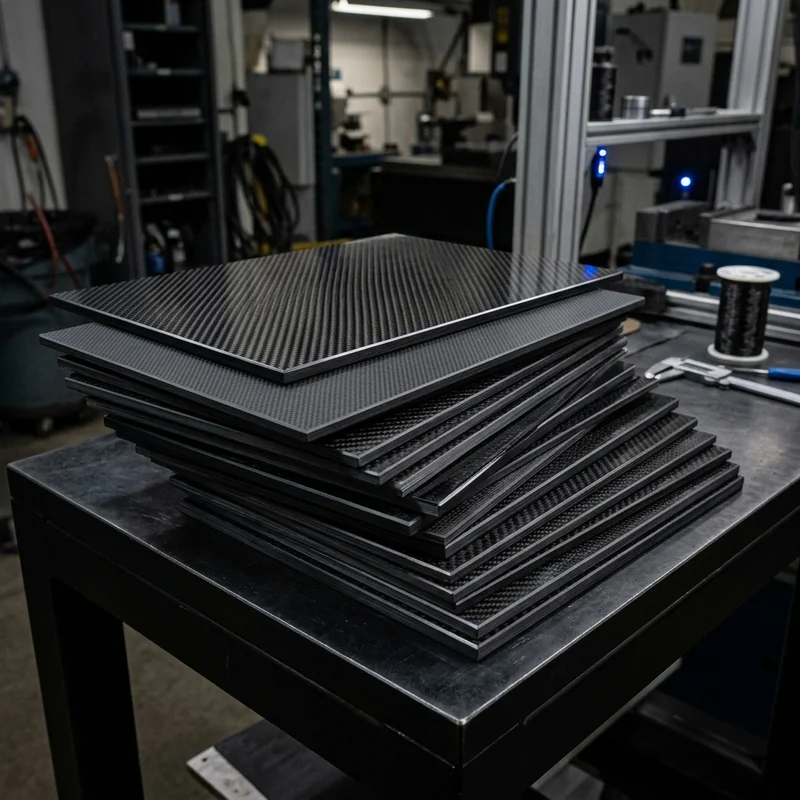
Carbon fiber standard plate-3k stripe
Lightweight, ultra-rigid standard sheets for drone fuselages, robot housings, facades and structural applications.

Carbon Fiber Plate — 3K Twill T700 3.0mm
Medium-thickness 3.0mm carbon fiber plate offering significantly higher load capacity while maintaining attractive 3K twill finish. Suitable for structural brackets, reinforcement plates, and load-bearing panels.

Carbon Fiber Plate — 3K Twill T700 1.5mm
Thin 1.5mm carbon fiber plate with 3K twill weave surface. Lightweight and stiff, commonly used for covers, panels, drone bodies, and applications requiring a premium aesthetic appearance.

Square Carbon Fiber Tube — 3K Twill T700
Square cross-section carbon fiber tube manufactured with 3K twill weave for torsional strength. Preferred for structural frames, trusses, and support columns where rectangular geometry offers design flexibility.
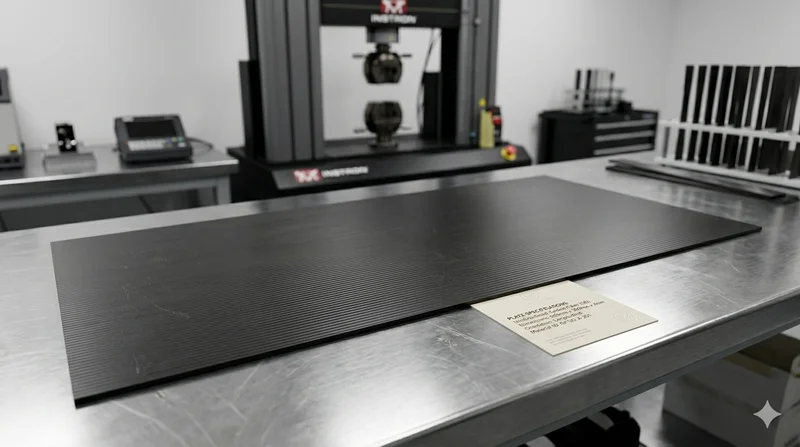
Carbon Fiber Plate — UD Unidirectional T700
Unidirectional carbon fiber plate with all fibers oriented in a single direction for maximum strength along the fiber axis. Essential for structural reinforcements, splints, and applications where load direction is predictable.