
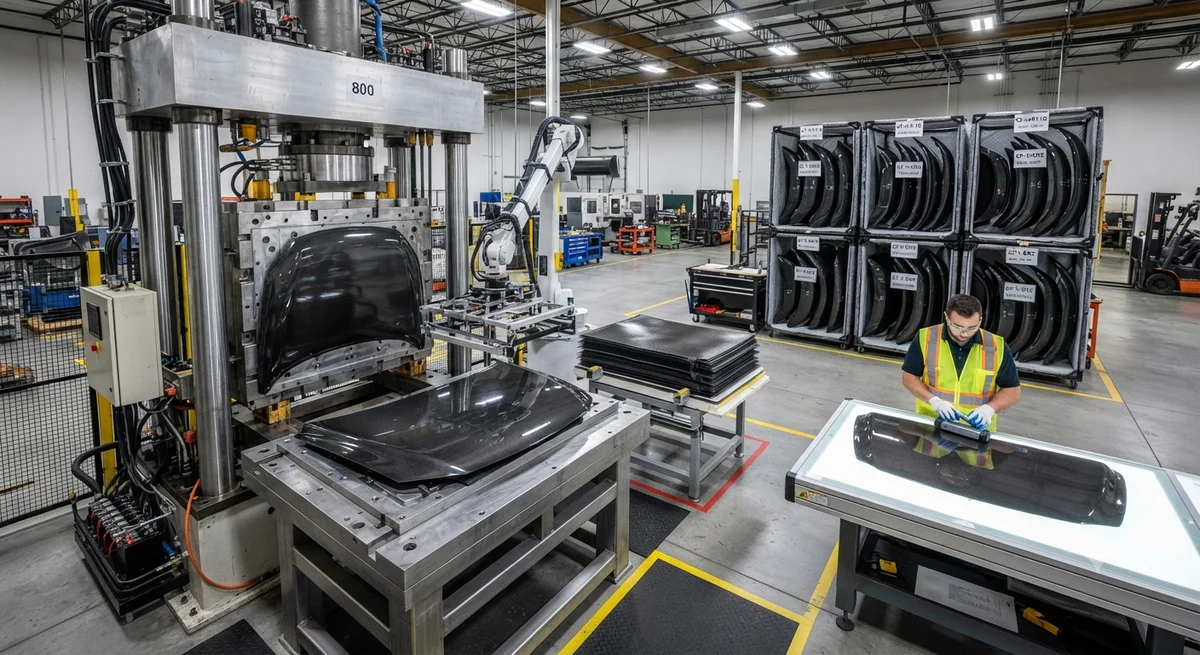
A detailed technical comparison of manufacturing processes for carbon fiber automotive hoods and trunk lids — covering prepreg autoclave, resin transfer molding (RTM), compression molding, and wet layup methods. Analysis of cycle times, tooling costs, mechanical properties, surface finish quality, and structural performance for both aftermarket and OEM production environments.
Introduction to Carbon Fiber Automotive Body Panels
Carbon fiber reinforced polymer (CFRP) body panels — particularly hoods, trunk lids, and roof panels — represent one of the highest-growth segments in the automotive composites market. The global automotive carbon fiber market was valued at $3.2 billion in 2025 and is projected to reach $7.8 billion by 2033, growing at a compound annual growth rate of 11.7%. Hood and trunk lid applications account for approximately 22% of this total market value, driven by the dual demands of vehicle lightweighting for fuel efficiency and range extension in electric vehicles, and the visual appeal of visible carbon fiber weave patterns in high-performance and luxury vehicle segments. A typical carbon fiber hood weighs 6–10 kg versus 18–25 kg for a comparable steel hood — a weight saving of 55–65% — while delivering equivalent or superior stiffness and impact energy absorption.
For B2B buyers sourcing carbon fiber body panels — whether for aftermarket performance brands, Tier 1 automotive suppliers, or OEM production programs — the choice of manufacturing process has profound implications for part cost, production volume capability, mechanical properties, surface finish quality, and lead time. This article provides a comprehensive technical comparison of the four principal manufacturing processes used for carbon fiber automotive hood and trunk lid production: prepreg autoclave curing, resin transfer molding (RTM), compression molding (sheet molding compound — SMC), and wet hand layup. We evaluate each process across eight critical parameters and provide a structured framework for process selection based on annual production volume, Class A surface requirements, structural load specifications, and total cost of ownership.
Prepreg Autoclave Curing: The Gold Standard
Prepreg autoclave curing remains the benchmark for quality in carbon fiber automotive body panels, delivering the highest mechanical properties, the best surface finish, and the most consistent fiber architecture of any production method. Unidirectional or woven carbon fiber prepreg — pre-impregnated with a precisely controlled epoxy resin formulation (typically 32–42% resin content by weight) — is laid up by hand or automated fiber placement (AFP) onto a precision-machined aluminum or invar tool. The assembly is vacuum-bagged and cured in an autoclave at 3–7 bar pressure and 120–180°C for 60–180 minutes, producing a void content of less than 1% and a fiber volume fraction of 58–65%.
For hood and trunk lid applications, prepreg autoclave processing delivers exceptional Class A surface finish (capable of 0.2–0.5 mm paint compatibility without additional filler), dimensional stability within ±0.1 mm over the 1.2–1.8 m panel length, and interlaminar shear strength of 55–70 MPa. However, the capital equipment investment is substantial: a production-grade autoclave with internal dimensions of 3 m × 5 m costs $350,000–$600,000, and the total cycle time (layup + bagging + autoclave cure + cool-down + trim + inspection) ranges from 6–10 hours per part. This translates to a production rate of 1–2 panels per mold per 8-hour shift, making prepreg autoclave best suited for low-volume (500–5,000 parts per year) premium applications such as supercar hoods, limited edition sports car panels, and motorsport bodywork. The cost per hood in prepreg autoclave production ranges from $650–$1,800 depending on complexity, fiber grade, and surface finish requirements.
| Parameter | Prepreg Autoclave | Resin Transfer Molding (RTM) | Compression Molding (CF-SMC) | Wet Hand Layup |
|---|---|---|---|---|
| Fiber Volume Fraction | 58–65% | 50–58% | 35–50% | 30–40% |
| Void Content | <1.0% | <1.5% | 2–4% | 3–8% |
| Class A Surface Readiness | Excellent (0.2–0.5 mm paint) | Good (0.3–0.8 mm) | Moderate (0.5–1.5 mm) | Poor (requires filler) |
| Cycle Time (per part, trim excluded) | 6–10 hours | 15–45 minutes | 3–12 minutes | 6–20 hours |
| Annual Volume Capability (per mold set) | 500–5,000 | 5,000–30,000 | 20,000–100,000+ | <500 |
| Tensile Modulus (0° direction) | 120–140 GPa | 95–120 GPa | 35–55 GPa | 40–70 GPa |
| Tooling Cost (hood, single cavity) | $25K–$50K | $80K–$180K | $120K–$250K | $5K–$15K |
| Part Cost per Hood (typical) | $650–$1,800 | $280–$650 | $120–$280 | $400–$900 |
| Weight Reduction vs Steel Hood | 60–65% | 55–60% | 45–55% | 50–60% |
| Automation Level | Medium (AFP available) | High | Very High | Low (manual) |
Resin Transfer Molding (RTM): The Volume Scalability Champion
Resin transfer molding (RTM) has emerged as the preferred process for medium-volume carbon fiber automotive body panel production, offering an optimal balance between part quality, cycle time, and total cost. In RTM, a dry carbon fiber preform — produced by 2D or 3D braiding, textile stitching, or binder-stabilized non-crimp fabric layup — is placed into a matched metal mold. The mold is closed under hydraulic pressure (50–200 tonnes), and catalyzed epoxy resin is injected under pressure (2–15 bar) into the mold cavity through precisely positioned injection ports. After resin injection and cure (typically 120–180°C for 5–20 minutes for fast-cure epoxy systems), the mold opens and the finished part is removed. High-pressure RTM (HP-RTM), operating at injection pressures of 40–120 bar, achieves cycle times as low as 3–5 minutes for complex geometries by using high-reactivity resin systems and advanced mold temperature control.
For carbon fiber hood production, RTM delivers several critical advantages: cycle times of 15–45 minutes per part (4–8× faster than prepreg autoclave), excellent fiber volume fractions of 50–58%, void content below 1.5%, and near-net-shape molding that reduces trim scrap by 20–30%. The primary investment is in the matched metal tooling ($80,000–$180,000 for a hood-sized mold cavity in P20 steel or aluminum 7075) and the hydraulic press ($300,000–$800,000 for a 500–1,000 tonne press). For annual volumes of 5,000–30,000 hoods, RTM delivers the lowest cost per part of any process achieving Class A surface finish. HP-RTM variants extend this range to 30,000–60,000 parts per year, approaching compression molding territory while maintaining superior mechanical properties.
The structural performance of RTM hoods is well-characterized. Typical RTM CFRP hoods using T700-12K carbon fiber and a bisphenol-A epoxy system achieve tensile modulus of 95–120 GPa (0° orientation), flexural strength of 550–700 MPa, and charpy impact energy of 35–50 kJ/m². The hood-to-body attachment strategy uses either bonded metallic inserts (steel or aluminum) co-cured into the part, or post-cure bonded brackets. The hood inner panel — typically a lower-stiffness RTM component or a compression-molded glass fiber SMC — is adhesively bonded to the outer panel in a secondary assembly operation, achieving peel strengths of 25–35 N/mm with two-part polyurethane structural adhesives.
Compression Molding (CF-SMC): High-Volume Economics
For production programs requiring annual volumes exceeding 20,000 units, compression molding using carbon fiber sheet molding compound (CF-SMC) offers the shortest cycle times and lowest per-part cost. CF-SMC consists of chopped carbon fiber (typically 12.5–50 mm staple length, 50K–60K tow) dispersed in a polyester, vinyl ester, or epoxy resin matrix, with calcium carbonate filler, catalyst, mold release, and low-profile additives to control shrinkage. The compound is produced as a continuous sheet on an SMC machine, matured for 24–72 hours to achieve the proper viscosity window, then cut into pre-weighed charges. In the compression molding press (800–2,500 tonnes), the charge is placed in an open mold heated to 140–160°C, the mold closes at 50–200 bar pressure, and the material flows to fill the cavity while curing in 2–6 minutes.
The key trade-off with CF-SMC is mechanical performance: the chopped fiber architecture produces tensile moduli of only 35–55 GPa — significantly lower than continuous-fiber processes. However, CF-SMC offers near-isotropic in-plane properties (a crucial advantage for crash energy absorption), excellent dimensional repeatability (coefficient of variation < 3% for critical dimensions), and cycle times of 3–10 minutes. Carbon fiber SMC hoods are 45–55% lighter than steel equivalents and cost $120–$280 per part — making them economically viable for mass-market performance vehicles, OEM trucks, and electric vehicle fleets where large production volumes justify the $120–$250K tooling investment. The surface finish from optimized CF-SMC formulations (using 15–25% low-profile additive by resin weight) can achieve Class A readiness with 0.5–1.5 mm of paint-build primer surfacer, suitable for most production vehicle paint lines.
- Fiber Length and Orientation Control: Modern CF-SMC processes use 50 mm fibers with only 8–12° out-of-plane misalignment, achieving tensile strength retention of 65–75% compared to continuous fiber laminates.
- Crash Performance: CF-SMC absorbs 40–55 kJ/kg specific energy in dynamic crush tests — comparable to high-strength steel and twice the specific energy absorption of aluminum alloys at equivalent mass.
- Class A Paint Readiness: Low-profile additives (polyvinyl acetate or polymethyl methacrylate based) reduce surface waviness to 8–15 μm Ra, acceptable for most automotive paint systems.
- Hybrid Molding: The emerging trend of "organosheet + CF-SMC" hybrid processes combines continuous fiber reinforcement in high-stress zones (hinge mounts, latch reinforcements, structural ribs) with CF-SMC in remaining areas.
Wet Hand Layup: The Aftermarket Standard
Wet hand layup — the manual process of impregnating dry carbon fiber fabric with liquid epoxy or polyester resin using rollers and squeegees — remains the dominant process for aftermarket carbon fiber hood production, particularly for lower-volume specialty applications where aesthetic appearance is prioritized over structural optimization. The wet layup process deposits 3–8 layers of 2×2 twill or plain-weave carbon fiber (200–600 g/m² each) into a female mold treated with release agent. After layup, the laminate is vacuum-bagged (0.8–0.95 bar vacuum) and cured at ambient temperature for 12–24 hours, or post-cured at 60–80°C for 4–8 hours to improve glass transition temperature and mechanical properties.
The advantages of wet hand layup are minimal capital investment (mold costs of $5,000–$15,000 for a composite tool, no press or autoclave required) and maximum design flexibility — complex geometries, intricate weave pattern alignment, and custom fiber architecture are straightforward to achieve. However, the process is labor-intensive (8–20 hours per hood), produces inconsistent fiber volume fractions (30–40%) with high void content (3–8%), and delivers the lowest mechanical properties among the four processes. The visible carbon fiber weave — a critical aesthetic requirement for the aftermarket — is best achieved through wet layup, as the manual process allows precise alignment of the outermost fabric ply to produce a symmetrical, distortion-free weave pattern. Typical aftermarket carbon fiber hoods cost $400–$900 retail and are sold to the enthusiast market for sports cars (Mazda MX-5, Subaru BRZ, BMW M-series, Nissan GT-R) and performance trucks.
Process Selection Framework for B2B Buyers
Selecting the optimal manufacturing process for carbon fiber hoods and trunk lids requires a structured evaluation of five key parameters. First, annual production volume determines the viable process envelope; volumes below 500 units favor wet layup or prepreg autoclave, while volumes above 20,000 units mandate compression molding or HP-RTM. Second, surface finish requirements — Class A paint-ready for OEM, moderate surface quality for aftermarket painted panels, or visible weave for exposed carbon fiber — impose process constraints. Third, structural load requirements including pedestrian protection regulations (ECE R127, FMVSS 226), hinge and latch load-bearing capacity, and overall hood stiffness targets dictate the minimum fiber architecture. Fourth, total cost of ownership — including tooling amortization, part cost, secondary operations (trimming, bonding, painting), and scrap rates — must be calculated over the program lifetime. Fifth, supply chain maturity and capacity — including material sourcing, coating and bonding capabilities, and quality system certifications (IATF 16949 for OEM programs) — must be verified.
Frequently Asked Questions
How does the weight of a carbon fiber hood compare to steel and aluminum?
A typical steel hood (sedan) weighs 18–25 kg. An aluminum hood weighs 12–16 kg (35% reduction from steel). A carbon fiber hood weighs 6–10 kg (55–65% reduction from steel, 35–50% reduction from aluminum). Weight savings depend on the process: prepreg autoclave achieves the highest savings (60–65%), while CF-SMC achieves 45–55%.
Can carbon fiber hoods meet pedestrian protection regulations?
Yes, but careful design is required. CFRP hoods must be designed with specific energy-absorbing structures (often a deformable aluminum or thermoplastic substructure bonded to the outer carbon fiber panel) to meet head impact criteria (HIC < 1000 for adult headform, HIC < 700 for child headform per ECE R127). Several OEM programs including BMW i-series and the Chevrolet Corvette have achieved pedestrian protection compliance with carbon fiber hoods.
What is the typical lead time for a carbon fiber hood production launch?
Lead times vary by process: wet layup aftermarket hoods — 4–8 weeks from mold completion to first part; prepreg autoclave — 12–20 weeks (including tool fabrication, laminate trials, and certification testing); RTM — 16–28 weeks (matched metal tooling is the long-lead item); compression molding (CF-SMC) — 20–36 weeks. OEM programs add 8–16 weeks for IATF 16949 PPAP (Production Part Approval Process) and validation testing.
What are the key quality assurance tests for carbon fiber hoods?
Production-quality hoods undergo: (1) ultrasonic C-scan for delamination detection (acceptance: zero delamination > 5 mm in critical zones); (2) surface profilometry (waviness ≤ 15 μm Ra for Class A surfaces); (3) stiffness testing (hood static torsion and bending stiffness as per OEM specification); (4) fatigue testing (typically 50,000–100,000 latch cycle equivalents at −20°C to +80°C); (5) paint adhesion testing (cross-hatch per ASTM D3359, minimum class 4B).
Part of topic
Related Articles
- Carbon Fiber Mooring for Floating Offshore Wind: Fatigue and Corrosion in Deep Water
- Carbon Fiber Bicycle Frame Optimization: Layup Design and Manufacturing for Competitive Racing
- Carbon Fiber CFRP Retrofit for Infrastructure: Bridge and Building Seismic Strengthening
- Carbon Fiber Medical Imaging Equipment: Lightweight Gantry and Couch Structures for MRI/CT
- Carbon Fiber EV Battery Enclosures: Crash Safety and Electromagnetic Shielding Design
- Carbon Fiber Structures for Low-Altitude Economy: UAV Airframes and eVTOL Components
Interested in Our Products?
Contact our team for competitive pricing and technical specifications.
Get a QuoteRelated Products
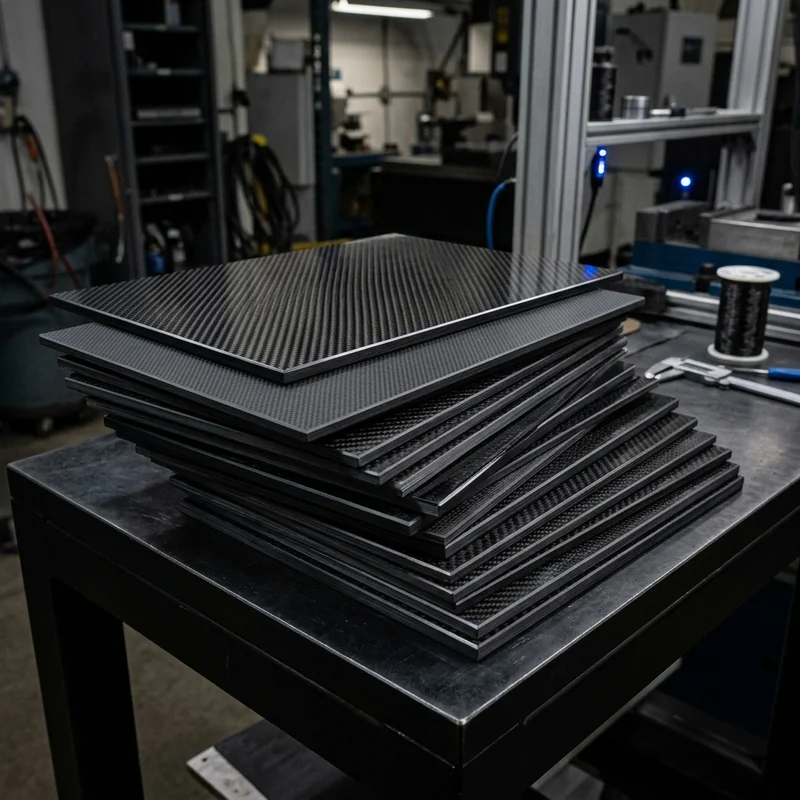
Carbon fiber standard plate-3k stripe
Lightweight, ultra-rigid standard sheets for drone fuselages, robot housings, facades and structural applications.

Carbon Fiber Plate — 3K Twill T700 1.5mm
Thin 1.5mm carbon fiber plate with 3K twill weave surface. Lightweight and stiff, commonly used for covers, panels, drone bodies, and applications requiring a premium aesthetic appearance.

Square Carbon Fiber Tube — 3K Twill T700
Square cross-section carbon fiber tube manufactured with 3K twill weave for torsional strength. Preferred for structural frames, trusses, and support columns where rectangular geometry offers design flexibility.

Carbon Fiber Plate — 3K Twill T700 3.0mm
Medium-thickness 3.0mm carbon fiber plate offering significantly higher load capacity while maintaining attractive 3K twill finish. Suitable for structural brackets, reinforcement plates, and load-bearing panels.
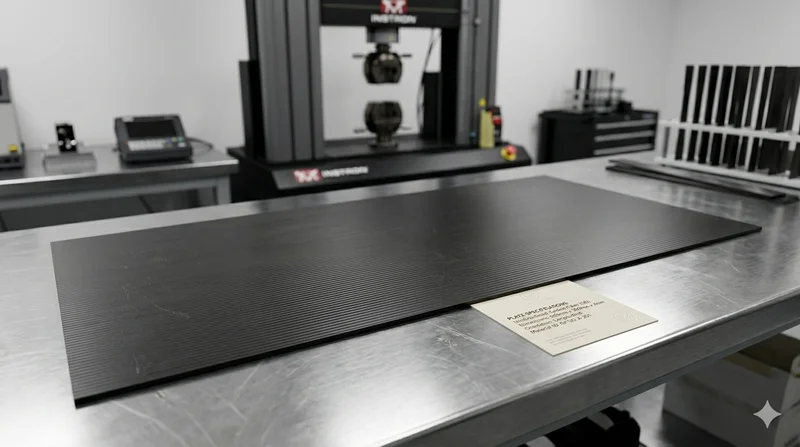
Carbon Fiber Plate — UD Unidirectional T700
Unidirectional carbon fiber plate with all fibers oriented in a single direction for maximum strength along the fiber axis. Essential for structural reinforcements, splints, and applications where load direction is predictable.