
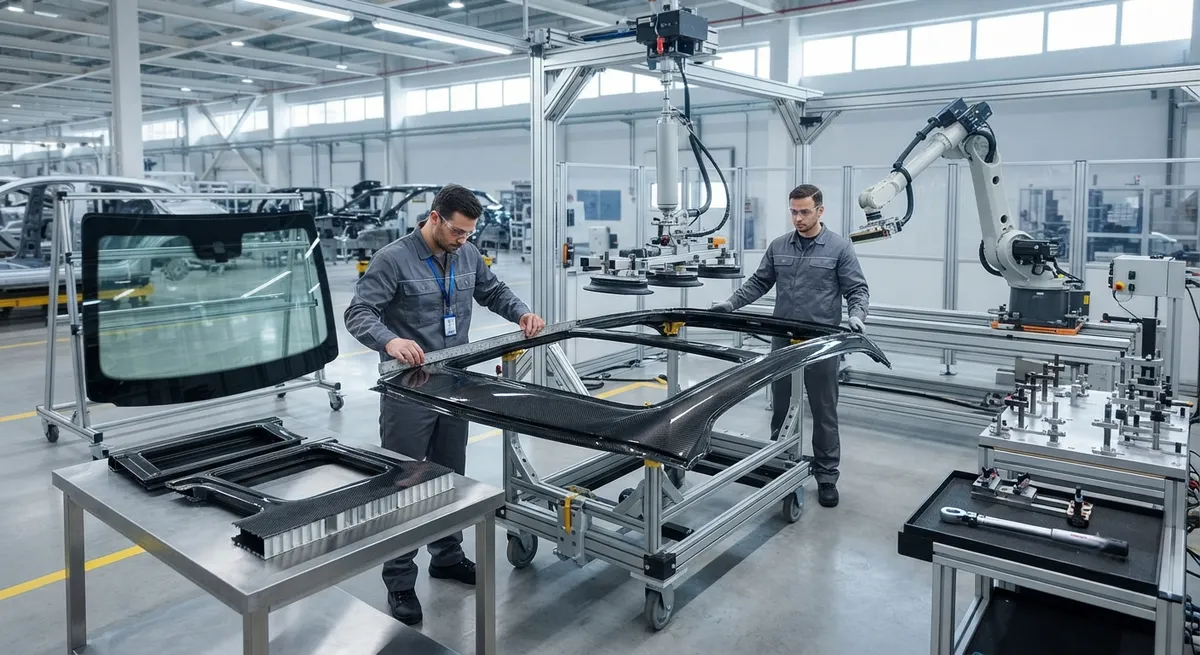
The automotive roof has become one of the most contested weight zones in modern vehicle design. A conventional steel roof assembly — outer panel, roof bows, and inner structure — can weigh 25-35 kg, and it sits at the highest point of the vehicle, where every kilogram degrades handling,
Introduction
The automotive roof has become one of the most contested weight zones in modern vehicle design. A conventional steel roof assembly — outer panel, roof bows, and inner structure — can weigh 25-35 kg, and it sits at the highest point of the vehicle, where every kilogram degrades handling, fuel economy, and electric vehicle range. At the same time, customer demand for panoramic glass roofs has exploded, which paradoxically makes the roof heavier: a large glass panel can weigh 15-20 kg by itself, and its frame must be stiff enough to support the glass, seal against leaks, and maintain crash performance. Carbon fiber composites solve this contradiction by providing the stiffness and strength of steel at a fraction of the weight, and the roof package is now one of the fastest-growing applications of carbon fiber in premium automotive manufacturing.
This article explains the three components of the carbon fiber roof package — the structural roof frame, the exterior roof panel, and the interior headliner — and examines the engineering trade-offs, manufacturing processes, and weight economics that drive adoption in EV platforms.
The Structural Roof Frame: Carrying the Glass at Low Weight
The panoramic roof frame is the core structural application. It must support a glass panel that can span more than two square meters, transfer loads to the vehicle body in a rollover, and provide a leak-free seal interface — all while being as light as possible to keep the center of gravity low. Carbon fiber is specified for this frame because it offers a stiffness-to-weight ratio roughly four times that of steel and two to three times that of aluminum.
- Panoramic glass support: A carbon fiber frame can support the same glass panel as a steel frame at 40-60% lower weight, which directly lowers the vehicle's center of gravity and improves ride dynamics.
- Rollover protection: The roof structure is a primary load path in rollover crashes. Carbon fiber frames are designed with the same crush and intrusion targets as steel, and modern designs meet roof crush requirements through the combined performance of the frame, the A-pillars, and the B-pillars.
- Integration with body structure: The frame is bonded and mechanically fastened to the body-in-white, with load transfer designed through co-cured metallic inserts at the mounting points.
- Thermal and acoustic management: The frame carries the seal channels, and its low thermal conductivity reduces condensation and improves cabin acoustics compared with metal.
The most common manufacturing route is resin transfer molding (RTM) or high-pressure RTM (HP-RTM), which achieves cycle times of 5-10 minutes for a roof frame while maintaining fiber volume fractions of 55-60%. This production economics — combined with the growing volume of panoramic-roof-equipped vehicles — is what has moved carbon fiber roof frames from concept cars into series production.
The Exterior Roof Panel: Outer Skin Options
On vehicles without a panoramic glass roof, the exterior roof panel itself can be a carbon fiber composite. The panel is typically a sandwich structure — carbon fiber skins over a low-density core — that provides the same stiffness as a stamped steel panel at 40-50% of the weight. The table below compares the roof package options:
| Roof Configuration | Approx. Assembly Weight | Stiffness | Typical Process | Application Context |
|---|---|---|---|---|
| Stamped steel roof panel | 18-25 kg (panel + bows) | Baseline | Stamping + spot welding | Volume vehicles, lowest cost |
| Aluminum roof panel | 12-16 kg | Comparable, thinner gauge | Stamping + riveting/bonding | Lightweight body programs |
| CFRP roof panel (sandwich) | 8-11 kg | Higher per unit weight | Prepreg autoclave or RTM | Supercars, limited series |
| CFRP panoramic roof frame + glass | Frame 6-10 kg + glass 15-20 kg | High, glass is structural | HP-RTM frame, laminated glass | Premium EVs, SUVs |
Sandwich roof panels also deliver secondary benefits: the core damps vibration and reduces noise transmission, the composite structure is corrosion-free and dimensionally stable, and the panel can be produced with an integrated Class A surface using in-mold coating or a painted carbon finish. For supercar programs where the roof is visible, the exposed carbon fiber weave is itself a design feature.
The Headliner: Composite Interior Systems
The headliner is the interior panel that covers the roof structure from inside the cabin. While traditionally made from pressed fiberboard and fabric, the headliner is becoming a functional composite component in premium vehicles, integrating lighting, sensors, and acoustic management into a single lightweight structure:
- Composite substrate: Carbon fiber or glass-carbon hybrid reinforced substrates replace fiberboard, offering higher stiffness at lower thickness and weight, which improves cabin headroom and crash performance.
- Integrated electronics: The headliner substrate carries ambient lighting channels, the sunroof control module, and sensor mounts, with the composite providing dimensional stability and low electromagnetic interference.
- Acoustic management: The substrate is combined with acoustic layers that absorb road and wind noise, and the composite's damping properties reduce structure-borne vibration from the roof panel.
- Weight distribution: A composite headliner can save 2-4 kg per vehicle at the top of the cabin, compounding the benefit of the low roof frame by keeping mass away from the highest point of the vehicle.
The headliner is typically produced with a low-pressure molding process — compression molding of reinforced sheet molding compound or thermoforming of glass-carbon hybrid mats — which supports the large two-dimensional shapes and the production volumes of premium vehicle programs.
EV Weight Distribution and Range Economics
For electric vehicles, the roof package carries extra strategic weight because of its location. Mass placed high in the vehicle raises the center of gravity, which increases body roll, reduces handling stability, and — through the associated structural reinforcement — adds mass elsewhere. Removing 15-20 kg from the roof structure on an EV delivers compounding benefits:
- Lower center of gravity: Improved handling and stability, particularly in SUVs and crossovers where the battery pack has already raised the vehicle's height.
- Range improvement: Every 10 kg removed from a vehicle improves range by roughly 1-2 km on a typical EV, making roof weight savings directly measurable in driving range.
- Secondary mass reduction: A lighter roof reduces the loads on the body structure, allowing lighter pillars, sills, and suspension components — the classic lightweighting compounding effect.
- Panoramic roof feasibility: Because a carbon fiber frame supports large glass panels at low weight, OEMs can offer the premium panoramic glass feature without the range penalty that a steel frame would impose.
This combination — premium feature plus range benefit — is why carbon fiber roof structures appear first on electric luxury SUVs and crossovers, where the glass roof is a differentiator and the range economics are most favorable.
Manufacturing and Cost Considerations
The production economics of carbon fiber roof components have improved dramatically. High-pressure resin transfer molding brings cycle times down to 5-10 minutes, robotic handling reduces labor content, and automated fiber placement and weaving reduce material waste. The main cost challenge remains the fiber itself and the tooling investment, which is why carbon fiber roofs are today specified in the premium segment, with the cost trajectory expected to improve as production volumes grow and recycled fiber enters the supply chain.
Designers also consider the joining strategy: the roof frame is typically bonded with structural adhesive and bolted through co-cured metallic inserts, avoiding welding that would damage the composite. Tolerance management is critical because the glass panel requires a precise, leak-free interface, and the thermal expansion of carbon fiber must be matched with the glass and seal system across the vehicle's operating temperature range.
Frequently Asked Questions
How much weight does a carbon fiber roof frame save compared with steel?
A carbon fiber panoramic roof frame typically weighs 40-60% less than an equivalent steel frame — roughly 6-10 kg saved on a typical premium vehicle. Combined with a composite headliner saving another 2-4 kg, the roof package can reduce total vehicle weight by 15-20 kg at the highest point of the vehicle, improving center of gravity, handling, and EV range.
Can a carbon fiber roof meet rollover crash requirements?
Yes. Carbon fiber roof frames are designed to the same roof crush and intrusion targets as steel, and they meet regulatory requirements through the combined performance of the frame, pillars, and body structure. The frame's high specific stiffness provides excellent crush resistance, and load paths are engineered through co-cured metallic inserts at the mounting points to distribute crash loads into the body.
What manufacturing process is used for carbon fiber roof frames?
Resin transfer molding (RTM) and high-pressure RTM (HP-RTM) are the most common processes for roof frames, achieving cycle times of 5-10 minutes with fiber volume fractions of 55-60%. Exterior panels use prepreg autoclave curing or RTM with sandwich construction, and headliners use low-pressure compression molding of reinforced composites.
Why is the roof important for EV weight distribution?
Mass placed at the highest point of the vehicle raises the center of gravity, increasing body roll and requiring additional structural reinforcement elsewhere. Removing 15-20 kg from the roof structure lowers the center of gravity, improves handling, and directly extends range — every 10 kg removed improves typical EV range by roughly 1-2 km. It also makes premium panoramic glass roofs feasible without the range penalty of a heavier steel frame.
Conclusion
The automotive roof package is a convergence point of several carbon fiber advantages: the structural frame carries panoramic glass at 40-60% lower weight than steel, the exterior panel and headliner reduce mass at the highest point of the vehicle, and the resulting weight savings improve handling, EV range, and the feasibility of premium glass roofs. With high-pressure RTM bringing roof frames into series production and the weight economics most favorable on electric platforms, carbon fiber roof structures have moved from concept to a strategic lightweighting application in premium automotive manufacturing.
YongXian supplies automotive-grade carbon fiber fabrics, prepregs, and reinforcement materials. Explore our carbon fiber product range or contact our engineering team to discuss material systems for your roof or body structure program.
Part of topic
Related Articles
- Carbon Fiber Mooring for Floating Offshore Wind: Fatigue and Corrosion in Deep Water
- Carbon Fiber Bicycle Frame Optimization: Layup Design and Manufacturing for Competitive Racing
- Carbon Fiber CFRP Retrofit for Infrastructure: Bridge and Building Seismic Strengthening
- Carbon Fiber Medical Imaging Equipment: Lightweight Gantry and Couch Structures for MRI/CT
- Carbon Fiber EV Battery Enclosures: Crash Safety and Electromagnetic Shielding Design
- Carbon Fiber Structures for Low-Altitude Economy: UAV Airframes and eVTOL Components
Interested in Our Products?
Contact our team for competitive pricing and technical specifications.
Get a QuoteRelated Products
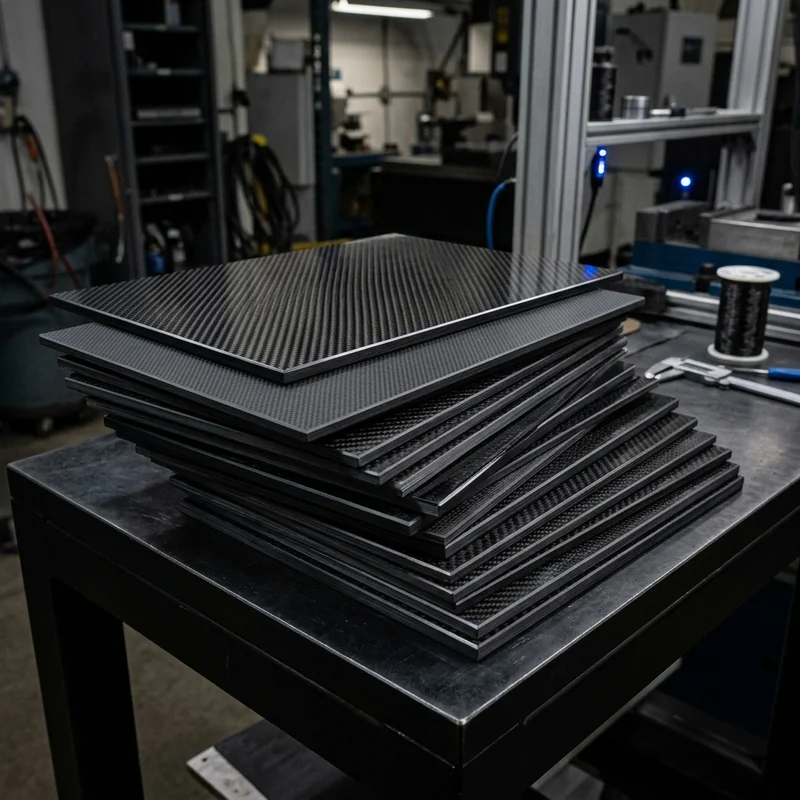
Carbon fiber standard plate-3k stripe
Lightweight, ultra-rigid standard sheets for drone fuselages, robot housings, facades and structural applications.

Carbon Fiber Plate — 3K Twill T700 3.0mm
Medium-thickness 3.0mm carbon fiber plate offering significantly higher load capacity while maintaining attractive 3K twill finish. Suitable for structural brackets, reinforcement plates, and load-bearing panels.

Carbon Fiber Plate — 3K Twill T700 1.5mm
Thin 1.5mm carbon fiber plate with 3K twill weave surface. Lightweight and stiff, commonly used for covers, panels, drone bodies, and applications requiring a premium aesthetic appearance.

Square Carbon Fiber Tube — 3K Twill T700
Square cross-section carbon fiber tube manufactured with 3K twill weave for torsional strength. Preferred for structural frames, trusses, and support columns where rectangular geometry offers design flexibility.
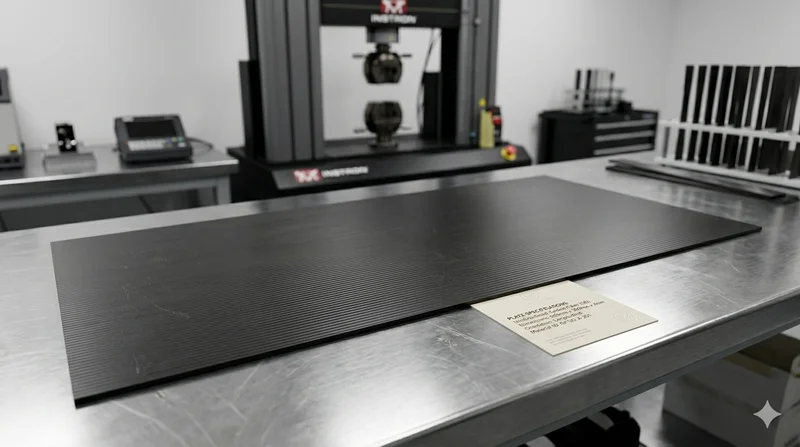
Carbon Fiber Plate — UD Unidirectional T700
Unidirectional carbon fiber plate with all fibers oriented in a single direction for maximum strength along the fiber axis. Essential for structural reinforcements, splints, and applications where load direction is predictable.