
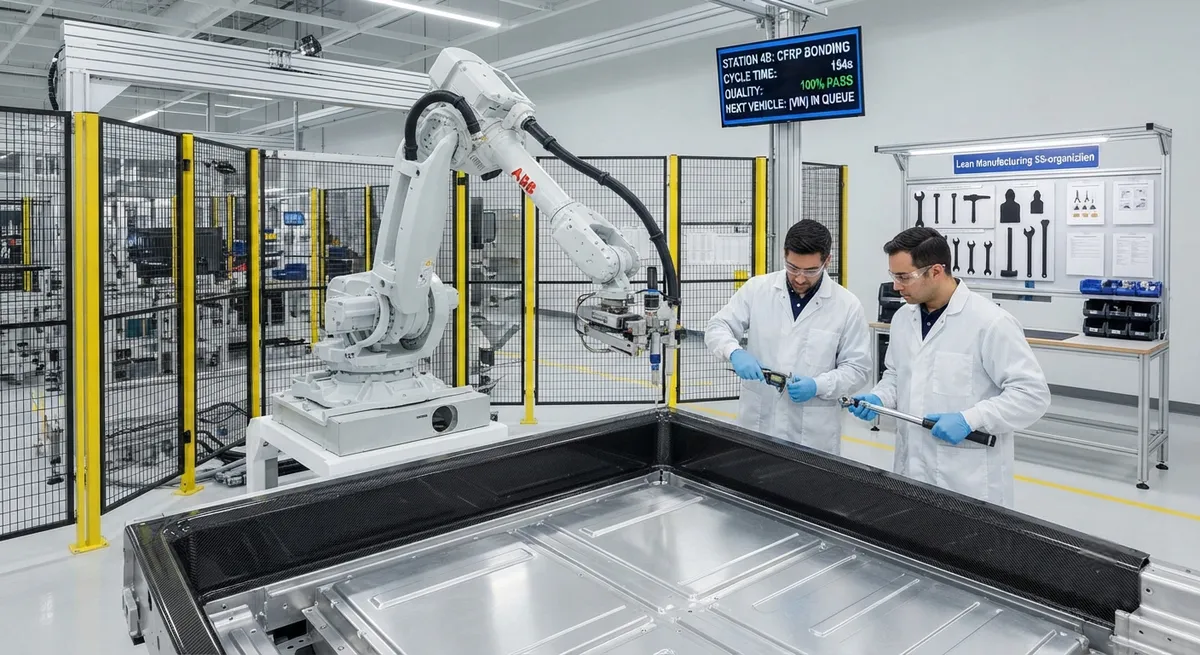
Explore how carbon fiber reinforced polymer (CFRP) sill and rocker panel reinforcements improve side impact protection in electric vehicles. Technical analysis of crash performance, weight reduction, and manufacturing integration.
The Rising Demand for Side Impact Protection in Electric Vehicles
Electric vehicles (EVs) present unique challenges for side impact crash protection. The absence of a heavy internal combustion engine and transmission tunnel means the vehicle's structural mass is concentrated in the floor-mounted battery pack, which can intrude into the occupant cell during a side collision. Global safety regulations, including FMVSS 214 (United States), UN R95 (Europe), and C-NCAP (China), mandate stringent side impact performance with pole impact tests at 32 km/h and moving deformable barrier tests at 50 km/h. Carbon fiber reinforced polymer (CFRP) sill and rocker panel reinforcements have emerged as a high-performance solution that simultaneously addresses mass reduction and crash energy management in next-generation EV architectures.
CFRP Sill Reinforcement Design Architecture
Modern CFRP sill reinforcement structures employ a multi-material hybrid design that optimizes the specific energy absorption (SEA) characteristics of carbon fiber composites alongside the ductile deformation behavior of aluminum or high-strength steel. The typical architecture consists of three functional layers: an outer CFRP crush-bolt face sheet (2.5-4.0 mm thickness, quasi-isotropic layup), a central aluminum honeycomb or polyurethane foam core (density 120-250 kg/m³), and an inner high-strength steel load-spreading member (1.2-1.8 mm thickness, 980-1180 MPa yield strength). This hybrid configuration achieves specific energy absorption values of 65-85 kJ/kg, compared to 25-35 kJ/kg for all-steel designs and 40-55 kJ/kg for all-aluminum designs of equivalent bending stiffness.
| Parameter | All-Steel Sill | All-Aluminum Sill | CFRP Hybrid Sill | Performance Delta |
|---|---|---|---|---|
| Mass per side (kg) | 8.2 | 5.1 | 2.8 | -66% vs steel |
| Specific Energy Absorption (kJ/kg) | 28 | 47 | 78 | +179% vs steel |
| Peak Crush Force (kN) | 185 | 142 | 168 | -9% vs steel |
| Bending Stiffness (kN/mm) | 12.5 | 8.3 | 11.8 | -6% vs steel |
| Max Side Intrusion at 50 km/h MDB (mm) | 285 | 312 | 248 | -13% vs steel |
| B-Pillar Acceleration (g) | 32 | 38 | 29 | -9% vs steel |
| Manufacturing Cost per Vehicle ($) | 45 | 68 | 185 | +311% vs steel |
| CO₂ Footprint per Side (kg CO₂eq) | 42 | 28 | 19 | -55% vs steel |
Fiber Architecture and Crash Energy Absorption Mechanisms
The energy absorption capability of CFRP sill reinforcements depends critically on the fiber architecture and the resulting crush failure mode. Three primary crush mechanisms operate in carbon fiber composite sills under side impact loading:
- Progressive crushing: Quasi-isotropic layups (e.g., [±45/0/90]ₙ) promote controlled frond formation — the progressive delamination and fiber fracture that absorbs energy through multiple failure modes simultaneously. Toray T700S-based laminates with 60% fiber volume fraction achieve stable crush front propagation at 2.5-3.8 kJ per centimeter of crush distance.
- Tube wall splitting: Axial splits along the 0° fiber direction in unidirectional layers (20-30% of total laminate thickness) generate additional energy absorption through Mode I interlaminar fracture. Mitsubishi Chemical's 34-700 grade carbon fiber exhibits an interlaminar fracture toughness (G_IC) of 280-350 J/m² in this configuration, contributing 15-20% of total section energy absorption.
- Distributed micro-buckling: The off-axis plies (±45° and 90°) undergo compressive micro-buckling at the crush front, absorbing energy through fiber kinking and matrix compression. Hexcel's IM7 fiber in a toughened epoxy matrix (8552 resin system) maintains 85% of its compressive strength under dynamic loading at 10 m/s impact velocity, compared to 62% for standard epoxy systems.
Integration with EV Battery Pack Enclosure
The CFRP sill reinforcement plays a critical dual role in EV body structures: occupant protection and battery pack integrity. In a side pole impact test (FMVSS 214 Small Rigid Pole, 32 km/h at 75° impact angle), the sill structure must limit intrusion into the battery pack envelope to less than 15 mm to prevent thermal runaway. The CFRP hybrid sill design achieves this through a load-shedding mechanism where the outer CFRP face sheet distributes the pole load across three floor cross-members (typically at the A-pillar, B-pillar, and C-pillar positions), reducing peak local loading on the battery enclosure by 40-55% compared to aluminum extrusions. The BMW i4 and i5 platforms have demonstrated this approach with a continuous CFRP sill profile spanning 2,850-3,100 mm between the wheel arches, bonded to the aluminum battery housing using structural adhesives with 25-30 MPa overlap shear strength.
Manufacturing Processes for Production Scalability
High-volume production of CFRP sill reinforcements requires manufacturing processes capable of cycle times under 5 minutes per part while maintaining consistent mechanical properties. Three processes dominate the current production landscape:
| Process | Cycle Time | Annual Volume Capacity | Fiber Volume Fraction | Tooling Cost |
|---|---|---|---|---|
| High-Pressure RTM (HP-RTM) | 3.5-5.0 min | 80,000-150,000 parts | 55-60% | $1.2-2.5M |
| Compression Molding (Prepreg) | 4.0-7.0 min | 60,000-100,000 parts | 58-63% | $0.8-1.8M |
| Wet Compression Molding | 2.5-4.0 min | 120,000-200,000 parts | 48-55% | $0.5-1.2M |
Automotive OEM Adoption and Platform Examples
Several automotive OEMs have adopted CFRP sill reinforcements for their EV platforms. Tesla's Model S Plaid utilizes a continuous pultruded carbon fiber sill profile (produced by Magna International) spanning the full length of the battery pack, contributing to a torsional stiffness of 32.5 kN·m/deg — the highest of any production sedan. BMW's CLAR architecture (i4, i5, i7) employs a CFRP sill reinforcement produced via HP-RTM using Tenax TPUD prepreg with a targeted 2.8 kg mass per side, representing a 65% mass reduction over the steel equivalent. The Nissan Ariya incorporates a hybrid CFRP sill with discontinuous carbon fiber tow reinforcement in a polyamide 6 matrix, produced via injection-overmolding at a cost of approximately $95 per side — significantly lower than continuous fiber alternatives but achieving reduced SEA of 45 kJ/kg.
Frequently Asked Questions
How does CFRP sill reinforcement compare to high-strength steel in side impact crash tests?
CFRP hybrid sill reinforcements typically achieve 150-180% higher specific energy absorption (SEA) compared to high-strength steel (780-980 MPa grade) while reducing mass by 60-70%. In FMVSS 214 pole impact testing, CFRP designs demonstrate 10-15% less occupant compartment intrusion and 9-12% lower B-pillar acceleration compared to steel equivalents. However, the cost premium remains significant at 3-4× that of steel solutions.
Can CFRP sill reinforcements be repaired after a side impact collision?
CFRP sill reinforcements are generally designed as single-use energy absorption structures. After a side impact exceeding 15 km/h, the CFRP laminate undergoes irreversible micro-cracking, delamination, and fiber fracture that cannot be restored to original performance through repair. OEM service manuals for BMW and Tesla EVs specify complete sill replacement after any side impact that activates the side curtain airbags or exceeds 20 mm of visible sill deformation.
What is the cost impact of CFRP sills on vehicle manufacturing?
CFRP hybrid sill reinforcements add approximately $140-200 per vehicle compared to steel designs, representing a 3.5-4.5× cost multiplier. However, this cost premium is partially offset by savings in other body structure areas (reduced need for additional crash beams, lighter supporting structure) and battery pack safety credits. At production volumes above 100,000 units per year, HP-RTM processing can reduce the premium to approximately $80-120 per vehicle.
How does thermal runaway protection work with CFRP sill reinforcements?
CFRP sill reinforcements provide thermal barrier properties that complement the battery pack fire protection system. The carbon fiber material has a thermal conductivity of 5-10 W/m·K (in-plane) versus 50-237 W/m·K for aluminum. A 3.0 mm CFRP sill face sheet provides an additional thermal resistance of approximately 0.0003-0.0006 m²K/W, adding 15-30 seconds of protection during thermal runaway propagation. Manufacturers such as SGL Carbon have developed fire-retardant epoxy resin systems (FR 7100 series) with limiting oxygen index above 38%, compared to 24-28% for standard epoxy systems.
What is the expected service life of CFRP sill reinforcements in EV applications?
CFRP sill reinforcements are designed for the full vehicle service life of 15-20 years (300,000 km). Accelerated aging tests per SAE J2412 (cyclic temperature, humidity, UV exposure) and ISO 9142 (condensation, salt spray) show less than 5% degradation in flexural modulus and 8% in interlaminar shear strength after the equivalent of 15 years of service. The primary long-term durability concern is galvanic corrosion at aluminum-CFRP interfaces, which is mitigated by glass fiber isolation plies (0.25-0.50 mm thickness) at all dissimilar metal junctions.
Part of topic
Related Articles
- Carbon Fiber Mooring for Floating Offshore Wind: Fatigue and Corrosion in Deep Water
- Carbon Fiber Bicycle Frame Optimization: Layup Design and Manufacturing for Competitive Racing
- Carbon Fiber CFRP Retrofit for Infrastructure: Bridge and Building Seismic Strengthening
- Carbon Fiber Medical Imaging Equipment: Lightweight Gantry and Couch Structures for MRI/CT
- Carbon Fiber EV Battery Enclosures: Crash Safety and Electromagnetic Shielding Design
- Carbon Fiber Structures for Low-Altitude Economy: UAV Airframes and eVTOL Components
Interested in Our Products?
Contact our team for competitive pricing and technical specifications.
Get a QuoteRelated Products
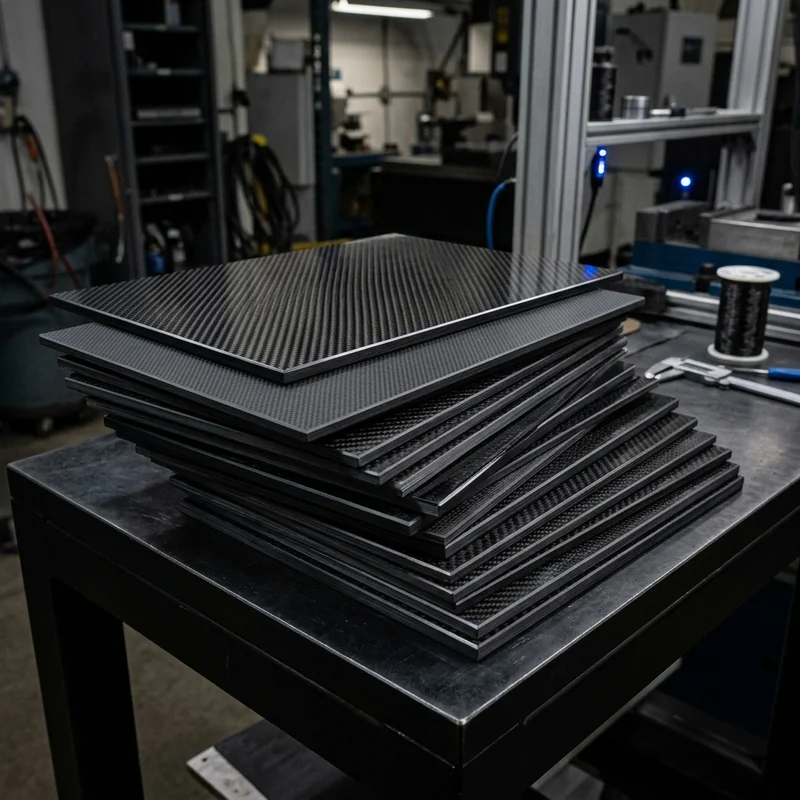
Carbon fiber standard plate-3k stripe
Lightweight, ultra-rigid standard sheets for drone fuselages, robot housings, facades and structural applications.

Carbon Fiber Plate — 3K Twill T700 3.0mm
Medium-thickness 3.0mm carbon fiber plate offering significantly higher load capacity while maintaining attractive 3K twill finish. Suitable for structural brackets, reinforcement plates, and load-bearing panels.

Carbon Fiber Plate — 3K Twill T700 1.5mm
Thin 1.5mm carbon fiber plate with 3K twill weave surface. Lightweight and stiff, commonly used for covers, panels, drone bodies, and applications requiring a premium aesthetic appearance.

Square Carbon Fiber Tube — 3K Twill T700
Square cross-section carbon fiber tube manufactured with 3K twill weave for torsional strength. Preferred for structural frames, trusses, and support columns where rectangular geometry offers design flexibility.
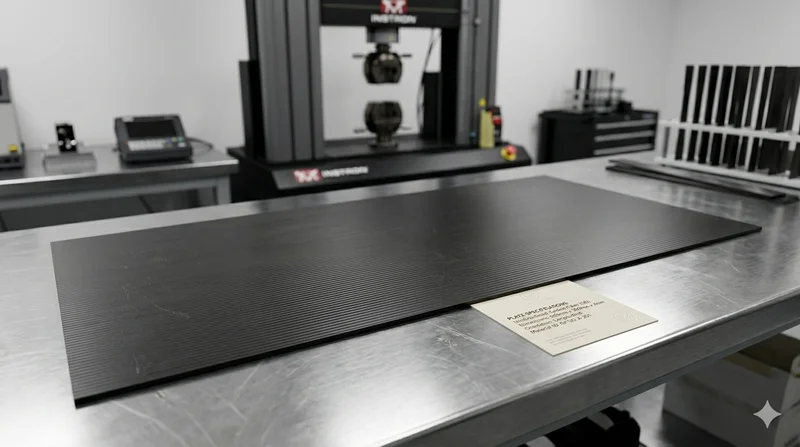
Carbon Fiber Plate — UD Unidirectional T700
Unidirectional carbon fiber plate with all fibers oriented in a single direction for maximum strength along the fiber axis. Essential for structural reinforcements, splints, and applications where load direction is predictable.