
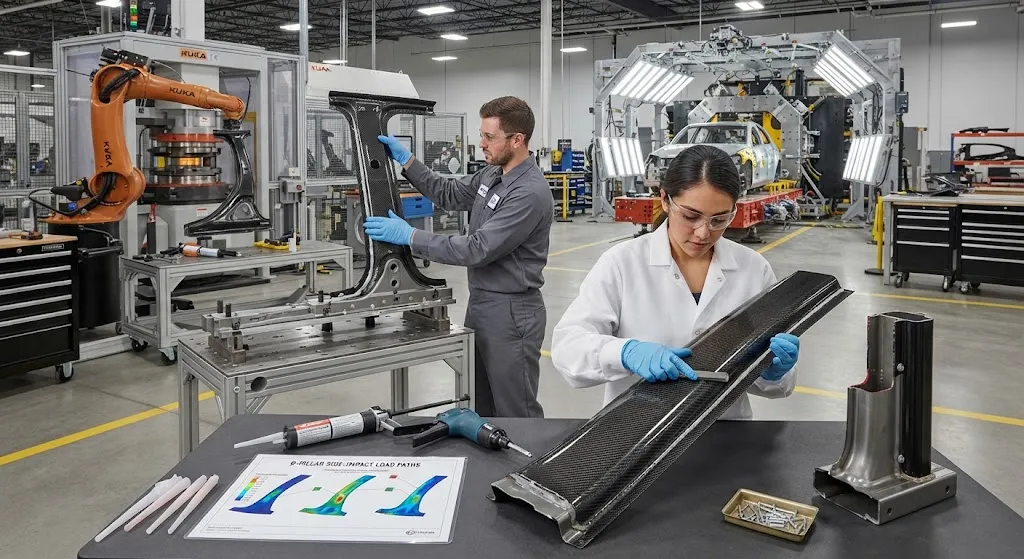
The B-pillar is one of the most safety-critical structures in any car. It is the vertical post between the front and rear doors that must hold the roof in a rollover, protect occupants in a side impact, and maintain survival space without crushing inward. For electric vehicles, the B-pi
Introduction
The B-pillar is one of the most safety-critical structures in any car. It is the vertical post between the front and rear doors that must hold the roof in a rollover, protect occupants in a side impact, and maintain survival space without crushing inward. For electric vehicles, the B-pillar carries an additional burden: battery-electric platforms are heavy, and every kilogram saved extends range, which makes the eternal automotive trade-off between strength and mass especially acute. Carbon fiber B-pillar reinforcements have emerged as a leading solution because they deliver both — significant weight reduction and superior crash energy absorption in the side-impact scenarios that define passenger safety.
This article is written for automotive body engineers, lightweighting program managers, and supply-chain teams evaluating composite structures for EV platforms. We will explain what the B-pillar does, how carbon fiber reinforcement absorbs and manages crash energy, how it compares with steel and aluminum, and the practical design and manufacturing routes that turn composite reinforcements from a concept into a production body-in-white component.
The Structural Role of the B-Pillar
Understanding the B-pillar's job clarifies why reinforcing it is so valuable. In a side impact, the pillar is loaded primarily in bending and compression as the intruding object pushes the door inward; it must resist deflection and absorb kinetic energy while maintaining a survivable occupant compartment. In a rollover, the pillar acts in compression to hold the roof. Its performance is therefore governed by two competing demands:
- Stiffness and strength for intrusion resistance: The pillar must bend or buckle only in a controlled way, absorbing energy as it deforms without allowing the door to reach the occupant.
- Progressive, predictable energy absorption: The ideal pillar collapses in a stable, staged manner rather than suddenly snapping, so deceleration stays within human tolerance.
Traditional steel B-pillars achieve this with high-strength and ultra-high-strength steel grades, tailored wall thicknesses, and tailored heat treatment. Carbon fiber offers an alternative that captures the same or better energy management at a fraction of the mass — but it must be engineered for controlled, progressive failure rather than brittle sudden collapse.
How Carbon Fiber Absorbs Crash Energy
Carbon fiber composites can absorb substantial specific energy — often more per kilogram than steel or aluminum — because of how they fail. In a crushing or bending event, a composite section undergoes multiple micro-mechanisms that each consume energy:
- Fiber fracture and pull-out: As fibers break and pull from the matrix, each interface event dissipates energy.
- Matrix cracking and delamination: The separation of plies absorbs significant energy in a stable, progressive way.
- Crumpling and progressive crushing: A well-designed trigger on the end of a tube or profile initiates a stable crush front that travels along the structure, absorbing energy steadily like a collapsing metal foam — but with higher specific energy.
The specific energy absorption (SEA) comparison below shows why carbon fiber is attractive in a mass-sensitive EV body:
| Material | Specific Energy Absorption (kJ/kg) | Tensile Strength (MPa) | Density (g/cm³) | Typical Use in Body-in-White |
|---|---|---|---|---|
| Mild steel | 15-30 | 270-410 | 7.85 | Body panels, closure structures |
| Advanced high-strength steel (AHSS) | 25-45 | 600-1,500 | 7.85 | Pillars, rails, rockers |
| Aluminum (5xxx/6xxx) | 40-70 | 200-350 | 2.70 | Body, closures, extrusions |
| Carbon fiber composite | 60-100 | 1,500-3,000 (fiber direction) | 1.55 | Reinforcements, crash structures |
The SEA column is the key: carbon fiber delivers roughly 2-6 times the energy absorption per kilogram of steel. A composite B-pillar reinforcement can therefore be substantially lighter than a steel equivalent while providing comparable or better crash performance — a direct win for EV range, which typically improves about 1% for every 1% of vehicle mass removed, and much more for components located high in the body.
Designing for Controlled, Progressive Failure
Raw carbon fiber is excellent at absorbing energy, but only if the failure mode is engineered to be progressive rather than brittle. Several design rules govern this:
- Fiber orientation for the load case: Bending and buckling dominate the B-pillar. A predominantly 0°-oriented layup along the pillar axis resists bending and buckling efficiently, while ±45° plies improve torsional and shear stability and toughness. A balanced quasi-isotropic notation near the crash zone manages multi-axial loading.
- Crush triggers and crush cones: Local geometric features (chamfers, notches, or plugs) initiate a stable crush front at the load-introducing end, so the composite collapses progressively instead of snapping. This is analogous to the deliberate crush zones designed into steel rails.
- Hybridization with metal: The most production-viable approach pairs a carbon fiber reinforcement with the existing steel pillar — a steel inner with a bonded or riveted carbon reinforcement cap, or a carbon hat section bonded over the steel. This protects the crack-sensitive composite from the sharp intrusion load, uses the steel for ductility and attachment, and uses the carbon precisely where its stiffness and energy absorption pay off.
- Adhesive bonding and fasteners: Carbon reinforcements are typically joined to the body shell with structural adhesive and mechanical fasteners. The bond must be engineered to transfer crash loads without peeling, and galvanic isolation is needed where carbon contacts aluminum to prevent corrosion.
Lightweighting and EV Range Benefits
The business case for carbon B-pillars rests on the compounding value of mass saved from a high body location. Removing weight from the roof line and upper body lowers the vehicle's center of gravity and reduces inertial loads in handling and crash, and it directly extends range. Typical figures show that:
- A carbon-reinforced B-pillar can reduce the pillar's weight contribution by 30-60% versus an all-steel unit of equivalent crash performance, depending on hybridization.
- Across a car, body-in-white lightweighting of 10% can improve EV range by roughly 3-5% at the same battery size, because less mass lowers rolling resistance and energy consumption.
- The weight saved high in the body reduces rollover propensity and eases packaging of battery packs, since the structural load path carries less mass through the crash zone.
While the raw material cost of carbon is higher than steel, the value proposition is strongest where range, premium positioning, and regulatory crash targets combine — which is precisely the territory of high-end and performance EV platforms, and increasingly of mass-market models as production processes mature and costs fall.
Manufacturing and Economics
Beyond material, the route to production matters. Several processes can form carbon B-pillar reinforcements, each with different cost and volume profiles:
- Compression molding of chopped or SMC-style carbon: Fast cycles suitable for moderate volumes, with lower performance than continuous fiber.
- Prepreg + autoclave or press cure: Highest performance and control, suited to premium and low-to-mid volumes; highest cost.
- Resin transfer molding (RTM) and high-pressure RTM (HP-RTM): The emerging industrial route for continuous-fiber crash structures — rapid injection and cure cycles (3-10 minutes) at volumes that can approach automotive production rates, with good mechanical performance.
- Continuous-fiber reinforced thermoplastic stamping: Short cycles (1-3 minutes) with recycle-friendly matrix, gaining traction for high-volume structural parts.
For a crash-relevant interior reinforcement, HP-RTM with a continuous carbon fiber preform is widely considered the most promising path to volume production, combining good specific energy absorption with cycle times that support automotive throughput. The main economic lever is cycle time and scrap reduction, which is why preformed near-net-shape fiber and automated handling are central to current development programs.
Frequently Asked Questions
Is a carbon fiber B-pillar stronger than a steel one in a side impact?
Not necessarily "stronger" in absolute load terms, but potentially better at the two things that matter: energy absorption per kilogram and controlled mass. Carbon fiber composites offer roughly 2-6 times the specific energy absorption of steel, so a comparable pillar can be built much lighter. However, carbon is brittle and crack-sensitive under sharp concentrated loads, so production B-pillars are almost always hybrid structures — a steel inner bonded to a carbon reinforcement — that retain steel's ductility and attachment while using carbon precisely where its energy absorption and stiffness pay off. This hybridization keeps crash performance at or above steel levels while cutting weight by roughly 30-60% on the pillar.
Why are carbon B-pillar reinforcements usually used as hybrid steel-composite structures?
Because pure carbon has weaknesses that hybridization solves. Carbon composites are excellent at progressive crushing energy absorption (high SEA, 60-100 kJ/kg) but are brittle under concentrated, sharp intrusion loads and crack-sensitive at fastener and attachment points. A hybrid design bonds or fastens a carbon reinforcement cap or hat section over the steel pillar: the steel provides ductility, robust bolted/bonded attachment, and redistribution of sharp loads, while the carbon adds stiffness and energy absorption in the highest-load region. The result combines the crash performance of a thicker steel section with roughly half the mass. Hybridization also simplifies joining, crash modeling, and galvanic-corrosion management compared to an all-carbon component.
How much weight does a carbon fiber B-pillar reinforcement save, and is it worth the cost?
A carbon-reinforced B-pillar typically reduces the pillar's contribution to body mass by roughly 30-60% versus an equivalent all-steel unit. Because the pillar sits high in the vehicle, saved mass lowers the center of gravity and, for EVs, directly extends range — roughly a 3-5% range gain for a 10% body-in-white weight reduction at fixed battery size. Whether it is worth the higher raw-material cost depends on the program: it is clearly valuable for premium and performance EVs where range and positioning command a price premium, and its cost-effectiveness improves as HP-RTM and thermoplastic stamping cut cycle times and scrap. On mass-market models the case is tighter and usually depends on meeting aggressive regulatory crash targets while maximizing range at the same battery cost.
Conclusion
Carbon fiber B-pillar reinforcements address the defining challenge of electric vehicle body structures: how to protect occupants in a side impact while shedding enough mass to extend range. By exploiting carbon's 2-6x advantage in specific energy absorption and managing its brittle failure through crush triggers and hybridization with steel, engineers can build B-pillars that are roughly 30-60% lighter than all-steel equivalents without compromising crash performance. The production path is converging on continuous-fiber HP-RTM and thermoplastic stamping, which bring cycle times and economics within reach of automotive volumes.
For body engineers and lightweighting teams weighing carbon for EV platforms, the winning approach is a well-integrated hybrid: steel for ductility and attachment, carbon for stiffness and energy absorption, joined with engineered adhesive bonds and galvanic isolation. Explore our carbon fiber fabrics and design options for automotive crash structures, or contact our engineering team to discuss material qualification, preform design, and crash-energy validation for your B-pillar program.
Part of topic
Related Articles
- Carbon Fiber Mooring for Floating Offshore Wind: Fatigue and Corrosion in Deep Water
- Carbon Fiber Bicycle Frame Optimization: Layup Design and Manufacturing for Competitive Racing
- Carbon Fiber CFRP Retrofit for Infrastructure: Bridge and Building Seismic Strengthening
- Carbon Fiber Medical Imaging Equipment: Lightweight Gantry and Couch Structures for MRI/CT
- Carbon Fiber EV Battery Enclosures: Crash Safety and Electromagnetic Shielding Design
- Carbon Fiber Structures for Low-Altitude Economy: UAV Airframes and eVTOL Components
Interested in Our Products?
Contact our team for competitive pricing and technical specifications.
Get a QuoteRelated Products
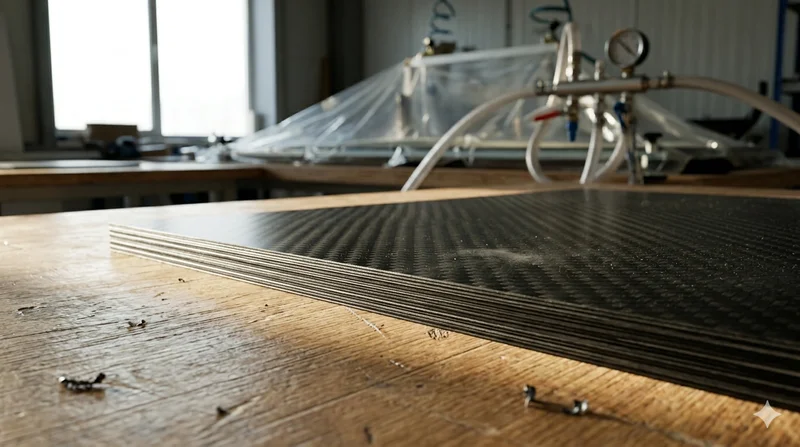
Carbon Fiber Plate — 3K Twill T700 3.0mm
Medium-thickness 3.0mm carbon fiber plate offering significantly higher load capacity while maintaining attractive 3K twill finish. Suitable for structural brackets, reinforcement plates, and load-bearing panels.
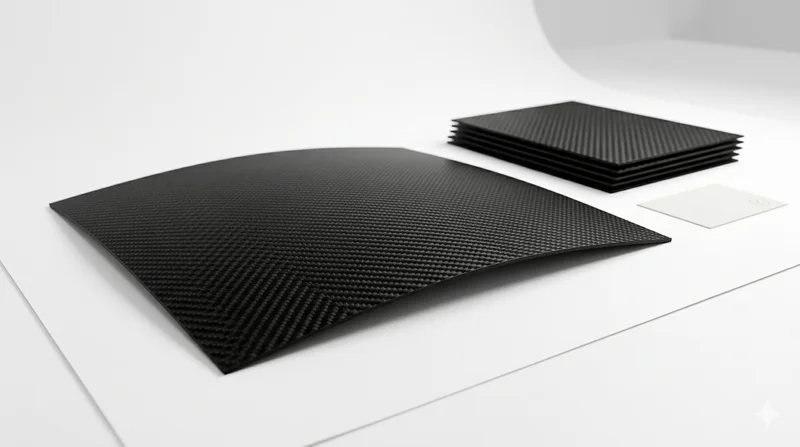
Carbon Fiber Plate — 3K Twill T700 1.5mm
Thin 1.5mm carbon fiber plate with 3K twill weave surface. Lightweight and stiff, commonly used for covers, panels, drone bodies, and applications requiring a premium aesthetic appearance.
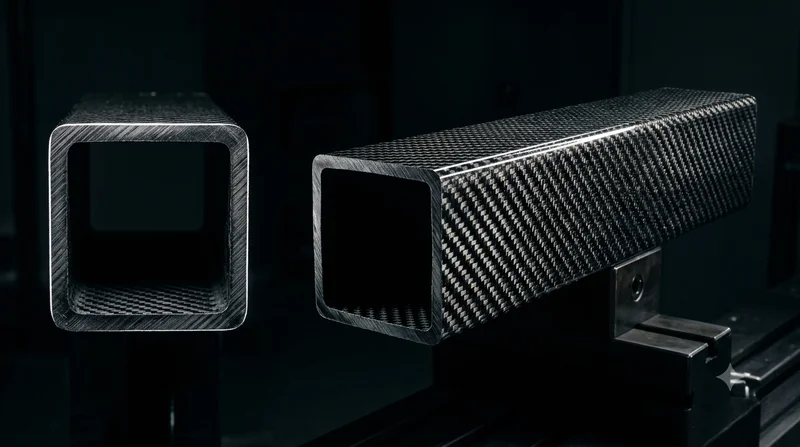
Square Carbon Fiber Tube — 3K Twill T700
Square cross-section carbon fiber tube manufactured with 3K twill weave for torsional strength. Preferred for structural frames, trusses, and support columns where rectangular geometry offers design flexibility.
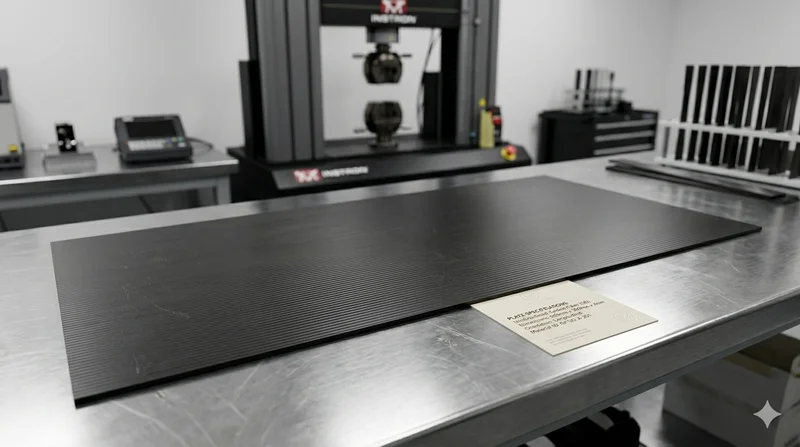
Carbon Fiber Plate — UD Unidirectional T700
Unidirectional carbon fiber plate with all fibers oriented in a single direction for maximum strength along the fiber axis. Essential for structural reinforcements, splints, and applications where load direction is predictable.
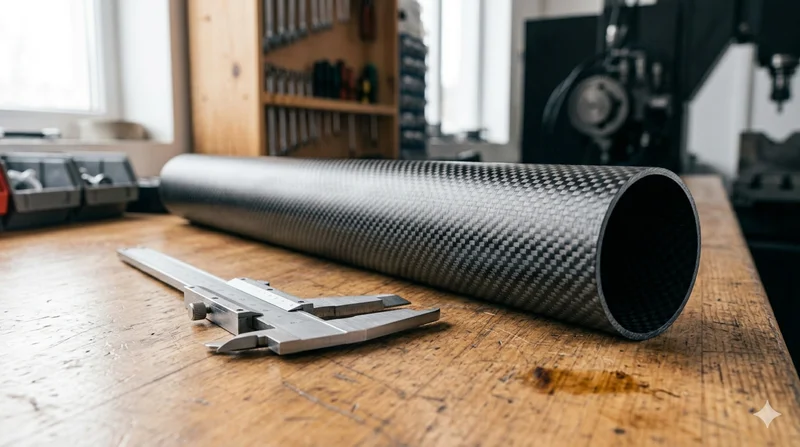
Round Carbon Fiber Tube — 3K Plain Weave T700
Standard round carbon fiber tube manufactured from Toray T700 grade fiber with 3K plain weave. Offers balanced strength and stiffness for general industrial applications including robotics, automation, sports equipment, and aerospace structures.