
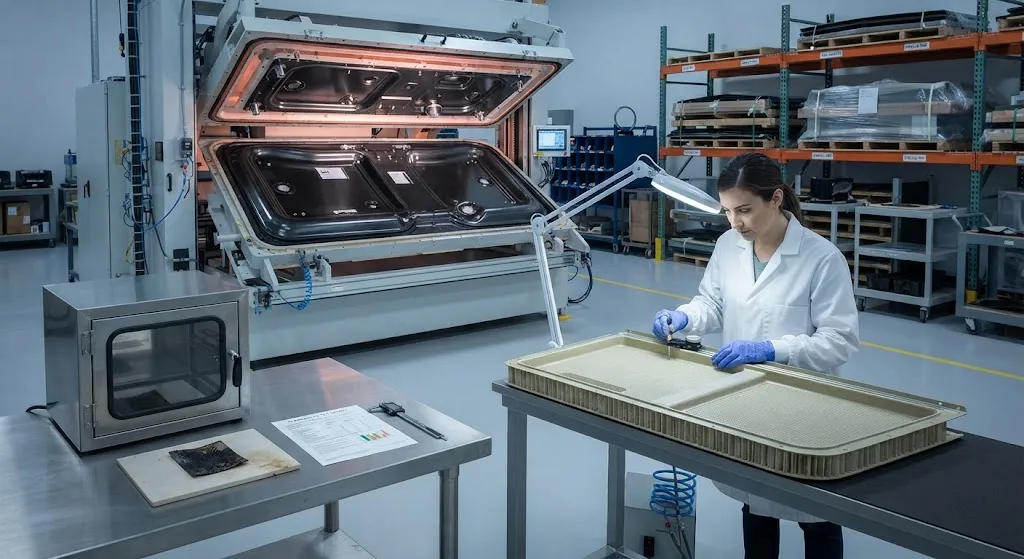
Every material that flies in an aircraft cabin is selected against a demanding list of requirements: low weight to save fuel, strict fire safety to protect passengers, and — increasingly — the ability to be produced at high rates for busy single-aisle programs. For decades, interior pan
Introduction
Every material that flies in an aircraft cabin is selected against a demanding list of requirements: low weight to save fuel, strict fire safety to protect passengers, and — increasingly — the ability to be produced at high rates for busy single-aisle programs. For decades, interior panels were dominated by phenolic and epoxy thermoset laminates with honeycomb cores. Today, thermoplastic composites are taking over many of these applications, offering a combination of fire performance, recyclability, and fast forming that thermosets cannot easily match.
This article explains why thermoplastics are winning interior business. It starts with the fire-safety standards that define the cabin environment, then quantifies the weight and cycle-time advantages, and finishes with the interior applications now moving into production. For engineers specifying interior panels, the practical question is where within the cabin the switch to thermoplastic composites pays off.
Fire-Safety Requirements in the Cabin
Cabin interiors are among the most strictly regulated structures on an aircraft, and fire behavior drives much of the material selection. The governing tests are defined by the Federal Aviation Administration (FAA) and the European Union Aviation Safety Agency (EASA), and they target behavior in a post-crash fire scenario:
- Heat release rate: The 12-second heat release test measures total and peak heat release, capping the contribution a panel makes to fire growth. Federal standard PROC—FAA 25.853(d) limits the two-minute total heat release to 65 kilowatt-minutes per square meter and the peak rate to 65 kilowatts per square meter.
- Smoke density: Panels must limit smoke generation so that cabin occupants and escape routes remain visible, with an integrated density limit based on a 4-minute flammability exposure.
- Toxic gas emission: Combustion must not release excessive concentrations of carbon monoxide and other gases, with limits on gas concentrations measured during the test.
- Vertical and horizontal burn: The basic flammability test sets burn length and self-extinguishing time limits to prevent sustained flame spread.
Thermoplastic matrices such as polyether ether ketone (PEEK), polyether ketone ketone (PEKK), and glass-fiber-reinforced polyetherimide (PEI) meet these requirements with inherently low heat release and smoke, often without heavy flame-retardant loading.
Weight Reduction and Part Integration
Weight is the other pillar of interior material selection. The table below compares a typical thermoplastic composite interior panel against an equivalent thermoset laminate panel for the same zone dimensions:
| Property | Thermoplastic panel (PEI/GF) | Thermoset panel (phenolic/epoxy) |
|---|---|---|
| Areal density for equivalent stiffness (kg/m²) | 2.4-3.2 | 3.0-4.0 |
| Panel thickness for equivalent stiffness (mm) | 6-8 | 7-10 |
| Typical weight saving | 10-20% | baseline |
| Forming cycle time (single part) | 1-5 minutes | 20-60 minutes (plus cure) |
| Recyclability at end of life | reformable by re-melting | limited, cross-linked |
| Touch/scratch resistance | durable, self-colored | painted surface can scratch |
Two advantages stand out. First, thermoplastic panels are 10-20% lighter at equivalent stiffness, a saving that compounds across dozens of interior panels on a single aircraft. Second, the forming cycle collapses from 20-60 minutes of thermoset cure to 1-5 minutes of thermoforming or stamping, which is what makes thermoplastics viable at the production rates of modern narrow-body programs.
Applications Moving into Production
The cabin is not a single material decision but a patchwork of zones, each with its own loading and aesthetic requirements. Thermoplastic composites have gained ground in several interior families:
- Sidewall and ceiling panels: The largest visible interior surfaces, where weight, surface finish and fire performance are all required. Thermoplastic skins with honeycomb or foam cores are entering service on retrofit and new programs.
- Overhead and stowage bins: Thermoplastic composites offer the stiffness and impact resistance needed for baggage bins while cutting weight and improving surface durability.
- In-flight entertainment (IFE) housings and electronics covers: These parts combine dimensional stability, radio-frequency transparency and fire resistance, a combination thermoplastics handle well.
- Galleys and lavatory panels: High-wear, high-moisture zones where thermoplastic surfaces resist scratching and absorb less water than painted thermosets.
- Ducting and air-management components: Blown-film and stamp-formed thermoplastic ducting replaces heavier metal or thermoset parts in the environmental control system.
Manufacturing and Quality Considerations
Switching interior parts to thermoplastics changes the production floor. Continuous fiber-reinforced sheets are stamped or thermoformed over low-cost tooling, and organosheet processing shortens lead times from weeks to days. Because the polymer is thermoplastic, parts can be welded, re-formed and — at end of life — re-melted and recycled, which aligns with the aircraft industry's growing circularity targets. Quality control centers on dimensional verification, surface inspection for cosmetic defects, and burn-test validation of flame-retardant formulations. Supplier qualification follows the same NADCAP-style documentation expectations as thermoset processing, but process control is simpler because cycle time is short and scrap can be reprocessed.
Frequently Asked Questions
Are thermoplastic composites safe for aircraft cabins?
Yes, when properly specified. Thermoplastic matrices such as PEEK, PEKK and glass-fiber-reinforced PEI pass the same FAA and EASA heat-release, smoke-density and toxic-gas tests as certified thermoset panels. Their polymer chemistry produces low heat release and smoke inherently, which means they can meet the 65 kW·min/m² two-minute heat-release limit without heavy flame-retardant additives. Certification of a thermoplastic interior part follows the same burn-test and flammability evidence path as any other cabin material.
How much weight do thermoplastic interiors save compared to thermoset?
For equivalent stiffness, thermoplastic composite interior panels are typically 10-20% lighter than their phenolic or epoxy counterparts. The saving comes from thinner skins, reduced laminate build-up, and the ability to integrate features such as stiffeners and fastening points into a single molded part. Because weight saving is multiplied across dozens of panels on one aircraft, the total interior weight reduction can reach tens of kilograms, which translates directly into fuel savings and range benefits over the aircraft's life.
Are thermoplastics more expensive than thermoset interior panels?
Per kilogram, thermoplastic resins are often more expensive than phenolics or epoxies. However, the total part cost can be lower because forming cycles are minutes rather than tens of minutes, tooling is cheaper and reusable, and scrap can be reprocessed instead of discarded. The economics favor thermoplastics at moderate-to-high production volumes, which is exactly the situation in modern single-aisle and regional programs. MRO cost also tends to be lower because surfaces are more scratch-resistant and panels can be re-formed rather than replaced.
Conclusion
Thermoplastic composites are becoming the default choice for a growing share of aerospace interior applications because they solve the three problems that cabin engineers care about most: fire safety, weight and production rate. With inherently low heat release and smoke, 10-20% weight savings at equivalent stiffness, and forming cycles measured in minutes, they outpace thermosets in sidewalls, bins, galleys and ducting. The regulatory framework is well established, and the manufacturing transition is underway across single-aisle and regional programs.
For engineers specifying interior panels, the starting point is matching material grade to zone requirement — fire class, loading, surface finish — and then validating burn-test performance and dimensional tolerance with a qualified partner. Explore our carbon fiber and thermoplastic-compatible reinforcement range, or contact our engineering team to discuss interior panel development and qualification.
Part of topic
Related Articles
- Carbon Fiber Mooring for Floating Offshore Wind: Fatigue and Corrosion in Deep Water
- Carbon Fiber Bicycle Frame Optimization: Layup Design and Manufacturing for Competitive Racing
- Carbon Fiber CFRP Retrofit for Infrastructure: Bridge and Building Seismic Strengthening
- Carbon Fiber Medical Imaging Equipment: Lightweight Gantry and Couch Structures for MRI/CT
- Carbon Fiber EV Battery Enclosures: Crash Safety and Electromagnetic Shielding Design
- Carbon Fiber Structures for Low-Altitude Economy: UAV Airframes and eVTOL Components
Interested in Carbon Fiber Tubes?
Contact our team for competitive pricing and technical specifications.
Get a QuoteRelated Products
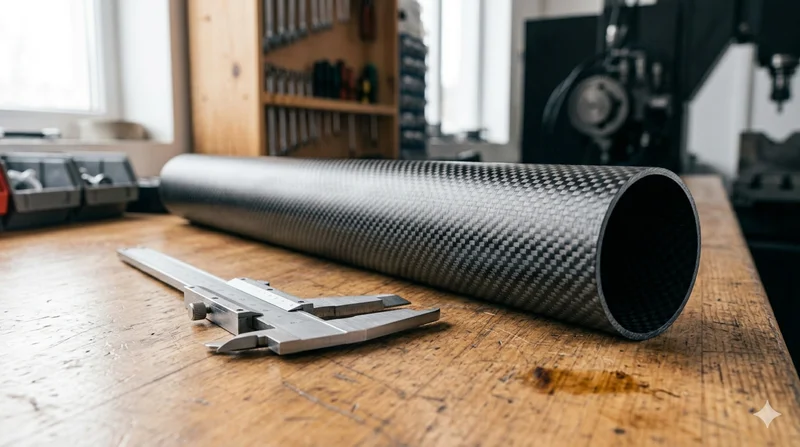
Round Carbon Fiber Tube — 3K Plain Weave T700
Standard round carbon fiber tube manufactured from Toray T700 grade fiber with 3K plain weave. Offers balanced strength and stiffness for general industrial applications including robotics, automation, sports equipment, and aerospace structures.
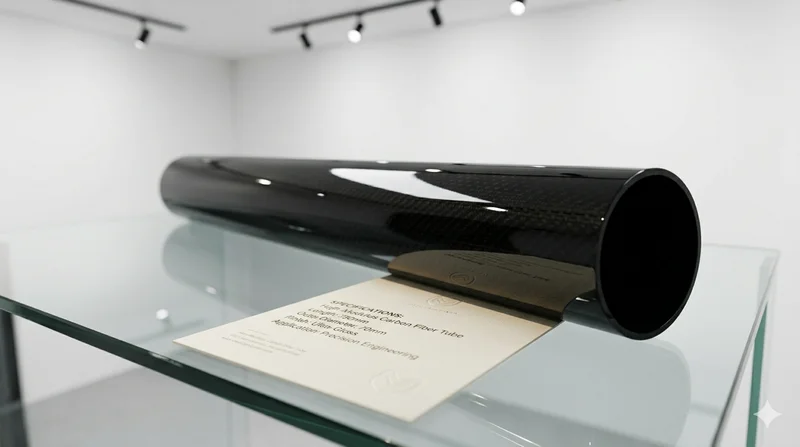
High Modulus Round Carbon Fiber Tube — M40
High modulus round tube manufactured with M40 grade fiber (tensile modulus 400 GPa). Designed for applications where maximum stiffness-to-weight ratio is critical, such as optical systems, precision machinery, and aerospace structures.