
In-depth technical analysis of carbon fiber composite interior panels for aircraft cabins, covering FAR 25.853 FST compliance, fire retardant resin systems, smoke density requirements, and manufacturing processes.
Aerospace Interior Cabin Panels and FAR 25.853 Compliance
Carbon fiber composite panels have become the material of choice for aircraft interior cabin furnishings, offering weight savings of 30–50% compared to traditional aluminum honeycomb and phenolic glass-fiber laminates. However, the use of carbon fiber in pressurized cabin environments imposes stringent fire, smoke, and toxicity (FST) requirements under Federal Aviation Regulation FAR 25.853 and its international equivalents — EASA CS 25.853 and CCAR 25.853.
Modern wide-body aircraft such as the Boeing 787 Dreamliner and Airbus A350 XWB incorporate over 300 interior panel components per aircraft — including ceiling panels, sidewall panels, stowage bins, lavatory modules, and galley structures — manufactured from carbon fiber-reinforced phenolic and PEEK matrix composites. The global aerospace interior composites market is projected to reach $4.8 billion by 2028, with FST-compliant carbon fiber panels representing the fastest-growing segment at 8.2% CAGR.
FAR 25.853 Regulatory Framework
FAR 25.853(a) establishes the fundamental flammability requirements for interior compartment materials. The regulation is divided into three testing tiers based on component criticality and exposure risk:
| Test Standard | Application | Key Requirement | Pass/Fail Criteria |
|---|---|---|---|
| FAR 25.853(a) App. F Part I (12-sec vertical) | Ceiling panels, luggage bins, partitions | Vertical Bunsen burner, 12-second flame application | Burn length ≤ 203 mm; flame time ≤ 15 sec after removal; dripping flame time ≤ 3 sec |
| FAR 25.853(a) App. F Part I (60-sec horizontal) | Seat cushions, carpet, upholstery | Horizontal Bunsen burner, 60-second exposure | Burn rate ≤ 64 mm/min for horizontal specimens |
| FAR 25.853(d) App. F Part IV (OSU heat release) | Ceiling and sidewall panels (2006 amendment) | Ohio State University calorimeter, 35 kW/m² heat flux | Peak heat release ≤ 65 kW/m²; total heat release ≤ 65 kW·min/m² over 2 min |
| FAR 25.853(d) App. F Part V (smoke density) | Ceiling and sidewall panels | NBS smoke chamber, flaming and non-flaming modes | Specific optical smoke density Ds ≤ 200 within 4 minutes |
| FAR 25.853(d) App. F Part VII (toxicity) | All interior materials | Gas analysis via FTIR or wet chemistry per Airbus ABP 4-0216 / Boeing D6-83941 | HCN ≤ 150 ppm, CO ≤ 3,500 ppm, NOx ≤ 100 ppm, SO2 ≤ 100 ppm, HCl ≤ 500 ppm, HF ≤ 200 ppm |
Fire Retardant Resin Systems for Carbon Fiber Panels
Achieving FAR 25.853 compliance with carbon fiber composites requires tailored resin chemistry. Carbon fiber itself is inherently flame-resistant (carbon does not burn below 800°C in air), but the polymer matrix must be formulated to meet the full FST envelope. The principal resin systems used in certified aerospace interior panels include:
- Phenolic Resins (Novolac and Resole): Industry standard for interior panels due to inherently low flammability, low smoke generation, and char-forming behavior. Phenolic carbon fiber panels achieve peak heat release of 35–50 kW/m², well below the 65 kW/m² OSU limit. Limitation: brittle mechanical properties requiring fabric reinforcement optimization.
- Polyether Ether Ketone (PEEK): High-performance thermoplastic with intrinsic V-0 flammability rating (UL 94) and exceptional FST performance. PEEK/carbon fiber panels show peak heat release of 20–30 kW/m². Used for premium seating structures and galley components. Cost: $80–120/kg versus $10–25/kg for phenolic prepreg.
- Polyether Imide (PEI): Amorphous thermoplastic with inherent fire resistance, low smoke emission, and high ductility. PEI panels pass OSU heat release requirements with peak values of 40–55 kW/m². Preferred for complex thermoformed shapes in sidewall panels.
- Bismaleimide (BMI): Thermoset resin bridging epoxy and polyimide performance. BMI panels offer operating temperatures up to 230°C with good FST properties, primarily specified for galley and lavatory areas near heat sources.
Cabin Panel Manufacturing Process
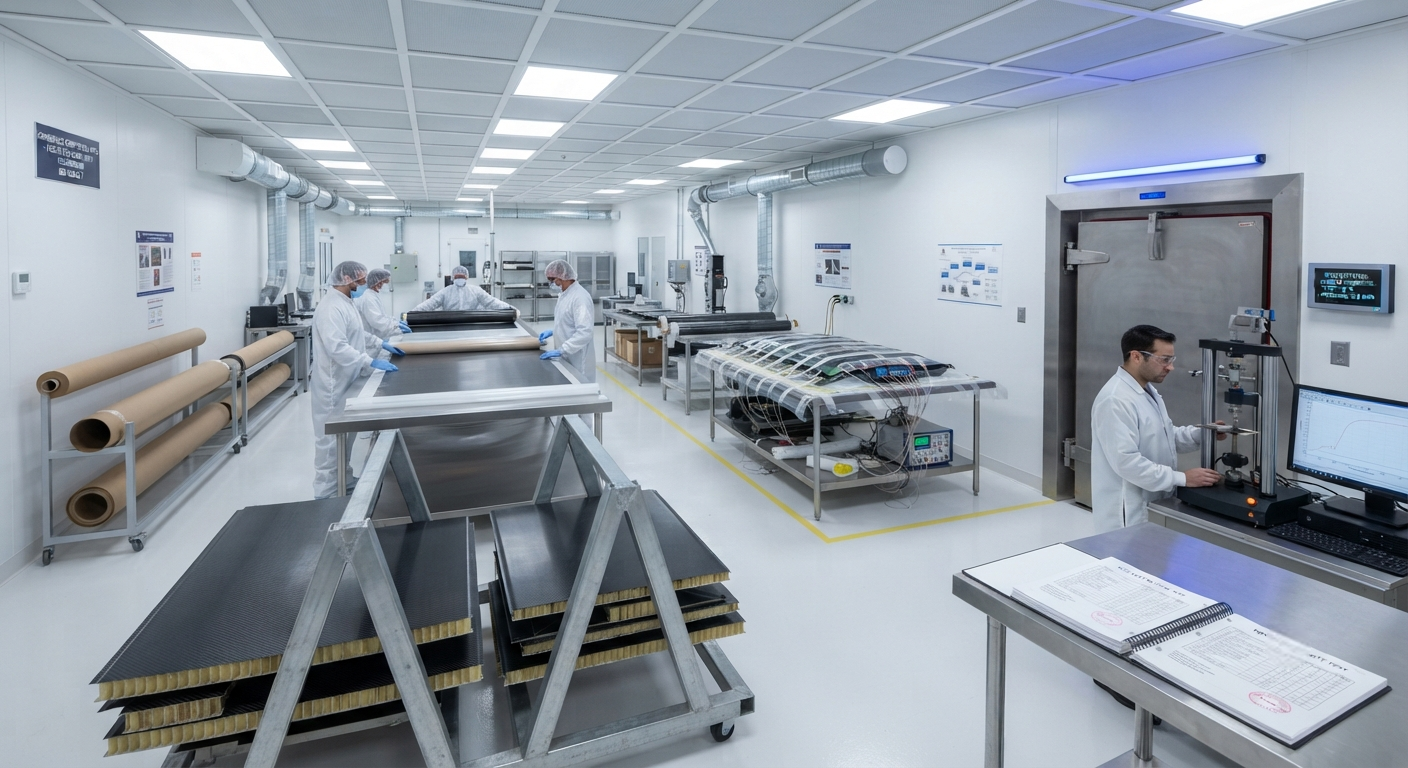
The production of FST-compliant carbon fiber cabin panels follows a tightly controlled process. Prepreg materials (typically 3K or 6K carbon fabric with phenolic resin at 38–42% resin content) are laid up in class 100,000 cleanrooms to prevent contamination. The layup sequence, ply orientation, and core material selection — typically Nomex honeycomb or Rohacell foam — determine the panel's structural and thermal performance.
Smoke Density and Toxicity Testing
Smoke density testing per FAR 25.853(d) Appendix F Part V uses an NBS smoke chamber (ASTM E662). Specimens of 76 mm × 76 mm are exposed to radiant heat (25 kW/m²) in both flaming and non-flaming modes. The specific optical smoke density (Ds) is calculated from the attenuation of a vertical light beam. Carbon fiber phenolic panels typically achieve Ds values of 50–120 in flaming mode and 30–80 in non-flaming mode, well below the 200 limit.
Can standard carbon fiber epoxy panels be used in aircraft interiors?
No. Standard epoxy-based carbon fiber composites do not meet FAR 25.853 FST requirements without modification. Epoxy resins generate dense black smoke (Ds > 500 in NBS testing) and release hazardous combustion gases including hydrogen cyanide and carbon monoxide at levels far exceeding regulatory limits. Only phenolic, PEEK, PEI, or BMI matrix systems have demonstrated consistent compliance in FAA-certified cabin panel applications. Some modified epoxy systems with halogen-free flame retardant additives achieve limited compliance for non-critical components, but certification documentation and test evidence are required for each specific formulation.
What is the typical weight reduction from switching to carbon fiber cabin panels?
Compared to traditional fiberglass/phenolic honeycomb panels weighing 2.8–3.5 kg/m², carbon fiber/PEEK hybrid panels achieve 1.6–2.2 kg/m² — a weight saving of 35–45%. For a Boeing 787-class aircraft with approximately 300 m² of interior panel surface area, this translates to 360–500 kg total weight reduction, which at typical fuel burn savings of $3,500–5,000/kg/year provides $1.3–2.5 million annual fuel cost reduction per aircraft.
How does recycling work for FST-compliant carbon fiber cabin panels?
FST-compliant panels pose unique recycling challenges due to the phenolic resin matrix, which is thermoset and highly cross-linked. Current recycling methods include: (1) pyrolysis at 500–700°C in an inert atmosphere to recover carbon fiber — recovered fiber retains 80–90% of original tensile modulus but only 50–70% of tensile strength; (2) fluidized bed thermal processing for mixed panel waste streams; and (3) mechanical grinding for use as filler in compression molded non-structural parts. Boeing's "Reclaim the Flame" program has diverted over 200 tons of production scrap from interiors manufacturing. ELG Carbon Fibre (now Gen 2 Carbon) operates commercial recycling facilities in the UK and Germany processing end-of-life aircraft interior panels.
Part of topic
Related Articles
- Carbon Fiber Mooring for Floating Offshore Wind: Fatigue and Corrosion in Deep Water
- Carbon Fiber Bicycle Frame Optimization: Layup Design and Manufacturing for Competitive Racing
- Carbon Fiber CFRP Retrofit for Infrastructure: Bridge and Building Seismic Strengthening
- Carbon Fiber Medical Imaging Equipment: Lightweight Gantry and Couch Structures for MRI/CT
- Carbon Fiber EV Battery Enclosures: Crash Safety and Electromagnetic Shielding Design
- Carbon Fiber Structures for Low-Altitude Economy: UAV Airframes and eVTOL Components
Interested in Our Products?
Contact our team for competitive pricing and technical specifications.
Get a QuoteRelated Products
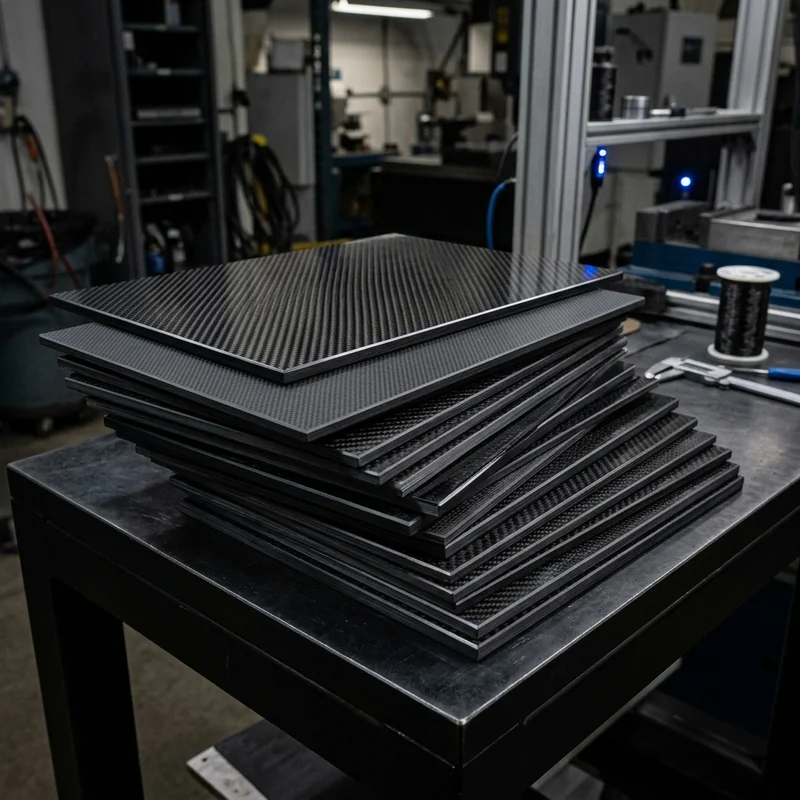
Carbon fiber standard plate-3k stripe
Lightweight, ultra-rigid standard sheets for drone fuselages, robot housings, facades and structural applications.
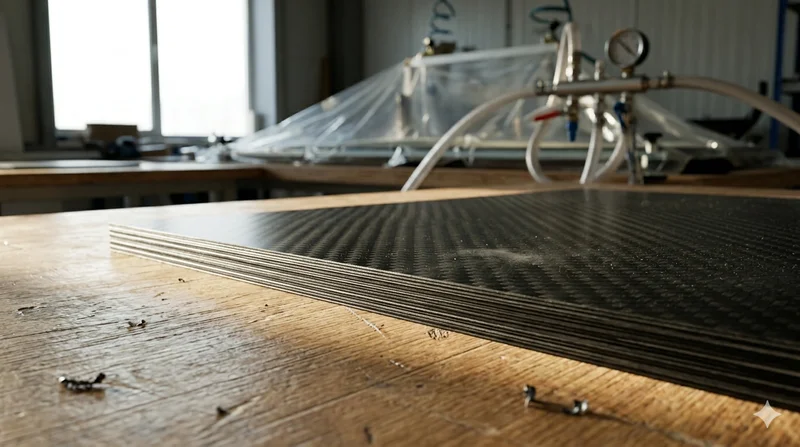
Carbon Fiber Plate — 3K Twill T700 3.0mm
Medium-thickness 3.0mm carbon fiber plate offering significantly higher load capacity while maintaining attractive 3K twill finish. Suitable for structural brackets, reinforcement plates, and load-bearing panels.

Carbon Fiber Plate — 3K Twill T700 1.5mm
Thin 1.5mm carbon fiber plate with 3K twill weave surface. Lightweight and stiff, commonly used for covers, panels, drone bodies, and applications requiring a premium aesthetic appearance.

Square Carbon Fiber Tube — 3K Twill T700
Square cross-section carbon fiber tube manufactured with 3K twill weave for torsional strength. Preferred for structural frames, trusses, and support columns where rectangular geometry offers design flexibility.
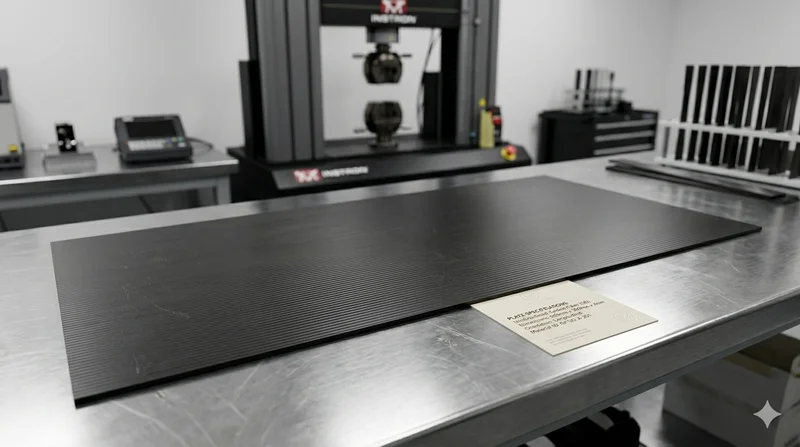
Carbon Fiber Plate — UD Unidirectional T700
Unidirectional carbon fiber plate with all fibers oriented in a single direction for maximum strength along the fiber axis. Essential for structural reinforcements, splints, and applications where load direction is predictable.