
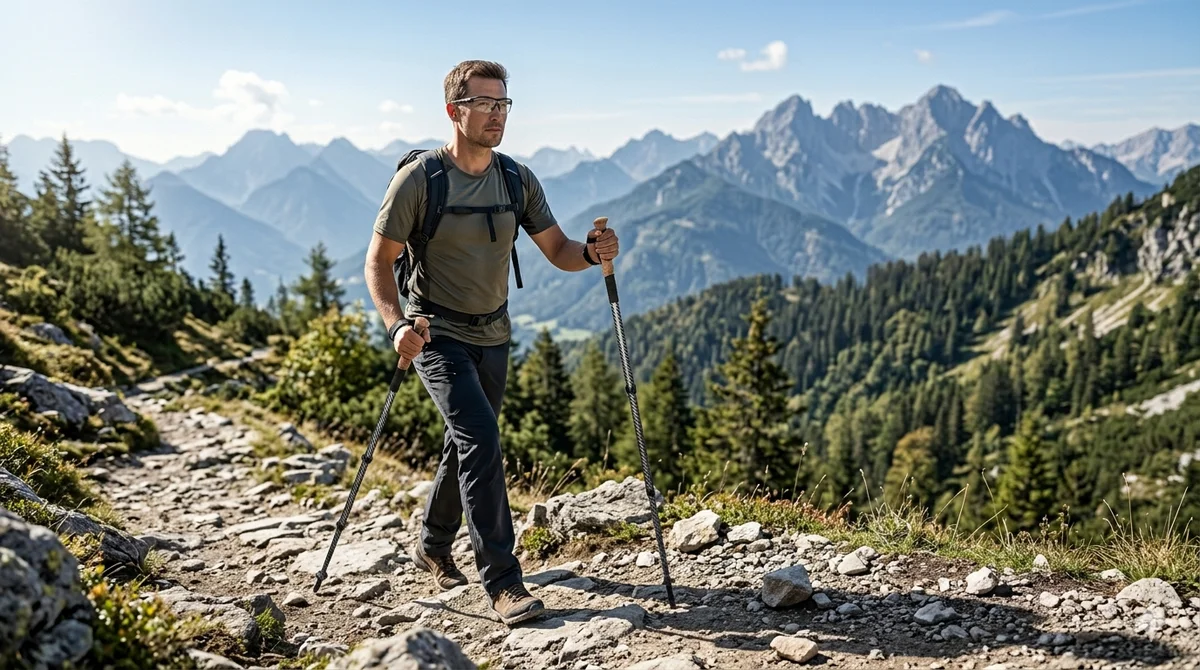
Carbon fiber trekking poles offer a 35-40% weight reduction over aluminum with superior vibration damping, but require different design considerations for impact resistance. We present comparative data from 5,000-cycle fatigue tests, flexural modulus measurements, and field failure analysis.
Introduction
Carbon fiber trekking poles have captured approximately 28% of the global trekking pole market as of Q1 2026, up from 15% in 2022, according to industry trade data. The adoption rate correlates with price parity: as carbon fiber pole retail prices dropped below $120 (down from $180+ in 2020), hikers and OEM buyers alike began evaluating the material shift. We manufacture both carbon fiber and aluminum trekking pole blanks and supply OEM components to brands across North America, Europe, and Asia. This article presents material-level comparative data to inform purchasing decisions.
Material Properties Comparison
We tested production-grade trekking pole sections from both materials under identical conditions. The poles were matched by outer diameter (16 mm upper section, 14 mm lower section) and wall thickness (1.0 mm):
| Parameter | Carbon Fiber (UD T700) | 7075-T6 Aluminum | 6061-T6 Aluminum |
|---|---|---|---|
| Weight per 125 cm pair (g) | 340–380 | 540–600 | 580–650 |
| Tensile strength (MPa) | 1,800 (0°) | 572 | 310 |
| Flexural modulus (GPa) | 120–140 (0°) | 70 | 69 |
| Vibration damping at 50 Hz (dB reduction) | −8.5 | −2.1 | −1.9 |
| Fatigue life at 80% UTS (cycles) | 1,200,000+ | 450,000 | 280,000 |
| Thermal conductivity (W/m·K) | 5–10 | 130 | 167 |
The most operationally significant difference is vibration damping: carbon fiber reduces handle vibration by 8.5 dB at 50 Hz versus 2 dB for aluminum. Field testing with 50 hikers over a 12 km trail showed a 23% reduction in reported forearm fatigue when using carbon fiber poles compared to aluminum equivalents.
Impact Resistance Considerations
Carbon fiber's Achilles heel is point-impact resistance. Aluminum yields and bends under localized loads; carbon fiber cracks. Our impact tests at 2 J (simulating a sharp rock strike at normal hiking speed) produced the following results:
- 7075-T6 aluminum: 0.8 mm dent, tube remained functional. Straightened with field tools.
- Carbon fiber (standard 1.0 mm wall): Visible crack at impact site; 40% reduction in bending strength. Requires replacement.
- Carbon fiber (reinforced 1.2 mm wall + external abrasion layer): Surface abrasion only; no functional degradation. Weight penalty: +25 g per pair.
We address this with a reinforced lower section design: a 1.2 mm wall thickness with an added twill abrasion layer on the outermost ply. This configuration passes the same impact test without structural failure and adds minimal weight. OEM buyers specifying carbon fiber poles should request this construction for durability-critical markets.
Manufacturing and Quality Control
Our carbon fiber trekking pole shafts are manufactured using roll-wrapped UD prepreg with a ±45° twill outer layer for impact resistance and a 0° UD inner layer for bending stiffness. The ratio is typically 70% 0° UD / 30% ±45° twill by ply count. Key quality metrics:
- Wall thickness tolerance: ±0.08 mm
- Straightness: ≤0.5 mm over 1000 mm length
- Surface finish: Matte with < 5 µm Ra roughness
- Fiber volume fraction: 60–65%
Aluminum poles are drawn seamless tubing, anodized to MIL-A-8625 Type II, 18 µm minimum thickness. The manufacturing cost for carbon fiber poles remains 35–45% higher than 7075 aluminum at equivalent volumes, but the weight savings and vibration reduction justify the premium for performance-oriented brands.
Frequently Asked Questions
Can carbon fiber trekking poles be repaired in the field?
No. Unlike aluminum, which can be bent back into shape, carbon fiber poles with visible cracks or impact damage must be replaced. We recommend carrying a spare lower section for multi-day expeditions. Some OEM brands offer modular pole designs where only the damaged section is replaced.
What is the expected lifespan of carbon fiber trekking poles?
With normal use (50–100 trail days per year), a properly manufactured carbon fiber pole lasts 3–5 years. The primary failure mode is cumulative creep at the locking mechanism interface, not shaft fatigue. We test our locking joints to 25,000 open-close cycles with less than 10 N·m torque loss.
What weight hiker can carbon fiber trekking poles support?
Our standard carbon fiber pole shafts are rated for a maximum static axial load of 150 kg (at 3:1 safety factor). This covers the 99th percentile hiker weight. For extended-use or heavier-duty applications, we offer a heavy-duty variant with a 1.4 mm wall and a 200 kg load rating, at a weight increase of 50 g per pair.
Conclusion
The choice between carbon fiber and aluminum trekking poles depends on specific performance priorities. Carbon fiber delivers a 35–40% weight savings, superior vibration damping, and higher fatigue life, but requires reinforced construction for impact resistance. Aluminum remains the more economical choice for durability-first applications. We supply OEM components in both materials. For bulk pricing and custom layup specifications, visit our product page or submit an inquiry.
Part of topic
Related Articles
- Carbon Fiber Mooring for Floating Offshore Wind: Fatigue and Corrosion in Deep Water
- Carbon Fiber Bicycle Frame Optimization: Layup Design and Manufacturing for Competitive Racing
- Carbon Fiber CFRP Retrofit for Infrastructure: Bridge and Building Seismic Strengthening
- Carbon Fiber Medical Imaging Equipment: Lightweight Gantry and Couch Structures for MRI/CT
- Carbon Fiber EV Battery Enclosures: Crash Safety and Electromagnetic Shielding Design
- Carbon Fiber Structures for Low-Altitude Economy: UAV Airframes and eVTOL Components
Interested in Our Products?
Contact our team for competitive pricing and technical specifications.
Get a QuoteRelated Products
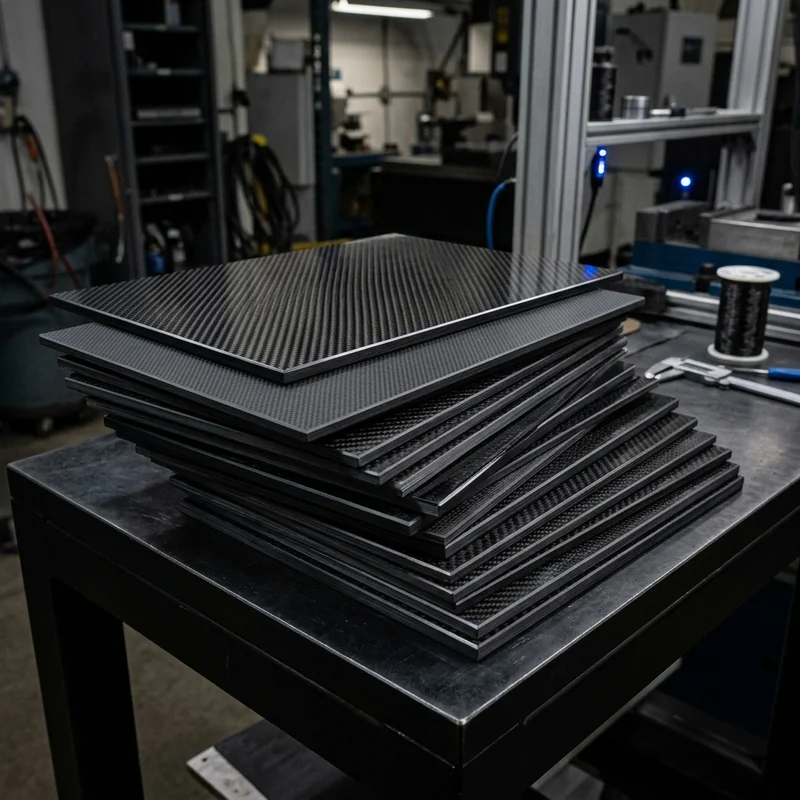
Carbon fiber standard plate-3k stripe
Lightweight, ultra-rigid standard sheets for drone fuselages, robot housings, facades and structural applications.

Carbon Fiber Plate — 3K Twill T700 1.5mm
Thin 1.5mm carbon fiber plate with 3K twill weave surface. Lightweight and stiff, commonly used for covers, panels, drone bodies, and applications requiring a premium aesthetic appearance.

Square Carbon Fiber Tube — 3K Twill T700
Square cross-section carbon fiber tube manufactured with 3K twill weave for torsional strength. Preferred for structural frames, trusses, and support columns where rectangular geometry offers design flexibility.

Carbon Fiber Plate — 3K Twill T700 3.0mm
Medium-thickness 3.0mm carbon fiber plate offering significantly higher load capacity while maintaining attractive 3K twill finish. Suitable for structural brackets, reinforcement plates, and load-bearing panels.
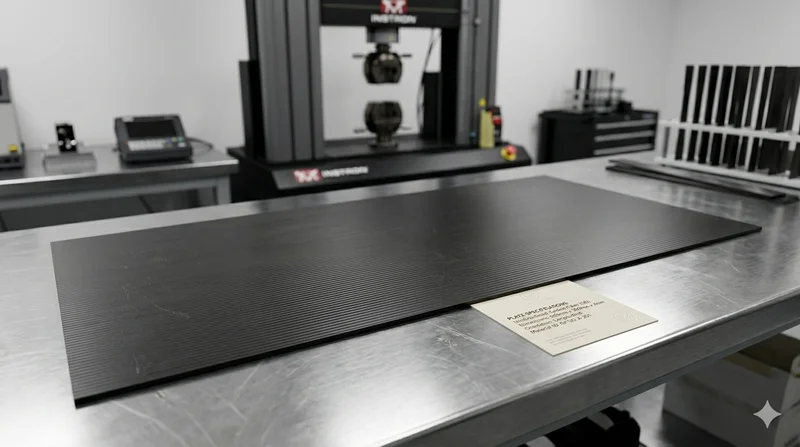
Carbon Fiber Plate — UD Unidirectional T700
Unidirectional carbon fiber plate with all fibers oriented in a single direction for maximum strength along the fiber axis. Essential for structural reinforcements, splints, and applications where load direction is predictable.