
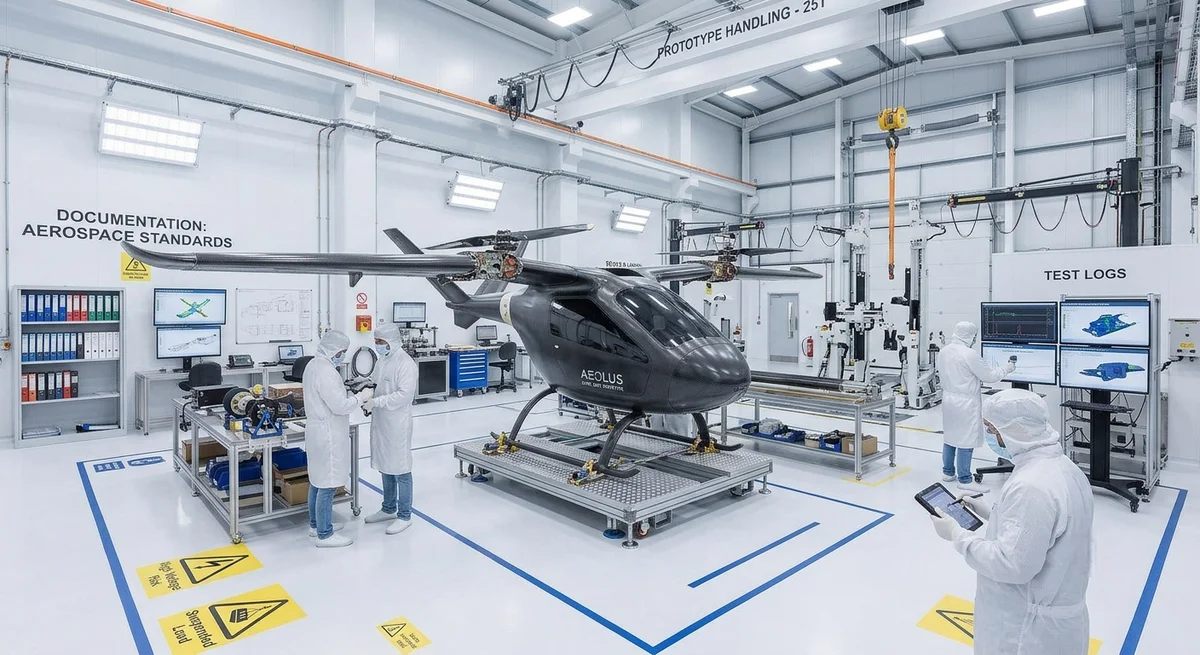
Urban Air Mobility (UAM) is driving unprecedented demand for high-performance carbon fiber composites. This article examines material requirements, structural design challenges, and certification standards for eVTOL aircraft structures.
Introduction
Urban Air Mobility (UAM) represents the next frontier in aviation. With over 200 eVTOL (electric Vertical Takeoff and Landing) aircraft programs in development worldwide, the demand for lightweight, high-strength structural materials has never been greater. Carbon fiber composites are the enabling technology for this new class of aircraft, comprising 60–75% of the structural weight of most eVTOL designs.
This article provides a comprehensive analysis of carbon fiber material requirements for UAM applications. We examine structural design challenges unique to eVTOL aircraft, certification pathways under EASA SC-VTOL and FAA Part 23, crashworthiness requirements, manufacturing scalability considerations, and cost targets necessary for commercial viability.
Material Requirements for eVTOL Structures
| Requirement | Specification | Why It Matters for UAM | Typical Material |
|---|---|---|---|
| Specific stiffness | >70 GPa/(g/cm³) | High cycle rate (4–6 flights/hour) demands fatigue-resistant, stiff structures | IM carbon/epoxy |
| Impact resistance | >6.7 J/mm (CAI) | Bird strike and ground handling impact scenarios | IM carbon + peel ply or thermoplastic veil |
| Fire resistance | FAR 25.853 (60s vertical burn) | Overflight of populated urban areas requires strict fire safety | Fire-retardant epoxy or BMI |
| UV/weather resistance | Minimum 5-year service without degradation | Continuous outdoor exposure (unlike aircraft in hangars) | UV-resistant paint system + epoxy |
| Lightning strike protection | Zone 1A (10% probability of attachment) | Low-altitude urban operations increase lightning exposure risk | Expanded copper foil + carbon skin |
| Damage tolerance | BVID (barely visible impact damage) at 35 J | Ground handling and debris impact from urban environment | Tough epoxy system + fabric layers |
| Production rate scalability | 10–50 aircraft/month (phase 1), 100–500/month (phase 2) | Unlike aerospace at 10–15/month, UAM targets automotive-like volumes | OoA prepreg, AFP, RTM |
Structural Design Approaches
Monocoque vs. Semi-Monocoque
Most eVTOL manufacturers have converged on a semi-monocoque approach for the main fuselage structure. A carbon fiber skin bonded to an internal frame of aluminum or carbon stringers provides an optimal balance of weight, manufacturability, and inspectability. Full monocoque designs, common in F1, are avoided for production UAM aircraft because damage inspection and repair access are too difficult in revenue service.
Wing and Rotor Support Structures
For lift-plus-cruise configurations, tilt-wing designs require the wing structure to support both vertical lift loads (up to 3.5g during maneuver) and cruise thrust. Carbon fiber spars with UD carbon in the flanges and ±45° fabric webs are typical. Rotor arms and pylons connecting motors to the wing or fuselage are often manufactured as single-piece carbon fiber components using bladder molding or RTM, reducing parts count by 70–80% compared to aluminum assemblies.
Energy Absorption Structures
Crashworthiness is a critical certification requirement. Dedicated carbon fiber energy-absorbing subfloor structures are designed with triggered crush zones that absorb 20–40 kJ of impact energy. These structures use tailored fiber placement to control progressive crushing, with specific trigger mechanisms (ply drop-offs, geometric triggers) that initiate stable crush at predetermined load levels (typically 8–15g deceleration for 95th percentile occupant protection).
Certification Pathways and Material Qualification
EASA SC-VTOL (Special Condition for VTOL) and the FAA's powered-lift certification framework both require material qualification programs that include:
- Environmental testing: 1,000-hour accelerated aging (heat, humidity, UV, thermal cycling)
- Statistical allowables generation: A-basis and B-basis values per CMH-17 with minimum 5 batches of material
- Flammability testing: Vertical burn (60-second and 12-second), heat release (OSU 65/65), smoke density
- Lightning strike testing: Zone-specific test regimes per SAE ARP 5416
- Fatigue testing: S-N curves to 10⁷ cycles with R-ratios from -1 to 10
Material qualification typically takes 12–18 months and costs $500,000–$2,000,000 per material system. This is a significant barrier for new carbon fiber suppliers entering the UAM market.
Manufacturing Scalability
UAM faces a unique manufacturing challenge: aerospace quality requirements with automotive production volumes. Key technologies enabling scalability include:
- Out-of-autoclave (OoA) prepregs: Reduce cycle time by 40–60% compared to autoclave cure. Cure at 90–120°C under vacuum pressure only.
- Automated fiber placement (AFP): Head speed of 1–2 m/s, placement rate of 10–20 kg/hour. Reduces labor content by 70% compared to hand layup.
- Resin transfer molding (RTM): Cycle times of 30–90 minutes for complex geometries. Near-net-shape reduces machining waste.
- Induction welding of thermoplastics: Weld times of 30–90 seconds per joint, enabling automated assembly without fasteners or adhesive cure cycles.
Market Forecast and Material Demand
| Year | Estimated Fleet Size | Carbon Fiber per Aircraft | Total CF Demand (metric tons) | Primary Material |
|---|---|---|---|---|
| 2026 | 50–80 (pre-production) | 300–450 kg | 18–36 | IM7/epoxy OoA prepreg |
| 2028 | 300–500 | 280–400 kg | 84–200 | IM7 + intermediate modulus fabric |
| 2030 | 1,500–3,000 | 250–350 kg | 375–1,050 | IM7 + High-modulus for rotor arms |
| 2035 | 10,000–18,000 | 200–300 kg | 2,000–5,400 | Automotive-grade CF + OoA prepreg |
FAQ
How does eVTOL carbon fiber usage compare to traditional aircraft?
An eVTOL aircraft uses 3–5× more carbon fiber per passenger seat than a conventional aircraft. A 4-passenger eVTOL contains 300–450 kg of carbon fiber (75 kg/seat), while a Boeing 787 contains 35 tons for 290 seats (120 kg/seat). The higher per-seat usage reflects the unique lift and structural requirements of vertical flight.
What are the biggest certification challenges for carbon fiber in UAM?
The primary challenges are: (1) demonstrating sufficient damage tolerance for high-cycle-rate operations (4–6 flights/hour vs. 1–2 flights/day for conventional aircraft), (2) meeting fire safety requirements for operations over populated areas, and (3) qualifying materials at automotive production rates while maintaining aerospace-quality statistical allowables.
Can eVTOL carbon fiber structures be cost-effectively mass-produced?
Yes, but it requires a fundamental shift from aerospace batch manufacturing to automotive flow production. The key enabling technologies are: automated fiber placement (AFP), out-of-autoclave prepregs, resin transfer molding (RTM) for complex components, and thermoplastic welding for assembly. Current prototype manufacturing costs of $50,000–$80,000 per aircraft for carbon fiber structure need to fall to $8,000–$15,000 at volume.
Related Articles
- Carbon Fiber Mooring for Floating Offshore Wind: Fatigue and Corrosion in Deep Water
- Carbon Fiber Bicycle Frame Optimization: Layup Design and Manufacturing for Competitive Racing
- Carbon Fiber CFRP Retrofit for Infrastructure: Bridge and Building Seismic Strengthening
- Carbon Fiber Medical Imaging Equipment: Lightweight Gantry and Couch Structures for MRI/CT
- Carbon Fiber EV Battery Enclosures: Crash Safety and Electromagnetic Shielding Design
- Carbon Fiber Structures for Low-Altitude Economy: UAV Airframes and eVTOL Components
Interested in Our Products?
Contact our team for competitive pricing and technical specifications.
Get a QuoteRelated Products

Carbon Fiber Plate — 3K Twill T700 1.5mm
Thin 1.5mm carbon fiber plate with 3K twill weave surface. Lightweight and stiff, commonly used for covers, panels, drone bodies, and applications requiring a premium aesthetic appearance.
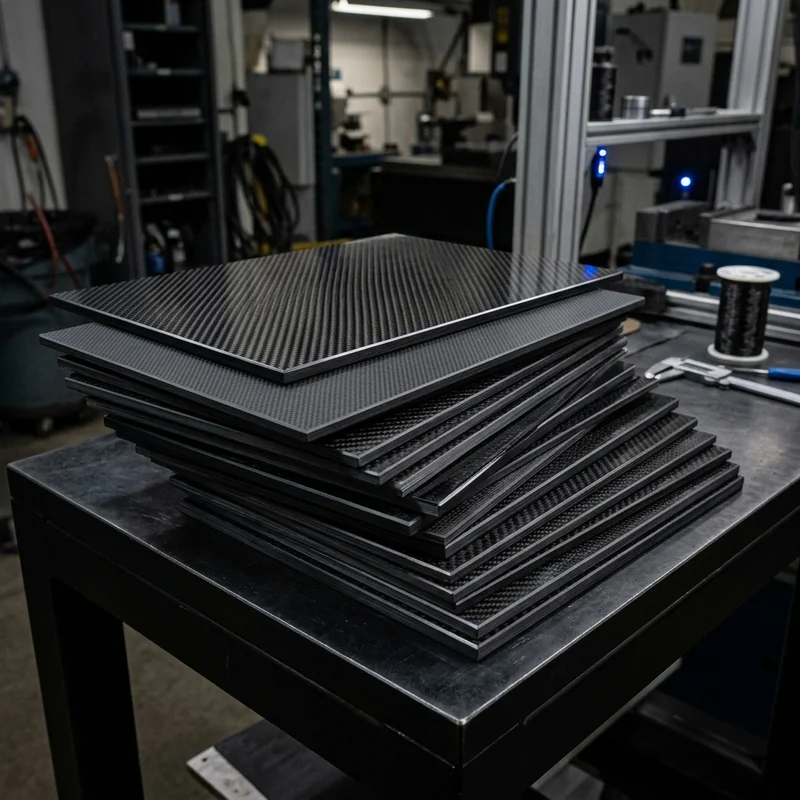
Carbon fiber standard plate-3k stripe
Lightweight, ultra-rigid standard sheets for drone fuselages, robot housings, facades and structural applications.

Square Carbon Fiber Tube — 3K Twill T700
Square cross-section carbon fiber tube manufactured with 3K twill weave for torsional strength. Preferred for structural frames, trusses, and support columns where rectangular geometry offers design flexibility.

Carbon Fiber Plate — 3K Twill T700 3.0mm
Medium-thickness 3.0mm carbon fiber plate offering significantly higher load capacity while maintaining attractive 3K twill finish. Suitable for structural brackets, reinforcement plates, and load-bearing panels.
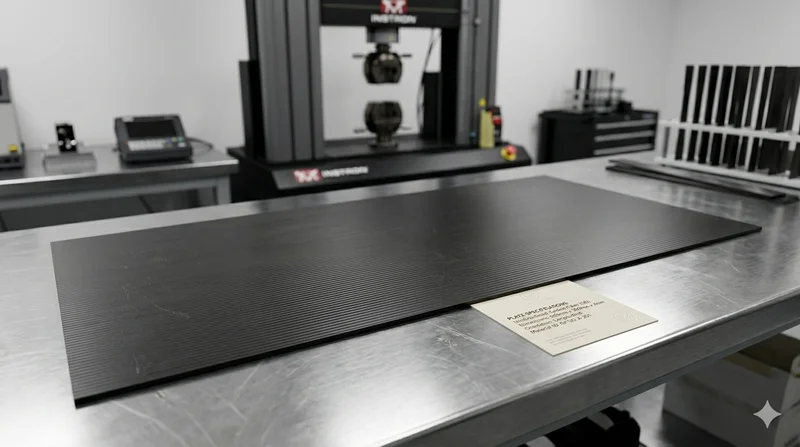
Carbon Fiber Plate — UD Unidirectional T700
Unidirectional carbon fiber plate with all fibers oriented in a single direction for maximum strength along the fiber axis. Essential for structural reinforcements, splints, and applications where load direction is predictable.