
Carbon fiber top tube repair is one of the few structural jobs a confident home mechanic can still finish, because the top tube lives in bending rather than the extreme point loads seen at the head tube and bottom bracket. A hairline crack behind the stem, a rack-clamp gouge or a crushed patch after
Introduction
Carbon fiber top tube repair is one of the few structural jobs a confident home mechanic can still finish, because the top tube lives in bending rather than the extreme point loads seen at the head tube and bottom bracket. A hairline crack behind the stem, a rack-clamp gouge or a crushed patch after a crash can all be stabilized with epoxy and a properly oriented patch, provided the laminate has not already separated internally while the paint still looked perfect.
This guide sets out what a carbon fiber top tube repair can and cannot fix, the sanding, layup and cure sequence used on real frames, whether you can paint carbon fiber parts once the patch is done, and when a carbon fiber sheet for bike reinforcement beats a full tube replacement. Every cost figure reflects typical 2026 shop labor rates and plain epoxy versus prepreg material prices.
Carbon Fiber Top Tube Repair: What Counts as a Fixable Crack
Damage that stays in the outer plies and has not moved the tube out of alignment is generally repairable. Damage that reaches the inner wall, deforms the bore or runs into a lug is a replacement decision, because nobody can inspect the far side of a closed tube without cutting it open.
| Damage type | Depth | Repair or replace | Typical cost |
|---|---|---|---|
| Paint chip, no fiber showing | Coating only | Cosmetic touch-up, no structural work | $0-20 DIY |
| Hairline crack in clear coat | Top ply | Repair: sand, patch, reclear | $40-90 DIY, $120-250 shop |
| Gouge with visible fiber break | 2-3 plies | Repair with patch overlapping 25 mm | $80-160 DIY, $250-450 shop |
| Crack with laminate delamination | Full wall | Repair only if tap test stays solid around it | $300-600 shop |
| Crushed or ovalized tube section | Full wall | Replace frame or tubeset | $400-1200+ |
| Crack running into the head lug | Joint | Replace, joint failure is not field repairable | Frame replacement |
The cheap line in that table is the clear-coat crack: it looks alarming and carries almost no structural risk. The row that worries a mechanic is the delamination, because the surface can look intact while the plies underneath have slipped and lost most of their load transfer.
Step by Step Carbon Fiber Top Tube Repair on the Bench
Work in a ventilated space above 18 degrees Celsius, wear a respirator while sanding, and mask everything you do not want epoxy on. Total working time runs two to three hours plus cure, so plan for the frame to sit untouched overnight.
- Inspect first: tap the area with a coin and listen for a dull, hollow note that changes pitch, which marks the delaminated boundary you have to open up.
- Sand back: feather the damaged area to bare laminate over a 40 to 60 mm zone, then scuff 25 mm beyond the visible crack so the patch bites into virgin material.
- Dry fit: cut two patches, one biased at 45 degrees and one at 0 degrees, each overlapping the damage by at least 25 mm on every side.
- Wet layup: brush slow-hardener epoxy into the void, lay the patches, squeegee out trapped air and finish with peel ply so the surface cures smooth.
- Cure and feather: hold 24 hours at room temperature, then feather the patch edge, wet-sand to 800 grit and reclear the whole zone.
Do not shorten the overlap. A patch that merely covers the visible crack works as a sticker rather than a repair, and the crack will walk out from under it within one season of hard riding.
Can You Paint Carbon Fiber Parts After a Repair
Yes, and you should, because paint and clear coat are what shield a fresh epoxy patch from UV, which degrades amine-cured resin faster than almost anything else in the workshop. The rule is full cure before abrasion: wait at least seven days after layup, or 24 hours at 40 degrees with a post-cure, before you put sandpaper on it.
Preparation is most of the finish. Wet-sand the whole tube to 600 grit so the new clear gets a mechanical key, wipe with wax and grease remover, spray a compatibility-promoting primer, then two coats of color and two of clear with proper flash time between coats. To refresh only the repair zone, blend the clear line into the original finish, because a hard edge there will show as a ridge for the life of the frame.
Carbon Fiber Sheet for Bike Frames: Reinforce or Replace
Sometimes the smarter move is not to rebuild the tube but to add a structural sleeve. A half-shell of carbon fiber sheet for bike reinforcement, wrapped around the damaged section and bonded with flexible epoxy, restores stiffness at a fraction of the cost of a new frameset, particularly on older models whose exact tubeset is out of production.
- Where a sleeve works: mid-tube cracks, rack-mount fatigue, downtube scuffs and seat-tube gouges while the bore is still round.
- Where it does not: lug and braze-on zones, any clamp that has been over-torqued, and cracks that already touch a joint.
- Material choice: twill or plain weave conforms to the tube radius, while a unidirectional wrap bridges the curve and leaves voids underneath.
- Weight cost: expect 25 to 60 g added, negligible on a touring build and worth noting on a climbing frame.
Frames leaving the workshop for gravel or bikepacking duty often get this treatment preemptively at the rack bosses, where repeated bolt loads are the most common source of the top tube cracks we see in the shop.
Frequently Asked Questions
Is a carbon fiber top tube repair safe for daily riding?
Yes, if the damage was limited to the outer plies and the repair used a full 25 mm overlap with a proper cure. Re-inspect after one week, one month and every six months afterwards: tap around the patch and look for clear-coat crazing at its border, the first sign that the patch edge is lifting.
How much does a professional carbon fiber top tube repair cost?
Expect 120 to 250 dollars for a clear-coat level crack, 250 to 450 for a multi-ply gouge and 300 to 600 once delamination is confirmed. Against 400 to 1200 dollars for a replacement frameset, repair is usually the rational choice unless the crack has reached a lug.
Can you paint carbon fiber parts without stripping the whole frame?
You can blend a spot repair into the original finish, but the new clear must be sanded and feathered at least 100 mm from the patch or the transition line stays visible. A full respray gives a uniform result and costs about the same in materials, so the real difference is labor.
Conclusion
A carbon fiber top tube repair succeeds when the damage is shallow, the overlap is generous and the cure is left alone, and it fails when a delaminated crack gets painted over and forgotten. Inspect early, tap test before you sand, reinforce a out-of-production tube with a carbon sleeve, and retire the frame the moment damage reaches a joint.
YongXian supplies carbon fiber sheet, plate, tube and CNC-cut blanks for repair and reinforcement work, including twill cloth and pre-cut patches sized for frame jobs. Browse our carbon fiber range or contact our engineering team with your tube dimensions and patch size.
Related Articles
- Carbon Fiber Road Wheels: What Matters for Buyers
- Carbon Fiber Drone Chassis Design: Loads, Layout and Layup
- Carbon Fiber Sheets 4x8: Buying, Pricing and Large Format Panel Uses
- Carbon Fiber Tube for RC Plane Spars and Pushrods: A Builder Guide
- Filament Wound Pipe Applications: Corrosion and Pressure Duty
- Filament Wound Bearing Design: Composite Sleeves That Outlast Bronze
Interested in Our Products?
Contact our team for competitive pricing and technical specifications.
Get a QuoteRelated Products

Round Carbon Fiber Tube — 3K Plain Weave T700
Standard round carbon fiber tube manufactured from Toray T700 grade fiber with 3K plain weave. Offers balanced strength and stiffness for general industrial applications including robotics, automation, sports equipment, and aerospace structures.

Square Carbon Fiber Tube — 3K Twill T700
Square cross-section carbon fiber tube manufactured with 3K twill weave for torsional strength. Preferred for structural frames, trusses, and support columns where rectangular geometry offers design flexibility.

Round Carbon Fiber Tube — 3K Twill
Lightweight and ultra-stiff round tubes ideal for drone frames, robotics, and structural applications.
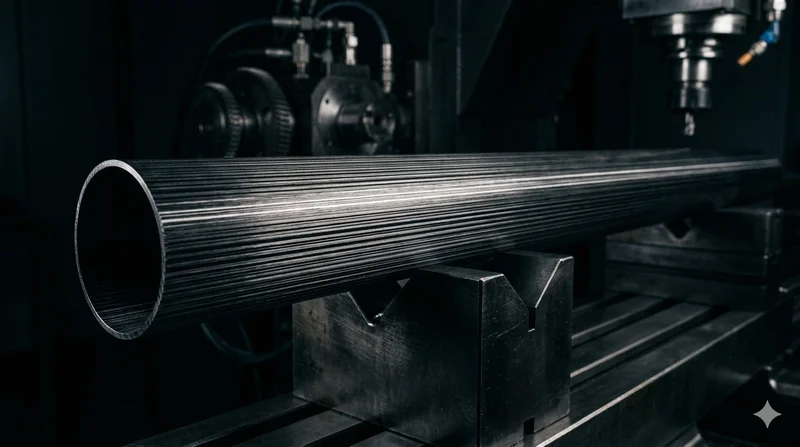
Round Carbon Fiber Tube — UD Unidirectional T700
Unidirectional (UD) round tube with all fibers aligned axially for maximum longitudinal stiffness. Ideal for applications requiring high bending rigidity with minimal weight, such as shafts, struts, and structural reinforcements.
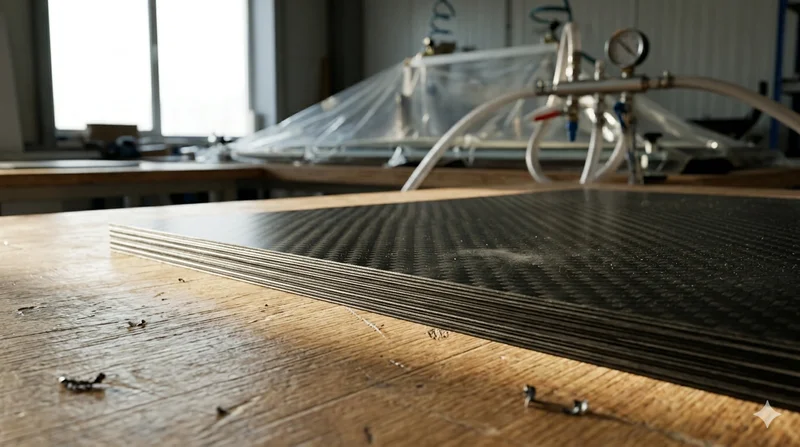
Carbon Fiber Plate — 3K Twill T700 3.0mm
Medium-thickness 3.0mm carbon fiber plate offering significantly higher load capacity while maintaining attractive 3K twill finish. Suitable for structural brackets, reinforcement plates, and load-bearing panels.