

Carbon fiber trade policy is shaped by national security concerns, anti-dumping duties, and industrial policy. This article maps the current tariff landscape — US Section 232 steel/aluminum tariffs affecting CF products, EU anti-dumping duties on Chinese CF, and emerging trade routes through Turkey and India.
Introduction
Carbon fiber trade policy has become increasingly complex and consequential as national security concerns, industrial policy, and environmental sustainability objectives intersect with global supply chain dynamics. The carbon fiber industry — with its dual-use nature (aerospace/defense and commercial), concentrated production capacity (Japan, US, China), and strategic importance for clean energy technologies — is at the center of trade policy debates in major economies.
Understanding the current tariff landscape, anti-dumping measures, and emerging trade routes is essential for carbon fiber buyers, suppliers, and investors navigating the global market. This article maps the key trade policy developments affecting carbon fiber in 2026 and their implications for supply chain strategy.
US Trade Policy Framework
The United States applies multiple overlapping tariff regimes to carbon fiber imports:
Section 232 tariffs (25%): Originally imposed on steel and aluminum imports for national security reasons, Section 232 tariffs affect carbon fiber products classified under metal matrix composites and certain carbon fiber-reinforced polymer (CFRP) products. The tariff applies to imports from most countries except those with negotiated exemptions (Australia, Brazil, Argentina, South Korea under specific quotas).
Section 301 tariffs (7.5–25%): Applied to Chinese-origin products, including carbon fiber and CFRP products. The tariff rate depends on the specific product classification: 25% for raw carbon fiber (HTS 6815.10), 7.5% for certain CFRP components. Combined with Section 232, effective tariff rates on Chinese carbon fiber can reach 40–60%.
Anti-dumping duties: The US Department of Commerce has imposed anti-dumping duties on Chinese-origin carbon fiber since 2019, with rates ranging from 25–90% depending on the exporter. These duties are reviewed annually and have significantly reduced Chinese carbon fiber imports to the US market.
Buy American provisions: Federal procurement requirements (Buy American Act, Build America Buy America Act) mandate domestic content thresholds for carbon fiber in government-funded projects. Current requirements specify 75% domestic content for defense applications and 55% for infrastructure projects, with planned increases to 85% and 75% respectively by 2029.
EU Anti-Dumping and Trade Defense
The European Union has implemented comprehensive trade defense measures for carbon fiber:
Anti-dumping duties on Chinese CF (2021–2029): The EU imposed definitive anti-dumping duties of 18.3–35.3% on Chinese-origin carbon fiber in 2021, following a investigation that found material injury to EU producers. The duties were extended in 2024 for another five years based on evidence that dumping would likely continue.
Countervailing duties: In addition to anti-dumping duties, the EU has imposed countervailing duties (10–25%) on Chinese carbon fiber, addressing subsidies provided by Chinese provincial and national governments to domestic producers.
Rules of Origin: The EU's preferential trade agreements (with Japan, South Korea, Singapore, etc.) require compliance with specific rules of origin for carbon fiber products. Typically, the fiber must be produced in the preferential partner country to qualify for reduced tariffs, preventing circumvention through third-country processing.
Carbon Border Adjustment Mechanism (CBAM): While currently focused on steel, aluminum, cement, and fertilizers, CBAM is expected to expand to include carbon fiber products by 2028. The mechanism will require importers to purchase carbon certificates corresponding to the embedded carbon emissions of imported products, creating a de facto carbon tariff.
Chinese Export Dynamics
China has become the world's largest carbon fiber producer by capacity (approximately 80,000 tonnes/year in 2025), but faces growing trade barriers in key markets:
Domestic market absorption: Approximately 70% of Chinese carbon fiber production is consumed domestically, primarily by wind energy (40%), sporting goods (25%), and aerospace/defense (15%) sectors.
Export diversification: Facing US and EU tariffs, Chinese producers are redirecting exports to Southeast Asia, Middle East, and Turkey. Chinese CF exports to ASEAN countries grew 45% in 2025, while exports to the EU declined 30%.
Quality convergence: Chinese producers — led by Zhongfu Shenying, Jilin Carbon Valley, and Guangwei Composites — have narrowed the quality gap with Japanese and US producers, enabling competitive positioning in mid-range applications even with tariff premiums.
Emerging Trade Routes and Hubs
Tariff pressures are reshaping global carbon fiber trade flows:
Turkey: Turkish carbon fiber converters are emerging as intermediaries, importing Chinese fiber, processing it into prepreg or components, and exporting to EU and US markets under preferential trade terms. Turkey's customs union agreement with the EU provides partial tariff relief for qualifying products.
India: Indian carbon fiber producers — led by Adani Composites and Carbon Fiber Technologies — are expanding capacity to serve both domestic demand and export markets. India's production cost advantage (30–40% lower than Chinese costs) makes it an emerging alternative source.
Mexico: USMCA (US-Mexico-Canada Agreement) provisions allow carbon fiber products manufactured in Mexico to enter the US duty-free, provided they meet rules of origin requirements. Several Mexican CFRP manufacturers are expanding capacity to serve the US aerospace and automotive markets.
Strategic Implications for Buyers
Carbon fiber buyers should consider several strategies to manage tariff risk:
Multi-sourcing: Maintaining qualified suppliers in multiple tariff jurisdictions reduces exposure to any single country's trade policy changes. Dual-sourcing from Japan/US and from India/Turkey provides geographic diversification.
Nearshoring evaluation: For applications requiring high volumes, evaluating manufacturing setup in Mexico (for US access) or Turkey (for EU access) can reduce effective tariff costs.
Contract structure: Incorporating tariff adjustment clauses in supply contracts allows cost sharing when tariff rates change unexpectedly.
Precursor localization: Investing in domestic precursor (PAN) production capacity reduces dependency on imported carbon fiber and insulates against tariff volatility.
Conclusion
Carbon fiber trade policy in 2026 is defined by the intersection of national security concerns, industrial policy, and environmental objectives. The US and EU maintain substantial tariff barriers against Chinese carbon fiber, while emerging producers in India, Turkey, and Mexico are reshaping global supply chains. For carbon fiber buyers and investors, understanding these trade policy dynamics — and building supply chain resilience through diversification, nearshoring, and strategic sourcing — is essential for managing cost and supply risk in an increasingly fragmented global market.
Part of topic
Related Articles
- Recycled Carbon Fiber Market Forecast 2030: Technology Maturity and Commercialization Path
- South Korea Carbon Fiber Market 2026: Hydrogen Economy and Shipbuilding Innovation
- Wind Turbine Blade Leading Edge Protection 2026: Polyurethane, Tape, and Metallic Shield Solutions
- China Carbon Fiber Overcapacity 2026: Price War Impact and Industry Consolidation
- India Carbon Fiber Market 2026: Wind Energy, Aerospace, and Defense Expansion
- PAN Precursor Market 2026: Acrylonitrile Supply and Carbon Fiber Cost Structure
Interested in Our Products?
Contact our team for competitive pricing and technical specifications.
Get a QuoteRelated Products

Carbon Fiber Fishing Rod Blank
High-quality carbon fiber fishing rod blank manufactured from multiple grades of Toray carbon fiber cloth. Available in a wide range of lengths, powers, and actions for freshwater and saltwater applications. Suitable for OEM rod building.
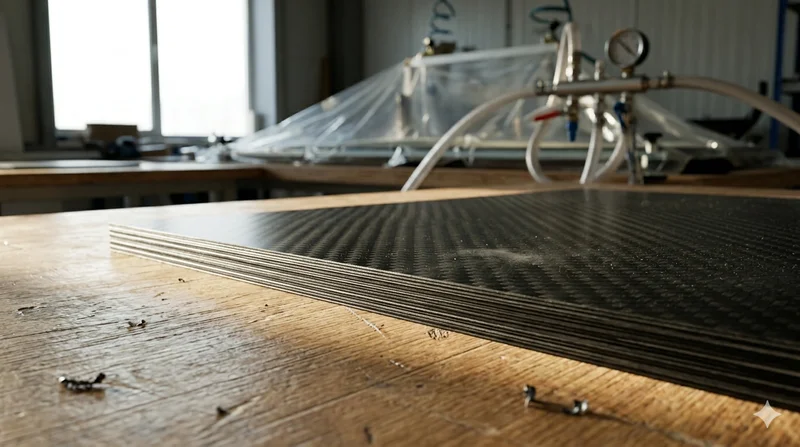
Carbon Fiber Plate — 3K Twill T700 3.0mm
Medium-thickness 3.0mm carbon fiber plate offering significantly higher load capacity while maintaining attractive 3K twill finish. Suitable for structural brackets, reinforcement plates, and load-bearing panels.
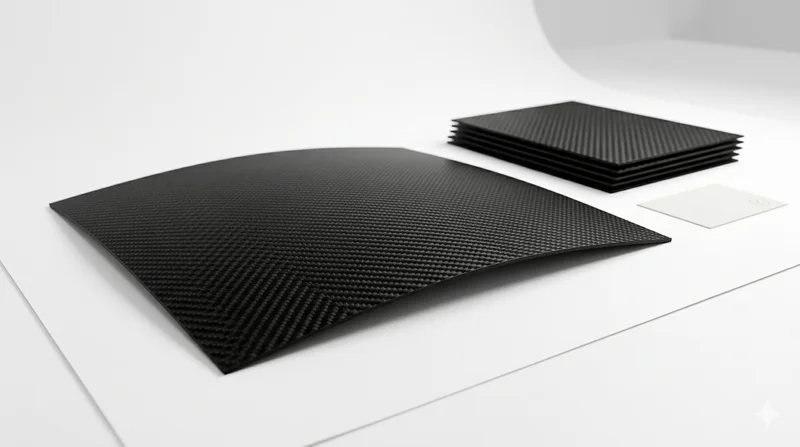
Carbon Fiber Plate — 3K Twill T700 1.5mm
Thin 1.5mm carbon fiber plate with 3K twill weave surface. Lightweight and stiff, commonly used for covers, panels, drone bodies, and applications requiring a premium aesthetic appearance.
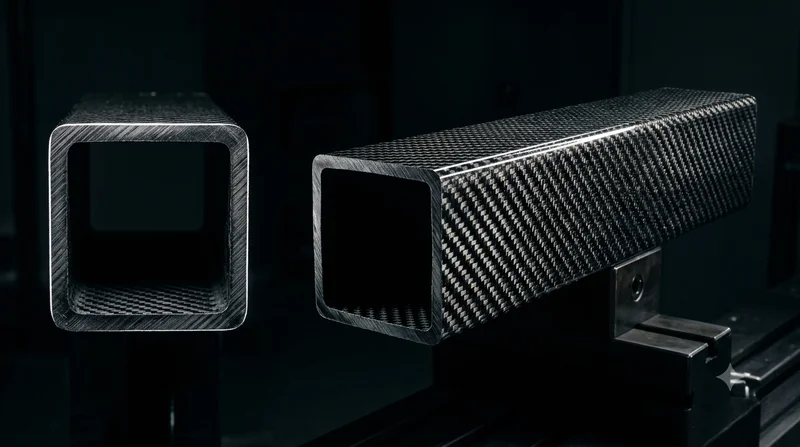
Square Carbon Fiber Tube — 3K Twill T700
Square cross-section carbon fiber tube manufactured with 3K twill weave for torsional strength. Preferred for structural frames, trusses, and support columns where rectangular geometry offers design flexibility.

Carbon Fiber Pickleball Paddle
High-performance pickleball paddle with Toray T700 carbon fiber face and polypropylene honeycomb core. Delivers excellent power-to-weight ratio, spin generation, and vibration dampening for competitive play.