
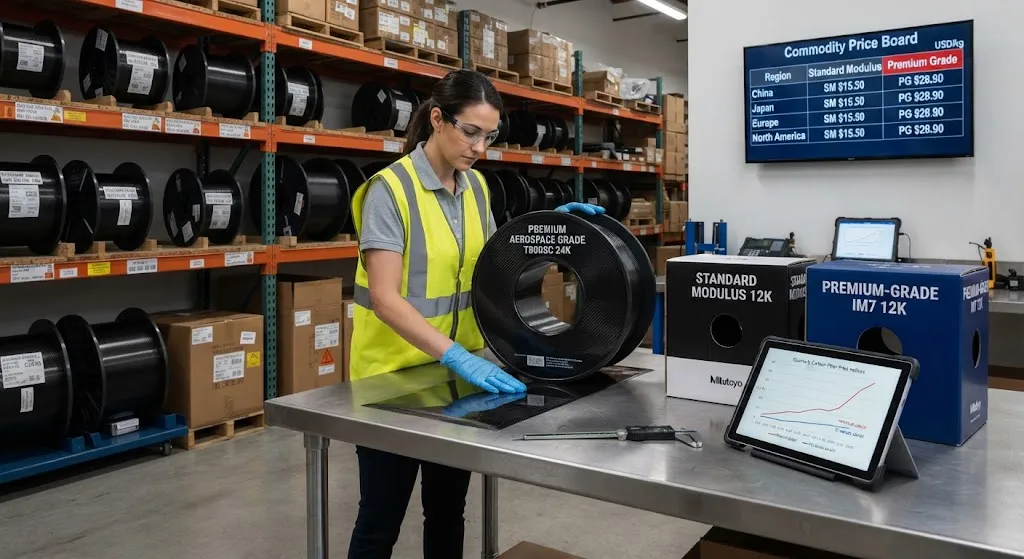
Carbon fiber prices are rebalancing along two diverging tracks in 2026. At the premium end, Toray announced in 2025 that it would raise prices on carbon fiber and intermediate products by 10-20% from January 2026, citing rising raw material, energy, and logistics costs. At the commodity
Introduction
Carbon fiber prices are rebalancing along two diverging tracks in 2026. At the premium end, Toray announced in 2025 that it would raise prices on carbon fiber and intermediate products by 10-20% from January 2026, citing rising raw material, energy, and logistics costs. At the commodity end, Chinese large-tow oversupply has driven T300-class standard modulus prices down from $33 per kilogram in 2022 to roughly $12 per kilogram by the end of 2024, where they have stabilized at historically low levels.
Both movements are real, both are market-driven, and both affect the same buyers. The result is a market where the average price no longer describes anything useful: the price depends entirely on grade, qualification status, and region of supply. This article explains the anatomy of the collapse, what Toray's hike actually covers, and how the two forces interact to shape procurement negotiation baselines in 2026-2027.
The Anatomy of the Price Collapse
The commodity collapse and the premium hike are two chapters of the same story: a supply base built for one market colliding with demand from another. The table below summarizes the price trajectory of representative segments in USD per kilogram.
| Segment | 2022 indicative price | End-2024 spot level | Primary driver of the move |
|---|---|---|---|
| T300-class standard modulus, 12K | 33 USD/kg | About 12 USD/kg | Chinese standard-modulus overcapacity |
| Large-tow 48-60K industrial | 25-30 USD/kg | 9-14 USD/kg | Oversupply plus wind demand timing swings |
| T700-class general-purpose | 38-45 USD/kg | 18-24 USD/kg | Standard-modulus pressure spreading upward |
| Aerospace-grade small tow, qualified | 70-90 USD/kg | 65-85 USD/kg | Qualification barriers, stable long-term contracts |
Two structural forces drove the collapse. First, Chinese producers commissioned tens of thousands of tonnes of new standard-modulus capacity between 2020 and 2024, timed to serve wind and industrial demand that then dipped in 2023, leaving lines underutilized and inventory high. Second, energy prices and shipping costs normalized after their post-pandemic spike, removing a cost floor that had previously been passed through to customers. Together they converted a balanced market into a buyers' market for every commodity segment.
Toray's 10-20% Price Hike: What It Covers
Toray's announced increase applies to carbon fiber and its intermediate products — the tow itself, unidirectional fabrics, prepreg, and related materials — sold under its brand portfolio. The stated reasons are the familiar cost stack: inflation in precursor and auxiliary raw materials, higher energy prices in production regions, and rising logistics and labor costs. The 10-20% range reflects a product-tiered approach: the largest increases target segments where supply was already tight and where contract prices had lagged input costs for several quarters.
The hike matters for three reasons beyond its direct effect on invoice prices. It signals that premium-grade capacity is not being diluted by the commodity glut — the price leader in aerospace-grade fiber is passing on its own cost inflation rather than absorbing competition. It realigns price expectations for contract renewals across the sector: when the largest producer moves, other suppliers gain cover to follow. And it reopens the gap between premium and commodity pricing, giving buyers a clearer two-tier market to plan around.
- Scope: Tow, fabrics, prepreg, and related intermediates, effective January 2026.
- Range: 10-20% depending on product and grade tier, with tighter product lines at the higher end.
- Rationale: Precursor and raw material costs, energy inflation, logistics and labor — the full input-cost stack.
- Signal: The largest producer confirms premium-grade supply remains price-inelastic to the commodity glut.
Why the Two Markets Diverge
The divergence between commodity and premium pricing is not accidental; it reflects different market structures. Commodity standard modulus fiber is quasi-undifferentiated: many regional producers supply the same T300-class product, switching costs are low, and qualification barriers are minimal outside aerospace. In such a market, marginal capacity sets the price, and China's surplus capacity is the marginal capacity — hence the $12 floor.
Premium aerospace-grade fiber sits in the opposite structure. Buyers are locked in through qualification: the months of testing, documentation, and certification needed to approve a fiber for flight-critical or safety-critical components make switching expensive, so incumbent suppliers enjoy pricing power even when commodity markets collapse. That is also why Toray's hike can hold: demand for qualified grades recovered with aerospace production rates, and the segment operates near effective capacity limits.
The interaction of the two structures created 2025's odd market: record wind demand absorbing commodity tonnage, aerospace recovering on the premium side, and a growing middle segment — T700-class general-purpose fiber for pressure vessels, automotive structural parts, and drones — squeezed between the two price anchors.
The Road to Rebalancing in 2026
Rebalancing does not mean prices return to a single equilibrium; it means the diverging tracks converge on a sustainable structure. Several forces point in that direction. Wind demand crossed 100,000 tonnes in 2025, and at 44.5% of total consumption it now absorbs the largest single share of commodity-grade tonnage — sustained at record levels, it tightens the large-tow segment that suffered the deepest price cuts. Chinese producers have responded to margin pressure by idling marginal lines and reorienting new investment toward larger tow counts and higher-value grades, slowing the accumulation of new default supply. And downstream consolidation in the automotive and storage tank industries concentrates buying power against the commodity segment, disciplining further price erosion.
The most likely 2026-2027 outcome is not a return to 2022 levels but a two-platform market: commodity grades broadly stable near current lows with modest seasonal variation, and premium grades firming through cost-push hikes and constrained supply. The middle segment, with no natural anchor, will fluctuate with the relative scarcity of each grade family — the segment where negotiation skill matters most.
Implications for Procurement Negotiation
For buyers, the rebalanced market rewards precise segmentation. Anchor commodity-volume agreements to published spot levels plus a defensible differential, rather than to historic averages that no longer describe supply. For qualified aerospace or IM/HM grades, expect hikes in the 10-20% range and negotiate the timing and liquidity of payments, not the direction of the movement. For the middle segment, build a multi-supplier panel that can switch between commodity and premium sources as price gaps widen and narrow.
- Index-based pricing for commodity: Tie standard-modulus contracts to a transparent spot or cost index rather than fixed pricing, protecting both parties from sudden swings.
- Cost-pass-through clauses for premium: Formalize the input-cost mechanism so annual reviews reflect documented raw material and energy changes.
- Volume commits against supply-security risk: Lock annual floors early in the year, when producers allocate capacity against wind and aerospace demand peaks.
- Cross-regional sourcing: Keep at least one non-Chinese qualified source for commodity grades to preserve leverage without abandoning the cost advantage.
Frequently Asked Questions
Will carbon fiber prices generally rise in 2026 because of Toray's hike?
No — the hike applies to Toray's carbon fiber and intermediates, concentrated in premium and qualified grades, and other producers are expected to follow mainly in the same segments. Commodity T300-class and large-tow prices are governed by Chinese supply surplus and remain near historic lows. The realistic expectation for 2026 is a wider gap between premium and commodity pricing, not a uniform price increase across the market.
Why did T300 prices fall from $33/kg to about $12/kg, and can they recover?
The fall reflects Chinese standard-modulus overcapacity commissioned between 2020 and 2024, combined with a 2023 demand dip that left lines underutilized. Marginal Chinese capacity became the price setter of a quasi-undifferentiated commodity. Recovery depends on capacity rationalization, not demand alone: sustained record wind demand running above 100,000 tonnes, idled marginal lines, and redirected investment toward larger tow counts would support a gradual climb, but a return to $30 levels is unlikely without permanent capacity removal.
How should a buyer structure a 2026 contract to benefit from the price rebalancing?
Split the contract by grade tier. For commodity volumes, use index-based or spot-linked pricing with a small fixed differential, multi-source across at least two regions, and lock annual volume floors early. For qualified premium grades, accept the 10-20% direction but negotiate ramp timing, payment terms, and volume commitments that offset the increase. For the middle T700-class segment, maintain a flexible supplier panel that can switch between commodity and premium sources as differentials change during the year.
Conclusion
The 2026 carbon fiber price rebalancing is less a single correction than a structural reorganization of the market into two price platforms: commodity grades anchored near historic lows by Chinese supply, and premium grades firming through cost-push hikes from the price leaders. Toray's 10-20% increase is the clearest statement that premium-grade supply remains price-inelastic, while T300's collapse from $33 to $12 per kilogram shows how far commodity discipline has fallen.
For procurement teams, the winning approach is segmentation: index-based commodity contracts, cost-pass-through terms for premium grades, early volume commitments, and a supplier panel that preserves optionality across both platforms. Browse our carbon fiber grades and formats across commodity and premium tiers, or speak with our team to build a sourcing structure aligned with the 2026 rebalancing.
Part of topic
Related Articles
- Recycled Carbon Fiber Market Forecast 2030: Technology Maturity and Commercialization Path
- South Korea Carbon Fiber Market 2026: Hydrogen Economy and Shipbuilding Innovation
- Wind Turbine Blade Leading Edge Protection 2026: Polyurethane, Tape, and Metallic Shield Solutions
- China Carbon Fiber Overcapacity 2026: Price War Impact and Industry Consolidation
- India Carbon Fiber Market 2026: Wind Energy, Aerospace, and Defense Expansion
- PAN Precursor Market 2026: Acrylonitrile Supply and Carbon Fiber Cost Structure
Interested in Our Products?
Contact our team for competitive pricing and technical specifications.
Get a QuoteRelated Products

Carbon Fiber Fishing Rod Blank
High-quality carbon fiber fishing rod blank manufactured from multiple grades of Toray carbon fiber cloth. Available in a wide range of lengths, powers, and actions for freshwater and saltwater applications. Suitable for OEM rod building.
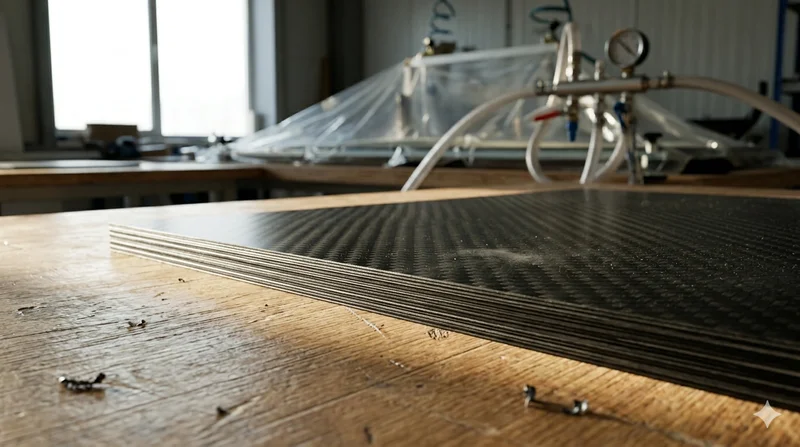
Carbon Fiber Plate — 3K Twill T700 3.0mm
Medium-thickness 3.0mm carbon fiber plate offering significantly higher load capacity while maintaining attractive 3K twill finish. Suitable for structural brackets, reinforcement plates, and load-bearing panels.
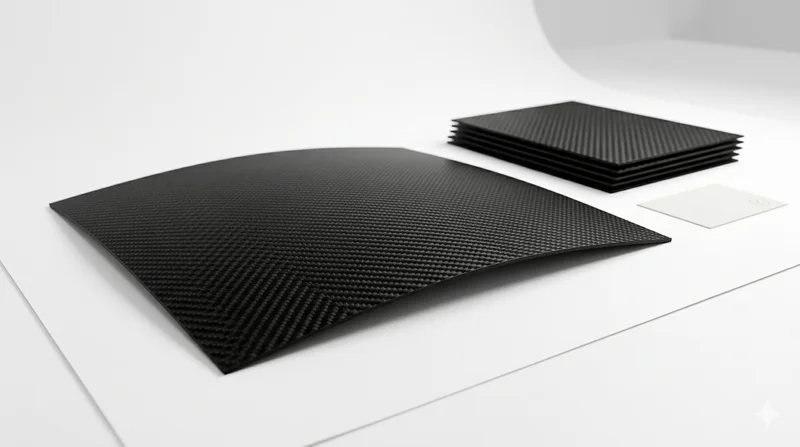
Carbon Fiber Plate — 3K Twill T700 1.5mm
Thin 1.5mm carbon fiber plate with 3K twill weave surface. Lightweight and stiff, commonly used for covers, panels, drone bodies, and applications requiring a premium aesthetic appearance.

Square Carbon Fiber Tube — 3K Twill T700
Square cross-section carbon fiber tube manufactured with 3K twill weave for torsional strength. Preferred for structural frames, trusses, and support columns where rectangular geometry offers design flexibility.

Carbon Fiber Drone Arm
Precision-molded carbon fiber drone arm combining unidirectional fiber for stiffness and woven layers for torsional strength. Designed for FPV, photography, and industrial drone platforms. Each arm is CNC-machined to exact specifications.