
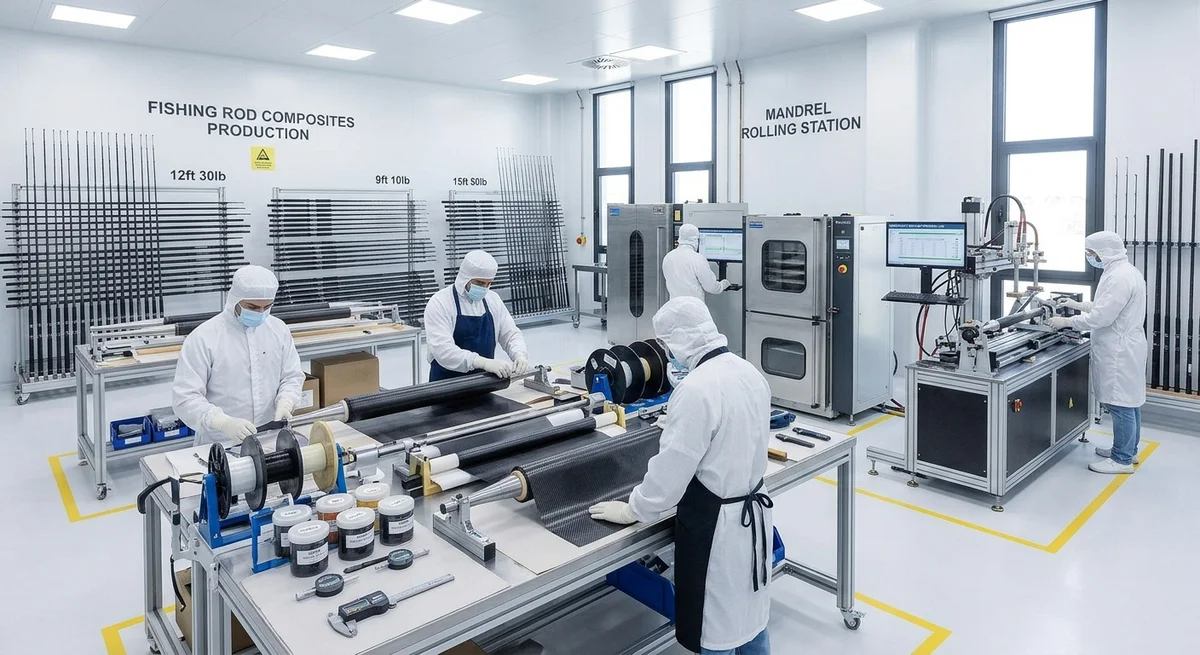
Fishing rod blank performance is determined by carbon fiber modulus, taper design, and layup schedule. We present modulus grade data, action classification, and spine measurement methods for OEM buyers selecting blank specifications.
Introduction
Carbon fiber fishing rod blanks represent the highest performance tier in the global fishing tackle market, with carbon fiber construction accounting for over 60% of mid-to-premium rod sales in North America and Europe as of 2026. The blank—the tapered tubular shaft that forms the rod body—is the single most performance-critical component, determining casting distance, hook-setting power, fish-fighting leverage, and sensitivity. At YongXian CarbonFiber, we manufacture carbon fiber tube blanks using roll-wrapping and filament winding processes, with modulus grades ranging from IM6 to high-modulus 60 Msi materials, tailored to OEM rod builder specifications.
Carbon Fiber Modulus and Rod Performance
The modulus of the carbon fiber reinforcement is the primary determinant of blank stiffness and recovery speed. Three modulus grades dominate the fishing rod market.
| Grade | Modulus (Msi) | Tensile Strength (ksi) | Tensile Strength (MPa) | Typical Application | Relative Material Cost |
|---|---|---|---|---|---|
| IM6 class | 30–34 | 600–710 | 4,140–4,890 | General freshwater, bass, walleye | 1.0× (baseline) |
| IM7 class | 40–44 | 720–780 | 4,960–5,380 | Saltwater, jigging, heavy cover | 1.3–1.5× |
| High Modulus | 50–60 | 450–550 | 3,100–3,790 | Competition casting, ultralight, ice fishing | 2.0–2.5× |
The inverse relationship between modulus and tensile strength is critical: high-modulus fibers (50+ Msi) deliver exceptional stiffness but are more brittle and less impact-resistant. For saltwater or heavy-cover applications where impact loads can exceed 15 kg, IM7 offers a superior balance of stiffness and toughness.
Taper Design and Action Classification
Action—the curve shape of a loaded rod—is governed by the taper rate (change in diameter per unit length) and the layup schedule. We classify blanks by taper rate into three action categories.
- Fast action (taper rate 0.06–0.08 mm/mm): The blank bends predominantly in the upper third of its length. Advantages: maximum casting accuracy, rapid hook set, high sensitivity. Disadvantages: shorter casting distance, less shock absorption during fight. Preferred for jigging, flipping, and pitching techniques.
- Moderate action (taper rate 0.04–0.06 mm/mm): Bends through the upper half of the blank. Advantages: balanced accuracy and casting distance, versatile across lure weights. The most common action specification for general-purpose rods.
- Slow action (taper rate 0.02–0.04 mm/mm): The entire blank flexes in a smooth parabolic curve. Advantages: maximum casting distance with light lures, superior shock absorption, ideal for light lines. Preferred for trout, panfish, and surf casting.
Within each action category, the recovery speed—measured as the time for the rod tip to return to within 2° of its resting position after deflection—is directly proportional to the carbon fiber modulus. A 50 Msi blank recovers 25–35% faster than an IM6 blank of identical taper design.
Manufacturing Process: Roll-Wrapping vs Filament Winding
| Parameter | Roll-Wrapped Blank | Filament-Wound Blank |
|---|---|---|
| Fiber orientation control | Precise (±2°) | Programmable (±1°) |
| Typical modulus range | 30–60 Msi | 30–45 Msi |
| Production volume efficiency | Low–medium (100–5,000 units) | High (5,000+ units) |
| Wall thickness uniformity | ±0.05 mm | ±0.03 mm |
| Tooling cost per taper design | $800–2,500 | $5,000–15,000 |
| Minimum order for custom taper | 500 units | 2,000 units |
We use roll-wrapping for custom and short-run OEM orders (500–5,000 units) where taper design flexibility is paramount, and filament winding for high-volume production runs where wall uniformity and cycle time reduction justify the higher initial tooling investment.
Spine Determination and Guide Placement
Every rolled or filament-wound blank has a spine—the stiffest bending axis resulting from the overlap seam in the layup. Consistent spine orientation relative to guide placement is critical for rod performance. We measure the spine by rotating the blank in 24 incremental positions under a fixed cantilever load and recording the rotational position with minimum deflection. The guides are then placed on the opposite side (spine-down orientation), aligning the guides with the stiffest axis to prevent the rod from twisting under load.
Frequently Asked Questions
What is the practical difference between IM6 and IM7 carbon fiber in a fishing rod blank?
IM7 offers approximately 30% higher modulus (40–44 Msi vs 30–34 Msi) and 10–15% higher tensile strength (720–780 ksi vs 600–710 ksi) at roughly 30–50% higher material cost. In actual fishing performance, IM7 blanks provide faster recovery speed, better sensitivity, and improved lifting power at the same blank weight. For saltwater and heavy-cover freshwater applications, we recommend IM7; for general freshwater rods where cost sensitivity is higher, IM6 delivers excellent performance at a lower price point.
How is the spine of a rod blank determined, and why does it matter?
The spine is measured by supporting the blank at its tip and butt, applying a fixed load at mid-span, and rotating the blank in 24 rotational positions. The position showing the least deflection under load is the spine. Guides must be placed on the opposite side (spine-down orientation) so that under load, the rod bends consistently without twisting. Improper spine-guide alignment can reduce casting accuracy by 15–25% and cause the rod to rotate in the angler's hand during a fight.
What custom blank specifications do you offer for OEM rod builders?
Available lengths: 1.2 m to 3.6 m in 150 mm increments. Taper is fully customizable: we adjust the mandrel profile and layup schedule to achieve target action curves. Modulus grade selection: IM6, IM7, or high-modulus (50–60 Msi). Minimum order: 500 units per custom taper design. Lead time: 6–8 weeks from taper design approval to first shipment. We provide sample blanks for mechanical testing before production commitment.
Does carbon fiber modulus affect the durability of a fishing rod blank?
Yes. High-modulus fibers (50–60 Msi) have lower ultimate strain to failure (0.7–1.0%) compared to IM6 (1.5–1.8%). This means high-modulus blanks are more prone to catastrophic failure under impact loads—for example, a hook snag or accidental rod tip impact. IM7 (40–44 Msi) represents the optimal durability-to-stiffness ratio for most applications. For dedicated competition casting where weight and stiffness are the only priorities, high-modulus is justified despite reduced impact resistance.
Conclusion
The science of carbon fiber fishing rod blanks—from fiber modulus selection and taper design to manufacturing method and spine orientation—determines the final rod's casting accuracy, lifting power, sensitivity, and durability. We manufacture custom carbon fiber rod blanks in modulus grades from IM6 to 60 Msi, using both roll-wrapping and filament winding processes, with minimum orders from 500 units. Explore our tube blank specifications or contact our engineering team to discuss your next blank design.
Part of topic
Related Articles
- Carbon Fiber Mooring for Floating Offshore Wind: Fatigue and Corrosion in Deep Water
- Carbon Fiber Bicycle Frame Optimization: Layup Design and Manufacturing for Competitive Racing
- Carbon Fiber CFRP Retrofit for Infrastructure: Bridge and Building Seismic Strengthening
- Carbon Fiber Medical Imaging Equipment: Lightweight Gantry and Couch Structures for MRI/CT
- Carbon Fiber EV Battery Enclosures: Crash Safety and Electromagnetic Shielding Design
- Carbon Fiber Structures for Low-Altitude Economy: UAV Airframes and eVTOL Components
Interested in Our Products?
Contact our team for competitive pricing and technical specifications.
Get a QuoteRelated Products
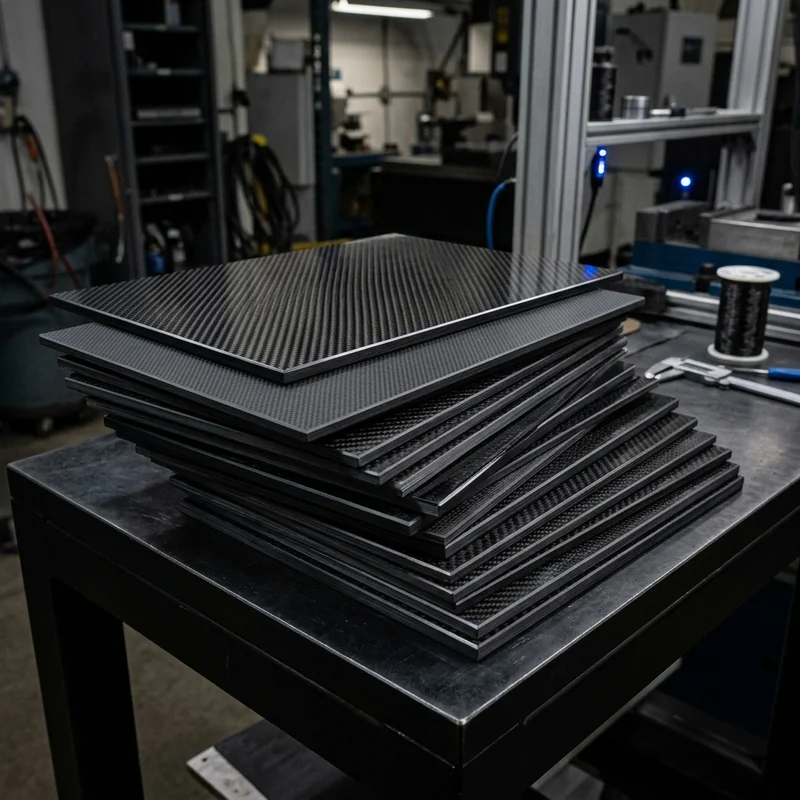
Carbon fiber standard plate-3k stripe
Lightweight, ultra-rigid standard sheets for drone fuselages, robot housings, facades and structural applications.

Carbon Fiber Plate — 3K Twill T700 1.5mm
Thin 1.5mm carbon fiber plate with 3K twill weave surface. Lightweight and stiff, commonly used for covers, panels, drone bodies, and applications requiring a premium aesthetic appearance.
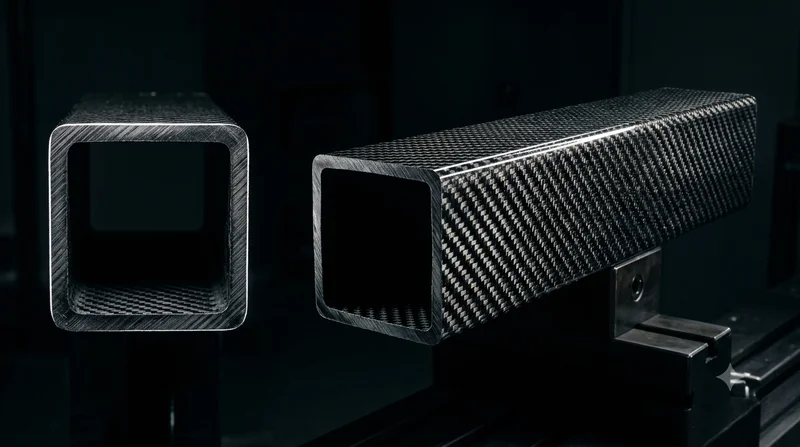
Square Carbon Fiber Tube — 3K Twill T700
Square cross-section carbon fiber tube manufactured with 3K twill weave for torsional strength. Preferred for structural frames, trusses, and support columns where rectangular geometry offers design flexibility.
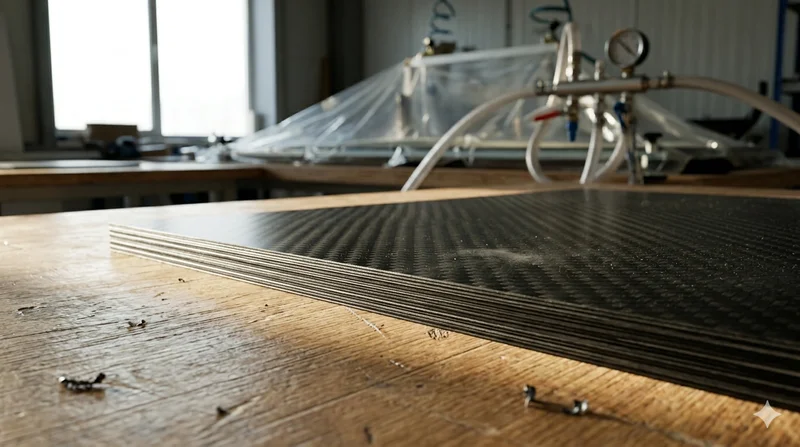
Carbon Fiber Plate — 3K Twill T700 3.0mm
Medium-thickness 3.0mm carbon fiber plate offering significantly higher load capacity while maintaining attractive 3K twill finish. Suitable for structural brackets, reinforcement plates, and load-bearing panels.
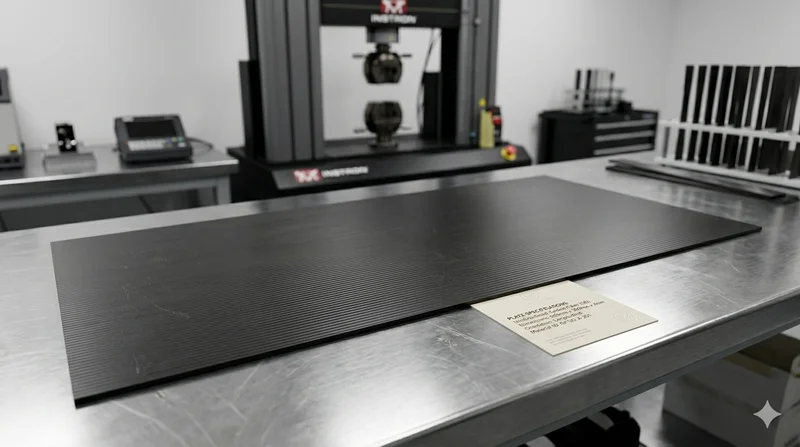
Carbon Fiber Plate — UD Unidirectional T700
Unidirectional carbon fiber plate with all fibers oriented in a single direction for maximum strength along the fiber axis. Essential for structural reinforcements, splints, and applications where load direction is predictable.