
Canada has long played a supporting role in the North American carbon fiber story — the second-largest aerospace composites base on the continent, but always in the shadow of the United States. That positioning is changing. Three demand streams are converging to make Canada a market wor
Introduction
Canada has long played a supporting role in the North American carbon fiber story — the second-largest aerospace composites base on the continent, but always in the shadow of the United States. That positioning is changing. Three demand streams are converging to make Canada a market worth examining on its own terms: a national hydrogen strategy that is turning existing gas infrastructure into hydrogen corridors spanning the country; Bombardier's business jet recovery lifting the Montreal composites cluster after years of restructuring; and Arctic defense programs that are adding a sovereign, multi-year channel for lightweight composite structures.
For carbon fiber suppliers, the Canadian opportunity is increasingly framed not as a single market but as a gateway. The Canada-EU Comprehensive Economic and Trade Agreement gives Canadian processors preferential access into European supply chains, while USMCA ties production into the US aerospace and defense base. A supplier that establishes Canadian distribution and technical support can serve three markets simultaneously.
The Hydrogen Corridor: Infrastructure as a Composite Demand Engine
Canada's hydrogen strategy, published in late 2020, targets hydrogen supplying up to 30% of the country's end-use energy by 2050, backed by abundant low-cost hydroelectricity in Quebec and British Columbia and a mature natural gas network in Alberta and Ontario. What makes the plan distinctive is its emphasis on corridors: instead of isolated pilot projects, the strategy maps hydrogen production hubs to transmission and storage infrastructure that connects regions. Alberta's oil and gas heartland is positioned as a blue hydrogen production center, Quebec leverages its hydro surplus for green hydrogen, and Ontario anchors a transportation corridor along the Windsor-Quebec axis where freight and bus fleets are adopting fuel cells.
The table below summarizes the principal corridor opportunities:
| Corridor Element | Current Status | Composite Demand | Growth Outlook |
|---|---|---|---|
| Hydrogen production hubs | Alberta blue, Quebec green underway | Piping, purification columns, storage vessels | Strong to 2030 |
| Transmission and distribution | Conversions and new builds | Composite pipes for low-pressure distribution | Moderate growth |
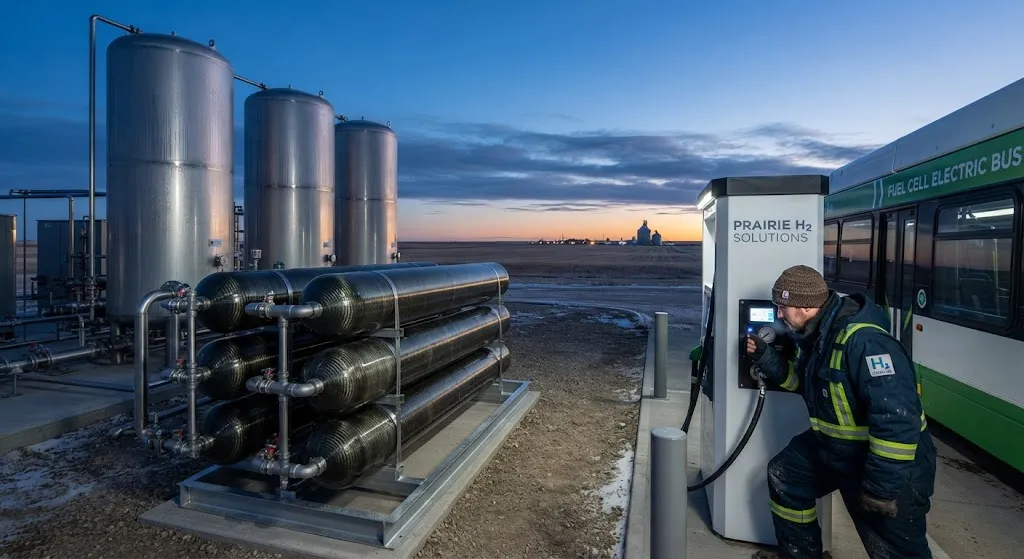
| Fleet refueling stations | Expanding in Ontario and Quebec | Type III and IV storage at 350-700 bar | Rapid growth |
| Mobility demand | Bus and truck pilots scaling | Onboard Type IV tanks, lightweight frames | Linked to fuel cell adoption |
The composite content of the corridor is concentrated in pressure equipment: Type III and Type IV hydrogen tanks for vehicles and stationary storage, composite piping where corrosion resistance and weight matter, and structural components for refueling systems. Canadian fabricators serving these segments import most of their carbon fiber today.
Bombardier Recovery and the Montreal Cluster
Bombardier's rebound is the second engine of Canadian composite demand. After the sale of its commercial aircraft programs and years of restructuring, the company refocused on business jets and has emerged from the downturn with a stronger order book. The Global 7500 remains the flagship all-composite business jet, its wing manufactured in Montreal with automated fiber placement and out-of-autoclave processing, and the Global 8000 extended the platform in 2025.
The Montreal cluster that surrounds Bombardier is where the multiplier effect happens. More than 200 aerospace companies in Quebec alone serve the prime alongside regional and international customers. The recovery has translated into several observable patterns for composite suppliers:
- Ramp-up demand: Bombardier's increasing delivery rate raises prepreg consumption and re-opens qualification slots at Tier 2 and Tier 3 fabricators who had paused aerospace work during the downturn.
- Aftermarket growth: The expanding Global fleet generates steady MRO demand for repair-grade prepreg and adhesives, a channel with faster qualification than original equipment.
- Relationship concentration: A single qualification against Bombardier specifications opens access to dozens of Quebec fabricators serving the same prime, making cluster entry a high-leverage move.
- Workforce signals: Hiring announcements across the cluster indicate capacity expansion, which precedes material purchasing decisions and rewards suppliers who establish local technical support early.
For suppliers, the classic aerospace trade-off applies: qualification is demanding, but the reward is multi-year framework agreements and a position inside a cluster that is also the natural gateway to US aerospace work under USMCA.
Arctic Defense and the F-35 Supply Chain
Canada's defense modernization adds a sovereign demand channel that is distinct from both hydrogen and aviation. The purchase of 88 F-35A fighters makes Canada a partner in the largest international fighter program, and Canadian industry participates in the global supply chain that sustains it. The F-35 airframe, roughly a third carbon fiber by weight, establishes a long baseline of composite work that Canadian suppliers can bid into.
Parallel to the F-35, the modernization of NORAD — announced as a C$38.6 billion package — expands surveillance infrastructure across the Arctic, where composites offer real advantages over metals. Cold-environment radomes must resist icing while remaining radio-transparent; sensor towers and UAV platforms benefit from corrosion resistance and low thermal mass; and lightweight structures reduce logistics burden at remote northern sites.
The CETA Trade Framework: Gateway in Both Directions
What elevates Canada beyond its domestic demand is the trade architecture around it. The Canada-EU Comprehensive Economic and Trade Agreement has been in force provisionally since 2017, eliminating tariffs on most industrial goods between Canada and the EU and harmonizing a wide range of technical barriers. For non-EU carbon fiber suppliers, Canadian distribution offers tariff-free access to European fabricators that might be harder to reach directly — a supply route that bypasses the tariff burden on direct EU imports. Conversely, the agreement opens the Canadian market to EU material producers, raising competitive intensity that rewards local service depth over price competition alone.
USMCA completes the picture on the southern side. Canadian processors exporting into US aerospace and defense programs must meet North American content rules, and materials sourced through Canada carry origin status that helps fabricators satisfy those requirements. A supplier positioned in Canada can quote into Canadian, US, and EU programs without the tariff friction that complicates direct entries, provided it maintains compliant origin documentation and local technical capability.
Supplier Entry Considerations
For suppliers evaluating Canada, the entry path differs by segment, and the three demand streams call for different sequencing. Practical guidance:
- Enter through industrial and energy first: Hydrogen corridor components and industrial applications carry shorter qualification cycles and produce revenue while aerospace qualification proceeds in parallel.
- Pursue aerospace qualification deliberately: Bombardier specification approvals take time but unlock the Montreal cluster; align qualification with the current ramp-up window while fabricators are accepting new sources.
- Prepare defense compliance: F-35 and Arctic work requires AS9100, dual-use export documentation, and familiarity with Canadian controlled goods requirements before bidding.
- Use CETA origin status: Structure supply so material entering through Canada carries compliant origin documentation, enabling tariff-free flow into both US and EU programs.
- Provide local technical support: Canadian fabricators expect responsive application engineering and regional stock; service depth is the differentiating factor in both hydrogen and aerospace channels.
The sequencing matters because the three streams operate on different cycles. Hydrogen corridor volume is growing now and rewards first movers as projects convert from pilots to deployment. Aerospace qualification is a longer play that compounds once approved. Defense work is the most compliance-heavy but the most durable. A supplier that threads all three builds a Canadian position that is far more valuable than the market's absolute size suggests.
Frequently Asked Questions
How is the Canadian hydrogen corridor different from other national hydrogen strategies?
Canada's strategy emphasizes infrastructure corridors rather than isolated projects, mapping production hubs in Alberta, Quebec, and Ontario to transmission and storage routes that connect regions. It is underpinned by abundant low-cost hydroelectricity and an existing gas network that can be converted. For composite suppliers, the difference is practical: corridor design creates repeatable, logistics-linked demand for pressure vessels, composite piping, and refueling components along defined routes, rather than scattered one-off installations.
What does Bombardier's recovery mean for new composite suppliers?
The recovery re-opens qualification slots that were closed during restructuring. Bombardier's faster delivery rate raises prepreg consumption across the Montreal cluster, and fabricators are again accepting new material sources after consolidating supplier lists in lean years. Aftermarket MRO demand for the expanding Global fleet also grows. For suppliers, the current ramp-up window is the right time to pursue aerospace qualification, since one approved specification opens access to dozens of Quebec fabricators serving the same prime.
How can suppliers participate in Canada's F-35 and Arctic defense work?
Canada's F-35 purchase secures industrial participation in the program's sustainment supply chain, including composite spares and repair work. Suppliers can bid through Canadian primes and Tier 1s, which requires AS9100 certification, dual-use export documentation, and familiarity with Canadian controlled goods compliance. NORAD modernization adds Arctic infrastructure demand, where documented cold-weather composite performance is the differentiator. The Industrial and Technological Benefits policy rewards suppliers who build Canadian value-added activity into their bids.
How does the Canada-EU trade agreement help carbon fiber suppliers enter the market?
The Comprehensive Economic and Trade Agreement eliminated most industrial tariffs between Canada and the EU. For non-EU suppliers, Canadian distribution provides tariff-free access to European fabricators and vice versa. Combined with USMCA, Canadian-sourced material can flow into US programs with compliant origin documentation. The same agreement raises competitive intensity as EU producers gain access to Canada, which means local technical support and service depth matter more than price alone.
Conclusion
Canada's composite market is defined by three converging demand streams — the hydrogen corridor, Bombardier's recovery in Montreal, and Arctic defense modernization — amplified by the CETA and USMCA trade frameworks that make the country a strategic gateway. The market is moderate in absolute size but exceptional in leverage: a supplier established in Canada can quote into Canadian, US, and European programs through tariff-favored routes.
YongXian supplies carbon fiber tow, fabric, and prepreg for pressure vessels, aerospace, and industrial applications worldwide. Explore our carbon fiber product range, or contact our team to discuss material qualification and market entry support for Canada and North America.
Part of topic
Related Articles
- Recycled Carbon Fiber Market Forecast 2030: Technology Maturity and Commercialization Path
- South Korea Carbon Fiber Market 2026: Hydrogen Economy and Shipbuilding Innovation
- Wind Turbine Blade Leading Edge Protection 2026: Polyurethane, Tape, and Metallic Shield Solutions
- China Carbon Fiber Overcapacity 2026: Price War Impact and Industry Consolidation
- India Carbon Fiber Market 2026: Wind Energy, Aerospace, and Defense Expansion
- PAN Precursor Market 2026: Acrylonitrile Supply and Carbon Fiber Cost Structure
Interested in Custom Carbon Fiber Products?
Contact our team for competitive pricing and technical specifications.
Get a QuoteRelated Products
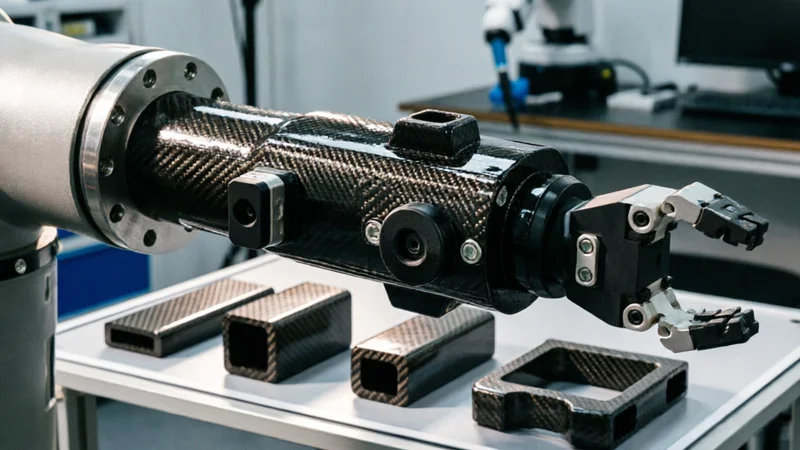
Carbon Fiber Robot End Effector Link — Custom Shape & Sensor Integration
Custom-shaped carbon fiber end effector links for robotic arms. Designed for automation integrators and research labs requiring lightweight, rigid connections between the robot wrist and gripper/tool. Can incorporate sensor mounting bosses, cable routing channels, and quick-change interfaces.

Custom Carbon Fiber Musical Instrument Parts
Carbon fiber components for musical instrument manufacturing offering superior dimensional stability, low weight, and consistent acoustic properties. We produce carbon fiber bows, guitar necks, violin chin rests, drum shells, and wind instrument bodies. Carbon fiber instruments are immune to humidity changes and temperature fluctuations that affect wooden instruments.
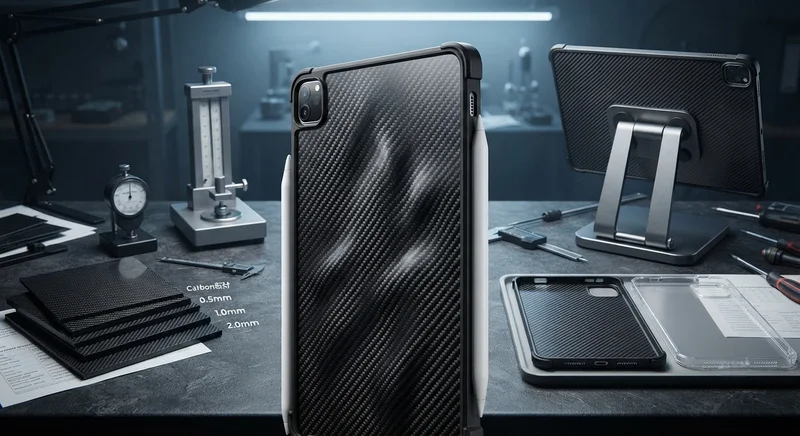
Carbon Fiber Tablet Case — Ultra-Light Protective Shell
Lightweight carbon fiber protective case for tablets and iPads. Molded from T700 3K prepreg with reinforced corner protection. Adds minimal weight while providing superior rigidity and drop protection compared to polycarbonate or silicone cases. Ideal for field workers, enterprise deployments, and professionals requiring durable tablet protection.
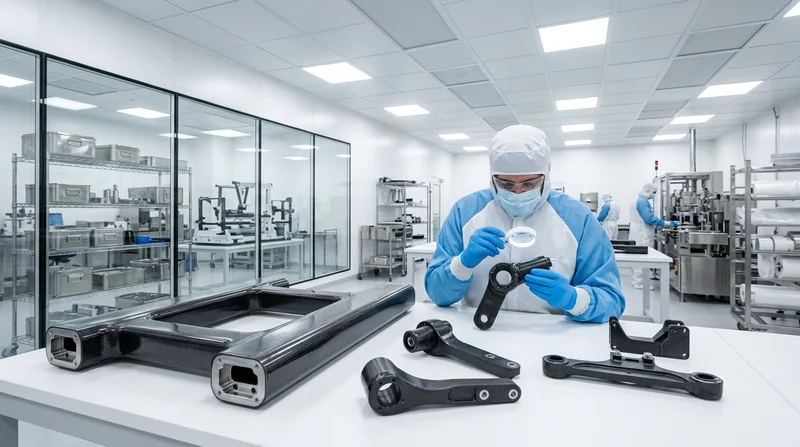
Custom Carbon Fiber Medical Device Components
Medical-grade carbon fiber components manufactured for imaging equipment, surgical instruments, and patient support systems. Carbon fiber's radiolucency (X-ray transparency) and high strength-to-weight ratio make it ideal for CT scanner beds, wheelchair frames, surgical robot arms, and MRI-compatible accessories. Biocompatible resin systems available.
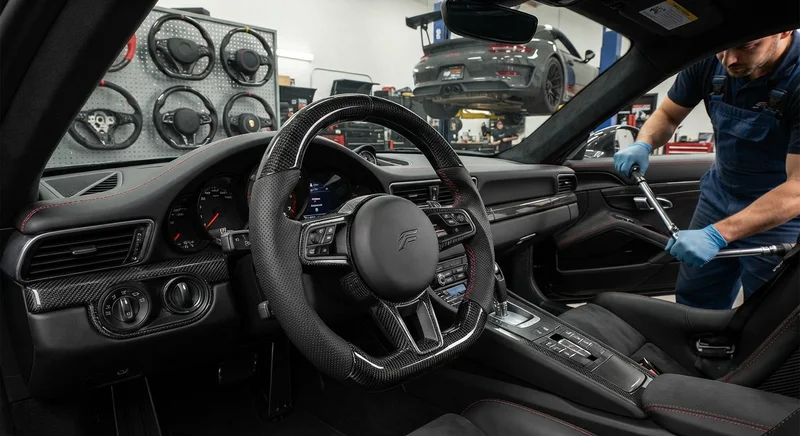
Carbon Fiber Steering Wheel — Custom Leather-Wrapped with CF Inlay
Custom carbon fiber steering wheel with genuine leather wrapping and carbon fiber inlay sections. Molded from T700 3K prepreg for maximum rigidity with a 30% weight reduction over OEM wheels. Available in D-shape (flat bottom) and round profiles. Direct bolt-on fitment for popular sports car and performance vehicle models. Custom stitching color and leather grade available.