
Canada plays a distinctive role in the North American carbon fiber market. It is not the region's largest consumer — that position belongs to the United States — but it hosts the second-largest aerospace composites production base on the continent, concentrated in Quebec and Ontario. At
Introduction
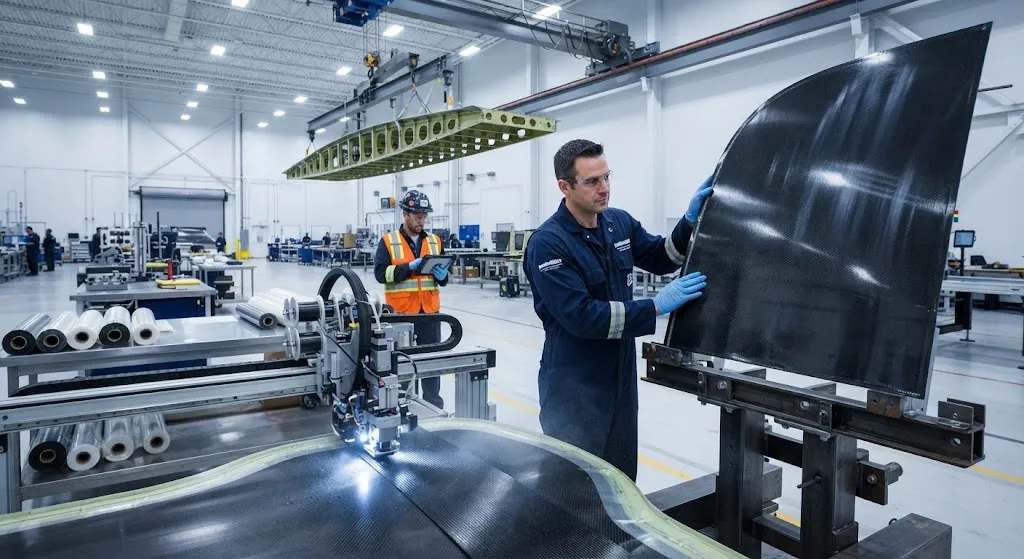
Canada plays a distinctive role in the North American carbon fiber market. It is not the region's largest consumer — that position belongs to the United States — but it hosts the second-largest aerospace composites production base on the continent, concentrated in Quebec and Ontario. At the center of this ecosystem is Bombardier, whose Montreal-area facilities assemble the Global 7500 and Global 8000 business jets, aircraft that carry the largest all-composite wings in business aviation. Around Bombardier has grown a dense network of composite part manufacturers, research institutes, and suppliers that together define the character of the Canadian market in 2026.
Three forces shape the outlook for the Canada carbon fiber market this year. First, Bombardier's production ramp and its composite wing strategy generate steady aerospace-grade demand. Second, a defense procurement wave — including Canada's F-35 purchase, new maritime patrol aircraft, and the modernization of NORAD — adds a sovereign, multi-year demand channel. Third, an active composite M&A landscape, with global acquirers consolidating Canadian and North American capabilities, is redrawing the supply map. This article examines each force and what it means for suppliers entering or expanding in Canada.
Market Size and Demand Structure
Industry estimates place Canadian carbon fiber demand at roughly 2,500-3,500 tonnes per year in 2026, with aerospace dominating consumption. The table below summarizes the demand structure across the principal end-use segments:
| Segment | 2026 Demand Share | Growth Outlook | Primary Drivers |
|---|---|---|---|
| Aerospace OEM | 50-55% | 4-6% per year | Bombardier Global wings, regional jets, supply chain parts |
| Defense | 15-20% | 7-9% per year | F-35 buy, P-8A Poseidon, CC-330 Husky, NORAD upgrades |
| Automotive & Industrial | 12-15% | 5-7% per year | EV components, sports equipment, tooling and dies |
| Energy & Hydrogen | 5-8% | 10-15% per year | Type IV hydrogen tanks, wind blade components |
| Wind Energy | 5-8% | 8-12% per year | Blade spar caps for Canadian and US wind projects |
Two structural features distinguish Canada from other secondary markets. The first is a deep aerospace supplier chain: Quebec alone hosts more than 200 aerospace companies, including composite specialists serving Bombardier, Airbus, and helicopter manufacturers. The second is the influence of the United States market on demand patterns — Canadian fabricators supply components into US airframe programs under USMCA rules, which means North American qualification standards apply to most significant contracts.
Bombardier and the Montreal Composites Cluster
Bombardier is the anchor customer of the Canadian carbon fiber market. The Global 7500, launched in 2018, was the first business jet with an all-composite wing, and the Global 8000, entering service in 2025, extends the same wing architecture with higher performance. Both aircraft are assembled at Bombardier's Mirabel facility near Montreal, while wings are manufactured nearby using automated fiber placement and out-of-autoclave process technology. Each Global family airframe consumes a significant quantity of intermediate-modulus carbon fiber prepreg, making Bombardier one of the largest single aerospace consumers of carbon fiber in Canada.
Around Bombardier's programs has grown the Quebec composites ecosystem:
- Composite part manufacturers: Quebec firms such as Comtek Advanced Structures and Delastek produce structural and interior composite components for business aviation, regional aircraft, and helicopters, consuming prepreg, honeycomb, and metallic bonding materials.
- Research and testing infrastructure: The National Research Council's aerospace facilities in Montreal and the Consortium for Research and Innovation in Aerospace in Quebec (CRIAQ) support material validation, process development, and certification testing for the Canadian supply chain.
- MRO and repair: Bombardier's and independent repair networks in Montreal and Toronto provide composite repair capacity for the global business jet fleet, creating steady demand for repair-grade prepreg and adhesives.
For suppliers, the Bombardier channel offers volume and long qualification cycles. Material approvals against Bombardier specifications are demanding but, once secured, yield multi-year framework agreements. The cluster structure also means a single qualification can open access to dozens of Tier 2 and Tier 3 fabricators serving the same prime.
Defense Procurement: F-35, Maritime Patrol, and NORAD Modernization
Defense procurement is the fastest-growing channel in the Canadian carbon fiber market. Canada announced in 2023 the purchase of 88 F-35A fighters, with an option for 16 more, for delivery beginning in 2026. The F-35 airframe is roughly 35% carbon fiber composite by weight — including skins, wing, and empennage structures — and Canada's participation in the global F-35 sustainment network positions Canadian firms for repair and component supply work over the aircraft's multi-decade service life. The program is complemented by the 2023 selection of 14 Boeing P-8A Poseidon maritime patrol aircraft and the acquisition of CC-330 Husky tanker-transport aircraft, both of which generate composite spares and sustainment demand.
Beyond aircraft, the modernization of NORAD announced in 2022 — a package valued at C$38.6 billion and funded at C$4.3 billion over five years — expands sensor, radar, and domain awareness systems across the Canadian Arctic. The associated ground infrastructure, UAV programs, and surveillance platforms all specify composite structures for weight and environmental resistance. Canada has also committed to increasing defense spending to 2% of GDP by 2032, sustaining procurement growth through the decade. For carbon fiber suppliers, the defense channel offers stable, ambitious demand with qualification requirements aligned to AS9100, ITAR considerations, and NATO standards, and the Canadian government's Industrial and Technological Benefits policy encourages suppliers to establish Canadian value-added work.
Composite M&A Activity and Supply Chain Consolidation
M&A activity has become a defining feature of the North American composites landscape, and it touches Canada directly. Global consolidation over the past several years — including the acquisition of NSE Composites by Ducommun in 2023, Parker's purchase of Meggitt in 2022, and the transfer of Bombardier's Belfast aerostructures business to Spirit AeroSystems in 2020 — reflects a broader trend of primes and Tier 1s internalizing composite capability. Canadian composite firms have been both targets and beneficiaries of this consolidation: acquirers gain access to the Canadian aerospace supplier base, USMCA tariff preferences, and proximity to US programs, while Canadian fabricators gain the scale and capital to qualify for larger contracts.
Three dynamics matter for suppliers evaluating the Canadian market in 2026:
- Nearshoring tailwind: North American aerospace and defense customers are shortening supply chains and favoring regional sources over Asia, a shift that directly benefits Canadian-based composite processors and their upstream material suppliers.
- Consolidation of material spend: As acquirers merge purchasing organizations, qualified material suppliers gain larger order volumes but face more rigorous quarterly pricing reviews — a balance that rewards technical differentiation.
- Hydrogen and infrastructure expansion: Canadian clean-energy policy plus US Inflation Reduction Act incentives are pulling Type IV hydrogen pressure vessel production, hydrogen refueling infrastructure, and wind blade manufacturing into closer coordination across the border, expanding composite demand beyond aerospace alone.
Supplier Entry Considerations for Canada
For carbon fiber suppliers, Canada offers a rational entry path into the broader North American market. Practical considerations include:
- Qualification strategy: Start with standard-modulus 12K and 24K tow, fabric, and prepreg for industrial, tooling, and composites-aftermarket applications, which carry shorter qualification cycles, while developing intermediate-modulus aerospace qualification in parallel.
- USMCA compliance: Canadian customers exporting into US programs require materials that meet North American content and origin rules; suppliers should document origin status and maintain compliant labeling.
- Defense compliance: High-modulus and high-tensile carbon fiber can fall under dual-use export control; suppliers serving Canadian defense customers must maintain robust end-use documentation and ITAR-aware handling.
- Local technical support: Canadian fabricators expect responsive application engineering, processing guidance, and European or North American stock holding — service depth separates winning suppliers in this market.
Frequently Asked Questions
How large is the Canadian carbon fiber market in 2026?
Industry estimates place Canadian carbon fiber demand at roughly 2,500-3,500 tonnes per year in 2026, with aerospace representing 50-60% of consumption. The market is considerably smaller than the US market but is distinguished by high aerospace-grade content and a concentrated, prime-anchored demand structure centered on Bombardier's Montreal cluster.
What role does Bombardier play in Canadian carbon fiber demand?
Bombardier is the anchor aerospace customer. Its Global 7500 and Global 8000 business jets feature the largest all-composite wings in business aviation, manufactured at the Mirabel facility with automated fiber placement and out-of-autoclave processing. Each airframe consumes significant quantities of intermediate-modulus prepreg, and the surrounding Quebec supplier network multiplies that demand across Tier 2 and Tier 3 fabricators.
How do defense programs affect carbon fiber demand in Canada?
Canada's purchase of 88 F-35A fighters, 14 Boeing P-8A Poseidon aircraft, and CC-330 Husky tankers, together with NORAD modernization funded at C$4.3 billion over five years, creates a multi-year, sovereign defense demand channel. Defense procurement is the fastest-growing segment of the Canadian market, with 7-9% annual growth expected through 2030 as spending rises toward 2% of GDP.
What should suppliers consider when entering the Canadian market?
Suppliers should build a tiered qualification strategy — industrial and tooling grades first, aerospace qualification in parallel — maintain USMCA-compliant origin documentation, address dual-use export control for high-performance fibers, and provide local technical support with regional stock holding. The Canadian cluster structure means one prime qualification can open access to dozens of fabricators.
Conclusion
The Canadian carbon fiber market in 2026 combines aerospace-grade demand, a growing sovereign defense channel, and an active M&A landscape that rewards capable suppliers. Bombardier's all-composite wings anchor steady demand in Montreal; defense procurement through the F-35, P-8A, and NORAD modernization adds resilience; and nearshoring plus hydrogen and wind expansion broaden the opportunity beyond aerospace. For suppliers able to navigate USMCA and defense compliance, Canada serves as a strategic gateway into North American aerospace and defense programs.
YongXian supplies carbon fiber fabrics, prepregs, and reinforcement materials to aerospace, defense, and industrial customers worldwide. Explore our carbon fiber product range or contact our team to discuss material specifications and qualification support for Canadian and North American market entry.
Part of topic
Related Articles
- Recycled Carbon Fiber Market Forecast 2030: Technology Maturity and Commercialization Path
- South Korea Carbon Fiber Market 2026: Hydrogen Economy and Shipbuilding Innovation
- Wind Turbine Blade Leading Edge Protection 2026: Polyurethane, Tape, and Metallic Shield Solutions
- China Carbon Fiber Overcapacity 2026: Price War Impact and Industry Consolidation
- India Carbon Fiber Market 2026: Wind Energy, Aerospace, and Defense Expansion
- PAN Precursor Market 2026: Acrylonitrile Supply and Carbon Fiber Cost Structure
Interested in Our Products?
Contact our team for competitive pricing and technical specifications.
Get a QuoteRelated Products

Carbon Fiber Fishing Rod Blank
High-quality carbon fiber fishing rod blank manufactured from multiple grades of Toray carbon fiber cloth. Available in a wide range of lengths, powers, and actions for freshwater and saltwater applications. Suitable for OEM rod building.

Carbon Fiber Plate — 3K Twill T700 3.0mm
Medium-thickness 3.0mm carbon fiber plate offering significantly higher load capacity while maintaining attractive 3K twill finish. Suitable for structural brackets, reinforcement plates, and load-bearing panels.

Carbon Fiber Plate — 3K Twill T700 1.5mm
Thin 1.5mm carbon fiber plate with 3K twill weave surface. Lightweight and stiff, commonly used for covers, panels, drone bodies, and applications requiring a premium aesthetic appearance.

Square Carbon Fiber Tube — 3K Twill T700
Square cross-section carbon fiber tube manufactured with 3K twill weave for torsional strength. Preferred for structural frames, trusses, and support columns where rectangular geometry offers design flexibility.
Carbon Fiber Pickleball Paddle
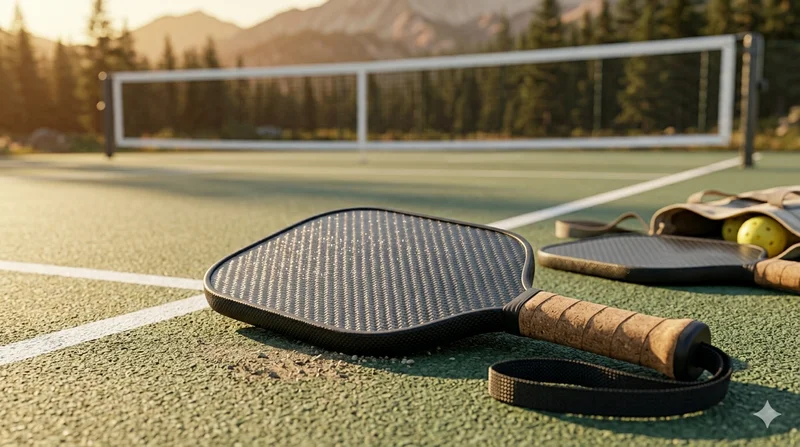
High-performance pickleball paddle with Toray T700 carbon fiber face and polypropylene honeycomb core. Delivers excellent power-to-weight ratio, spin generation, and vibration dampening for competitive play.