
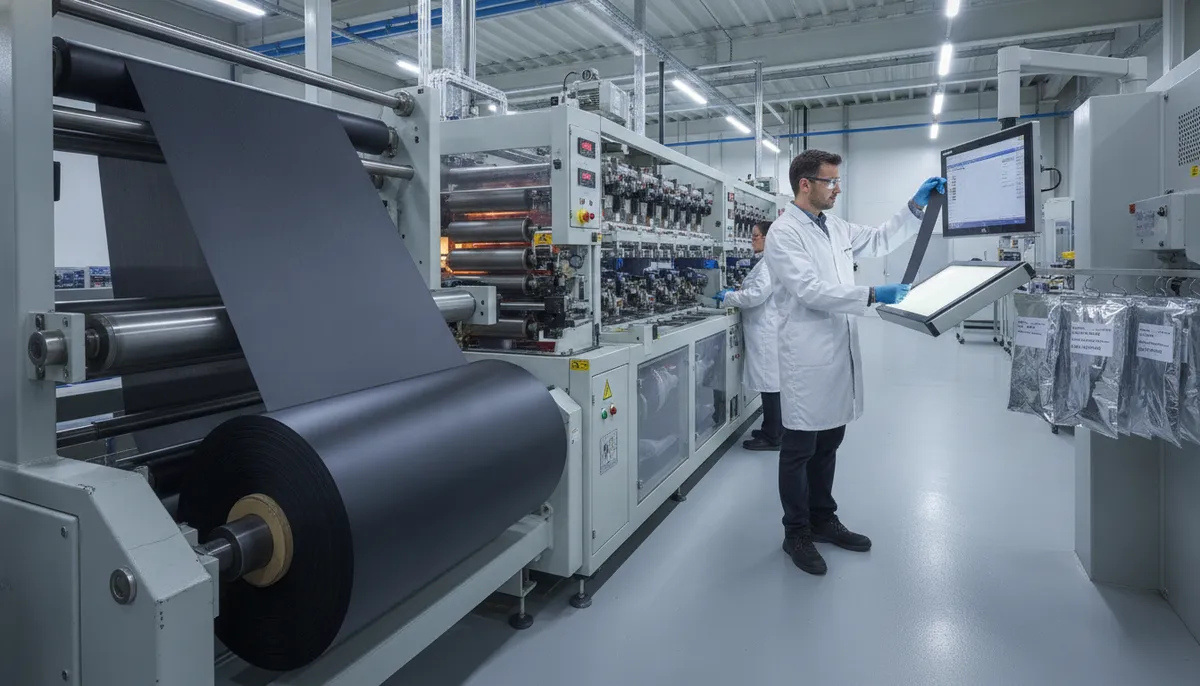
Belgium rarely appears on the global list of carbon fiber producing nations, yet it holds an outsized position in the European composites value chain. The country is home to Syensqo, the specialty chemicals company that emerged from the Solvay split and that inherited one of the world's
Introduction
Belgium rarely appears on the global list of carbon fiber producing nations, yet it holds an outsized position in the European composites value chain. The country is home to Syensqo, the specialty chemicals company that emerged from the Solvay split and that inherited one of the world's most important portfolios of aerospace resin systems and thermoplastic composite materials. It operates the Port of Antwerp-Bruges, Europe's largest integrated chemical cluster and one of its busiest container gateways. And it sits at the center of the Benelux region, surrounded by automotive, aerospace, and renewable energy OEMs that consume carbon fiber in volume.
The market structure that results is distinctive: Belgium is not where carbon fiber is spun, but where it is compounded, qualified, distributed, and turned into engineered materials. The recent five-year aerospace supply agreement between Syensqo and Toray — securing fiber supply for Syensqo's composite material programs — underscores how the Belgian hub functions as the interface between fiber makers and end users. This article maps the Belgian market: the chemical industry foundation, Syensqo's composite portfolio and the Toray agreement, Antwerp's logistics role, and what buyers should expect when sourcing carbon fiber materials through a Belgian hub.
The Chemical Industry Foundation
Belgium's relevance to carbon fiber starts with chemistry, not fiber production. The country hosts one of Europe's densest concentrations of specialty chemical, polymer, and compounding capacity, anchored by the Port of Antwerp-Bruges cluster along the Scheldt and the Walloon region's materials heritage around the former Solvay and now Syensqo sites. The structural facts that matter:
- Specialty chemicals base: resin systems, thermoplastics, and additives for composite manufacturing are developed and produced in Belgium, which feeds the compounding and material development side of the carbon fiber supply chain.
- Syensqo headquarters: the specialty polymers and composite materials group operates from Brussels, with composite R&D and application development assets across Europe serving aerospace and automotive customers.
- Skilled materials workforce: the chemistry-heavy economy provides the formulation engineering, testing, and qualification expertise that composites require — more valuable to the sector than raw fiber capacity.
- R&D tax environment: Belgian innovation incentives support material qualification and application development programs, which is precisely the cost-heavy stage of bringing carbon fiber materials to market.
The consequence is that Belgian companies act as the formulation layer between fiber producers and part manufacturers. A wind blade or aircraft component made in Europe with carbon fiber almost certainly touches Belgian-engineered resin chemistry, thermoplastics, or compounding expertise at some point in its supply chain.
Syensqo Composites: Thermoplastics and Aerospace Systems
Syensqo is the commercial centerpiece of the Belgian carbon fiber ecosystem. Formed from the 2023 split of Solvay into Syensqo (specialty polymers and composite materials) and Solvay (essential chemicals), the company inherited Solvay's aerospace composite material business — a portfolio of epoxy resin systems, prepregs, and, critically, high-performance thermoplastic composites that are increasingly specified for next-generation aircraft. Its relevance to carbon fiber buyers breaks down into three streams:
| Product Stream | Market Position | Typical Application |
|---|---|---|
| Epoxy resin systems & prepregs | Aerospace-qualified legacy portfolio | Aircraft primary structure, nacelles, interior |
| Thermoplastic composites (PEEK, PEKK systems) | Leading position, growing spec rate | Next-gen aircraft frames, brackets, clips |
| Compounding & specialty polymers | Broad industrial base | Automotive, electronics, energy, medical |
Thermoplastic composites are Syensqo's growth engine and the reason the Toray agreement matters. Thermoplastic carbon fiber parts offer weldability, repairability, high throughput consolidation, and chemical resistance that thermosets cannot match, which is driving their specification in airframe secondary structure and, increasingly, primary structure. That growth depends on reliable fiber supply, which industrial producers in Asia do not always prioritize for aerospace-grade tow — creating exactly the kind of supply gap that a five-year agreement with a Western fiber major closes.
The Syensqo-Toray Five-Year Agreement
The recent supply agreement between Syensqo and Toray is the clearest signal of how the Belgian market secures its fiber. Under the deal, Toray commits to supplying carbon fiber to Syensqo's composite materials business over a five-year period, guaranteeing the aerospace-grade tow and fabric that Syensqo converts into prepregs, thermoplastics, and composite parts. Three aspects of the arrangement are instructive for the market:
- Security of supply: aerospace programs run on qualified, batch-consistent fiber, and a five-year commitment removes the procurement uncertainty that threatens program timelines.
- Qualified material continuity: switching fiber suppliers in aerospace requires full re-qualification; a long-term agreement keeps the qualified fiber constant across program lifetimes.
- Vertical linkage via the hub: the agreement effectively ties a Japanese fiber maker's capacity to a Belgian material integrator selling into European and global airframers — the Belgian hub functioning as the bridge.
For buyers analyzing the Belgian market, the agreement signals two things. First, aerospace fiber demand remains strong enough to justify multi-year commitments in 2025-2026. Second, the strategic bottleneck in aerospace composites is shifting from fiber capacity to qualified material integration — the formulation, qualification, and supply-chain management that companies like Syensqo provide and that Belgium's ecosystem is structured to support.
The Antwerp Logistics Hub
Belgium's second pillar for carbon fiber is logistics. The Port of Antwerp-Bruges is Europe's largest integrated chemical cluster and a top-tier container port, and it functions as the physical gateway through which carbon fiber raw materials, manufactured goods, and composites move across the continent. The logistics advantages are concrete:
| Logistics Factor | Antwerp-Bruges Position | Impact on Carbon Fiber Supply |
|---|---|---|
| Container throughput | Top-3 European port | Reliable inbound fiber & outbound composite freight |
| Chemical cluster | Largest integrated chemical cluster in Europe | Feedstock, resins, and additives co-located with logistics |
| Inland connectivity | Barge + rail + truck to Rhine valley | Cost-effective distribution to DACH and French OEMs |
| Cold-chain and warehousing | Extensive bonded warehousing | Prepreg storage and just-in-time kitting for manufacturers |
For carbon fiber specifically, the port matters because composites supply chains are logistics-sensitive: prepreg has a finite shelf life, unidirectional material must be stored under controlled temperature, and manufacturing customers expect short lead times. Antwerp's bonded warehousing and multimodal distribution let material integrators hold inventory close to the European OEM base while keeping landed costs competitive. Buyers importing carbon fiber sheet, fabric, or tow through a Belgian hub gain shorter transit times to Central European manufacturing and simpler customs handling than through more peripheral gateways.
Market Drivers and Buyer Considerations
Belgium's carbon fiber market in 2026 is defined by four demand drivers. Aerospace recovery and next-generation airframe programs push aerospace-grade resin and thermoplastic demand; the circular economy policy regime in the EU increases interest in recycled content and repairable thermoplastic systems; the offshore wind build-out in the North Sea continues to consume structural composites; and the automotive sector's shift toward multi-material lightweighting favors thermoplastic-based carbon fiber solutions. For buyers, the Belgian supply picture offers particular advantages and one structural caveat:
- Material integration depth: sourcing through Belgian channels provides access to qualified resin systems, thermoplastics, and compounding expertise rather than fiber alone.
- Aerospace qualification readiness: Belgian-based material integrators carry the aerospace QA and traceability infrastructure that qualification demands.
- Logistics efficiency: Antwerp-based distribution shortens lead times and de-risks customs into the EU single market.
- Structural caveat: Belgium is not a fiber manufacturing center — fiber must be imported from Western or Asian producers, so landed fiber supply depends on global market conditions and transport costs.
The practical sourcing strategy for a buyer is therefore two-tier: secure raw fiber or fabric from a primary producer with published specifications, then use the Belgian ecosystem for the compounding, qualification, and logistical layers that determine whether the material actually reaches production as an engineered, certified input.
Frequently Asked Questions
Does Belgium actually produce carbon fiber?
Belgium is not a significant carbon fiber producer — there is no major Belgian fiber-spinning plant comparable to the production sites of Toray, Teijin, or the Chinese manufacturers. Belgium's role is upstream and downstream of fiber spinning: it hosts a dense specialty chemicals industry, the Syensqo composite materials business with aerospace resin and thermoplastic systems, sizable compounding and material development capacity, and the Port of Antwerp-Bruges logistics gateway. Raw carbon fiber reaching the Belgian market is effectively always imported, either from Western majors or Asian producers, and then transformed locally into engineered materials, qualified prepregs, and composite parts.
What is the Syensqo-Toray agreement about?
Syensqo and Toray signed a five-year carbon fiber supply agreement under which Toray commits to supplying carbon fiber to Syensqo's composite materials business. The arrangement secures aerospace-grade tow and fabric over a multi-year horizon, giving Syensqo enough supply certainty to run its prepreg, thermoplastic composite, and parts programs without procurement interruptions. Because aerospace programs depend on qualified, batch-consistent fiber and re-qualification is expensive, a long-term supply commitment keeps the certified material constant across program lifetimes. It also illustrates Belgium's role as the integration hub: a Japanese fiber producer supplying through a Belgian-headquartered material integrator into European and global airframers.
Why are thermoplastic carbon fiber composites growing in importance?
Thermoplastic carbon fiber composites — systems based on PEEK, PEKK, and other melt-processable polymers — offer several structural and economic advantages over thermosets: they can be welded and repairable, which cuts assembly time; they consolidate in minutes rather than hours of autoclave cure; they tolerate impact damage better; and they are recyclable. These properties make them attractive for next-generation aircraft secondary structure and increasingly primary structure, and for automotive parts where cycle time matters. Syensqo holds a leading position in these material systems, which is why its composite business and its fiber supply security — including the Toray agreement — matter to the Belgian market.
What should a buyer consider when sourcing carbon fiber through Belgium?
Three factors dominate. First, material integration: the Belgian ecosystem offers qualified resin systems, thermoplastics, and compounding rather than raw fiber, so it suits buyers who need engineered or aerospace-qualified materials and can specify what they need. Second, logistics: Antwerp-based distribution gives short lead times and EU customs efficiency, which is highly relevant for prepreg and temperature-sensitive material. Third, the structural caveat that fiber itself is imported — buyers should anchor fiber pricing and supply expectations to global market conditions and transport costs rather than assume Belgian production. For many manufacturers, the winning pattern is buying raw fiber or fabric from a primary producer and using the Belgian chain for compounding, qualification, and distribution.
Is Belgium a good sourcing gateway for the EU composites market?
Yes, for most practical purposes. The Port of Antwerp-Bruges is Europe's largest integrated chemical cluster and among its busiest container ports, with barge, rail, and truck connectivity deep into the Rhine valley and Central Europe. That position makes it a low-cost, low-customs-friction gateway for carbon fiber raw materials and composite goods serving DACH, French, and Benelux OEMs. The main caveat is that fiber must be imported from elsewhere, so landed economics depend on global fiber supply and transport markets. For buyers who need engineered, qualified material with short lead times, Belgium is among the most practical entry points in Europe.
Conclusion
Belgium's position in the carbon fiber market is defined by integration rather than production. A deep specialty chemicals base, the Syensqo composite materials business with its leading thermoplastic systems, the five-year Toray fiber supply agreement, and the Antwerp-Bruges logistics gateway together make the country the compounding, qualification, and distribution hub of the European composites value chain. For buyers, that means Belgium delivers what fiber producers alone cannot: qualified engineered materials, stable sourcing relationships, and efficient access to the European OEM base.
For engineers and procurement teams working in the European market, the practical strategy is to combine primary fiber purchasing with Belgian integration and logistics depth. Explore our carbon fiber sheet, fabric, and unidirectional laminate range with published specifications suitable for aerospace, industrial, and composite part programs, or contact our engineering team for material data, qualification documentation, and EU supply planning.
Part of topic
Related Articles
- Carbon Fibre for Sale: Reading Listings, Grades and Lead Times
- Carbon Fiber Near Me: Why Local Sourcing Beats Cross-Border for Prototyping
- Carbon Fiber Rod Blanks: Supply Chain and Custom Cutting Services
- Carbon Fiber Tube Shop: Selecting the Right Supplier for Custom and Standard Tubes
- Carbon Fiber Sheet Price: Factors Affecting Cost per Square Meter
- Carbon Fibre Sheet Supplier UK: Sourcing Options and Specification Checklist
Interested in Our Products?
Contact our team for competitive pricing and technical specifications.
Get a QuoteRelated Products
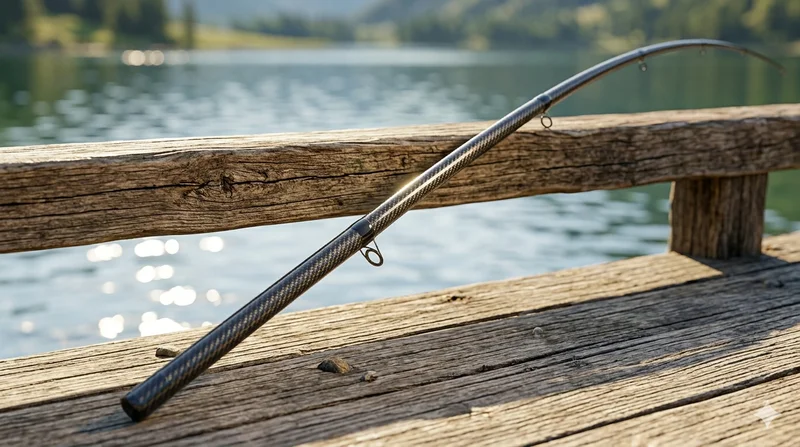
Carbon Fiber Fishing Rod Blank
High-quality carbon fiber fishing rod blank manufactured from multiple grades of Toray carbon fiber cloth. Available in a wide range of lengths, powers, and actions for freshwater and saltwater applications. Suitable for OEM rod building.

Carbon Fiber Plate — 3K Twill T700 1.5mm
Thin 1.5mm carbon fiber plate with 3K twill weave surface. Lightweight and stiff, commonly used for covers, panels, drone bodies, and applications requiring a premium aesthetic appearance.

Carbon Fiber Plate — 3K Twill T700 3.0mm
Medium-thickness 3.0mm carbon fiber plate offering significantly higher load capacity while maintaining attractive 3K twill finish. Suitable for structural brackets, reinforcement plates, and load-bearing panels.
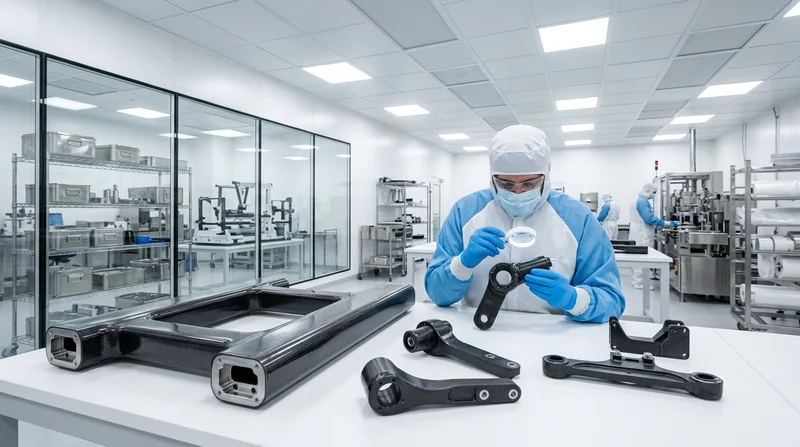
Custom Carbon Fiber Medical Device Components
Medical-grade carbon fiber components manufactured for imaging equipment, surgical instruments, and patient support systems. Carbon fiber's radiolucency (X-ray transparency) and high strength-to-weight ratio make it ideal for CT scanner beds, wheelchair frames, surgical robot arms, and MRI-compatible accessories. Biocompatible resin systems available.

Square Carbon Fiber Tube — 3K Twill T700
Square cross-section carbon fiber tube manufactured with 3K twill weave for torsional strength. Preferred for structural frames, trusses, and support columns where rectangular geometry offers design flexibility.