
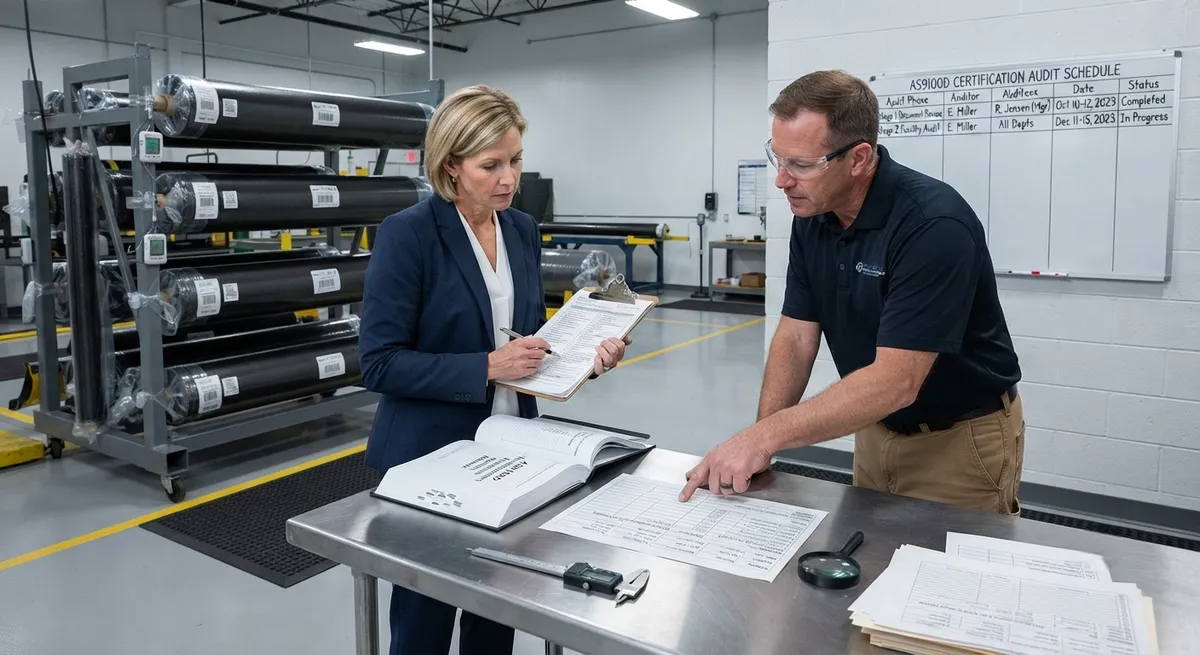
AS9100D certification is the entry ticket to the aerospace supply chain. The standard, published by the International Aerospace Quality Group and aligned with ISO 9001, adds aviation-specific requirements for product safety, configuration management, counterfeit part prevention, and spe
Introduction
AS9100D certification is the entry ticket to the aerospace supply chain. The standard, published by the International Aerospace Quality Group and aligned with ISO 9001, adds aviation-specific requirements for product safety, configuration management, counterfeit part prevention, and special process control. For carbon fiber suppliers — fiber producers, prepreg manufacturers, and fabric weavers — certification demonstrates that the quality system behind the material is capable of supporting flight-critical applications.
This article explains the requirements most relevant to composite material suppliers, the audit structure you will face, and the documentation that must be in place before an accredited certification body issues the certificate. It is written for quality managers and business owners preparing their first AS9100D audit or upgrading from ISO 9001.
What AS9100D Requires Beyond ISO 9001
AS9100D shares the ISO 9001:2015 framework — context analysis, risk-based thinking, process approach — and adds aerospace-specific clauses. The requirements that most affect composite suppliers include:
- Product safety: A documented process to manage product safety risks, including hazard analysis applied to material properties and handling.
- Counterfeit parts prevention: Controls to ensure purchased materials and components are genuine and traceable to certified sources.
- Configuration management: Control of material specifications, test standards, and design baselines so every batch matches the qualified configuration.
- Traceability: Full lot and batch traceability from raw fiber to delivered prepreg, including resin lot, cure data, and storage conditions.
- Special process control: Qualification and control of processes such as impregnation, slitting, and storage whose output cannot be fully verified by final inspection.
- On-time delivery and performance monitoring: Measurement of delivery reliability, which is a gate in most OEM supplier scorecards.
What the Requirements Mean for Composite Production
The table below maps AS9100D requirement areas to the specific controls a carbon fiber or prepreg facility must demonstrate:
| AS9100D Area | Composite Supplier Application |
|---|---|
| Risk-based thinking | Failure mode analysis on impregnation lines, cold chain, and storage |
| Product safety | Hazard controls for resin handling, solvents, and pressurized curing equipment |
| Configuration management | Revision control of material specs, test methods, and approved supplier lists |
| Traceability | Batch records linking fiber lot, resin lot, process parameters, and test results |
| Special processes | Qualification of impregnation, slitting, and cold storage as controlled processes |
| Nonconforming material | Segregation, disposition, and customer notification procedures for off-spec lots |
Auditors look for evidence that these controls are real and consistently applied, not documented for the audit. Records from recent production batches, calibration logs, and training files carry more weight than a well-written manual.
The Audit Process: Stages and Timelines
AS9100D certification follows a standard two-stage audit conducted by an accredited certification body, followed by periodic surveillance. The typical structure is:
| Stage | Focus | Typical Duration |
|---|---|---|
| Stage 1 (documentation review) | QMS manual, procedures, context analysis, scope definition | 1 day, usually remote |
| Stage 2 (certification audit) | On-site verification of processes, records, and shop-floor practice | 3-5 auditor-days |
| Surveillance audits | Annual verification that the system stays effective | 1-2 auditor-days per year |
| Recertification | Full reassessment every three years | Similar to Stage 2 |
From the decision to pursue certification to the certificate date, most composite suppliers plan 9-15 months, depending on the maturity of their existing quality system. A facility already operating an effective ISO 9001 system typically moves faster.
Documentation and Records to Prepare
Before Stage 1, ensure the following are in place and current:
- Quality manual aligned to AS9100D clause structure, with the scope statement covering all aerospace material products.
- Procedures for document control, nonconforming material, corrective action, and internal audit.
- Risk register covering product safety, supply chain, and production risks.
- Traceability records demonstrating lot-to-lot linkage for fiber, resin, and finished prepreg.
- Calibration records for all test and inspection equipment, including data-loggers used in cold-chain monitoring.
- Training records proving operators and inspectors are qualified for their assigned tasks.
- First article inspection results (AS9102) for representative products, demonstrating the FAI process is implemented.
Common Nonconformities for Composite Facilities
Certain findings recur across composite supplier audits. Correct them before the auditor arrives:
- Traceability gaps between fiber lots and finished prepreg rolls, especially after slitting operations.
- Out-of-calibration measurement equipment, most often temperature recorders and scales.
- Incomplete out-time and storage condition records for prepreg batches.
- Uncontrolled revision of material specifications or test standards.
- Supplier approval lists that include vendors without evidence of evaluation.
Frequently Asked Questions
How long does AS9100D certification take and what does it cost?
Plan 9-15 months from project start to certificate issue for a composite facility. Cost has two components: internal effort, typically one full-time quality manager plus cross-functional support, and the certification body's fees, which depend on facility size and number of employees — for a mid-size composite manufacturer these typically range from several thousand to tens of thousands of dollars per three-year certification cycle, plus annual surveillance fees. The largest cost is usually internal, not the auditor's invoice.
Do I also need Nadcap accreditation for composite processes?
AS9100D and Nadcap serve different purposes. AS9100D certifies the quality management system as a whole. Nadcap is a special-process accreditation program managed by the Performance Review Institute, covering specific processes such as nonconventional machining, chemical processing, and — relevant to composites — NDT and materials testing. Whether you need Nadcap depends on the special processes you run and your customers' requirements. Many composite suppliers hold AS9100D and seek Nadcap only for processes that are on their customers' Nadcap lists.
Is AS9100D required if I only supply non-structural composite parts?
Not always technically, but commercially it usually is. Some customers accept ISO 9001 for non-structural, secondary parts, but an increasing number apply AS9100D across their entire approved supplier list regardless of part class. Holding AS9100D also signals readiness for structural programs later, avoids a second certification effort when your product scope grows, and is increasingly a filter in supplier portals that pre-select candidates by certificate. For carbon fiber and prepreg suppliers, where the same material can end up in flight-critical structure, treat AS9100D as the practical baseline.
Conclusion
AS9100D certification for carbon fiber suppliers is a process, not an event: build the quality system around traceability, configuration control, and special process management, prepare complete and current records, and walk the auditor through evidence rather than documents. The result is not just a certificate — it is the disciplined material control that aerospace buyers expect and a genuine competitive advantage when OEMs allocate capacity during rate ramps.
If you are preparing for AS9100D or sourcing composite materials from certified suppliers, review our carbon fiber product range and contact our team to discuss quality documentation and qualification support for your aerospace programs.
Part of topic
Related Articles
- Carbon Fibre Sheet Supplier UK: Sourcing Options and Specification Checklist
- Carbon Fiber Sheets Near Me Suppliers: Local Stock vs Factory Direct
- Filament Wound Epoxy Tubes: Industry Standards and Compliance Requirements
- Carbon Fiber Dealers Near Me: What a Good Dealer Actually Adds
- Carbon Fiber Supplies Near Me: Local Sourcing Without Compromising Spec
- Carbon Fiber for Sale: Online Platforms and Direct Sales Channel Comparison
Interested in Our Products?
Contact our team for competitive pricing and technical specifications.
Get a QuoteRelated Products
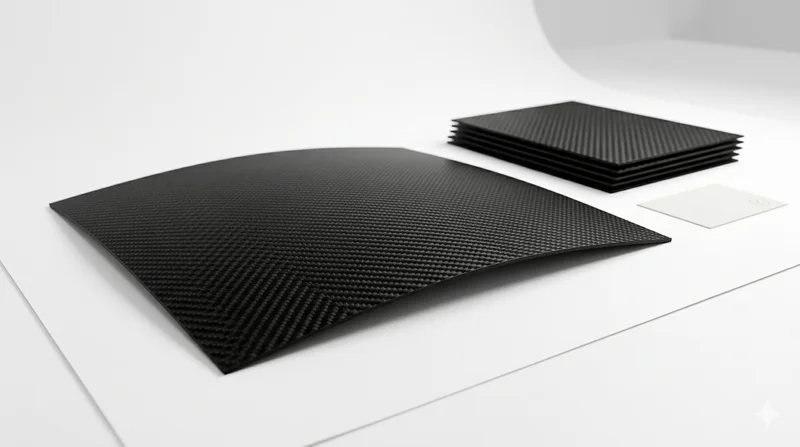
Carbon Fiber Plate — 3K Twill T700 1.5mm
Thin 1.5mm carbon fiber plate with 3K twill weave surface. Lightweight and stiff, commonly used for covers, panels, drone bodies, and applications requiring a premium aesthetic appearance.
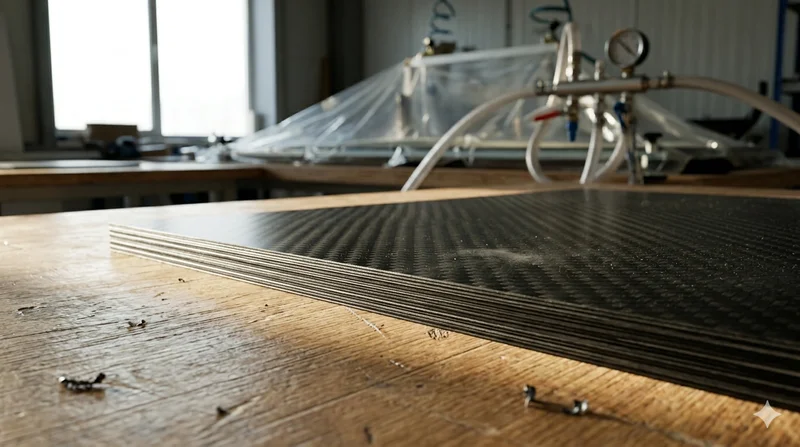
Carbon Fiber Plate — 3K Twill T700 3.0mm
Medium-thickness 3.0mm carbon fiber plate offering significantly higher load capacity while maintaining attractive 3K twill finish. Suitable for structural brackets, reinforcement plates, and load-bearing panels.
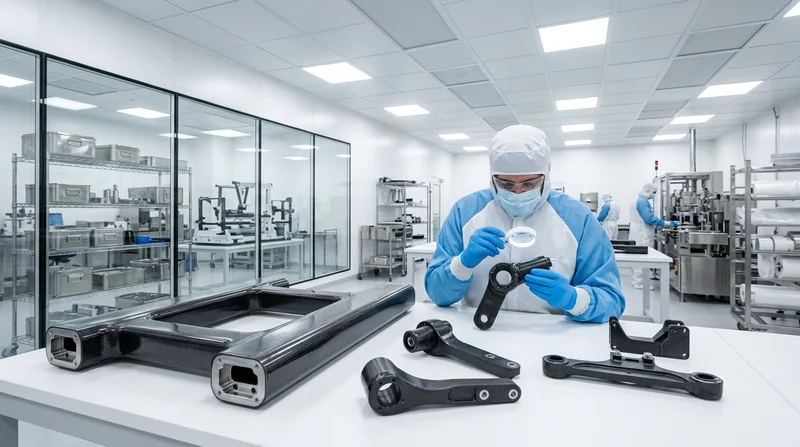
Custom Carbon Fiber Medical Device Components
Medical-grade carbon fiber components manufactured for imaging equipment, surgical instruments, and patient support systems. Carbon fiber's radiolucency (X-ray transparency) and high strength-to-weight ratio make it ideal for CT scanner beds, wheelchair frames, surgical robot arms, and MRI-compatible accessories. Biocompatible resin systems available.

Carbon Fiber Fishing Rod Blank
High-quality carbon fiber fishing rod blank manufactured from multiple grades of Toray carbon fiber cloth. Available in a wide range of lengths, powers, and actions for freshwater and saltwater applications. Suitable for OEM rod building.
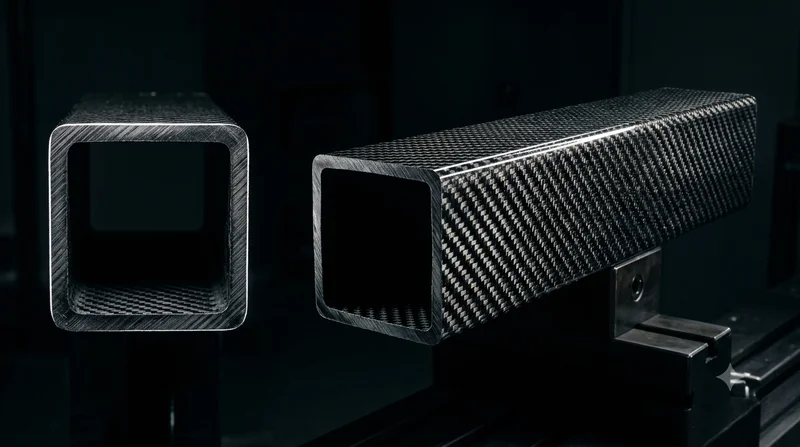
Square Carbon Fiber Tube — 3K Twill T700
Square cross-section carbon fiber tube manufactured with 3K twill weave for torsional strength. Preferred for structural frames, trusses, and support columns where rectangular geometry offers design flexibility.